A child in the middle of a dinosaur phase is not being cute. They are being an expert, and they have noticed that most adults are not.
That is the whole problem with a generic dinosaur book. If you hand a four-year-old who knows twelve species a book about "a dinosaur", they will look at the picture, identify it correctly, and tell you it is wrong.
Which dinosaur should the book be about?#
Whichever one they picked. Not the one you would pick.
The default reach is Tyrannosaurus rex, and it is the weakest choice for exactly the children this book is for. Every dinosaur book has one. A child who has moved on to naming Therizinosaurus because it has the ridiculous claws has already told you what to use.
| If they keep saying… | Use that one, and it will land |
|---|---|
| Triceratops | The one they can pronounce first — often the entry point |
| Stegosaurus | Plates and a tail like a club; easy to draw, easy to love |
| Parasaurolophus | The crest. They will be pleased you got the crest right |
| Therizinosaurus | The claws. This is a child who has gone deep |
| Spinosaurus | The strongest challenger to T. rex, and bigger |
| Any pterosaur | ⚠️ Not a dinosaur, and they know. So does the book if you say so |
That last row is worth a moment. Pterosaurs and plesiosaurs are not dinosaurs, and children in this phase know it with some passion. A book that gets the distinction right earns a level of trust that is out of all proportion to the effort.
What should the story be about?#
The common mistake is making the child a visitor — they arrive, they look at dinosaurs, they go home. That is a museum trip, not a story.
Better: give them a job. The dinosaur world is the setting; the child doing something in it is the plot.
- Something is lost and only they know where it is.
- A very large animal is frightened of a very small thing.
- They are the only one who can reach somewhere.
- They have to decide between two things they both want.
Two lines of that in the story box is enough. On KindFable you write it exactly as you would say it out loud: "He knows every dinosaur name and he corrects everyone. His favourite is the Therizinosaurus because of the claws."
If you would rather not write anything, our shop has a finished personalized dinosaur book with exactly that shape: Your Child and the Too-Big Trick-or-Treaters, for ages 3 to 7. The sample shown stars Oliver, five, and his two best friends are dinosaurs who are a bit too big for Halloween. It is written in rhyme:
THUMP! THUMP! THUMP! The windows shake. The pumpkins jiggle. Fences quake.
Here's BONK, as bumpy as a tank. Here's TOOT, who honks hello: HONK-HONK!
Bonk knocks the door flat, Toot honks the pumpkins out, and it is the child who picks up the chalk and makes the plan. That is the job, not the museum trip. A parent adds their own child's photo and name, and every page is painted with that child.


A book from our shop · ages 3–7
Your Child and the Too-Big Trick-or-Treaters
A rhyming Halloween with two dinosaur best friends who are a bit too big for trick-or-treating — Bonk knocks the door flat, Toot honks the pumpkins out — until your child chalks a plan and the whole street comes to them.
Shown here starring Oliver, 5. Yours is painted with your own child’s face and name on every page, from $39 — and you see the pages before you pay.
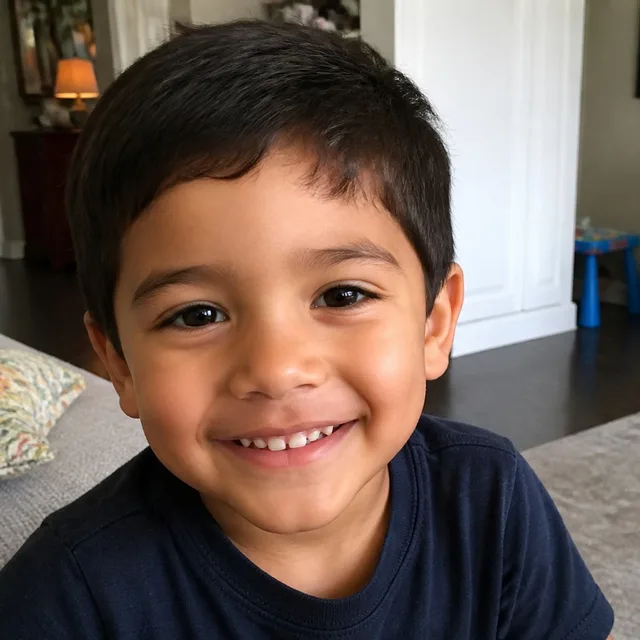
The photo they uploaded
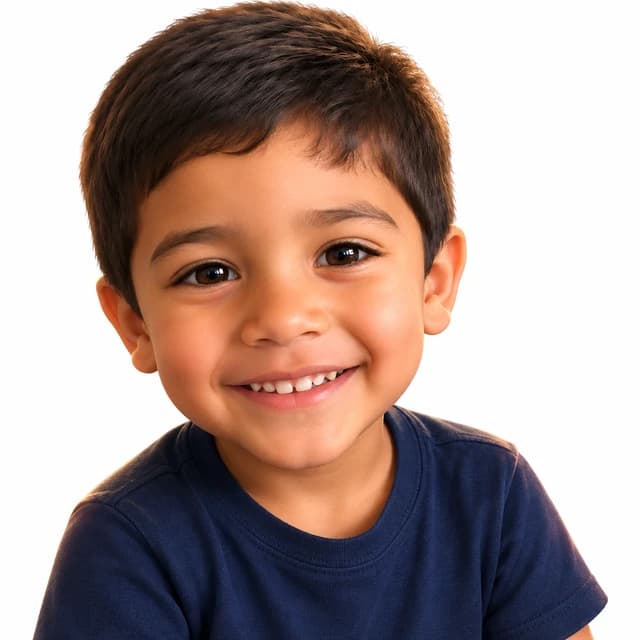
The character we drew
Written from this story — not a stock track with a name dropped in. Free with every book.
How the story begins
- 1October night. The moon is round. The leaves go skipping on the ground. And OLIVER is at the gate. His two best friends are running late.
- 2THUMP! THUMP! THUMP! The windows shake. The pumpkins jiggle. Fences quake. Here's BONK, as bumpy as a tank. Here's TOOT, who honks hello: HONK-HONK!
- 3A ghost needs sheets. For BONK? Let's see... One, two — no, wait — it's TWENTY-THREE. “Too big? Too tall? Too bumpy? NO! Just come as YOU — come on, let's GO!” A witch's hat for TOOT? Oh dear. It sits so high it's hardly here.
The rest of the story is in Your Child and the Too-Big Trick-or-Treaters.
The words to the song
[Verse 1]
October night, the moon is round,
THUMP-THUMP-THUMP — what's that sound?
It's Bonk and Toot, they've come to play,
Oliver's friends, on Halloween day!

[Chorus]
Too big? Too loud? Too stompy? NO!
We'll find a way — come on, let's GO!
If the door's too small, if the hat won't fit,
We'll make our OWN way — that's the trick of it!

[Verse 2]
Knock on the door — KER-BOOM! — oh dear.
Say a little boo — HOOOONK! — did you hear?
One swish of tail and the pumpkins roll,
Down the hill like a bowling bowl!

[Verse 3]
The lights went out, the doors shut tight,
Two big dinos hid from sight.
(Not very well — we saw your tail!)
But Oliver's plan was sure not to fail.

[Chorus]
Too big? Too loud? Too stompy? NO!
We'll find a way — come on, let's GO!
A neck's a slide and a tail's a drum,
Ding-ding! Roll up! Everybody come!

[Outro]
Now tap goes Bonk, as soft as can be,
And "boo" goes Toot, like a whisper — see?
Two sleepy heads on the windowsill.
Goodnight, Oliver. The street is still.
That is the mechanism a good dinosaur book uses. The dinosaurs are companions rather than scenery — named, drawn consistently, and present on page after page beside your child. If you write your own on the create page, you can name the exact species and add it the same way.
Is the obsession something to steer them out of?#
No, and it is worth saying because it gets asked.
An intense, narrow interest between about three and six is a recognised and ordinary stage of development. The American Academy of Pediatrics' guide to cognitive development in preschool children describes preschoolers as intensely curious, asking question after question about the world around them — and a dinosaur phase is that curiosity with a subject. Children in one build vocabulary faster, sustain attention for longer, and practise the thing that later looks like research: collecting, sorting, comparing and correcting. It usually fades by about seven on its own.
A book that takes the interest seriously — right species, right claws — does more than one that treats it as a costume. It also gets read more: the American Academy of Pediatrics' policy statement on literacy promotion recommends reading aloud with young children every day, and the book a child brings to you unasked is the easiest one to read every day.
How do I make one?#
1. One clear photo of their face. Daylight, normal expression.
2. Name, age, and the actual species. Spell it however they say it.
3. Two lines about the interest. Not "he likes dinosaurs" — "he corrects everyone, and he is right".
4. Add the dinosaur as a companion. No photo needed: described in a sentence, it becomes a character who is in the whole book rather than one illustration.
5. Look at the cover before you decide. Painted and shown to you free — and this is the moment to check the dinosaur looks like the one you asked for. (For a shop book the steps are shorter still: open the book, press "Personalize this book", add the name and one photo.) Both prices are on one page, and the hardcover carries two audio credits for narration and a song.
What to read next#
- They are ready for real dinosaur facts, not stories → a good non-fiction dinosaur book beats any story for a child at this stage; our best children's books of all time list covers what else lands at four to eight.
- You want the gift case and the timing → the personalized book gift guide.
- You want to see all nine looks → the art styles.
Why their own face changes a dinosaur book#
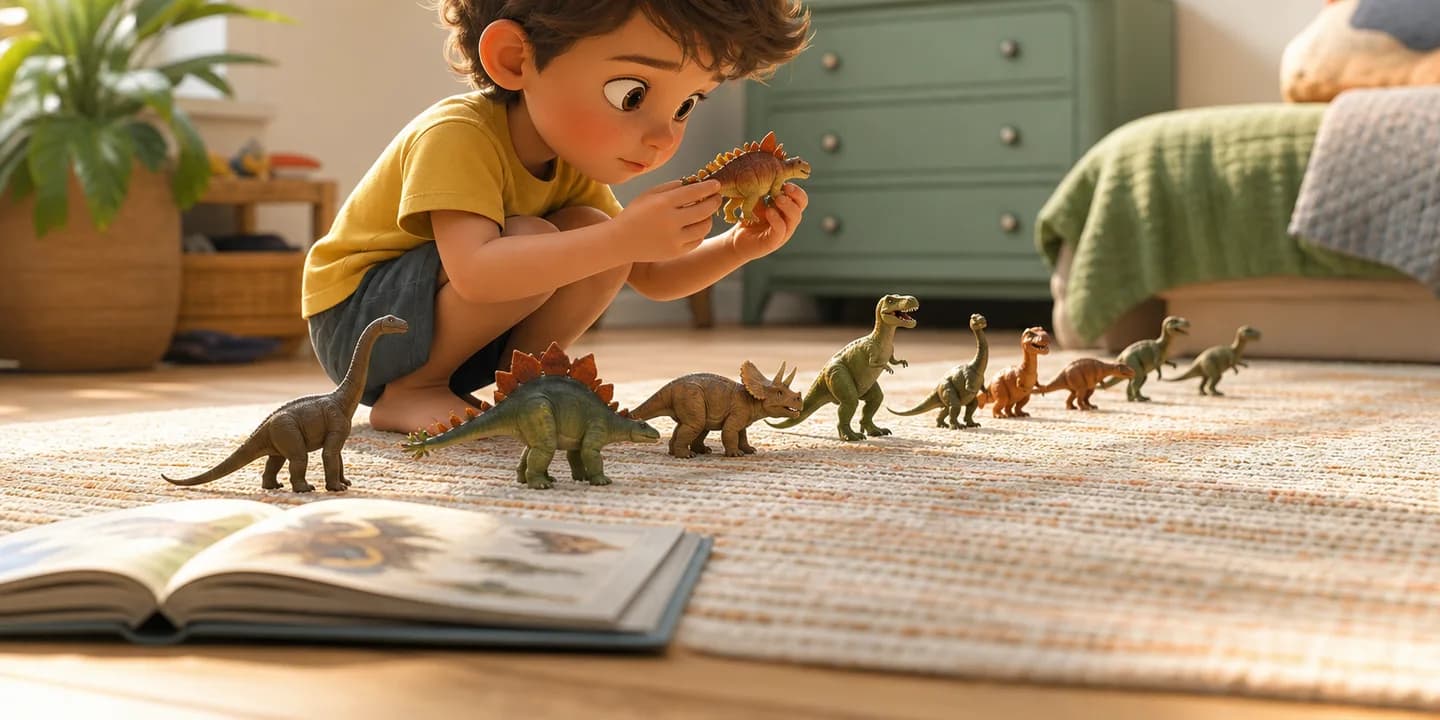
Dinosaur books are the one genre where a child already imagines themselves in the story. They have been doing it on the rug with plastic models for a year.
A personalized children's book with photo just stops them having to. It is their face, in the Cretaceous, with the species they chose, doing the job. And because the interest fades — it will, around seven — the book quietly becomes the record of the year they knew everything about Therizinosaurus and would tell anyone who stood still.
Start with the photo and see the cover before you decide anything.