The best alphabet books for preschoolers pair each letter with a word that starts with its sound — and make you want to read them again. Choose by the job: a letter–sound book for learning, a chant for joining in, a letter-hunt book for older preschoolers, and an alphabet joke for children who already know their ABCs. Below are 12 of the best ABC books sorted that way, the one trap to watch for on alphabet pages, and how to read an ABC book so the letters actually stick.
What should a good alphabet book do?#
An alphabet book is a child's first map of written language. The US National Institute of Child Health and Human Development lists phonics — linking sounds to letters — among the five major parts of reading on its page about the best way to teach children to read. So the most useful ABC books do more than show 26 letters:
| A good alphabet book… | Why it matters |
|---|---|
| Pairs each letter with a word that starts with its usual sound | "B is for ball" teaches "buh"; that is the link children need for reading |
| Shows the letter clearly, big enough to trace | Letter shapes are learned by eye and finger |
| Has something to say back or look for | Children remember what they do, not what they are shown |
| Is worth rereading | The alphabet is learned by repetition |
| Includes lowercase, not just capitals | Most of what children will read is lowercase |
Watch for the wrong-sound trap. "X is for xylophone" teaches a "z" sound, "K is for knight" teaches a silent letter, and "G is for giraffe" teaches the soft g before the hard one. These are fine in an alphabet joke book for a child who already knows the letters; in a first ABC book they muddle the very link the book exists to teach. The best first ABC books pick words like box, fox or ax for X.
Which alphabet books are best for preschoolers?#
Sorted by how each one teaches. First-publication years checked against library catalogue records.
| How it teaches | Book | First published | Ages |
|---|---|---|---|
| Letter sounds with real things | Eating the Alphabet by Lois Ehlert | 1989 | 2–5 |
| Letter sounds with rhyme | Dr. Seuss's ABC by Dr. Seuss | 1963 | 2–5 |
| A chant to join in | Chicka Chicka Boom Boom by Bill Martin Jr. and John Archambault, illustrated by Lois Ehlert | 1989 | 2–5 |
| Letters as characters | LMNO Peas by Keith Baker | 2010 | 3–6 |
| Letter shapes to lift and explore | Alphablock by Christopher Franceschelli, illustrated by Peskimo | 2013 | 2–5 |
| Lots to look at for each letter | Gyo Fujikawa's A to Z Picture Book by Gyo Fujikawa | 1974 | 2–5 |
| Animal alphabet | Animalia by Graeme Base | 1986 | 4–8 |
| Hunting for letters in the world | Alphabet City by Stephen T. Johnson | 1995 | 4–8 |
| Superhero alphabet | Superhero ABC by Bob McLeod | 2006 | 4–7 |
| Alphabet as a joke | Z Is for Moose by Kelly Bingham, illustrated by Paul O. Zelinsky | 2012 | 4–7 |
| Alphabet out of order | AlphaOops! The Day Z Went First by Alethea Kontis, illustrated by Bob Kolar | 2006 | 4–7 |
| Alphabet with a twist ending | The Z Was Zapped by Chris Van Allsburg | 1987 | 5–9 |
For learning the letter sounds (ages 2 to 5)#
Eating the Alphabet. Bold, bright fruits and vegetables from apricot to zucchini, with capital and lowercase letters on every page. It is the best first ABC book here for one reason: almost every word starts with the letter's usual sound, and food is something a toddler can point at, name and later taste.
Dr. Seuss's ABC. "Big A, little a, what begins with A?" — a question on every page, and a silly answer. The question-and-answer rhythm turns the alphabet into a game.
Chicka Chicka Boom Boom. The lowercase letters climb a coconut tree and fall out in a heap. Children chant along long before they recognise the letters, which is how the chant does its work. Our guide to books like Chicka Chicka Boom Boom has more chant books.
For looking and touching#
Alphablock. Chunky pages cut in the shape of each letter; lift the letter to find a word beneath. Little hands learn the shapes by holding them.
LMNO Peas. Tiny busy peas acting out jobs and hobbies, letter by letter — acrobats, builders, divers. Lots to spot and talk about.
Gyo Fujikawa's A to Z Picture Book. A classic packed with children, animals and things for every letter. A slow, pointing book for a rainy afternoon.
For older preschoolers and kindergartners#
Animalia. Every page is crowded with things beginning with one letter — an alliterative sentence at the top and dozens of hidden objects below. Stunning, and best for four and up; for a two-year-old there is simply too much on the page.
Alphabet City. Paintings of city scenes in which each letter hides in plain sight — an A in a sawhorse, a Z in a fire escape. It won a Caldecott Honor, and it teaches children to look for letters in the world around them.
Superhero ABC. Comic-book heroes for every letter, each with an alliterative power. For the child who would rather fly than sit still.
For children who already know their letters#
Z Is for Moose. Zebra is directing a perfectly orderly alphabet show — until Moose cannot wait for his letter. Children need to know the order to get the joke, which makes it a funny test.
AlphaOops! The Day Z Went First. Z is tired of always being last, and the alphabet descends into chaos. Another order joke for confident four- and five-year-olds.
The Z Was Zapped. A dramatic alphabet in 26 acts — the A was in an avalanche, the B was badly bitten — with each disaster to guess before you turn the page. For five and up.
If we had to choose one for a three-year-old, it would be Eating the Alphabet; for a five-year-old, Alphabet City. We would hold Animalia back until four, however beautiful it is — a book a child cannot make sense of yet is a book they stop asking for.
How do you read an alphabet book so the letters stick?#
- Say the sound, not just the name. "B — buh — ball." The sound is what helps with reading.
- Let your child find the letter. "Where's the B on this page?" Finding beats being shown.
- Trace it with a finger. Big letters on the page are for tracing.
- Connect it to their world. "B, like Ben! Like banana!"
- Start with their name. Point out the letters of your child's name whenever they appear.
- Don't read all 26 at once. Five letters and a chat is a good session for a three-year-old.
- Read it again. And again. Repetition is how the alphabet is learned.
Their name is the natural place to begin. Rebecca Treiman and Victoria Broderick found, in the Journal of Experimental Child Psychology (1998), that preschoolers, kindergartners and first graders knew the first letter of their own name better than other letters, and could print it better too. For the next stage — sounds into words — the guide to how to teach your child to read has fifteen kindergarten reading activities, and books for language development covers the talking that comes before letters.
Can a custom storybook help a child learn letters?#
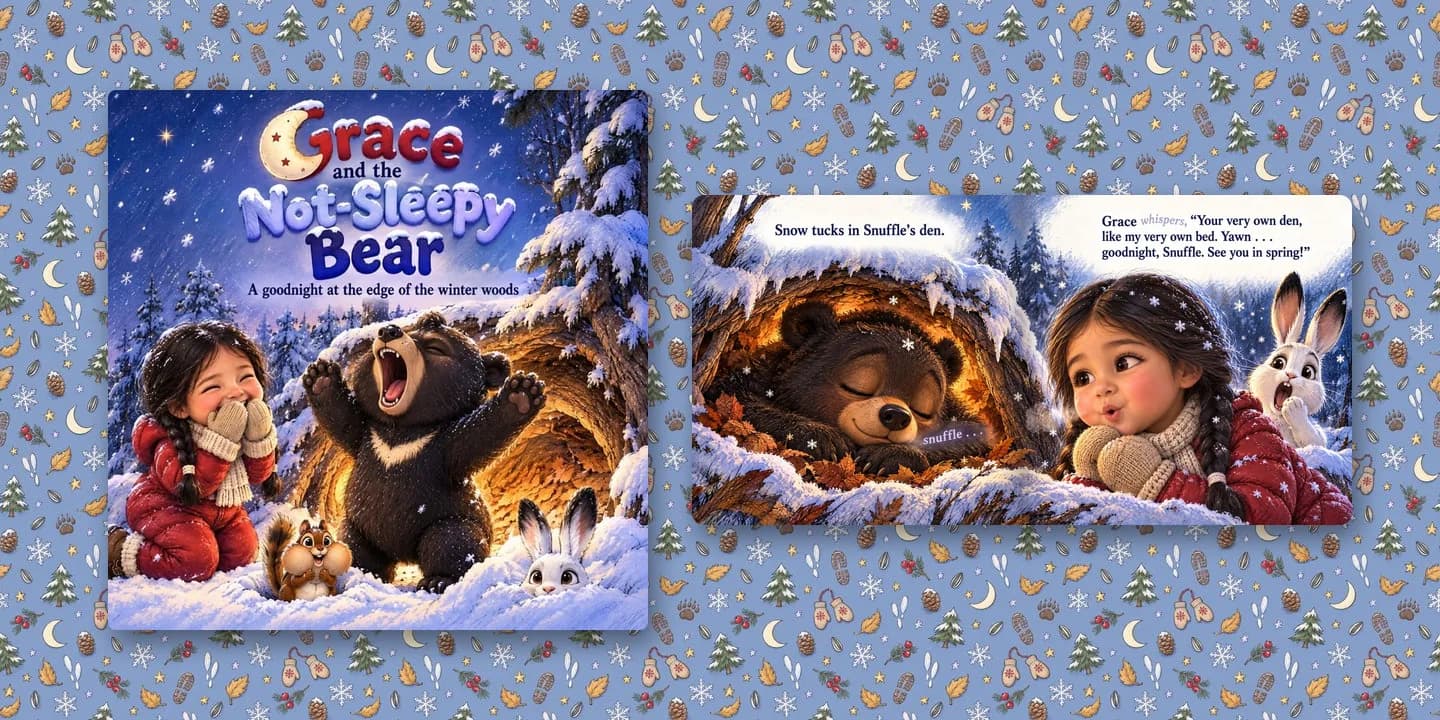
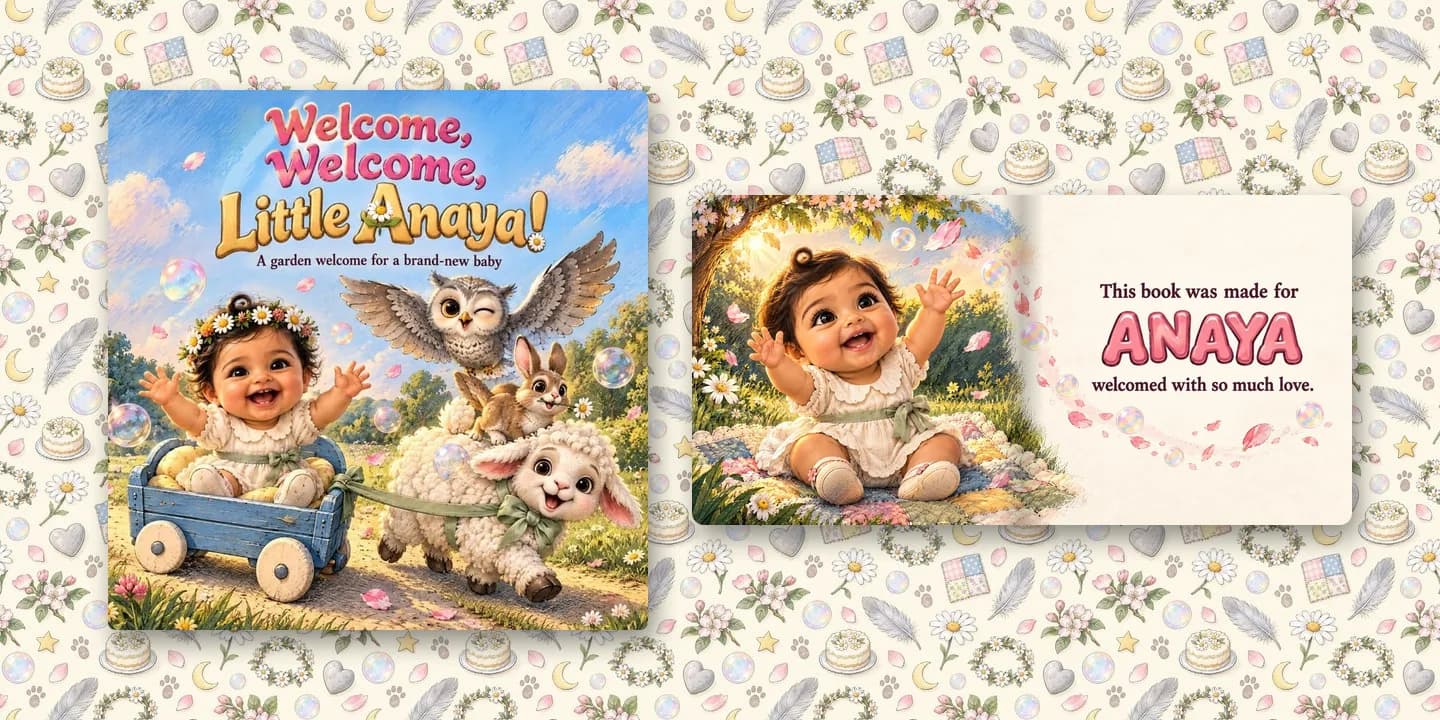
It can help with the letters children learn first: the ones in their own name. A custom storybook puts your child's name on the cover and through the story, so the letters they care about most turn up again and again — and in a story where they are the hero, which is the kind of book a child asks for every night.
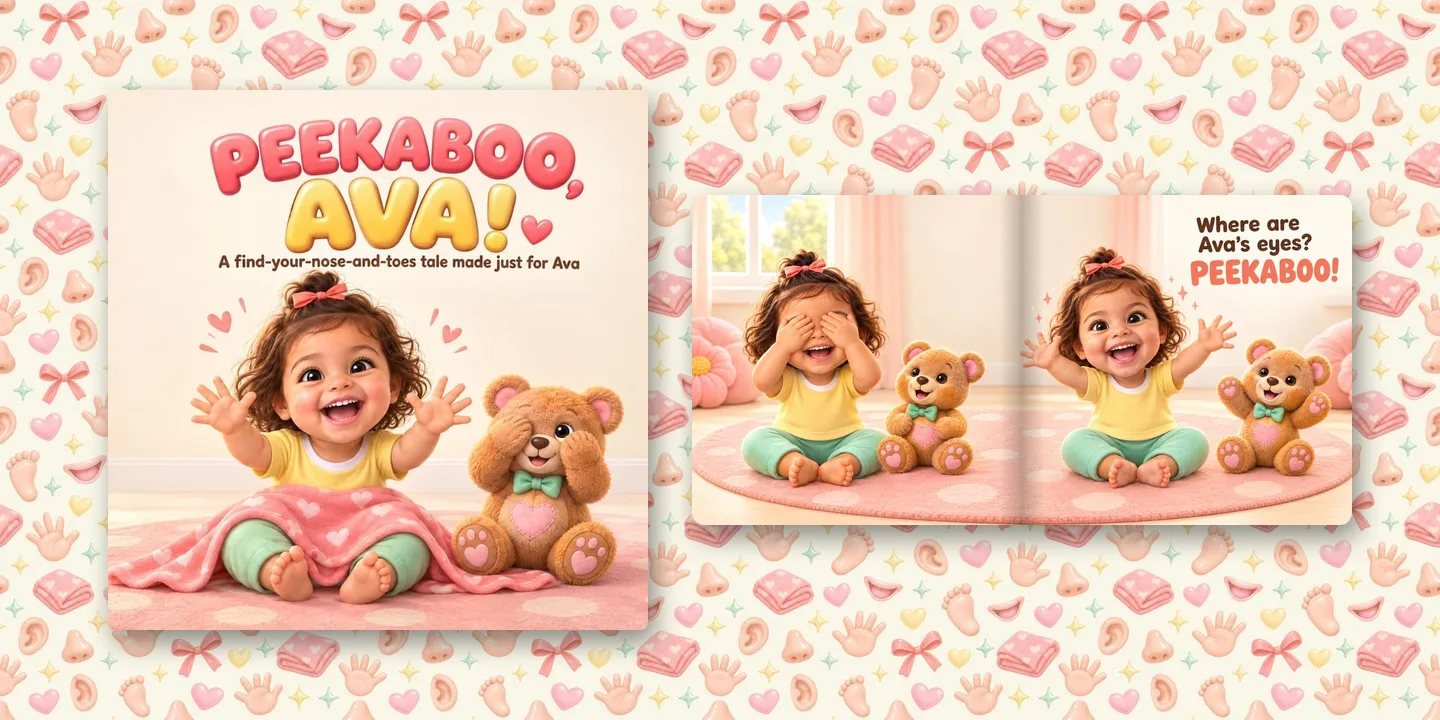
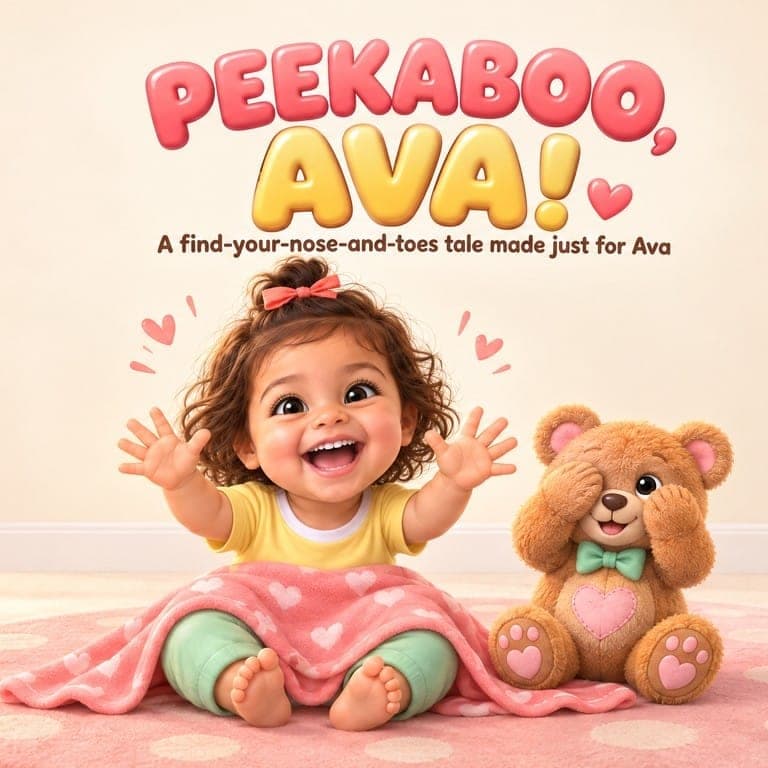
Peekaboo, Your Child! is a good example for the youngest: their name is in the title and on every page — Where are Ava's eyes? Peekaboo! — a first-words book of the body that doubles as a first look at the letters of their own name. For a slightly older child, Your Child Could Be Anything has a big lettered word on every page — FIREFIGHTER, CHEF, ASTRONAUT — and a teacher's page that starts with A is for…
How do I make a book with my child's name on every page?#
- Pick a story from the shop, or start your own at /create.
- Add your child's name and age, so the words fit the reader.
- Upload one clear photo and tick the consent box. Your child becomes the character on every page, with the same face from the cover to the last page.
- Tell the story box what your child loves — the animal, the toy, the word they say most — and choose an art style.
- See the cover before you pay. The painted cover is free to look at; nothing is charged until you decide.
- Choose the format. The hardcover comes with narration and a song of the story, and the digital book is ready the same day. Prices are on one page.
Here is one, read in full. Ava is the sample child; your copy stars yours.
A book from our shop · ages 1–3
Peekaboo, Your Child!
Where are your little one's eyes? PEEKABOO! A giggly first-words book of the body for the very youngest — eyes behind two hands, an ear Coco the teddy finds, a nose behind a big pink flower (BOOP!), a milky smile, ten wiggly fingers, toes under the blanket and one very special belly button. Then night-night, eyes. Night-night, toes.
Shown here starring Ava, 2. Yours is painted with your own child’s face and name on every page, from $39 — and you see the pages before you pay.
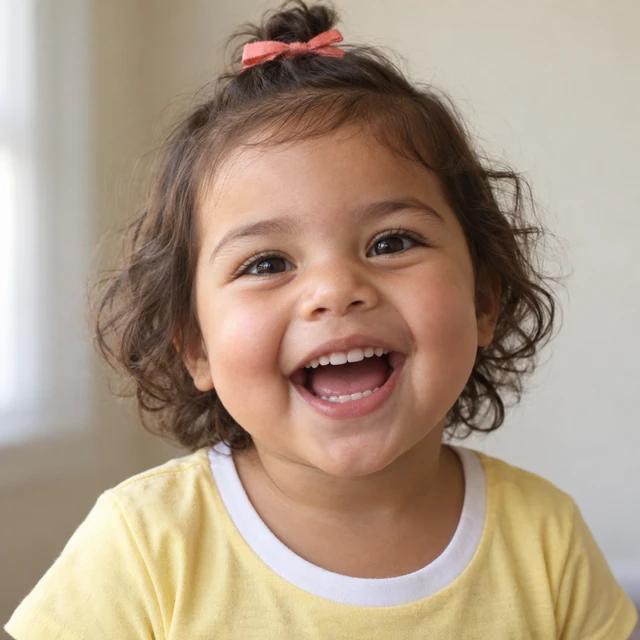
The photo they uploaded

The character we drew
Written from this story — not a stock track with a name dropped in. Free with every book.
How the story begins
- 1Hello, Ava! Let's play PEEKABOO!
- 2Where are Ava's eyes? PEEKABOO!
- 3Where are Ava's ears? Here they ARE!
The rest of the story is in Peekaboo, Your Child!.
The words to the song
[Verse 1]
Where are Ava's eyes? Peekaboo!
Where is Ava's nose? Boop, boop-boo!
Where are Ava's hands? Clap, clap, clap!
Where are Ava's toes? Tap, tap, tap!

[Chorus]
Peekaboo! Peekaboo!
I see you, and you see me too!
Peekaboo! Peekaboo!
Ava, Ava, I love you!

[Verse 2]
Where is Ava's tummy? Round and small,
Where's her belly button? Best of all!
Coco hides, then Coco's found,
Ava giggles all around!

[Chorus]
Peekaboo! Peekaboo!
I see you, and you see me too!

[Outro]
Night-night, eyes, night-night, toes,
Night-night, Ava... off she goes.