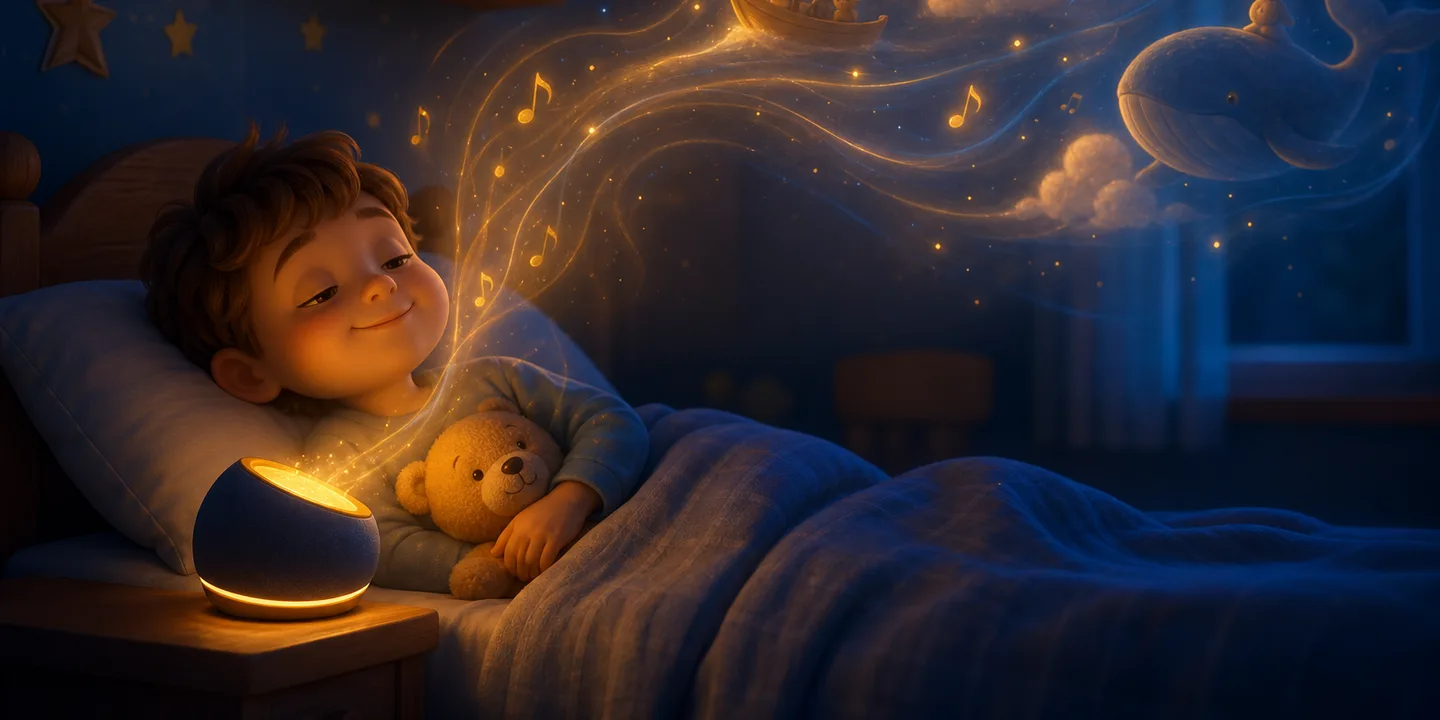
Every parent has had the night where the reading does not happen. You are ill, or away, or you have simply run out of voice at 7:40pm. The book is right there and you cannot do it.
That is the gap the audio version is for — not as a replacement for a lap and a book, but as the thing that covers the nights which would otherwise have nothing in them.
It is their story, read aloud#
The distinction that matters: this is not a stock recording with your child's name dropped into the gaps. Any finished book on KindFable can be produced as a narrated audio story from that book's own text — the same story you read on the page, with music and sound under it, your child as the hero throughout.
Because the words are already personal, the audio is personal by construction. The dog's name is the dog's name. The week that really happened is still the week that really happened.
And it can become a song#
The other version surprises people. The book can also be turned into a song made from its own words — the story set to music, start to finish.
Songs behave differently from stories. A child who will hear a story twice will play a song eleven times, and will sing bits of it in the back of the car three weeks later. If you want the version they take with them, it is usually this one. It is the same pull that makes a chanting picture book stick — our list of books like Pete the Cat, split by the song or the shrug is built around exactly that.
What audio is genuinely good for#
- The car. The single best use. A twenty-minute drive and a story about themselves.
- The hundredth retelling. Re-reading is one of the best things for early literacy — and also the thing a parent's voice tires of first. Let the narration take rounds forty through ninety.
- Nights you are not there. Travelling parents, hospital stays, split households. A story in your child's own world, playing in the room, is a small piece of continuity.
- Pre-readers, alone. A child who cannot read yet can start the audio and follow the pictures — which is the closest thing to independent reading available at four.
- Wind-down without a screen. Audio is the one media format that does not light up a face at bedtime.
Does listening "count"?#
It is not the same as being read to, and nobody should pretend it is — the shared attention of a parent and a book is the part that matters most, and no recording provides it.
But listening is not passive, either. A child following a story is doing the same work of predicting, picturing and holding a thread that reading demands. When Hutton and colleagues scanned preschoolers while they listened to stories, published in Pediatrics in 2015 (full text), children from homes with more reading showed more activity in the brain areas that support mental imagery and understanding a narrative. And as a research summary republished by Reading Rockets puts it, listening comprehension becomes the dominating influence on reading comprehension early in school. Re-listening to a familiar story is one of the most useful things a young child can do with twenty minutes.
None of this replaces the lap. The American Academy of Pediatrics' 2024 policy statement on literacy promotion is about parents reading with children, and that stays the first choice. The honest framing: the audio version is not competing with you reading aloud. It is competing with the nights that would otherwise have no story at all.
How it fits with the book#
- The audio is made from a finished book, so the story and the pictures come first.
- Every book includes the song free — and a hardcover ($69, free shipping) includes the narrated story too.
- On any other book, audio is $7.99.
- The narration and the song are separate things; you can have one, the other, or both.
- Everything stays with the book — the digital book, the PDF, and the audio live together in your library, so the whole keepsake is in one place.
A small note on the bedtime order#
If you are going to use both, the order that works is: read it together the first time, out loud, with the pictures. That is the moment a child recognises themselves and it only happens once — do not spend it on a speaker. The audio takes over afterwards, which is exactly when you will want it.
Make the book first — building the story and seeing your child's cover cost nothing — and add the audio once you have read it. Or look through the books in our shop — every one comes with its own story song, free. For the research on why a child's own name in the narration matters — infants tune to it from 4.5 months — see the neuroscience of personalized books.
Two other pages pick up where this one stops: bedtime stories with your child as the hero is about the reading itself, and what a personalized storybook actually is walks through a finished book from the first page to the song.