Every "best children's books of all time" list has the same flaw: it puts Goodnight Moon and Charlotte's Web on the same page, four years of childhood apart, and leaves you to work out which is which. So this one is sorted by the age each book actually lands at, with the year it was published, who illustrated it, and whether it exists as a board book.
Twenty-four books. The oldest is from 1926 and the newest from 2013, and every one of them has survived being read aloud several hundred times by someone who was very tired.
How was this list chosen?#
Three filters, applied in order:
1. It has outlived a generation. Every book here has been continuously in print long enough that the adults reading it were read it themselves. That is a harder test than any prize.
2. It works read aloud. Some beautiful books are for looking at alone. These are the ones built for a voice — a repeated line, a rhythm, a page turn that lands.
3. It is honest about one feeling. Being small. Being angry. Being loved anyway. A picture book that dates is usually one that was about a trend rather than a feeling.
⚠️ What is deliberately not here: the current bestseller charts. A book that is selling this month has not yet passed test one. It may well be a classic in 2050, and it does not belong on this list yet.
The best books for babies and one-year-olds (0–2)#
At this age the book is a physical object first and a story second. Your child will chew it, hold it upside down, and turn two pages at once. Buy the board book — for every title below, it exists, and it is the one that survives.
What they are doing: listening to your voice, patting the pictures, and learning that a page turn makes something new happen. The American Academy of Pediatrics, in its policy statement on literacy promotion, recommends reading together every day from infancy — and at this age the voice matters more than the title.
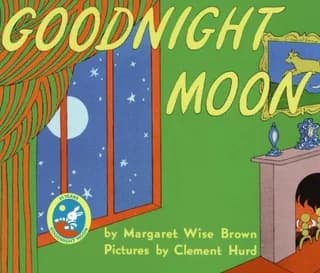
Goodnight Moon#
- Written by
- Margaret Wise Brown
- Illustrated by
- Clement Hurd
- First published
- 1947
- Ages
- 0–4
- Format
- Board book and picture book
The template every bedtime book since has copied: a room, and then everything in the room said goodnight to, one at a time. The rhythm slows on purpose as it goes.
Reading it aloud: drop your voice a little on every page. By "goodnight nobody" most babies have stopped moving, which is the entire design.
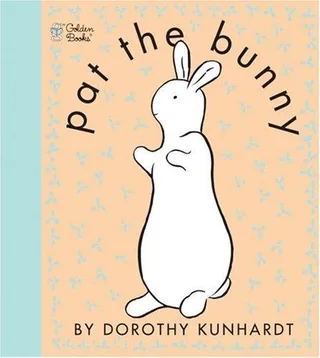
Pat the Bunny#
- Written by
- Dorothy Kunhardt
- First published
- 1940
- Ages
- 0–3
- Format
- Touch-and-feel board book
Barely a story — fur to stroke, a mirror to look into, a scratchy face to feel. Published in 1940 and still in print, which tells you most of what you need to know.
Reading it aloud: put their hand on the page and say what it feels like. At one year old that is the whole session, and it is enough.
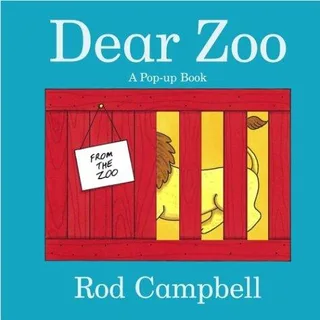
Dear Zoo#
- Written by
- Rod Campbell
- First published
- 1982
- Ages
- 0–3
- Format
- Lift-the-flap board book
The zoo keeps sending unsuitable pets and the child keeps sending them back. Every spread is a flap hiding one animal, which turns the book into a sequence of tiny guesses.
Reading it aloud: let them lift every flap themselves. It will be slow. That is the point, and the flaps take an astonishing amount of punishment.
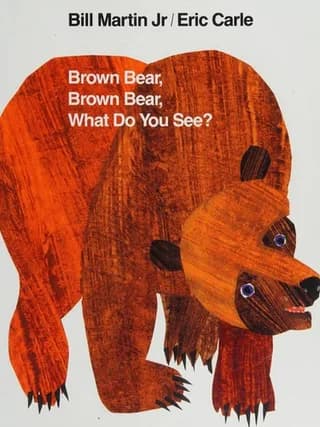
Brown Bear, Brown Bear, What Do You See?#
- Written by
- Bill Martin Jr.
- Illustrated by
- Eric Carle
- First published
- 1967
- Ages
- 0–4
- Format
- Board book and picture book
One question, one answer, one new animal, repeat. The structure is so regular that children start supplying the next line within a couple of readings — the earliest form of "reading" there is.
Reading it aloud: stop before "what do you see?" and wait. They will fill the gap long before they can name a letter.
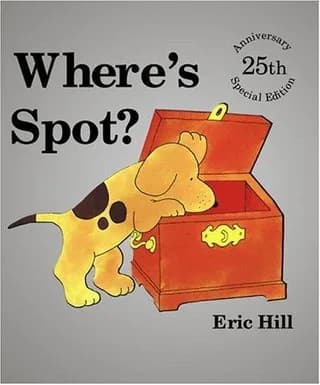
Where's Spot?#
- Written by
- Eric Hill
- First published
- 1980
- Ages
- 0–3
- Format
- Lift-the-flap board book
A mother dog looks for her puppy behind eight flaps, finding the wrong animal every time. Simpler than Dear Zoo and often the first book a child "reads" back to you.
Reading it aloud: ask "is he in the piano?" and let them answer. They will know the answer by the third reading and tell you anyway.
The best books for toddlers (2–4)#
Now the story matters, but predictability matters more. A two-year-old wants to know what happens next and to be right about it. Repetition is not a compromise at this age — it is the whole pleasure.
What they are doing: chanting along, predicting the page turn, and asking for the same book again immediately.
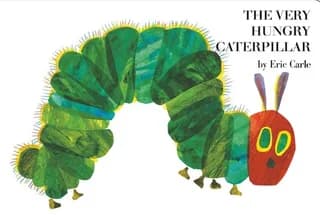
The Very Hungry Caterpillar#
- Written by
- Eric Carle
- First published
- 1969
- Ages
- 0–4
- Format
- Board book and picture book
Counting, the days of the week and a metamorphosis, hidden inside a story about eating too much fruit. The die-cut holes give a small child something to do that is part of the story rather than a gimmick.
Reading it aloud: read it wrong on purpose. "On Thursday he ate through four… bicycles?" A two-year-old correcting you is a two-year-old reading. If they love it, here are ten books to read next, sorted by which part of it they responded to.
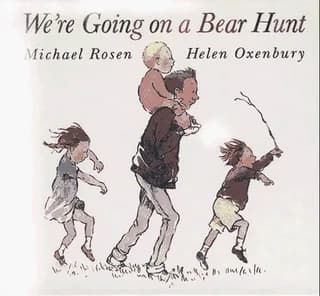
We're Going on a Bear Hunt#
- Written by
- Michael Rosen
- Illustrated by
- Helen Oxenbury
- First published
- 1989
- Ages
- 2–6
- Format
- Picture book
A campfire chant turned into a book. Swishy swashy. Splash splosh. Squelch squerch. The second half runs the whole journey backwards at speed.
Reading it aloud: stand up and do the actions. This is the one book here that gets worse sitting down.
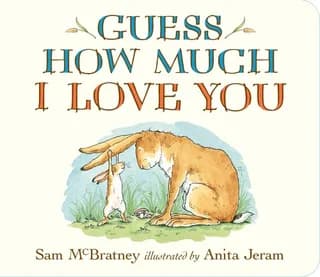
Guess How Much I Love You#
- Written by
- Sam McBratney
- Illustrated by
- Anita Jeram
- First published
- 1994
- Ages
- 0–5
- Format
- Board book and picture book
Two hares competing over who loves the other more, in units of arm-span and hop-height. Anita Jeram's washed-out ink is half the reason it lasts.
Reading it aloud: it is short and it ends on a whisper. Read it last.
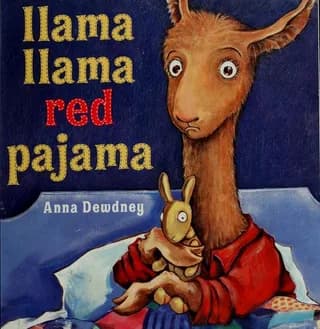
Llama Llama Red Pajama#
- Written by
- Anna Dewdney
- First published
- 2005
- Ages
- 2–6
- Format
- Board book and picture book
The one book on this list about a tantrum, told from inside the tantrum. Baby llama waits, frets, and then completely loses it while his mother is downstairs on the phone.
Reading it aloud: children who are themselves stalling at bedtime find this hilarious rather than instructive, which is the correct response and works better than a lecture.
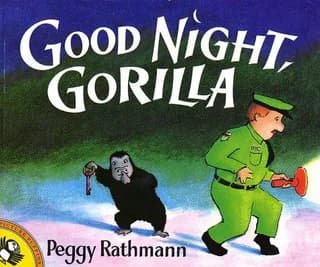
Good Night, Gorilla#
- Written by
- Peggy Rathmann
- First published
- 1994
- Ages
- 0–4
- Format
- Board book and picture book
Almost wordless. The gorilla lifts the zookeeper's keys and lets every animal out, and they all follow him home to bed.
Reading it aloud: because there is barely any text, your child narrates it to you. That reversal is a real developmental shift, and it makes this the best book here for a grandparent who is nervous about reading aloud.
The best picture books for preschoolers (3–6)#
Here a book can finally have a plot, a joke and a bad mood. This is the richest band on the whole list, and the one where most parents give up too early and move to chapter books.
What they are doing: following a story across pages, laughing at things being wrong, and recognising a feeling they have had.
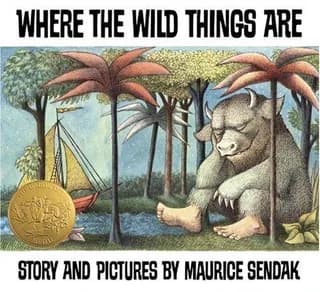
Where the Wild Things Are#
- Written by
- Maurice Sendak
- First published
- 1963
- Ages
- 4–8
- Format
- Picture book
Max is sent to bed without supper, sails to where the monsters are, becomes their king, and comes home to find his supper still hot. By EBSCO's count ten sentences and 338 words carry the whole emotional arc of a tantrum. The American Library Association gave it the 1964 Caldecott Medal.
Reading it aloud: the wild rumpus is three wordless spreads. Say nothing at all and let them look — most adults rush it and lose the best part of the book.
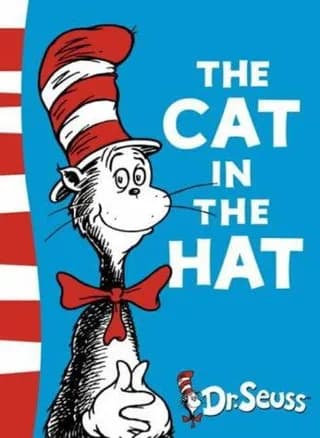
The Cat in the Hat#
- Written by
- Dr. Seuss
- First published
- 1957
- Ages
- 3–7
- Format
- Picture book
Written on a 236-word vocabulary list to prove a beginner reader did not have to be boring. It worked, and it changed what early readers looked like everywhere.
Reading it aloud: the meter is relentless and it will run away from you. Slow down on the Thing One and Thing Two pages or nobody follows the plot.
The Gruffalo#
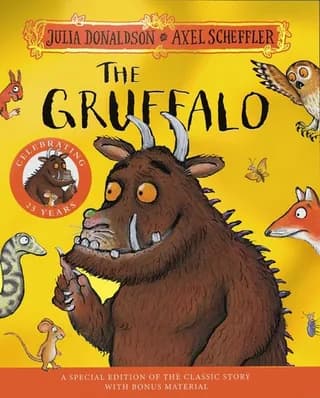
- Written by
- Julia Donaldson
- Illustrated by
- Axel Scheffler
- First published
- 1999
- Ages
- 3–7
- Format
- Board book and picture book
A mouse invents a monster to frighten off predators, then meets it. The rhyme is precise enough that a four-year-old can recite the whole book, and often does.
Reading it aloud: it is written to be performed with different voices. Pick one for the mouse and stick to it — they will notice if you swap.
The Snowy Day#
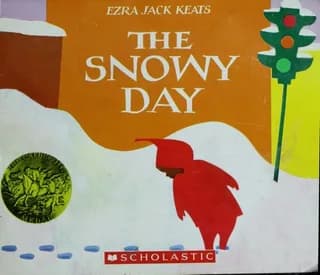
- Written by
- Ezra Jack Keats
- First published
- 1962
- Ages
- 3–7
- Format
- Board book and picture book
A small boy wakes to snow and spends a day in it. Nothing happens, beautifully. It was the first American picture book with a Black child as its hero, and it won the Caldecott Medal in 1963.
Reading it aloud: it is quiet and it is short. Best on an actual snowy day, when they will get up and go outside afterwards.
The Tiger Who Came to Tea#
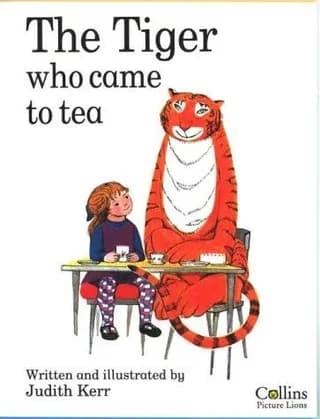
- Written by
- Judith Kerr
- First published
- 1968
- Ages
- 2–6
- Format
- Picture book
A tiger arrives at teatime, eats absolutely everything in the house including all the water in the tap, and leaves. Nobody is frightened and nobody explains.
Reading it aloud: the joy is in the escalation. Sound more delighted with each thing the tiger eats, and let the ending stay unexplained — resisting the urge to make it mean something is the whole trick.
Don't Let the Pigeon Drive the Bus!#
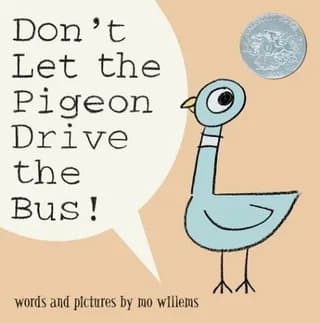
- Written by
- Mo Willems
- First published
- 2003
- Ages
- 3–7
- Format
- Picture book
A pigeon wheedles, bargains and finally screams at the reader for permission to drive a bus. The child's only job is to say no.
Reading it aloud: this is the most reliably funny book here, and it needs an audience that answers back. It is a poor bedtime book for exactly that reason.
The best books for early readers (4–8)#
The band where a child starts reading to you and where the first real chapter books arrive. Keep reading aloud anyway — a child's listening level runs years ahead of their reading level, and the good stuff lives up there.
What they are doing: reading a page themselves, then handing the book back; sitting still for a longer story; asking what a word means.
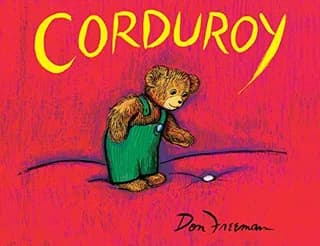
Corduroy#
- Written by
- Don Freeman
- First published
- 1968
- Ages
- 3–7
- Format
- Board book and picture book
A department-store bear with a missing button waits to be chosen, goes looking for it at night, and is bought the next morning by a girl who does not care about the button.
Reading it aloud: the escalator page frightens some three-year-olds and thrills most fives. A good early test of whether your child likes a bit of jeopardy.
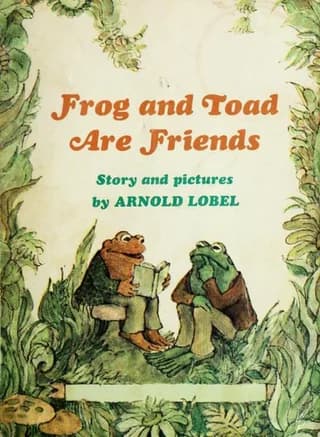
Frog and Toad Are Friends#
- Written by
- Arnold Lobel
- First published
- 1970
- Ages
- 4–8
- Format
- Chapter book
Five short stories about two amphibians of very different temperaments. Frog is cheerful, Toad is not, and the book never once suggests Toad should change.
Reading it aloud: one story a night. It is a first chapter book that reads like a picture book, which is exactly the bridge most children need.
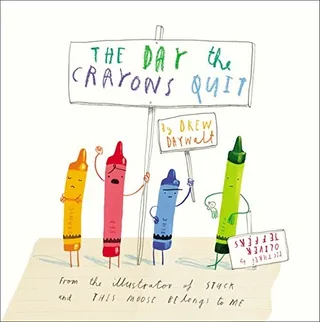
The Day the Crayons Quit#
- Written by
- Drew Daywalt
- Illustrated by
- Oliver Jeffers
- First published
- 2013
- Ages
- 4–8
- Format
- Picture book
The crayons write letters of complaint. Beige is tired of being second to brown; grey is exhausted from colouring elephants.
Reading it aloud: every crayon needs a different voice, and the letters are short enough that you can commit. The newest book on this list, and it has already outlasted its imitators.
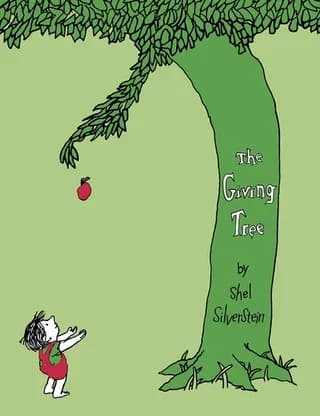
The Giving Tree#
- Written by
- Shel Silverstein
- First published
- 1964
- Ages
- 4–8
- Format
- Picture book
A tree gives a boy everything it has, piece by piece, until it is a stump. Fifty years of argument about whether it is a story about love or about being used.
An honest note: this is the one book here that a lot of adults actively dislike, and they have a point — read as a model for a relationship it is bleak. It stays on the list because it does something almost nothing else at this age does: it gives a six-year-old something genuinely arguable. Read it, then ask them whether the tree was happy.
The best chapter books to read aloud (7–10)#
Read these aloud even after they can read alone. The vocabulary, the sentences and the feelings are all pitched above what a seven-year-old can decode and exactly at what they can understand.
What they are doing: holding a story across several nights, and minding very much what happens to a character.
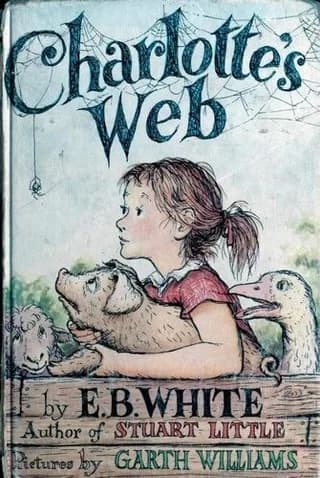
Charlotte's Web#
- Written by
- E. B. White
- Illustrated by
- Garth Williams
- First published
- 1952
- Ages
- 7–10
- Format
- Chapter book
A pig is to be slaughtered; a spider saves him by writing in her web; the spider dies. It is the best book about death ever handed to a seven-year-old and it does not soften anything.
Reading it aloud: read the last two chapters yourself first. You will want to know what is coming.
Winnie-the-Pooh#
- Written by
- A. A. Milne
- Illustrated by
- E. H. Shepard
- First published
- 1926
- Ages
- 5–9
- Format
- Chapter book
The original 1926 stories, which are drier, funnier and much stranger than the adaptations. Eeyore is genuinely depressed, and nobody tries to fix him.
Reading it aloud: the jokes are in the sentence rhythm, so read it slowly and do not explain them. Children who miss a joke at five get it at seven.
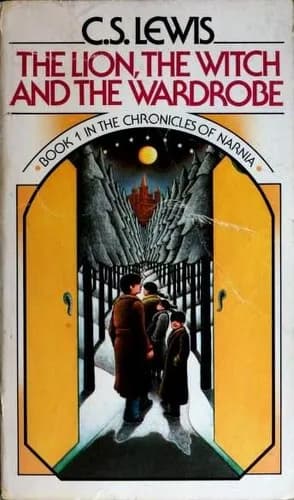
The Lion, the Witch and the Wardrobe#
- Written by
- C. S. Lewis
- Illustrated by
- Pauline Baynes
- First published
- 1950
- Ages
- 8–12
- Format
- Chapter book
Four children walk through a wardrobe into a country under permanent winter. The first chapter is one of the great openings in children's literature.
Reading it aloud: it is a better read-aloud at seven than a solo read at nine. Start younger than the age band suggests and stop if the battle is too much.
What to read next#
- They have a favourite and you want the next one → books like The Very Hungry Caterpillar, which picks the follow-up from which part of the book they actually respond to.
- You want to know why some of these last fifty years and others do not → what makes a good children's story.
- It is December and you want the seasonal shelf → children's Christmas books, which sorts them by the odd calendar they live on — four weeks of hard use, then eleven months in a box.
- You are buying rather than borrowing → the gift guide, on timing and occasions.
Where does a personalized storybook fit on a list like this?#
Twenty-four books, and not one of them is about your child.
That is not a criticism — it is what a classic is. A book earns fifty years by being about everyone, which means it is never quite about anyone. Max is angry and your child is angry, and the gap between those two facts is the small distance every reader crosses.
There is one book that does not ask them to cross it.
That is what we make at KindFable. You upload one photo, type a few lines about your child — what they are into, something that actually happened this month — and we paint them as the hero of a full 32-page storybook. Not their name dropped into a template: their face, drawn as a character, on every single page, with up to three companions beside them. A grandparent, the dog, an imaginary friend who lives on the ceiling.
It will not outlive a generation the way Goodnight Moon has. It only has to outlive one childhood, which is the only readership it was ever written for — and a personalized children's book with photo is the book on the shelf that gets taken down at eighteen.
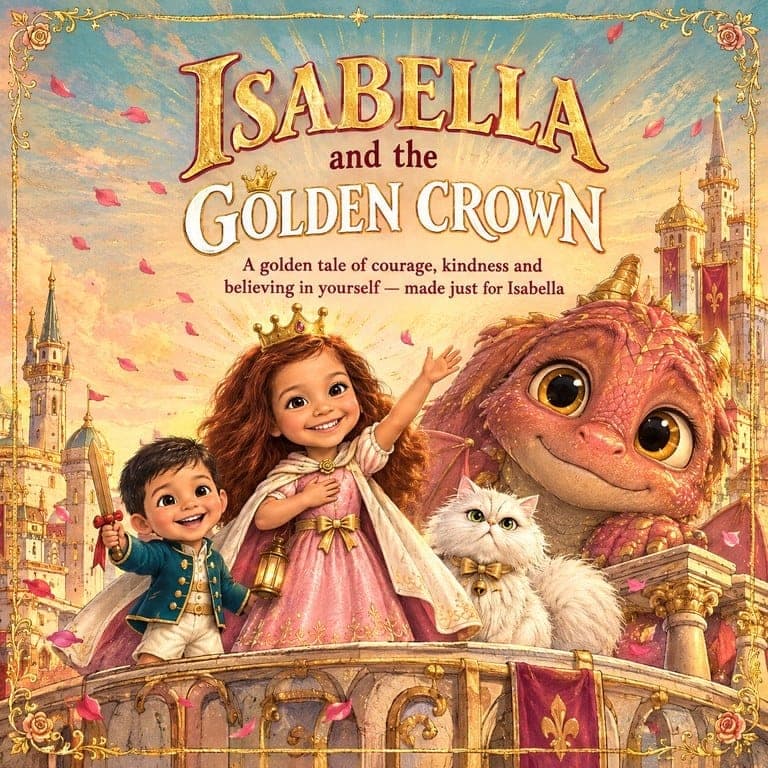
Here is a complete one, from our shop. The Golden Crown is a finished story for ages 3 to 7: a kingdom behind closed shutters, a dragon on Thistle Hill, and a crown that shines only for the bravest heart. The sample you can read stars Isabella, who is six and "the smallest princess there has ever been". When you order it, your own child's face and name take her place on every page. Look inside it, and press play on the song.

A book from our shop · ages 3–7
Your Child and the Golden Crown
A kingdom hiding behind closed shutters, a crown that will only shine for the bravest heart, and the smallest princess there has ever been — who walks up to a dragon as big as a hill and finds out what brave really means.
Shown here starring Isabella, 6. Yours is painted with your own child’s face and name on every page, from $39 — and you see the pages before you pay.
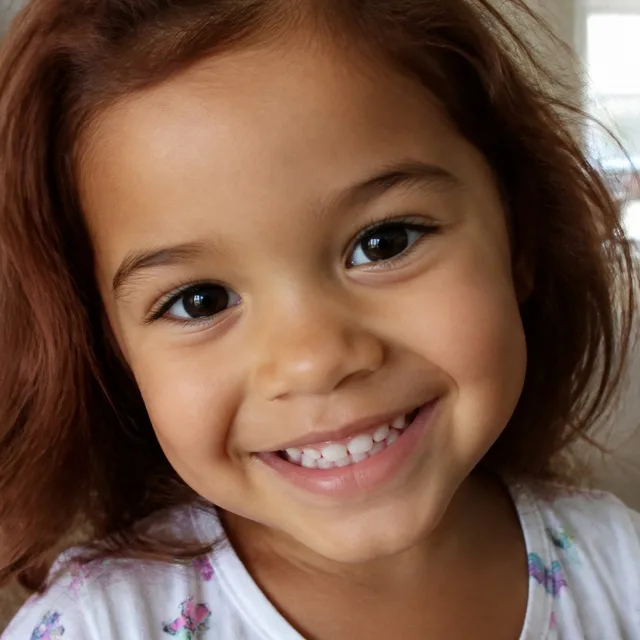
The photo they uploaded
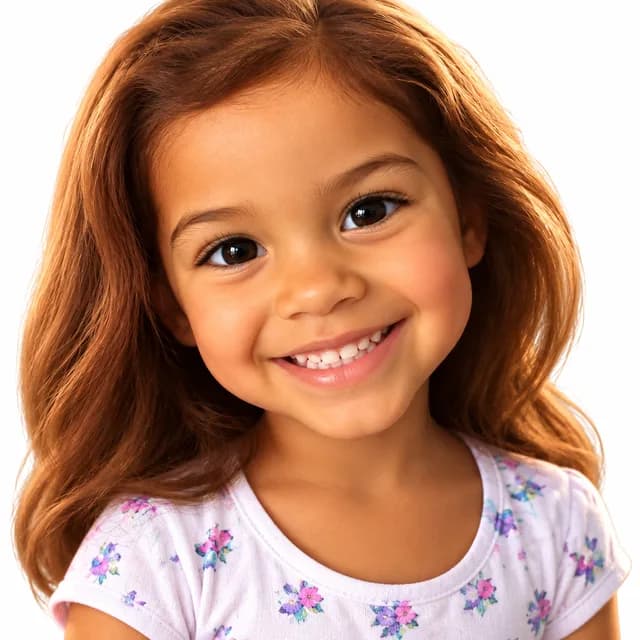
The character we drew
Written from this story — not a stock track with a name dropped in. Free with every book.
How the story begins
- 1In the golden kingdom of Sunmere, every shutter was closed. A dragon sat on Thistle Hill. The Great Bell had not rung for a HUNDRED days. “The whole kingdom is waiting for a brave princess,” said Oliver. “It can't be me,” said Isabella. “I'm the smallest princess there has ever been.”
- 2On its cushion lay the Crown of Sunmere. “It shines,” the old story said, “for the BRAVEST heart.” Isabella put it on. It did not shine. Not even a little. “It's just sleepy,” said Oliver. “It's just honest,” said Duchess.
- 3That night the dragon ROARED. The shutters rattled. The chandelier swung. “I'm scared,” whispered Oliver. Isabella was scared too. But she looked at her little brother, and she said, “Then I'll go.”
The rest of the story is in Your Child and the Golden Crown.
The words to the song
[Verse 1]
In a golden town where the shutters were shut,
A bell hung quiet and a dragon sat.
“It can't be me,” said the smallest one,
“I'm not brave enough” — but the day had begun.

[Chorus]
I'm not sure I can... but I'll go anyway!
Scared and going, going anyway.
One step, two steps, knees that shake —
That's what brave is, for goodness' sake!

[Verse 2]
Through the wood that watched and the bridge that swayed,
With a cat in her cape and a brother unafraid,
She sang out loud so her knees wouldn't show,
And every little step whispered, “Maybe... I know.”

[Verse 3]
The dragon was big as a hill and more,
But she saw the tear that was under the roar.
She pulled out the thorn — one, two, three, POP! —
And the crown on her head went glow... and stop... and TOP!

[Chorus]
I think I can... yes, I'll go anyway!
Kind and going, going anyway.
Ring the bell and open the door —
“I CAN,” she said, “and I could before!”

[Outro]
So when you're small and the world is tall,
And you're not so sure you can do it at all,
Say it soft, then say it strong:
“I'm scared — and I'm going.” You can't go wrong.
You can order the personalized princess book with your child as the hero — and if crowns are the thing in your house, here is what makes a personalized princess book worth giving. Or write a story of your own: on KindFable it goes name and age, one photo, a tick box for consent, a few lines about your child, and one of nine art styles. You see your child painted into the book before you pay for anything — the softcover and hardcover prices are both on one page, every book includes its own song, free, and the hardcover adds the narrated audiobook.
Read the twenty-four first. Then, when you want the twenty-fifth, start with the photo.
Book covers are shown unaltered for identification, sourced from Open Library. Each cover remains the property of its publisher and illustrator. KindFable is not affiliated with any of the books recommended here.