If your child has worn out The Very Hungry Caterpillar, the ten books below are the natural next reads — but which one you reach for depends on what your child does while you read. One chants the refrain. One counts the fruit. One ignores both and pokes the holes. Those are three different children, and they want three different books.
Which book should I read after The Very Hungry Caterpillar?#
Watch what they do on the next reading, then use the row that matches. Ages are the publisher's banding; the format column matters more than parents expect, because under two the board book is the one that survives.
| What they do while you read | What they are responding to | Read next | Age |
|---|---|---|---|
| Say "but he was still hungry" before you do | The refrain — a repeated line they can own | Brown Bear, Brown Bear · Chicka Chicka Boom Boom | 0–4 |
| Count the fruit, or list what he ate | The cumulative structure — the list that grows | Old Lady Who Swallowed a Fly · Dear Zoo · Good Night, Gorilla | 0–4 |
| Poke a finger through every hole | The page that reacts to being touched | Pat the Bunny · Press Here | 0–3 |
| Skip ahead to the butterfly | The metamorphosis — becoming something else | Elmer · The Wonderful Things You Will Be | 2–6 |
If they do all four, you have a two-year-old and a long winter. Start with the refrain row — it is the cheapest to satisfy and the one they will perform back to you.
What is The Very Hungry Caterpillar actually doing?#
The Very Hungry Caterpillar is a 1969 picture book by Eric Carle in which a newly hatched caterpillar eats through a week of food, builds a cocoon and emerges as a butterfly. It works on very young children because four separate devices are running at once inside twenty-odd pages.
A pattern a child can predict. Every page is the same sentence with one number swapped, and "but he was still hungry" comes back every time. A two-year-old who cannot read a word still knows what is coming — and being right, out loud, in front of you, is the entire pleasure. Predictability is not a weakness in a toddler book; it is the feature, and it is why the format has a name of its own: the predictable book.
Counting hidden inside a story. One apple, two pears, three plums. The maths never announces itself, so nobody is being taught anything, which is exactly why it sticks.
Pages that react to touch. The die-cut holes are rarer than they look. Almost no picture book gives a small child something to do that is part of the story rather than a gimmick bolted on. The pages physically widen as the caterpillar eats, so the book gets fatter in your hands as he does.
A story about becoming. He eats, he gets fat, he hides away, and he comes out as something else entirely. Metamorphosis is a strange thing to hand a person who is in the middle of growing up, and it is the reason the book survives the toddler years.
Carle's own publisher states that the book "has been translated into 70 languages and sold over 55 million copies" — a figure as of 2026, and one that only grows. It was first published by the World Publishing Company in 1969 and is published in the US today by Philomel.
If they chant the refrain: books built on rhythm#
These are the ones a child recites before they can read. The words fall into a shape the mouth remembers, and after three readings you are no longer reading — you are both saying it.
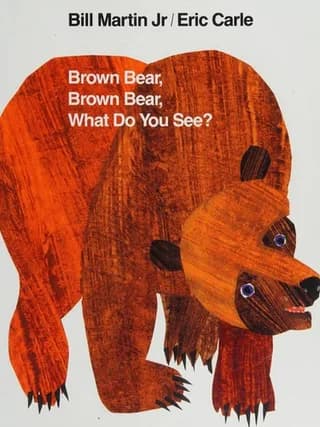
1. Brown Bear, Brown Bear, What Do You See?#
- Written by
- Bill Martin Jr.
- Illustrated by
- Eric Carle
- First published
- 1967
- Ages
- 0–4
- Format
- Board book and picture book
The closest relative of the Caterpillar, illustrated by the same hand. One question, one answer, one new animal, repeat. The structure is so regular that children start supplying the next line themselves within a couple of readings, which is the earliest form of "reading" there is.
Reading it aloud: stop before "what do you see?" and wait. The pause is the whole exercise — they will fill it long before they can name a letter.
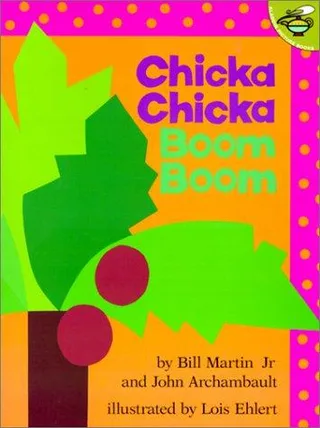
2. Chicka Chicka Boom Boom#
- Written by
- Bill Martin Jr. and John Archambault
- Illustrated by
- Lois Ehlert
- First published
- 1989
- Ages
- 2–6
- Format
- Board book and picture book
The alphabet as a party: the lowercase letters race up a coconut tree, it collapses, and the uppercase letters come to sort it out. What makes it work is the beat — it is closer to a playground rhyme than to prose, and it is almost impossible to read slowly.
An honest note: it is sold as an alphabet book and it is a poor one. A child who does not already know the letters will not learn them here, because the letters are characters in a story rather than things being taught. Buy it for the rhythm, which is superb, and teach the alphabet somewhere else.
Reading it aloud: speed up through the pile-up and let the "boom boom" land hard. Toddlers join on the boom before anything else.
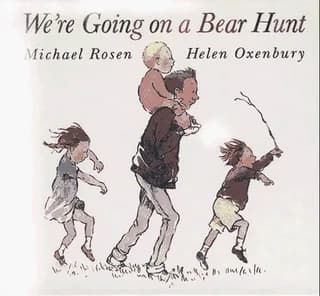
3. We're Going on a Bear Hunt#
- Written by
- Michael Rosen
- Illustrated by
- Helen Oxenbury
- First published
- 1989
- Ages
- 2–6
- Format
- Picture book
Michael Rosen and Helen Oxenbury turned a campfire chant into a book, and it rewards being performed rather than read. Swishy swashy. Splash splosh. Squelch squerch. The second half runs the entire journey backwards at speed, which small children find genuinely thrilling.
Reading it aloud: stand up. Hand them the swishy swashy and do the actions. This is the one book on the list that gets worse sitting down.
If they love the collecting: one more thing on every page#
The Caterpillar's other engine is a cumulative tale — each page repeats everything before it and adds one more, so the page turn is a small reveal. These three run on the same fuel.
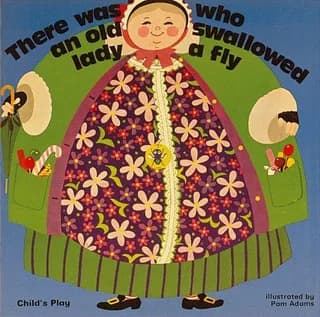
4. There Was an Old Lady Who Swallowed a Fly#
- Written by
- Traditional rhyme
- Illustrated by
- Pam Adams
- First published
- 1973
- Ages
- 2–6
- Format
- Picture book with cut-outs
Structurally the Caterpillar's twin, and the textbook cumulative tale: someone eats an escalating series of things and each page recites the whole list again. Pam Adams's edition cuts a hole through the old lady's middle that grows with every swallow, so the die-cut trick is here too.
Reading it aloud: children who find the ending funny rather than alarming are usually three and up. Below that, some genuinely do not like it — read the last page first and watch their face before you commit.
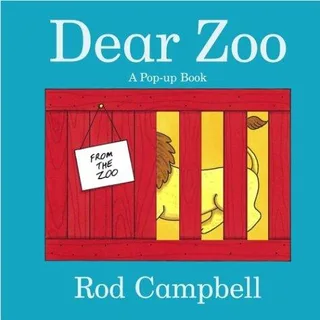
5. Dear Zoo#
- Written by
- Rod Campbell
- First published
- 1982
- Ages
- 0–3
- Format
- Lift-the-flap board book
The zoo keeps sending unsuitable pets and the child keeps sending them back. Every spread is a flap hiding one animal, which turns the book into a sequence of tiny guesses. For the under-twos this is often a better fit than the Caterpillar itself.
Reading it aloud: let them lift every flap — it will be slow and that is the point. The flaps survive a startling amount of handling.
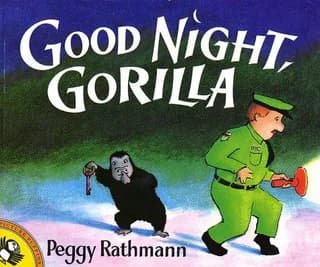
6. Good Night, Gorilla#
- Written by
- Peggy Rathmann
- First published
- 1994
- Ages
- 0–4
- Format
- Board book and picture book
Almost a wordless picture book. The gorilla lifts the zookeeper's keys and lets every animal out, and they all follow him home to bed.
Reading it aloud: because there is barely any text, your child narrates it to you. That reversal is a real developmental shift and a very good sign — and it makes this the best book on the list for a grandparent who is nervous about reading aloud.
If they poke the holes: books that do something#
A page that responds is a category of its own, and it is the hook parents most often miss when choosing the next book.
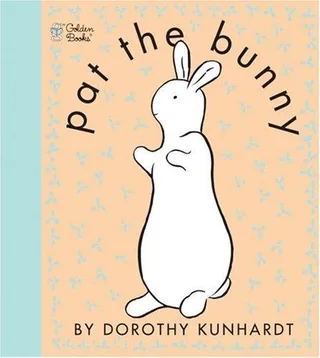
7. Pat the Bunny#
- Written by
- Dorothy Kunhardt
- First published
- 1940
- Ages
- 0–3
- Format
- Touch-and-feel board book
Published in 1940 and still in print, which tells you most of what you need to know. Fur to stroke, a mirror to look into, a scratchy face to feel. It is barely a story — it is a set of things to do with your hands, for a child not quite ready for a plot but very ready for a book.
Reading it aloud: there is almost nothing to read. Put their hand on the page and say what it feels like. That is the whole session, and at one year old it is enough.
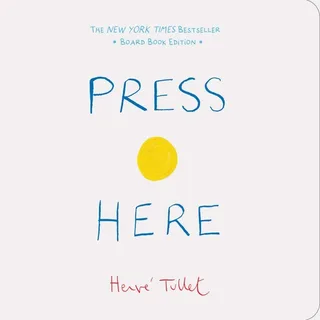
8. Press Here#
- Written by
- Hervé Tullet
- First published
- 2011
- Ages
- 2–6
- Format
- Picture book
Hervé Tullet's book has no moving parts at all and is still the most interactive book here. Press the yellow dot, turn the page, and there are two. Shake the book and the dots scatter.
Reading it aloud: do exactly what it says, every time, with a straight face. The illusion collapses the moment you sound like you are humouring them.
If they love the butterfly: books about becoming#
The quietest of the four hooks, and the one that lasts longest. Some children do not care about the fruit at all — they wait for the end, where the small hungry thing turns out to have been something else all along.
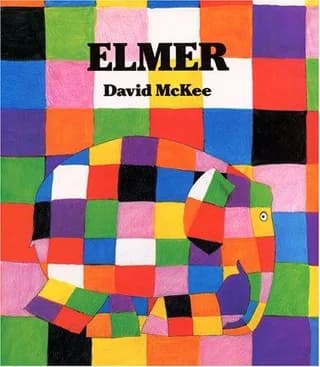
9. Elmer#
- Written by
- David McKee
- First published
- 1989
- Ages
- 2–6
- Format
- Picture book
The patchwork elephant who wants to be grey like everyone else, paints himself, and is promptly missed by every friend he has. It says the thing directly: the part of you that does not match is the part people love.
Reading it aloud: the colours carry it on the fortieth reading, which is more than most message books manage. Let them find Elmer on the grey pages.
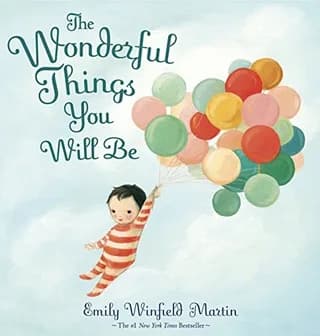
10. The Wonderful Things You Will Be#
- Written by
- Emily Winfield Martin
- First published
- 2015
- Ages
- 0–5
- Format
- Picture book
Less a story than a letter from a parent to a child about who they might turn out to be. It is the Caterpillar's ending stretched to book length.
Reading it aloud: this is the one adults get emotional about, not children. Give it at a birth or a first birthday and read it to a two-year-old who will not yet notice why your voice has gone odd.
How do I read these books aloud so they land?#
Every book here gets better with performance. Four things that work across all ten:
1. Slow the page turn down. The reveal is the whole event. Hold the page a beat longer than feels natural and watch them lean in.
2. Read it wrong on purpose. "On Thursday he ate through four... bicycles?" A two-year-old correcting you is a two-year-old reading. Asking questions and letting the child do the talking has a name — dialogic reading — and as Reading Rockets puts it, the point is that "the adult helps the child become the teller of the story". Reading Rockets is an education service of WETA, the public television station in Washington, D.C.
3. Let them own the repeated line. In Brown Bear, stop before "what do you see?" In Bear Hunt, hand them the swishy swashy. In the Caterpillar, they already have "but he was still hungry".
4. Reread the same book. Most parents tire of a book long before the child does. Repetition is how a small child moves from listening to predicting to performing, and skipping ahead to a new one interrupts that.
None of this is optional extra credit. The American Academy of Pediatrics' 2024 policy statement on literacy promotion — its first update since 2014 — recommends that pediatricians advise every family to read aloud with their children daily from birth.
What to read next#
These ten are the Caterpillar's closest relatives; for the wider shelf, our list of the best children's books of all time is sorted by the age each one actually lands at, from board books to first chapter books. What makes a good children's story unpacks why the four devices above work at all, and child-hero bedtime stories covers what changes when the child in the book is yours.
Can I get a personalized children's book with photo of my own child?#
If you only remember one line of this, remember who each book is for:
- The one who chants the refrain → Brown Bear, Brown Bear, then Bear Hunt when they can stand up and do the actions.
- The one who counts and collects → Dear Zoo under two, Old Lady from three.
- The one who pokes every hole → Pat the Bunny at one, Press Here at three.
- The one who waits for the butterfly → Elmer, and The Wonderful Things You Will Be if you are giving it as a present.
Ten good books — and every one of them was written for somebody else's child.
That is the one thing no publisher can fix. A book about becoming can be beautiful and still be about a caterpillar, while the child holding it is the one actually doing the becoming.
One more version: There is one more version of that story available to you, and it is the one no publisher can print in advance: the one where the child doing the becoming is yours.
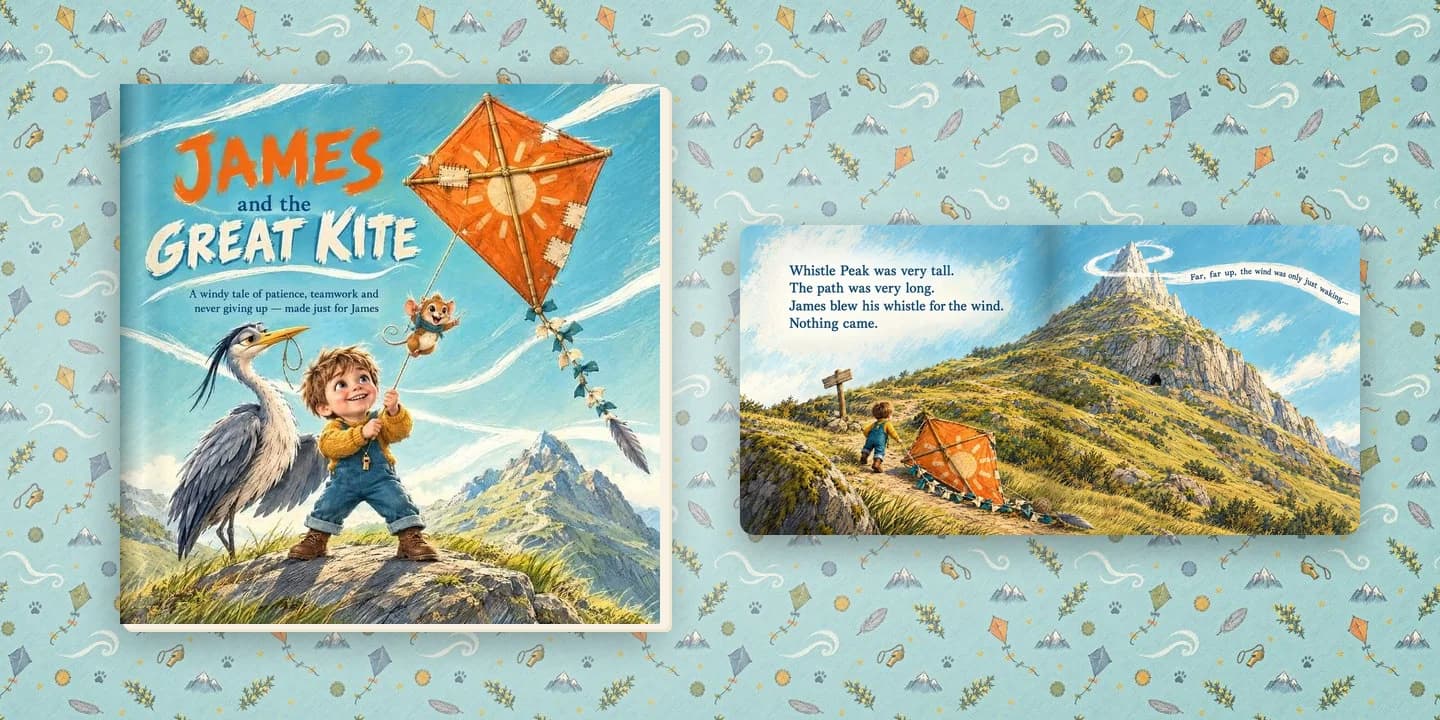
That is what we make at KindFable. You upload one photo, type a few lines about your child — what they are into, something that actually happened this month — and we paint them as the hero of a full 32-page storybook. Not their name dropped into a template: their face, drawn as a character, on every single page, with up to three companions beside them. A grandparent, the dog, an imaginary friend who lives on the ceiling.
The recognition is the same one the Caterpillar's holes produce, aimed the other way. A hole in the page makes a book feel real. A book where my child is the main character makes the child feel real — in a form they can hold, and reread, and find again at twenty.
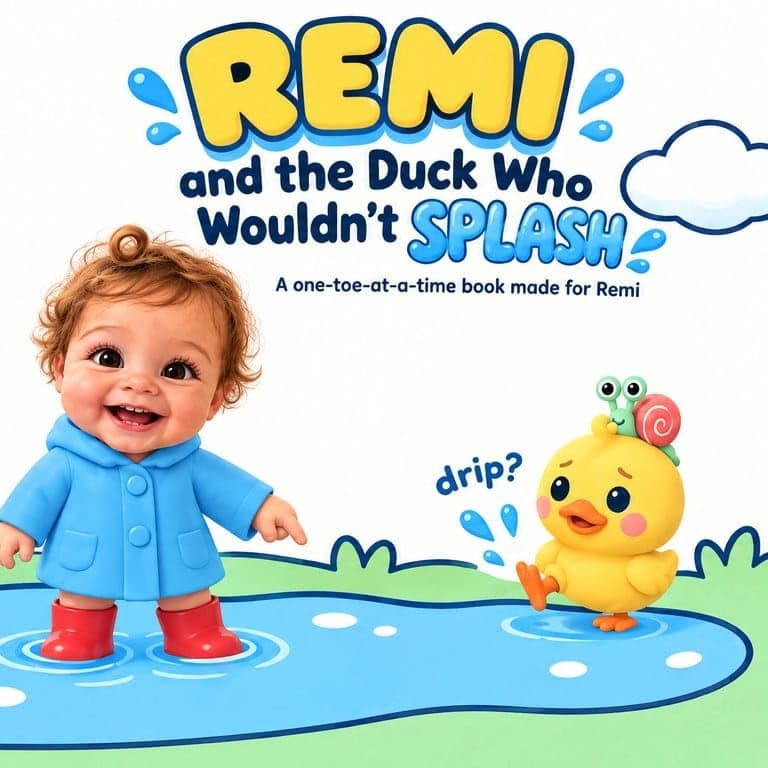
From our shop: For a Caterpillar-age reader, the book from our shop we would hand over first is Your Child and the Duck Who Wouldn't Splash — a board-style book for ages 0 to 3, with the same short lines and the same one-step-per-page rhythm. It is a finished story: the sample shown stars Remi, who is two, and when you order it you add your child's photo and name, and every page is painted with your child instead.
"This is Puddle. Puddle is scared of WATER. (Yes. A duck.)" So the child shows him how: "One toe, Puddle. Like THIS." It is a becoming story too, told at toddler size — brave is one small step at a time, and the child is the one who teaches it.

A book from our shop · ages 0–3
Your Child and the Duck Who Wouldn't Splash
Puddle is a duck. Puddle is scared of water. (Yes. A duck.) So your little one shows him how — one toe, two feet, a little sit-down splash — until SPLASH! SPLASH! QUACK! A board-style book for the littlest readers about being brave one small step at a time.
Shown here starring Remi, 2. Yours is painted with your own child’s face and name on every page, from $39 — and you see the pages before you pay.
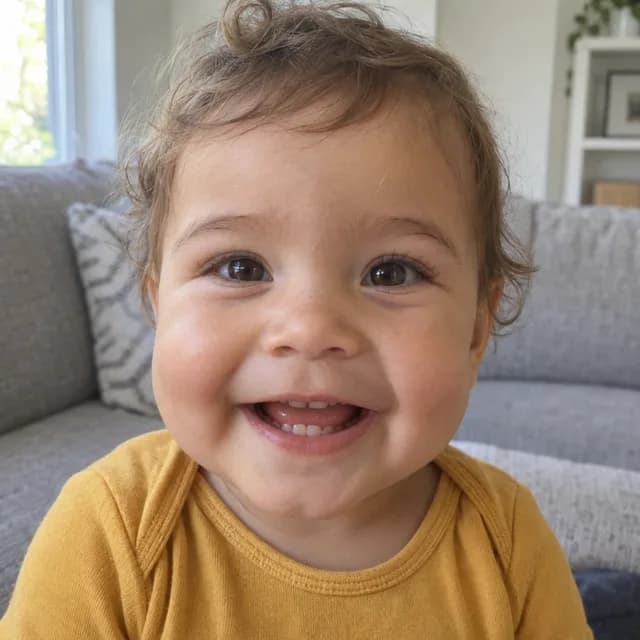
The photo they uploaded

The character we drew
Written from this story — not a stock track with a name dropped in. Free with every book.
How the story begins
- 1This is Puddle. Puddle is scared of WATER. (Yes. A duck.)
- 2One toe, Puddle. Like THIS.
- 3Puddle tried. Good duck!
The rest of the story is in Your Child and the Duck Who Wouldn't Splash.
The words to the song
[Verse 1]
One toe, Puddle, like this — drip!
Two feet, Puddle, like this — splish!
Good duck, good duck, look at you!
A little bit of water and a little bit of you.

[Verse 2]
Sit down, Puddle, like this — SPLASH!
Now the pond, Puddle — don't dash!
Brave duck, brave duck, look at you!
Floating on the water — QUACK! — it's true!

[Chorus]
Splish, splash, splish, splash,
Puddle loves the water now!
Splish, splash, splish, splash,
show me, show me, show me how!

[Outro]
Pitter patter, here's the rain,
Puddle isn't scared again.
Wrap up warm and close your eyes —
goodnight, Puddle. Goodnight, Remi. Tomorrow: splash surprise!
If you would rather write your own, on KindFable it goes: name and age, one photo, a tick box for consent, a few lines about your child, and one of nine art styles. You see the cover, painted, before you pay for anything — and the softcover and hardcover prices are both on one page, with the hardcover adding the narrated audiobook, and every book includes its own song, free — this one's plays above. After that everything lives in your dashboard: the page-flip reader, the audio studio, and a reorder button for when the grandparents ask.
If the four hooks above described your child better than any age band ever has, that is the whole idea. Start with the photo and see the cover before you decide anything.
Book covers are shown unaltered for identification, sourced from Open Library. Each cover remains the property of its publisher and illustrator. KindFable is not affiliated with any of the books recommended here.