Ask a parent which book their child asks for and you rarely get the most beautiful one on the shelf. You get a specific, slightly battered one. Those books tend to share a shape — and once you can see it, you can brief a story for your own child in a single sentence.
One small want, one real obstacle, one change#
That is the whole engine of a picture book. Not a quest. Not a moral. A character wants something ordinary, something is in the way, and by the end they are different in a way a four-year-old can see.
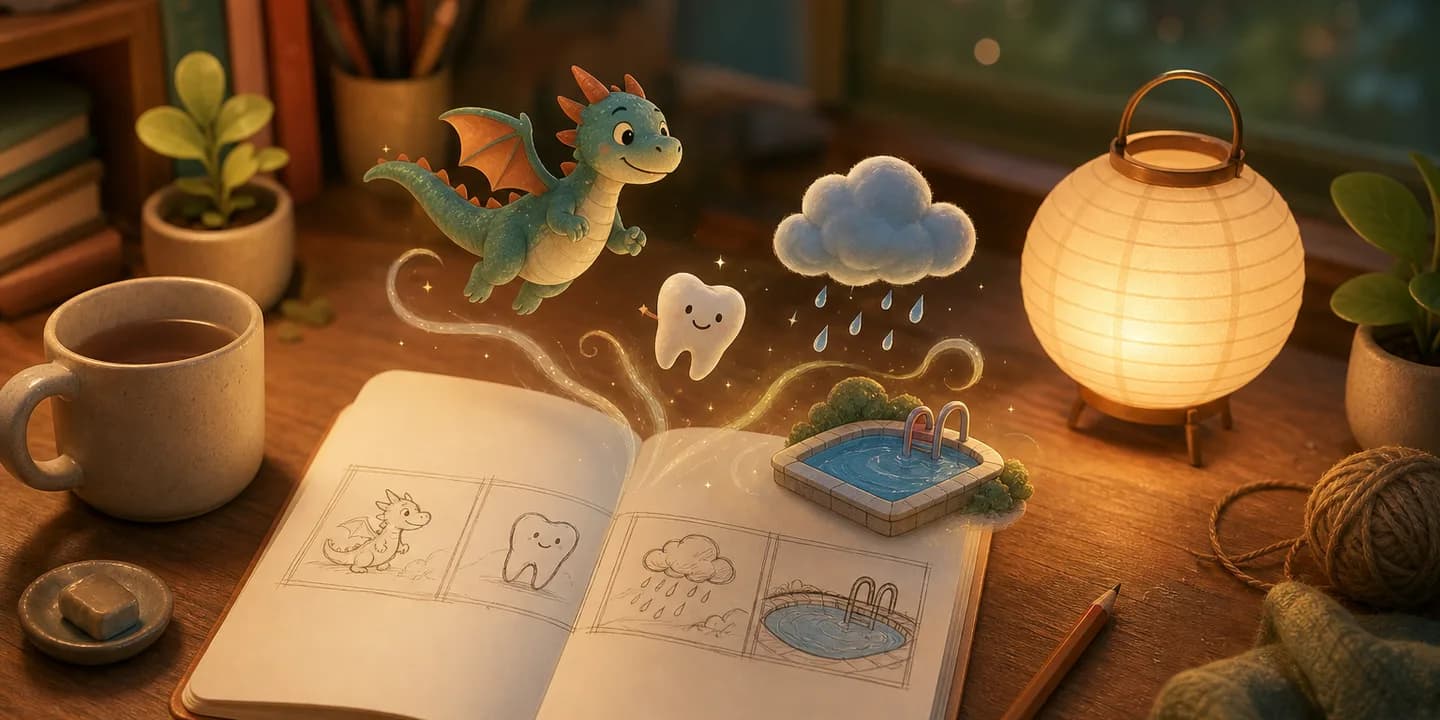
The mistake most adults make when inventing a story for a child is going too big. Dragons, kingdoms, the fate of the world. But a small child's imagination does not need scale — it needs recognition. A story about the wobbly tooth that would not come out is more gripping to a five-year-old than a story about saving a planet, because they have a wobbly tooth.
Make the stake the size of their world#
The things that are genuinely enormous when you are four:
- the first day at a new place
- the dark, and what is in it
- a new baby who takes up all the attention
- a lost toy
- being the smallest one there
- a thunderstorm
- water that goes over your head
Any one of these carries a whole book. They feel small only from up here. And if your child's world right now is mostly pretend, the same small stakes still apply inside it; a personalized book about imagination is a good next read.
The same test sorts seasonal shelves. A book that simply says "be thankful" has a message but no want. That is why our list of Thanksgiving books for preschoolers sorts the books by what they are actually about (gratitude, turkeys or history) rather than treating them as one pile.
The child has to solve it#
This is the rule that matters most and gets broken most often. If a grown-up arrives and fixes the problem, the story quietly teaches the opposite of the thing you wanted it to teach.
The hero can be helped. They can be frightened. They can need a hand up at the end. But the turn — the moment where it changes — has to be something they do. That is what makes a child carry the story back into real life: "I was brave like in my book" only works if the book's brave bit was theirs.
What that shape looks like on the page#
Your Child and the Golden Crown, a personalized princess book in our shop, is a clean example of all three rules. The sample shown stars Isabella, 6. The stake is the one from the list above, being the smallest one there: "It can't be me," she says. "I'm the smallest princess there has ever been." A crown that is meant to shine "for the BRAVEST heart" does not shine for her, and the obstacle is real. Then the dragon roars, her little brother whispers "I'm scared," and the turn is hers to take: "Then I'll go."
That is a whole picture book in three scenes. A parent adds their own child's photo and name, and every page is painted with that child.
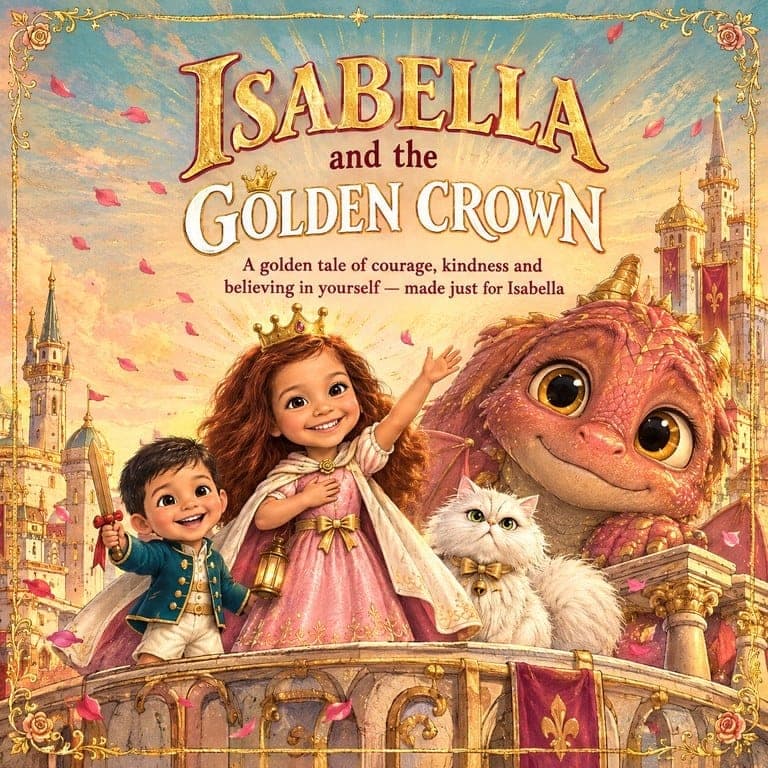

A book from our shop · ages 3–7
Your Child and the Golden Crown
A kingdom hiding behind closed shutters, a crown that will only shine for the bravest heart, and the smallest princess there has ever been — who walks up to a dragon as big as a hill and finds out what brave really means.
Shown here starring Isabella, 6. Yours is painted with your own child’s face and name on every page, from $39 — and you see the pages before you pay.
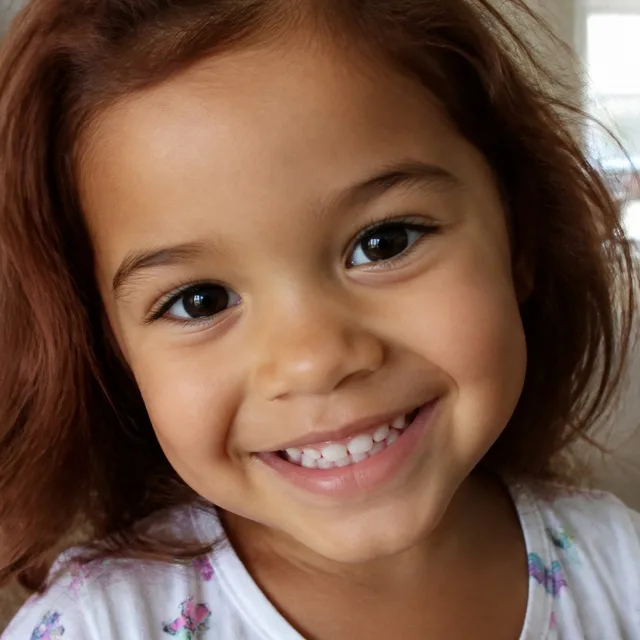
The photo they uploaded
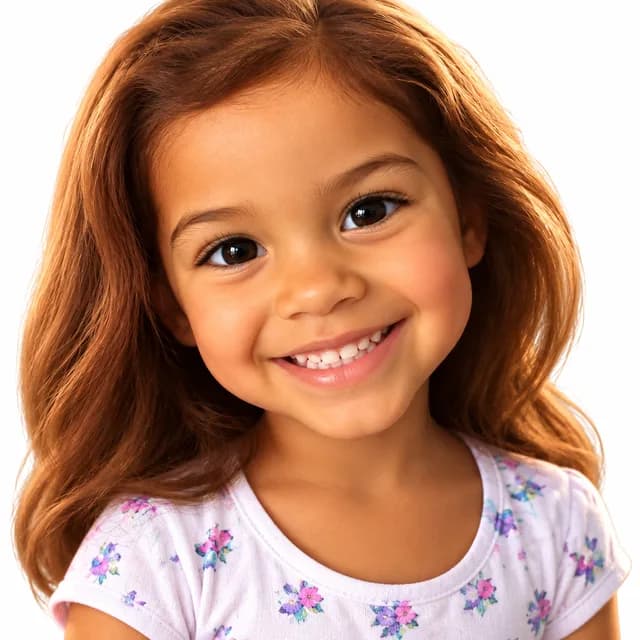
The character we drew
Written from this story — not a stock track with a name dropped in. Free with every book.
How the story begins
- 1In the golden kingdom of Sunmere, every shutter was closed. A dragon sat on Thistle Hill. The Great Bell had not rung for a HUNDRED days. “The whole kingdom is waiting for a brave princess,” said Oliver. “It can't be me,” said Isabella. “I'm the smallest princess there has ever been.”
- 2On its cushion lay the Crown of Sunmere. “It shines,” the old story said, “for the BRAVEST heart.” Isabella put it on. It did not shine. Not even a little. “It's just sleepy,” said Oliver. “It's just honest,” said Duchess.
- 3That night the dragon ROARED. The shutters rattled. The chandelier swung. “I'm scared,” whispered Oliver. Isabella was scared too. But she looked at her little brother, and she said, “Then I'll go.”
The rest of the story is in Your Child and the Golden Crown.
The words to the song
[Verse 1]
In a golden town where the shutters were shut,
A bell hung quiet and a dragon sat.
“It can't be me,” said the smallest one,
“I'm not brave enough” — but the day had begun.

[Chorus]
I'm not sure I can... but I'll go anyway!
Scared and going, going anyway.
One step, two steps, knees that shake —
That's what brave is, for goodness' sake!

[Verse 2]
Through the wood that watched and the bridge that swayed,
With a cat in her cape and a brother unafraid,
She sang out loud so her knees wouldn't show,
And every little step whispered, “Maybe... I know.”

[Verse 3]
The dragon was big as a hill and more,
But she saw the tear that was under the roar.
She pulled out the thorn — one, two, three, POP! —
And the crown on her head went glow... and stop... and TOP!

[Chorus]
I think I can... yes, I'll go anyway!
Kind and going, going anyway.
Ring the bell and open the door —
“I CAN,” she said, “and I could before!”

[Outro]
So when you're small and the world is tall,
And you're not so sure you can do it at all,
Say it soft, then say it strong:
“I'm scared — and I'm going.” You can't go wrong.
Repetition is a feature, not padding#
Three tries. A phrase that comes back. A refrain the child can say before you do. Adults read this as filler; children read it as an invitation to participate, and participation is why they ask for the book again. Rhythm you can read aloud without stumbling matters more than a clever sentence you have to concentrate on.
It also pays off on the second and third reading. Reading Rockets' guide to repeated interactive read-alouds describes how each new reading of the same book lets a child notice more and say more.
The ending should settle, not excite#
A bedtime story has a job at the end, and the job is downwards. Resolve it, name the feeling, close the loop — the light goes off, the hero sleeps, the day is finished. Save the cliffhanger for a morning book.
How to say all that in one line#
You do not have to write any of this yourself. When you make a book on KindFable you give the story a seed, and the seed is the whole game. The most useful brief has two ingredients:
One true detail + one feeling.
- ✅ "She was nervous about her first swimming lesson but jumped in anyway."
- ✅ "He held his baby sister for the first time and whispered hi."
- ✅ "The thunderstorm last Tuesday, and how she hid under the table with the dog."
- ❌ "A fun adventure story."
- ❌ "Something about dinosaurs."
The first three each contain a want, an obstacle and a change. The last two contain a genre. A genre is not a story, and it produces the generic book you were trying to avoid.
The other details worth giving#
- What they are actually into right now — not what they liked last year. Interests drive the world the story happens in.
- Who belongs in it. A grandparent, the baby, the dog, the toy that goes everywhere. Up to three companions can be in the book, drawn consistently — and those are the pages children linger on.
- Whether it really happened. If the moment is real, you can ask for it to be told faithfully rather than turned into a fantasy. The book becomes a family record instead of an adventure.
Then read it out loud#
The final test is not literary. Read the finished book aloud once, at normal speed, and watch what happens at the turn. If your child leans in, the shape worked.
Then let them take over. Asking questions and letting the child do the talking has a name, dialogic reading, and as Reading Rockets puts it, "the adult helps the child become the teller of the story." A story with a clear want, obstacle and change is the easiest kind for a child to retell.
Try it with one real moment — building the story and seeing the painted cover is free — or look inside the books in our shop first and reverse-engineer the shape for yourself.
Two worked examples: books like Where the Wild Things Are takes apart the best-known turn in picture books, and ten seconds after the goal shows the same shape built from one ordinary afternoon.