Every list of "books that teach colors" names the same shelf of classics and stops there. None of them answer the question underneath: how does a two-year-old actually learn colors — and what does a book have to do to help?
The short answer: children learn colors in a fixed order — match first, point second, name last — and a book helps when it shows one color at a time, on real things, with a reason to keep looking. A child who is in the book, doing the finding herself, learns fastest of all. Here is the whole picture, with a real book you can read to the end of the page.
At what age do children actually learn colors?#
Color learning is a ladder, not a switch, and every child climbs it in the same order at their own speed:
| Rung | What it looks like | Typical age |
|---|---|---|
| Matching | Puts the red block with the red block | ~18 months–2 years |
| Pointing | "Where's the blue one?" — and she points | ~2–3 years |
| Naming | Holds up the crayon and says "green!" | ~3 years |
The CDC's developmental milestone checklist lists naming some colors of items at around age three. That is worth knowing before any book, because it tells you what "working" looks like: a twenty-month-old who happily jams the yellow duck onto the yellow page is not behind — she is exactly on the first rung, and the right book meets her there instead of drilling names she is not ready to say.
It also means a color book has a long life. The same book is a matching game at eighteen months, a pointing game at two and a half, and a naming victory lap at three.
What makes a color book actually work?#
Four things separate the color books that teach from the ones that just look bright:
One color at a time. A page shouting six colors at once teaches none of them. The books that work give each color its own moment — its own page, its own object, its own little event — so the word and the thing get a clean pairing.
Real objects, not swatches. A red square teaches "square." A red poppy teaches red, because a poppy is a thing a child can find again in the world tomorrow. The color word sticks to the object, and the object carries it everywhere.
Repetition with a twist. Toddlers learn by hearing the same shape of sentence again and again — but an identical page eight times loses them. The pattern that holds attention is same rhythm, new color: the child knows what kind of thing comes next, but not which one.
A payoff. The best color books end by gathering everything up — and nothing gathers colors like a rainbow. A child who has met red, orange, yellow, green, blue and purple one at a time gets to see them all hold hands at the end. That last page is the whole lesson, sung once more with feeling.
Why does it work better when your child is IN the book?#
Here is the part the classic shelf cannot do.
Research on personalized books, led by Professor Natalia Kucirkova, has found that children produce more talk during shared reading when the book is about them — more pointing, more naming, more "that's me!". And talking during reading is not a side effect of learning color words; it is the learning. Every time a child says "red!" out loud, the pairing gets one coat stronger.
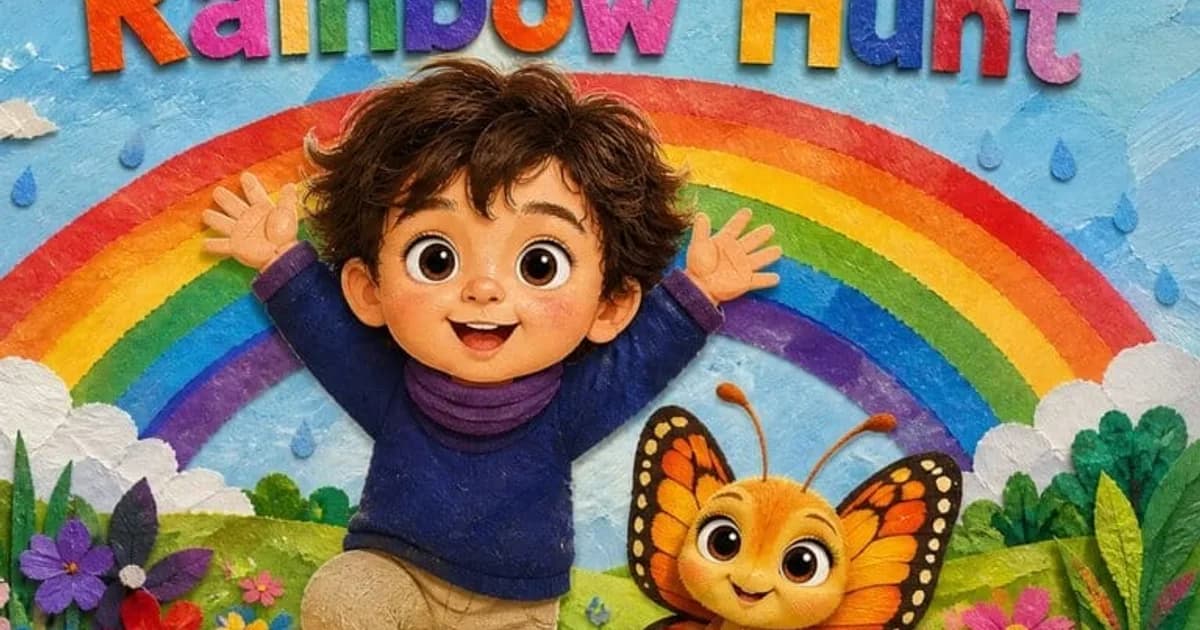
A personalized color book adds something else the classics structurally cannot: agency. In a generic color book, the child is shown red. In a book where she is the hero of a color hunt, she finds it — she is the one who spots the poppy, chases the orange butterfly, hunts all afternoon for something purple. For a two-year-old listener, that difference is enormous. She is not watching a lesson. She is winning a game, page after page.
What does a learning book with your child in it look like?#
Here is a finished one from our shop. It is not a color book — it is a personalized zoo book, Your Child's Wild Zoo Day, for ages 3 to 7 — but it runs on the same rule the color shelf does: one thing per page, on a real thing the child already knows, with the child doing the finding. The sample shown stars Henry, six:
The zoo gates opened and Henry ran in FIRST. At the meerkat mound, five meerkats stood up straight to see him.
Ten animals follow, each with a real fact beside it — and the facts are full of color words worth pointing at. "Did you know? A giraffe's tongue is dark blue-purple and about as long as your arm." A three-year-old who has just learned purple will want to find that tongue on every reading. A parent adds their own child's photo and name, and every page is painted with that child. Read it here, and play its song while you do:
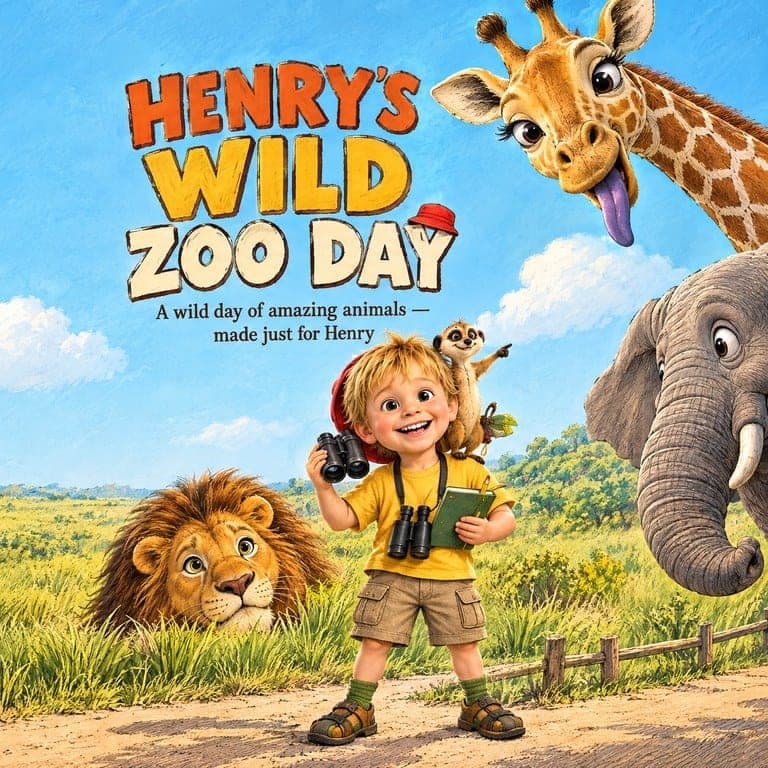

A book from our shop · ages 3–7
Your Child's Wild Zoo Day
A runaway meerkat who wants the best lookout, a giraffe who steals the map, an elephant who soaks everyone — ten amazing animals, ten real facts, one wild day at the zoo.
Shown here starring Henry, 6. Yours is painted with your own child’s face and name on every page, from $39 — and you see the pages before you pay.
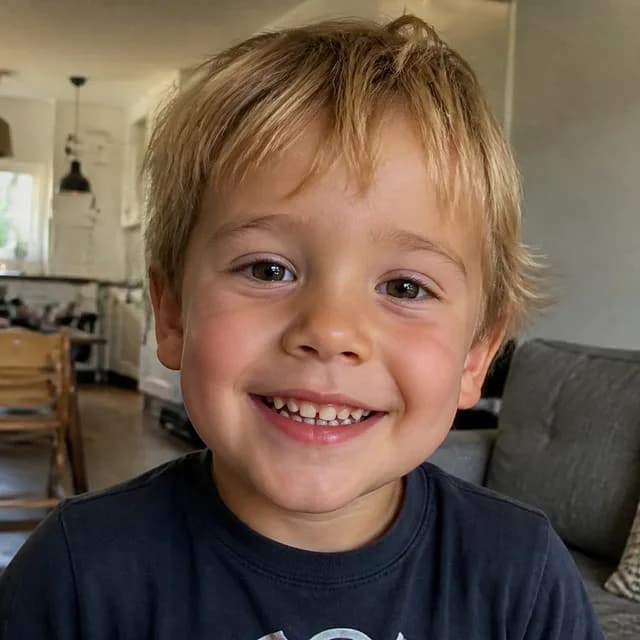
The photo they uploaded
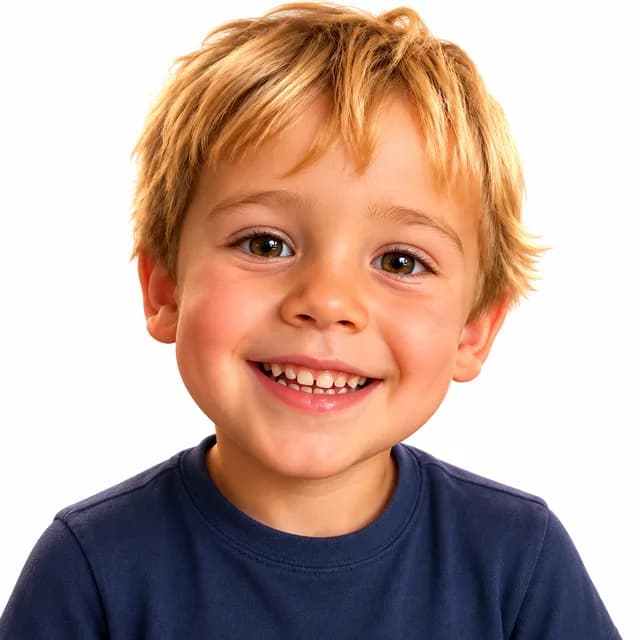
The character we drew
Written from this story — not a stock track with a name dropped in. Free with every book.
How the story begins
- 1The zoo gates opened and Henry ran in FIRST. At the meerkat mound, five meerkats stood up straight to see him. A sixth one popped out under the fence and hopped onto his sandal. I'm Dash. I'm the lookout. Where's the BEST lookout? Did you know? Meerkats live in big families called MOBS. One meerkat stands guard on its back legs while the others dig for food.
- 2“Up there!” said Dash. “Giraffes can see the whole zoo!” Tallulah the giraffe bent down, and down, and down... and took Henry's map with her TONGUE. Did you know? A giraffe's tongue is dark blue-purple and about as long as your arm, so it can pull leaves from thorny trees.
- 3“Elephants are the biggest!” said Dash. “Climb on his back and we'll see EVERYTHING.” Baobab the elephant dipped his trunk in the pool... and — WHOOSH — Henry and Dash were soaked. Did you know? An elephant's trunk has NO bones. It is made of thousands of muscles, and it can pick up a single peanut or spray a whole bucket of water.
The rest of the story is in Your Child's Wild Zoo Day.
The words to the song
[Verse 1]
The gates swung open, Henry ran in first,
Binoculars bouncing, ready for the worst —
A meerkat popped up on his sandal and said,
“I'm Dash! I'm the lookout! Let's find the best view instead!”

[Chorus]
Where's the best lookout? Up, up, up we go!
Giraffe neck, elephant back, lion rock — oh no!
A tongue, a splash, a ROAR, a squeak,
And a notebook full of every new thing we seek!

[Verse 2]
The giraffe's purple tongue took the map away,
The elephant's trunk gave a shower spray,
Flamingos went pink from the shrimp they ate,
And the penguins flew underwater — wasn't that great?

[Verse 3]
The sloth moved an arm (we waited an hour),
The chameleon's eyes looked two ways, what power!
The hippo held her breath, one, two, three, four,
And the lion's big roar shook the whole zoo floor!

[Chorus]
Where's the best lookout? Up, up, up we go!
Treetop walkway, wooden tower — now we know!
From the top we saw it all, and Dash went still:
“The best lookout's with my family, on my own little hill.”

[Outro]
Ten animals, ten new things, one wild day,
Dash on his mound and Henry on his way.
“Come back tomorrow!” — and you know he will.
There's always one more animal, and one more thing to learn still.
Notice what the book is doing: one animal per scene, a new find each time, the same happy rhythm, and the child out in front. That is the checklist from the section above — worn as a story, not a lesson. For a book that is only about colors, you write the hunt yourself, as the next sections show.
Does singing the colors help?#
More than you would guess. A University of Edinburgh study (Ludke, Ferreira & Overy, 2014, Memory & Cognition) found that phrases learned through song were recalled better than the same phrases spoken — melody gives words a shape that memory can hold.
Parents see the toddler version of this daily: a two-year-old who cannot yet say "yellow" on request will sing it dead on pitch in the middle of a chorus. A color book that comes with its own song keeps teaching in the car, in the bath, and at bedtime, long after the book is closed. Every book has one — the zoo book above plays its song on this page, built from the same story the pages tell, so the book and the song reinforce each other.
Every KindFable book comes with its own song free, and the hardcover adds an audiobook credit, which most families spend on exactly this pair: the narrated audiobook and the story song for their child's book.
How do you make one for your child?#
The whole thing takes a few minutes at kindfable.com/create:
- Name and age. The age matters — the story's length and rhythm are tuned to it, so a two-year-old gets short chantable lines and a four-year-old gets a little more story.
- One photo. Your child becomes the hero of the book — the same recognisable character on every page. The photo itself is never kept; you tick the consent box, and once the character exists the original is deleted.
- A few sentences about their week. This is the secret ingredient. For a color book, write the hunt: "She found a red flower in the garden, chased an orange butterfly, picked yellow flowers, hopped like a green frog, flew her blue kite, and hunted all afternoon for something purple." The story is written from your note — the details you type are the details that show up on the pages.
- Pick an art style. Nine to choose from — paper collage suits a color hunt well; there is also watercolor, 3D cartoon, classic storybook and more. (Here is how the styles compare on the same story.)
- See the cover before you pay. The book only goes ahead once you have seen your child on it.
If you would rather not write anything, start from a finished shop book instead: open the book's page, press "Personalize this book", add your child's name and one photo, and you see your child's pages before you pay.
Afterwards everything lives in your dashboard: the page-flip reader, the audio studio for the narration and song, and reordering when a grandparent inevitably wants a copy. If you want the bigger picture of what a personalized storybook can hold — companions, pets, any week of your child's life — start there; and if the ladder above made you think of an older child, a book where your child is the main character works at every age colors no longer need teaching.
The classics on the color shelf earned their place. But they were printed for every child, which means they were printed for no child in particular. A color book where your own two-year-old is the one doing the hunting — with her name in the title and her song in the chorus — teaches the same six words with the one ingredient no classic can print: her.