The first day of preschool goes best when it is not a surprise. Start two to three weeks before: shift bedtime and wake-up time, visit the preschool, meet a classmate, read books about going to school, and practise a short, cheerful goodbye. On the day, pack light, leave something from home, say goodbye quickly and come back exactly when you said you would. Below is a countdown built from NAEYC's own tips, a packing list, a goodbye script, what to write in a first-day note, gift ideas, and the best books about starting preschool.
What should you expect on the first day of preschool?#
A short day, new routines and big feelings — for both of you. Crying at drop-off is common and normal; the NHS describes separation anxiety as common between 6 months and 3 years, and it can return at times of change like a new preschool. Many children settle within minutes of the parent leaving. Ask the staff how your child was after you left — it is often reassuring.
For the first week or two, expect a tired child, a bigger appetite and some extra clinginess at home. NAEYC, the US National Association for the Education of Young Children, puts it simply: separation is a process, and you and your child will need time to feel comfortable with the new situation.
How do you prepare a child for preschool?#
NAEYC's 13 tips for starting preschool, written by experienced early-years teachers, make a natural countdown:
| When | What to do | Why |
|---|---|---|
| 3 weeks before | Move to an "early to bed" and "school wake-up" routine | Gives your child time to adjust to the new schedule |
| 3 weeks before | Visit the library during a read-aloud time | Gets them used to listening to another adult in a group |
| 2–3 weeks before | If they have never been cared for by someone else, leave them for short periods with friends or relatives | Teaches that you return, and that they are safe with others |
| 2 weeks before | Arrange a play date with a child from the class | A familiar face on day one |
| 2 weeks before | Go to the home visit or visiting day; meet the teacher | The building and the teacher stop being strangers |
| 2 weeks before | Find out the toileting routine, and talk it through | One of the biggest worries for a three-year-old |
| 1–2 weeks before | Make a book about the new preschool, with photos of your child there | Your child rehearses their own first day |
| 1 week before | Let your child pick a backpack and write their name on it together | Ownership and excitement |
| 1 week before | Tell stories about your own first days, with old photos | "Mum was nervous too" helps |
| Every evening | Read books about going to school and saying goodbye | Rehearsal, in the calm of home |
| The day before | Choose a special object from home, and a personal belonging of yours — a scarf — to take | They know you will come back for it |
The tip most families miss is the book. NAEYC suggests making one at home about the new preschool experience — photos of the school, of your child in front of it, of you picking them up — with simple sentences on each page. A child who has "read" their own first day a dozen times walks in already knowing how it ends.
What should you pack for the first day of preschool?#
- A backpack they can open and close themselves, with their name on it
- A full change of clothes, labelled, in a bag — accidents and paint happen
- A water bottle they can manage alone
- Snack or lunch, if the preschool asks for it, in containers they can open
- A comfort object, if the preschool allows it — a small toy or blanket
- Something of yours — NAEYC's suggestion of a scarf or bandanna
- A family photo, for the cubby or the backpack
- Nappies or pull-ups and wipes, if your child still uses them
- Sun hat or warm hat, depending on the season
Label everything. Every three-year-old's water bottle looks the same by 10am.
What does a good first-day morning look like?#
- Wake up early enough not to rush. Hurrying feeds worry.
- Breakfast together. Talk through the day in order: "First we go in, then you hang up your coat, then I give you a kiss, then you play."
- Take the first-day photo at home, not at the door — the goodbye should be quick.
- Arrive on time, not early. Long waits at the door make goodbyes longer.
- Help them settle into one activity, then say goodbye.
- Say goodbye and go. Never sneak out; always say goodbye and when you will be back.
- Be there exactly on time at pick-up. The first pick-up is the proof that you come back.
What should you say at the goodbye?#
Keep it short, warm and the same every day. Tie your return to an event your child understands, not a time: "after snack", "after story", "after nap".
"I love you. Have fun playing. I'll be back after snack." — then a kiss, a hug, a wave, and go.
If your child cries, say it once: "You're sad I'm going. Your teacher will help. I always come back." Then hand over to the key person and leave. The guide to books about separation anxiety has a full drop-off script and a table of the habits that make goodbyes harder.
What should you write for the first day of preschool?#
A first-day note in the lunchbox, a message for the first-day sign, or a few words on the page of a book — keep it short enough to be read aloud to a three-year-old.
- Have a happy first day, Mia. I'll pick you up after snack.
- You are brave, you are kind, and I'll be right back.
- Big day for a big kid. I love you all day long.
- Play, paint, make a friend. See you after story time!
- My heart is in your pocket. Love, Mummy.
- First day of preschool! Ready, set, PLAY.
- Every time you wash your hands, that's me saying I love you.
- Today you start preschool. Tomorrow you'll be telling me all about it.
- You've got your backpack, your snack and all my love.
- Hi, superstar. Daddy's proud of you already.
- Wave at the window. I'll be waving back from the car.
- New friends, new paints, same hugs at home time.
For a first-day sign, the classic line is your child's name, "First Day of Preschool", the date, and one favourite thing — "I love dinosaurs" — which makes the photo fun to look back on in ten years.
What is a good gift for the first day of preschool?#
The best first-day gifts make the new place feel connected to home:
- A backpack with their name on it, chosen by them
- A small comfort object that can live in the cubby
- A family photo keyring to clip on the backpack
- A lunchbox they can open themselves
- A book about a child starting preschool — ideally one where the child is your child
Which books are best about starting preschool?#
Read these in the evenings before the first day, not at the door. First-publication years checked against library catalogue records.
| Book | First published | Best for |
|---|---|---|
| The Kissing Hand by Audrey Penn | 1993 | Carrying a parent's love into school |
| Llama Llama Misses Mama by Anna Dewdney | 2009 | Missing a parent on the first day |
| Maisy Goes to Preschool by Lucy Cousins | 2009 | Knowing what happens in a preschool day |
| Will I Have a Friend? by Miriam Cohen, illustrated by Lillian Hoban | 1967 | Worrying about making friends |
| Mae's First Day of School by Kate Berube | 2018 | Refusing to go — and finding others are nervous too |
| The Night Before Preschool by Natasha Wing | 2014 | The night-before nerves |
| David Goes to School by David Shannon | 1999 | Laughing at the rules |
| Wemberly Worried by Kevin Henkes | 2000 | A child who worries about everything |
| Owen by Kevin Henkes | 1993 | Taking a comfort object to school |
The Kissing Hand and Will I Have a Friend? both appear on NAEYC's own list of books about going to school and saying goodbye. If we had to pick one for a first-timer, it would be Maisy Goes to Preschool: before a child can be brave about a day, they need to know what happens in it. For the next big step, see books about starting kindergarten, and for worries that last beyond the first week, books about school anxiety.
Can you turn a photo into a children's book about starting preschool?#
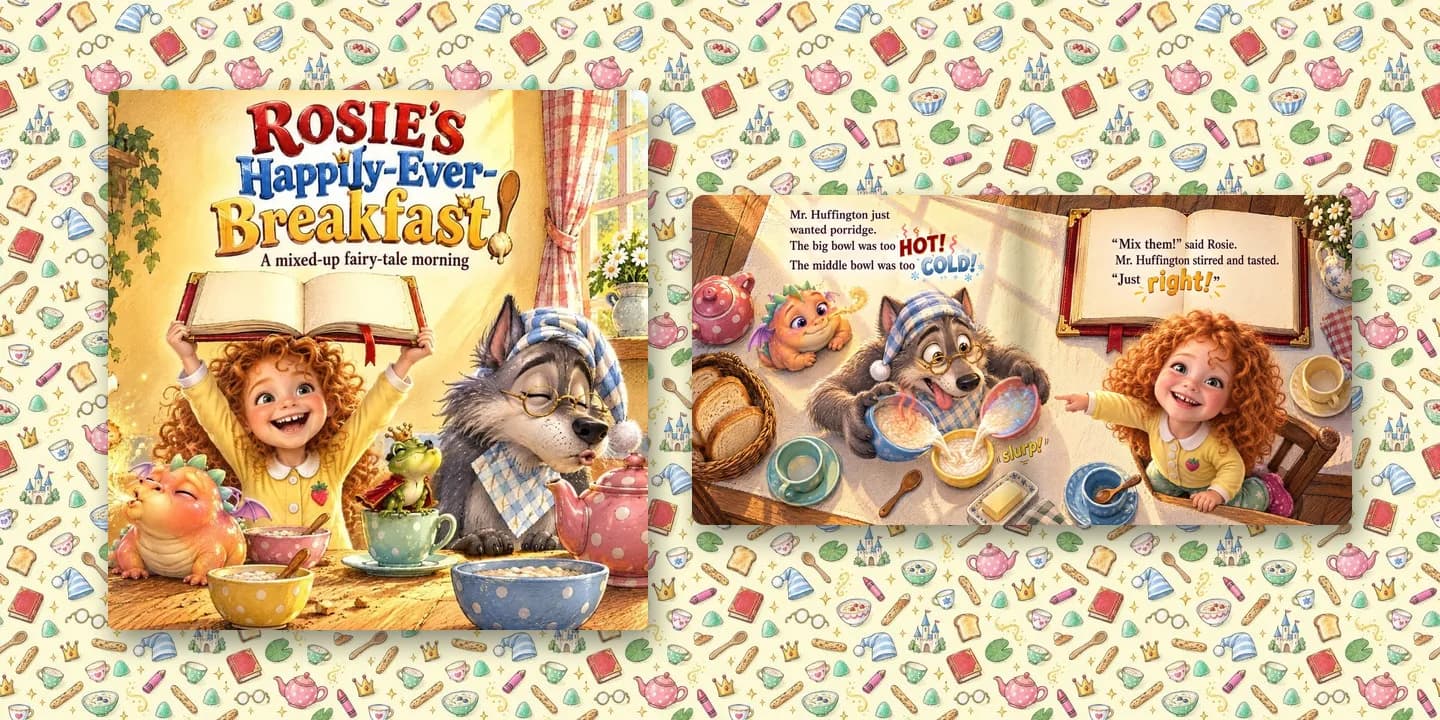
Yes — and it is exactly what NAEYC suggests. Its tips recommend making a book at home about the new preschool, with photos of your child there and simple sentences on each page. When you turn a photo into a children's book, your child is the one who walks through the door, hangs up their coat, makes a friend and is picked up at the end — so the real first day is the second time they have done it.
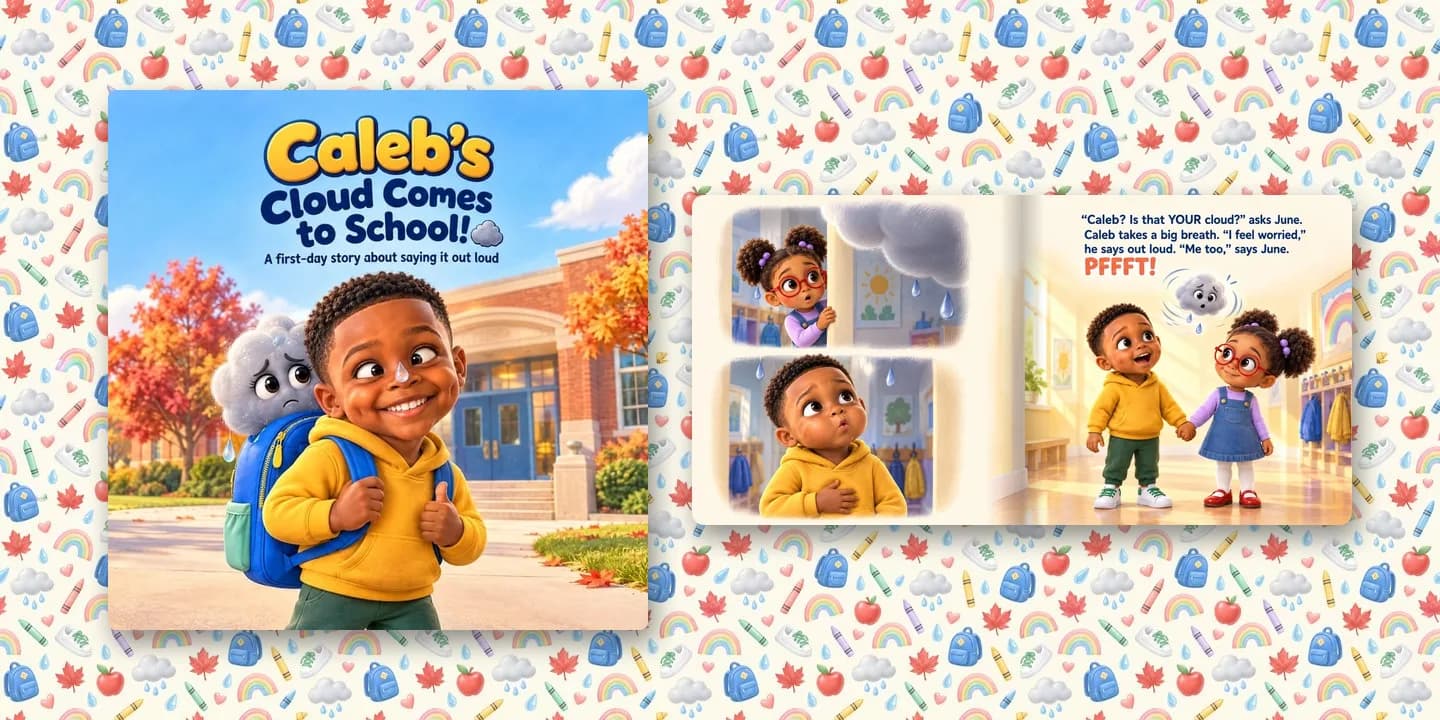
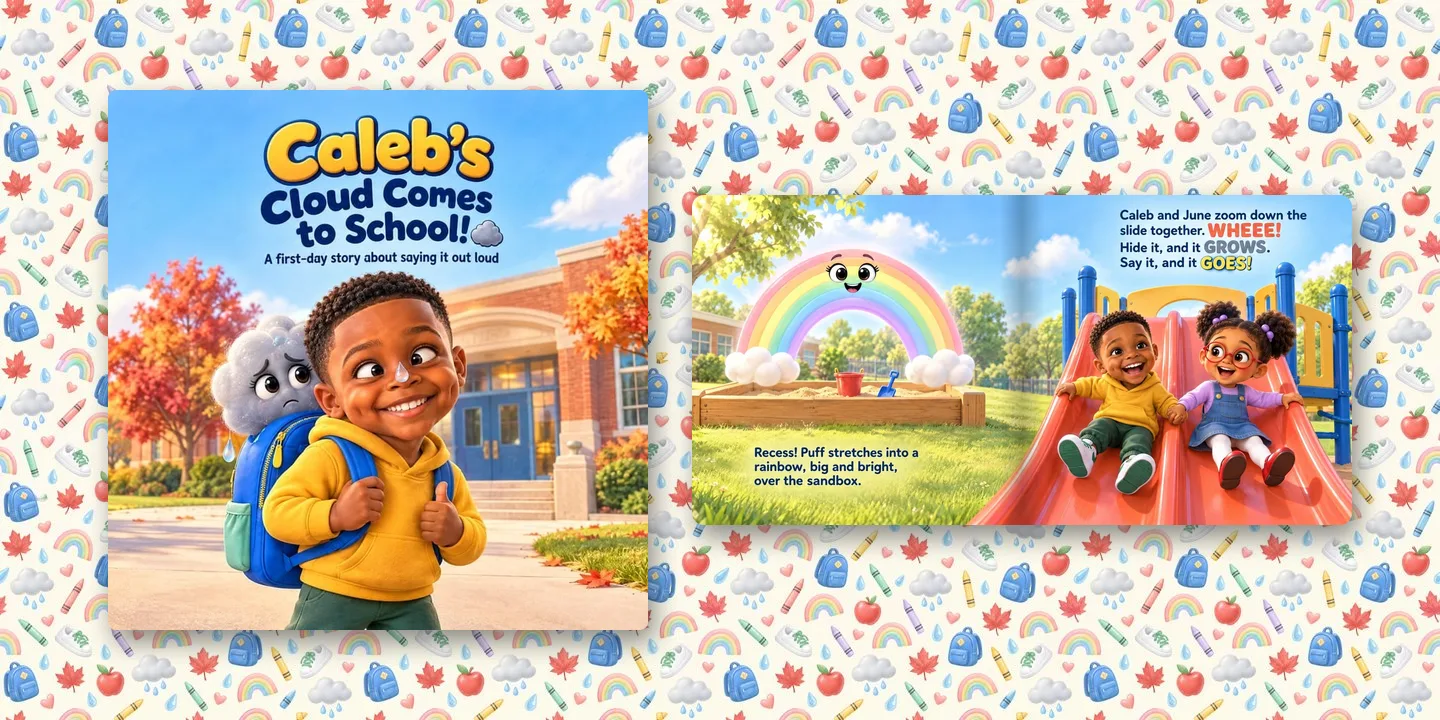
Your Child's Cloud Comes to School! was written for exactly this. On the first day, a teeny grey worry cloud pops up over your child's cereal and tags along. Hide it, and it grows; say it out loud — "I feel worried" — and a new friend says "Me too", and the cloud shrinks into a rainbow. Or start your own story at /create and tell it about your child's own preschool: the teacher's name, the coat peg, the goodbye you use.
How do I make a first-day book starring my child?#
- Pick a story — start with the Worry Cloud, or begin your own at /create.
- Add your child's name and age, so the words fit a preschooler.
- Upload one clear photo and tick the consent box. Your child becomes the character on every page, with the same face from the cover to the last page.
- Tell the story box about the new preschool — the teacher, the friend from the play date, the snack they are excited about — and choose an art style.
- See the cover before you pay. The painted cover is free to look at; nothing is charged until you decide.
- Write a message on the book's own message page — one of the first-day lines above works.
- Choose the format. The digital book is ready the same day, in time for the first week; the hardcover comes with narration and a song of the story. Prices are on one page.
Here is one, read in full. Caleb is the sample child; your copy stars yours.
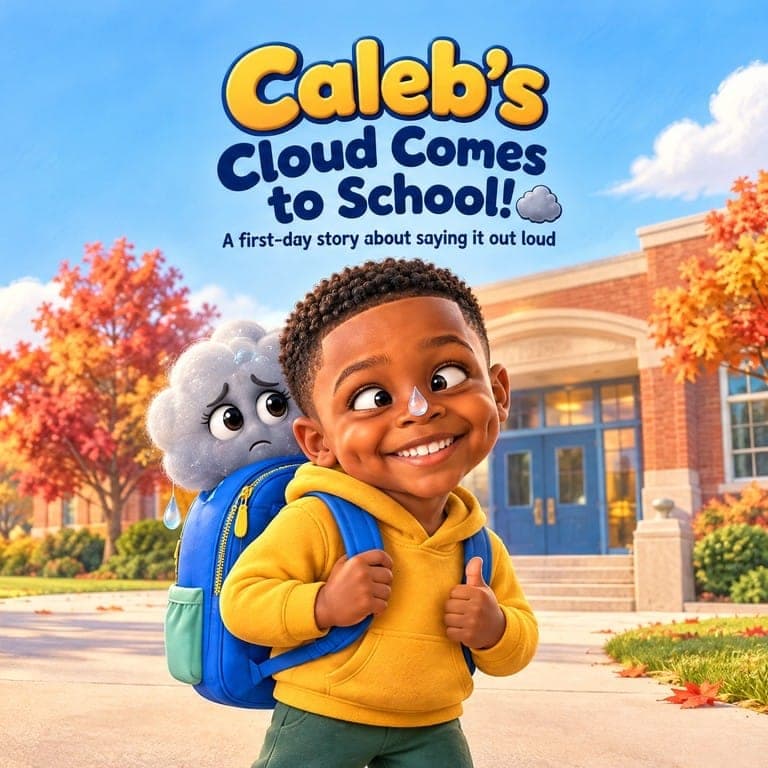

A book from our shop · ages 3–6
Your Child's Cloud Comes to School!
On the first day of school a teeny grey worry cloud pops up over your child's cereal and tags along. Hide it under the backpack flap, in the cubby, behind the coats — and it GROWS, until it fills the whole hallway. Then your child says it out loud, a new friend says “Me too”, and the cloud turns into a rainbow.
Shown here starring Caleb, 5. Yours is painted with your own child’s face and name on every page, from $39 — and you see the pages before you pay.
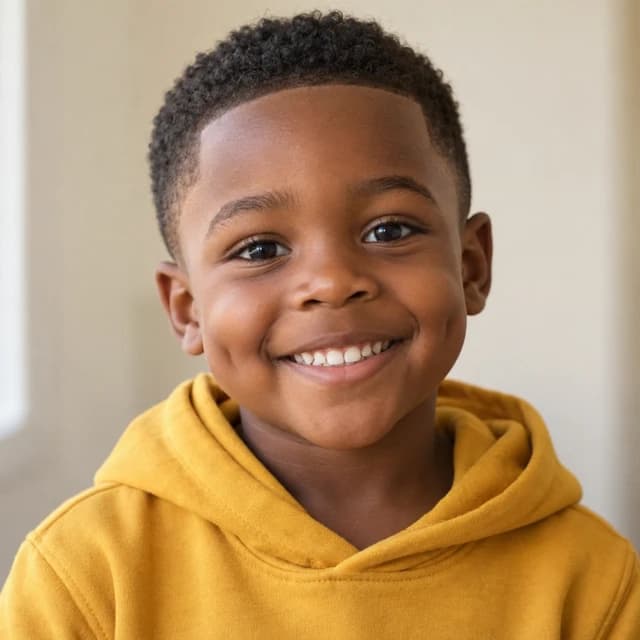
The photo they uploaded
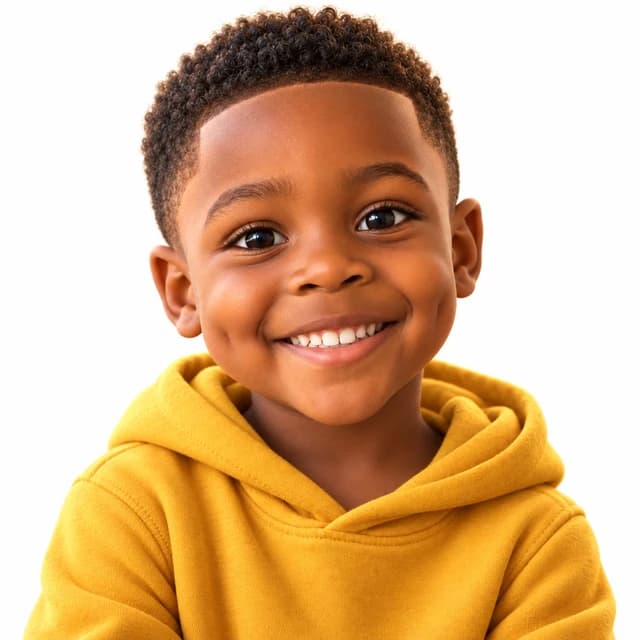
The character we drew
Written from this story — not a stock track with a name dropped in. Free with every book.
How the story begins
- 1It's the first day of school! Caleb's tummy goes flip-flop, flip-flop. Then... PLIP! A teeny grey cloud pops up over his cereal.
- 2Off to school! The little cloud tags along. “SHOO!” says Caleb. The cloud bobs right back. Bob, bob, bob, all the way down the street.
- 3At the school gate, Caleb spins around. “Who are YOU?” “Plip,” says the cloud. It looks just as worried as Caleb feels. He names it Puff.
The rest of the story is in Your Child's Cloud Comes to School!.
The words to the song
[Verse 1]
A teeny cloud came to breakfast,
Plip, plip, right on my spoon.
I hid it in my backpack —
It puffed up like a big balloon!

[Chorus]
Hide it, and it grows, grows, grows,
Say it, and it goes, goes, goes!
Hold a hand and breathe out slow —
Pfffft! Here comes a rainbow!

[Verse 2]
It rained right on my sneakers,
It filled the whole hallway,
Then June said, “Me too,”
And the grey just floated away.

[Chorus]
Hide it, and it grows, grows, grows,
Say it, and it goes, goes, goes!
Hold a hand and breathe out slow —
Pfffft! Here comes a rainbow!

[Outro]
Got a worry cloud? Say it out loud,
Plink! A rainbow, shiny and proud.
Bye-bye, Puff, see you some day,
Hand in hand, we run to play!