The best books about separation anxiety give a child a promise they can hold on to: the grown-up always comes back. For toddlers that promise is simple — a mother owl returning at night; for preschoolers it can be a kiss held in a hand or an invisible string. Read them in the days before a drop-off, not at the door. Below are 11 books about separation anxiety sorted by the separation your child is facing, followed by a drop-off script, a table of goodbye rituals, and the signs that mean clinginess needs more than a book.
What is separation anxiety, and when does it happen?#
Separation anxiety is the distress a baby or young child feels when separated from a parent or main carer — crying, clinging, protesting at the door. It is a normal stage of development, not a problem to fix. The NHS describes separation anxiety and fear of strangers as common between the ages of 6 months and 3 years, although it can last longer and may come back at times of stress.
It appears because a baby has worked something out: that they are a separate person from you, and how much they depend on the people who care for them. The CDC lists "reacts when you leave (looks, reaches for you, or cries)" among its milestones for 9 months. The NHS puts it more warmly: separation anxiety is usually a sign of how well you have bonded.
| Age | What it often looks like | What helps most |
|---|---|---|
| 6–12 months | Crying when you leave the room; wary of strangers | Peek-a-boo, talking from the next room |
| 1–2 years | Clinging at nursery or daycare drop-off | Short practice separations; a comfort object |
| 2–3 years | Protests at the door, "Don't go!", bedtime calling out | A goodbye ritual; talking about pick-up |
| 3–5 years | Worry before preschool, tummy aches on school mornings | Naming the worry; a story about a first day |
How do you make daycare drop-off easier?#
The NHS's practical advice on separation anxiety fits on a single card:
- Practise short separations. Leave your child with someone they know for a few minutes, then build up to longer times and less familiar places.
- Talk about what you'll do together later. "When I pick you up, we'll go to the shop and get food for dinner." A plan gives a child something to look forward to.
- Leave something comforting. A scarf that smells of you, or a favourite toy, close by.
- Make the goodbye positive. Smile and wave confidently, however you feel; children pick up on tension.
- Play peek-a-boo with babies. The NHS calls it a good way to show that you always come back.
Two more habits that most drop-offs need:
- Never sneak out. Disappearing when your child is distracted saves one tearful goodbye and costs trust at every drop-off after it.
- Keep it short. A long, lingering goodbye tells a child that something worrying is happening. A short one tells them this is ordinary.
A drop-off script that works#
| Moment | Say | Do |
|---|---|---|
| On the way | "First we go in, then hang up your coat, then I give you a kiss and go to work." | Say it the same way every day |
| At the door | "You'll play, have lunch, and after nap I'll come back." | Point to a picture of the routine if there is one |
| The goodbye | "Kiss, hug, high five. See you after nap!" | Your goodbye ritual — the same every time |
| If they cry | "You're sad I'm going. Your teacher will help. I always come back." | Hand over to the key person and leave |
| At pick-up | "I came back! Tell me one thing you did." | Make the return as clear as the goodbye |
Tie the return to an event, not a clock. "After nap" or "after snack" means something to a two-year-old; "three o'clock" does not. For a full first-day plan — the countdown, a packing list and first-day notes — see the first day of preschool.
What makes separation anxiety worse?#
A few common habits make goodbyes harder without anyone meaning them to.
| Instead of… | Try… | Because… |
|---|---|---|
| Sneaking out while they play | A short, clear goodbye every time | Trust that you will say goodbye makes it easier to let go |
| A long, lingering goodbye | Kiss, hug, wave — then go | A long goodbye signals that something is wrong |
| "I'll be back soon" | "I'll be back after nap" | Toddlers understand events, not time |
| Coming back in when they cry | Leaving, then calling the setting later | Coming back teaches that crying brings you back |
| Hiding your own worry badly | A calm face at the door, worry in the car | Children read your face before your words |
| Big changes all at once | One change at a time where you can | A new baby, a move and a new nursery together is a lot |
Separation anxiety often comes back at times of change — a new sibling, a house move, a parent starting a new job, a family break-up. The NHS notes it can happen again at times of stress or anxiety. When it does, go back to short practice separations and a steady goodbye ritual; it usually settles again as life settles.
Which books about separation anxiety help toddlers and preschoolers?#
Sorted by the separation each one is best at. First-publication years checked against library catalogue records.
| Separation | Book | First published | Ages |
|---|---|---|---|
| The grown-up always comes back | Owl Babies by Martin Waddell, illustrated by Patrick Benson | 1992 | 1–4 |
| Goodbye routine at the door | Bye-Bye Time by Elizabeth Verdick, illustrated by Marieka Heinlen | 2008 | 1–3 |
| Love that travels with you | The Kissing Hand by Audrey Penn | 1993 | 3–6 |
| Love that connects you when apart | The Invisible String by Patrice Karst | 2000 | 3–7 |
| Missing a parent at preschool | Llama Llama Misses Mama by Anna Dewdney | 2009 | 2–5 |
| A whole day apart | I Love You All Day Long by Francesca Rusackas, illustrated by Priscilla Burris | 2004 | 2–5 |
| Starting preschool | Maisy Goes to Preschool by Lucy Cousins | 2009 | 2–4 |
| A worrier starting school | Wemberly Worried by Kevin Henkes | 2000 | 3–6 |
| A comfort object | Owen by Kevin Henkes | 1993 | 3–6 |
| Bedtime goodbye | Llama Llama Red Pajama by Anna Dewdney | 2005 | 2–5 |
| Bedtime and the dark | Can't You Sleep, Little Bear? by Martin Waddell, illustrated by Barbara Firth | 1988 | 2–5 |
For toddlers: the grown-up comes back#
Owl Babies. Three baby owls wake in the night to find their mother gone. Sarah is sensible, Percy is trying, and Bill — the smallest — says only "I want my mommy!" on every page. She comes back. Toddlers usually take Bill's line, and the relief on the last page is the whole lesson.
Bye-Bye Time. A board book that walks through a goodbye: a hug, a kiss, a wave, and then playing. Short and practical — read it before drop-off so the steps are familiar.
For preschoolers: love that travels#
The Kissing Hand. Chester the raccoon does not want to start school, so his mother kisses his palm; whenever he misses her, he presses his hand to his cheek. Many families copy the kiss at the door, which makes it a book that turns into a ritual.
The Invisible String. Two children are told that everyone who loves each other is connected by an invisible string, wherever they are. It suits a child who worries about a parent working away or travelling, and it reaches older children too.
Llama Llama Misses Mama. Llama Llama's first day at preschool, a lot of missing, and Mama coming back at the end. The rhyme carries the feeling without dwelling on it.
I Love You All Day Long. Owen the piglet does not want his mother to leave him at school, so she tells him all the ordinary things he will do — and that she loves him through each one.
For starting preschool or school#
Maisy Goes to Preschool. A plain, bright walk through a preschool day, from coats to home time. For a two-year-old, knowing what happens next is half the battle.
Wemberly Worried. Wemberly worries about everything, most of all the first day of school — until she meets another worrier. It tells anxious children they are not the only one.
Owen. Owen will not give up his yellow blanket before school, and his mother finds a clever way for it to come along. A book about comfort objects that respects them.
For bedtime separation#
Llama Llama Red Pajama and Can't You Sleep, Little Bear? are bedtime books about the same fear: being left alone in the dark. The guide to a toddler bedtime routine covers what to do when bedtime separation turns into calling out all night.
If we had to choose one book for each age: Owl Babies for a toddler, The Kissing Hand for a three-year-old starting preschool. The Invisible String is lovely, but for a two-year-old the idea is too abstract — save it for four and up.
How should you read a book about separation anxiety?#
- Read it in the days before, not at the door. A book is rehearsal, not rescue.
- Let your child say the worried line. "I want my mommy!" said in the safety of your lap is a feeling practised, not a feeling suffered.
- Pause before the return. "Do you think she'll come back?" — and let them answer.
- Borrow the ritual. If the book has a kissing hand or a string, try it at the real door.
- Read it again after a hard drop-off. At home, that evening, as proof that you came back.
When does separation anxiety need more than a book?#
Crying at drop-off is normal. The NHS suggests talking to your health visitor if your child's separation anxiety:
- is causing them a lot of distress
- leaves them upset for a long time after you have left
- has gone on for more than a few weeks
Ask your child's key worker how long the crying lasts after you leave — in many settings it stops within minutes, which is worth knowing on the drive to work. For older preschoolers whose worry is about school itself rather than leaving you, the guide to books about school anxiety covers tummy aches, refusing to go, and how to talk about it.
Can a book where my child is the main character help with drop-off?#
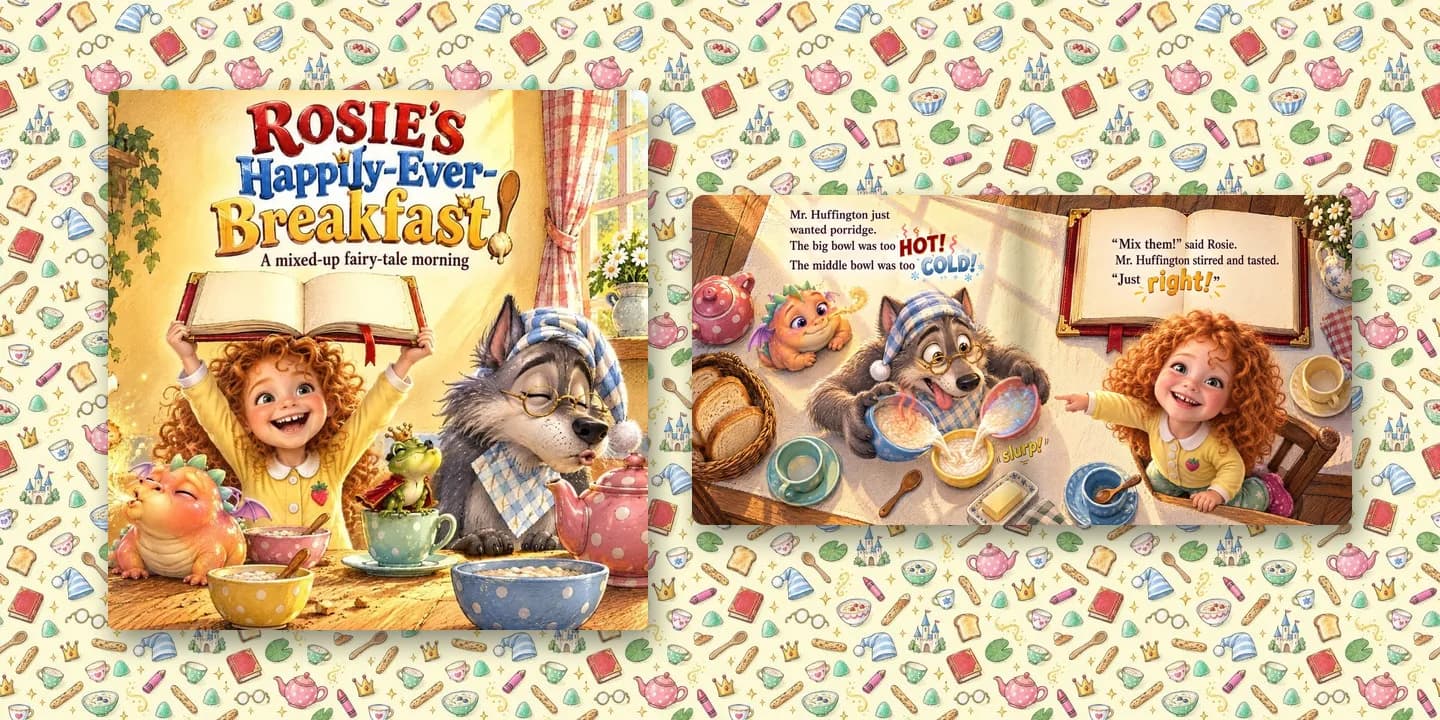
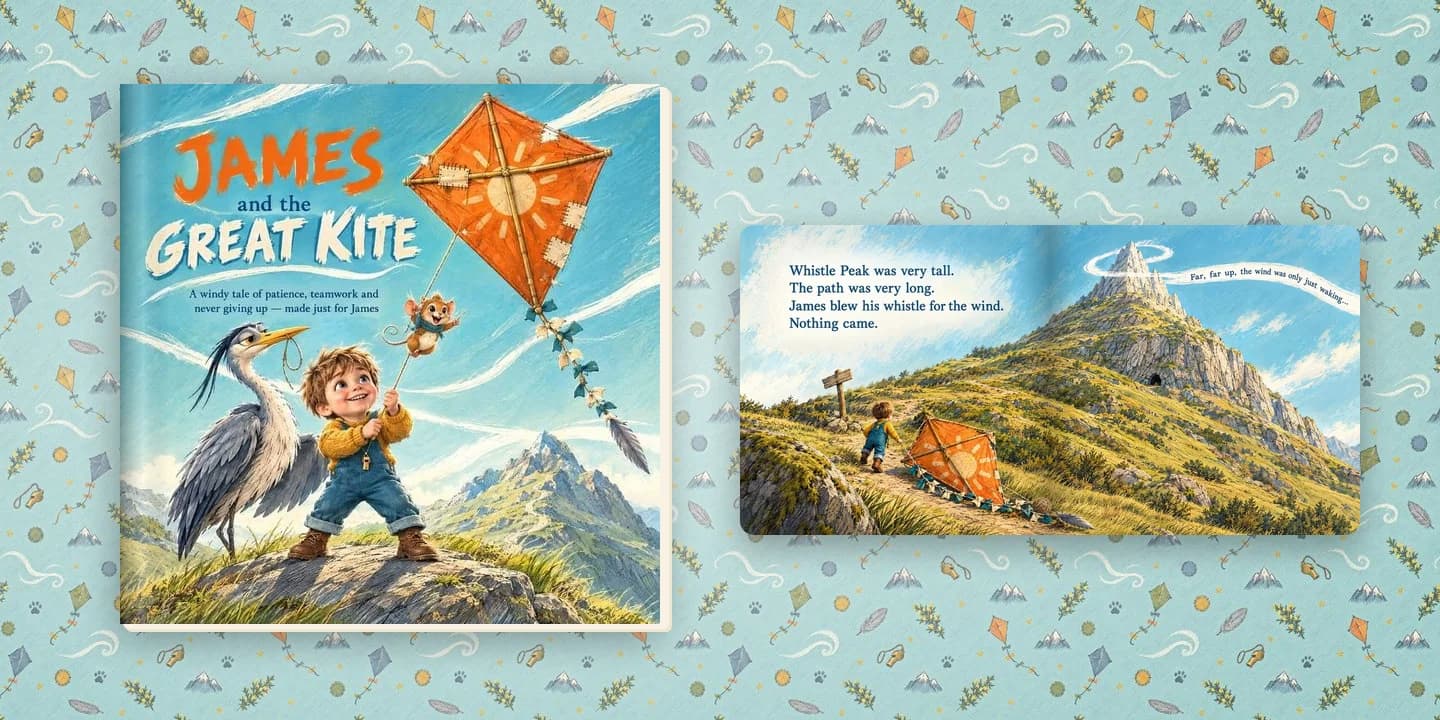
It can help a child rehearse it. Every book above is about an owl, a raccoon or a llama. In a book where your child is the main character, the child who walks through the door, says goodbye and has a good day is your child — so by the time the real door opens, they have already done it once, with their own face on every page.
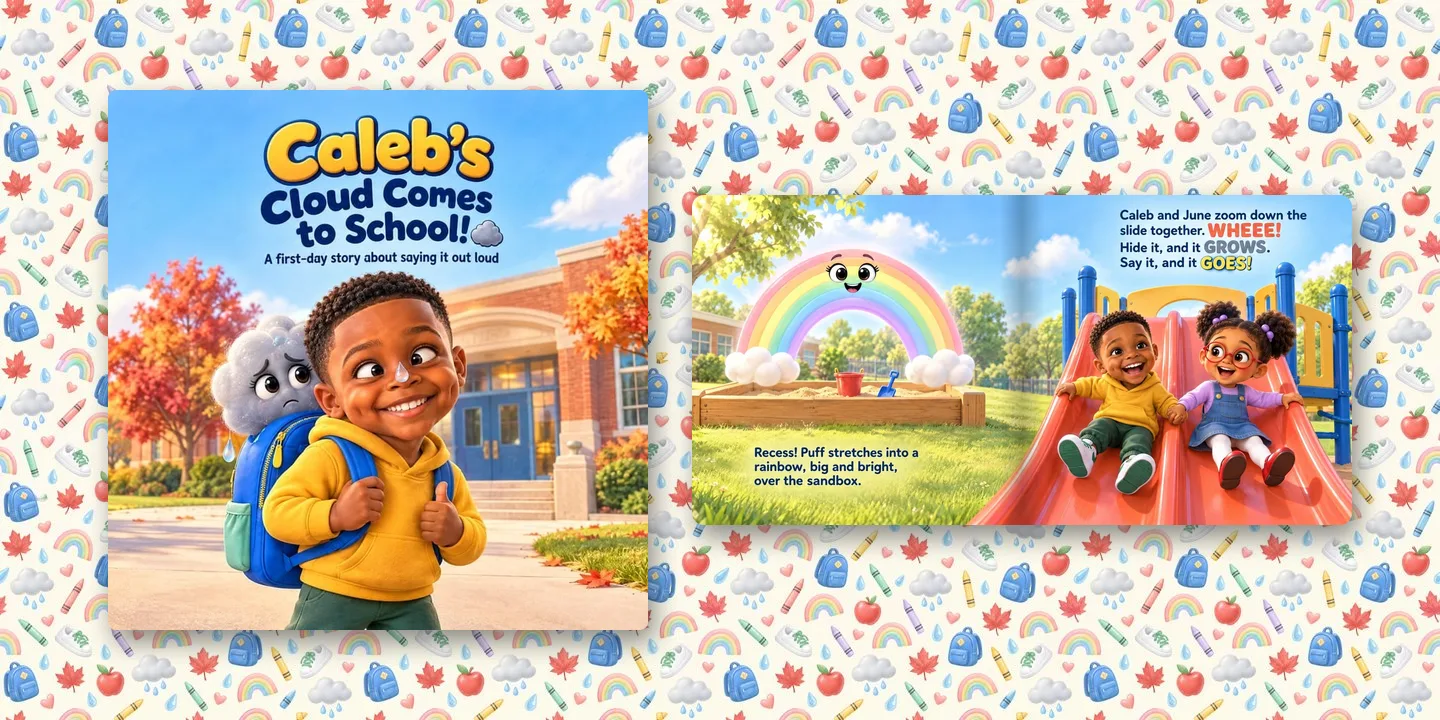
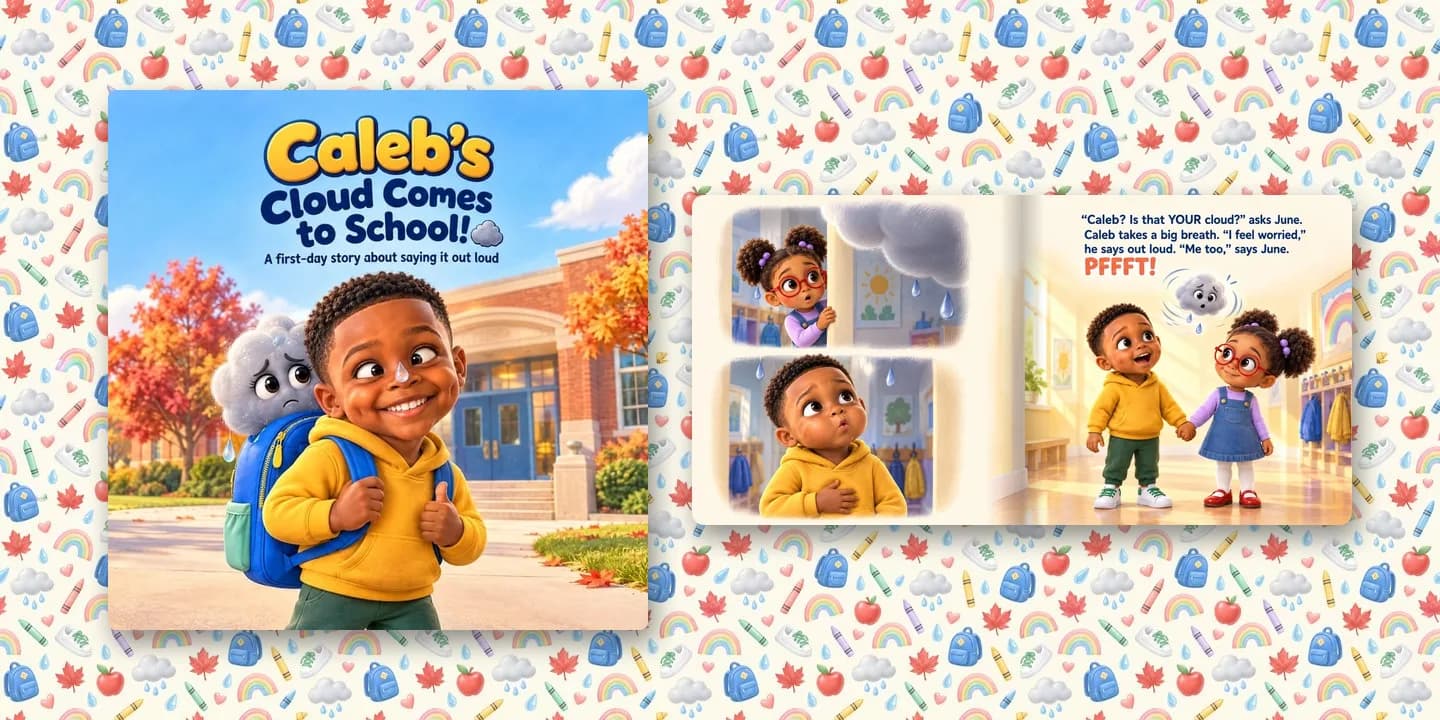
Your Child's Cloud Comes to School! was written for exactly this. On the first day of school a teeny grey worry cloud pops up over your child's cereal and tags along. Hide it under the backpack flap, in the cubby, behind the coats — and it grows, until it fills the whole hallway. Then your child says it out loud: "I feel worried." A classmate says, "Me too." The cloud shrinks into a rainbow. Hide it, and it grows. Say it, and it goes.
For a kindergartner, Your Child and the Heavy Backpack unpacks first-day worries one part of the day at a time, with a new friend and half a cracker.
How do I make a first-day book starring my child?#
- Pick a story — start with the Worry Cloud, or begin your own at /create to tell the story of your child's own nursery.
- Add your child's name and age, so the words fit the reader.
- Upload one clear photo and tick the consent box. Your child becomes the character on every page, with the same face from the cover to the last page.
- Tell the story box what drop-off is like — the teacher's name, the coat peg, the goodbye you use — and choose an art style.
- See the cover before you pay. The painted cover is free to look at; nothing is charged until you decide.
- Choose the format. The hardcover comes with narration and a song of the story, and the digital book is ready the same day — handy for reading on a phone in the car park. Prices are on one page.
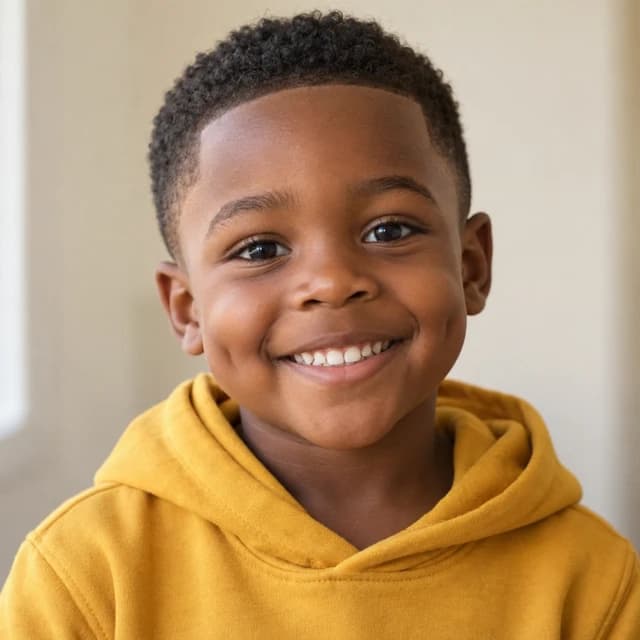
Here is one, read in full. Caleb is the sample child; your copy stars yours.


A book from our shop · ages 3–6
Your Child's Cloud Comes to School!
On the first day of school a teeny grey worry cloud pops up over your child's cereal and tags along. Hide it under the backpack flap, in the cubby, behind the coats — and it GROWS, until it fills the whole hallway. Then your child says it out loud, a new friend says “Me too”, and the cloud turns into a rainbow.
Shown here starring Caleb, 5. Yours is painted with your own child’s face and name on every page, from $39 — and you see the pages before you pay.
The photo they uploaded

The character we drew
Written from this story — not a stock track with a name dropped in. Free with every book.
How the story begins
- 1It's the first day of school! Caleb's tummy goes flip-flop, flip-flop. Then... PLIP! A teeny grey cloud pops up over his cereal.
- 2Off to school! The little cloud tags along. “SHOO!” says Caleb. The cloud bobs right back. Bob, bob, bob, all the way down the street.
- 3At the school gate, Caleb spins around. “Who are YOU?” “Plip,” says the cloud. It looks just as worried as Caleb feels. He names it Puff.
The rest of the story is in Your Child's Cloud Comes to School!.
The words to the song
[Verse 1]
A teeny cloud came to breakfast,
Plip, plip, right on my spoon.
I hid it in my backpack —
It puffed up like a big balloon!

[Chorus]
Hide it, and it grows, grows, grows,
Say it, and it goes, goes, goes!
Hold a hand and breathe out slow —
Pfffft! Here comes a rainbow!

[Verse 2]
It rained right on my sneakers,
It filled the whole hallway,
Then June said, “Me too,”
And the grey just floated away.

[Chorus]
Hide it, and it grows, grows, grows,
Say it, and it goes, goes, goes!
Hold a hand and breathe out slow —
Pfffft! Here comes a rainbow!

[Outro]
Got a worry cloud? Say it out loud,
Plink! A rainbow, shiny and proud.
Bye-bye, Puff, see you some day,
Hand in hand, we run to play!
For the moment after the first week, the guide to books about starting kindergarten covers the next big door.