The best books about picky eaters make a new food familiar and funny before it ever reaches the plate. Picky eating is common and usually a phase, and books help in a specific, measurable way: toddlers prefer foods they have seen again and again. Below are 12 books about picky eaters sorted by the strategy they model, what the research says about tasting and familiarity, the NHS's mealtime rules, and the two famous picky-eater books that model exactly what not to do.
Why are so many toddlers picky eaters?#
Two things are going on, and they are different. Terence Dovey and colleagues explain in a review in Appetite (2008) that food neophobia is reluctance to eat, or avoidance of, new foods, while picky or fussy eating means rejecting a substantial amount of foods, including familiar ones. Most toddlers go through some of both.
From a toddler's point of view, it makes sense. A new food is unknown, and unknown things go in the mouth slowly. Familiarity is the cure — which is why both repeated tasting and repeated seeing help.
Do picture books really help picky eaters?#
Yes, and there is research on exactly this. Carmel Houston-Price and colleagues gave parents picture books to share with their toddlers, and reported in the Journal of Experimental Child Psychology (2009) that repeated exposure to pictures of foods made toddlers prefer to look at those foods — and that the preference carried over to new pictures of the same foods.
Looking is not eating, but it is the first step towards it. A child who has met broccoli on fifty pages is meeting it as an old friend at dinner.
Tasting is the next step. Jane Wardle and colleagues randomly assigned 156 parents of children aged 2 to 6 to give their child a small taste of a disliked vegetable every day for 14 days, to receive nutrition advice, or to do nothing. In Appetite (2003) they reported that only the daily-tasting group showed significant increases in liking, ranking and eating the vegetable.
Put together: see it in a book, then taste a tiny bit, every day, without pressure.
What does the NHS say about fussy eaters?#
The NHS's page on fussy eaters boils down to a handful of rules:
| Do | Don't |
|---|---|
| Give your child the same food as the rest of the family (without added salt) | Force your child to eat a food they reject |
| Eat together — the best way for a child to learn to enjoy new foods is to copy you | Leave meals until your child is too hungry or tired to eat |
| Give small portions and praise any eating, even a little | Give too many snacks — two healthy snacks a day is plenty |
| Keep offering a variety — it may take lots of attempts | Use food as a reward |
| Try serving a food a different way | Worry if your child is active, growing and well |
That last point is reassuring: the NHS says that if a child is active, gaining weight and seems well, they are getting enough to eat. If your child is losing weight, not growing, eats only a very small number of foods, or gags and panics around food, talk to your doctor — those are not ordinary fussiness.
Which games make new food less scary?#
Familiarity does not have to happen at the table. These games build it without a single "just one bite".
- Food detective. Look at a new food with a magnifying glass: what colour, what shape, what smell? Touching and sniffing count as progress.
- Rainbow plate. One small piece of something red, orange, yellow, green and purple. The goal is to make the rainbow, not to finish it.
- Taste-test stickers. A sticker for every taste, not for every plate cleared — the reward is for being brave, not for eating a lot.
- Cook together. Children are more curious about food they have washed, stirred or arranged.
- Grow something. Cress on a windowsill, or one tomato plant. Food you grew is food you want to try.
- Shop together. Let your child choose one new fruit or vegetable to bring home.
How does picky eating change with age?#
| Age | What is typical | What helps |
|---|---|---|
| 1–2 | Appetite drops and varies day to day; strong reactions to textures | Small portions; the same foods as the family |
| 2–3 | Reluctance to try new foods is common | Repeated tasting; books and food play |
| 3–5 | Likes and dislikes become firmer; "I don't like it" before tasting | Cooking together; one new food alongside favourites |
| 5+ | More willing to try, especially with friends | Shared meals; letting them choose and prepare |
Which books about picky eaters are best?#
Sorted by the strategy each book models. First-publication years checked against library catalogue records.
| Strategy | Book | First published | Ages |
|---|---|---|---|
| Naming food likes and dislikes | Yummy Yucky by Leslie Patricelli | 2003 | 1–3 |
| Renaming food to make it fun | I Will Not Ever Never Eat a Tomato by Lauren Child | 2000 | 3–7 |
| Meeting fruit and vegetables A to Z | Eating the Alphabet by Lois Ehlert | 1989 | 2–5 |
| Food variety (and a tummy ache) | The Very Hungry Caterpillar by Eric Carle | 1969 | 2–5 |
| Growing and cooking vegetables | The Ugly Vegetables by Grace Lin | 1999 | 4–7 |
| Monsters and vegetables | Monsters Don't Eat Broccoli by Barbara Jean Hicks, illustrated by Sue Hendra | 2009 | 3–6 |
| The joke turned upside down | Little Pea by Amy Krouse Rosenthal, illustrated by Jen Corace | 2005 | 3–6 |
| The joke turned upside down | Gregory, the Terrible Eater by Mitchell Sharmat, illustrated by Jose Aruego and Ariane Dewey | 1980 | 4–7 |
| Eating only one thing | Bread and Jam for Frances by Russell Hoban, illustrated by Lillian Hoban | 1964 | 4–7 |
| A family of fussy eaters | The Seven Silly Eaters by Mary Ann Hoberman, illustrated by Marla Frazee | 1997 | 4–8 |
| Try it — under pressure | Green Eggs and Ham by Dr. Seuss | 1960 | 3–7 |
| Bribery gone wrong | Eat Your Peas by Kes Gray, illustrated by Nick Sharratt | 2000 | 3–7 |
For toddlers#
Yummy Yucky. A board book of things a baby thinks are yummy and things that are definitely yucky. Toddlers laugh, and it gives them words for likes and dislikes that are not a tantrum.
Eating the Alphabet. Bold, bright fruit and vegetables from apricot to zucchini. A looking book — exactly the kind of repeated exposure the research describes.
The Very Hungry Caterpillar. One apple, two pears, three plums — and then a Saturday of cake and sausage and a stomach ache, cured by one nice green leaf. See books like The Very Hungry Caterpillar.
For preschoolers#
I Will Not Ever Never Eat a Tomato. Lola won't eat carrots, peas or fish fingers — so her brother Charlie tells her they are orange twiglets from Jupiter, green drops from Greenland and ocean nibbles. The best book on this list, because it models a strategy that actually works: playful renaming, no pressure, and the child choosing to try.
Monsters Don't Eat Broccoli. Rhyming monsters insist they would never eat anything green and healthy, with a twist at the end that children love. Read it, then serve broccoli as "tiny trees" — a reframe toddlers adopt quickly.
The Ugly Vegetables. A girl wishes her mother grew flowers like the neighbours, not strange vegetables — until the vegetable soup brings the whole street to the door. A good book before growing something on a windowsill.
Little Pea and Gregory, the Terrible Eater flip the joke: a pea who must eat candy before he can have spinach for dessert, and a goat who wants fruit and vegetables instead of tin cans. Children find the reversal hilarious, and it takes the heat out of the subject.
For older preschoolers and their parents#
Bread and Jam for Frances. Frances will only eat bread and jam — so her parents give her bread and jam, at every meal, until she is desperate for spaghetti and meatballs. A calm, very funny lesson in not fighting.
The Seven Silly Eaters. Seven children, each of whom will only eat one particular thing, and a mother running herself ragged — until they cook for her. One for the parent as much as the child.
Where we disagree#
Green Eggs and Ham is a classic, and the rhymes are brilliant. But as a picky-eating strategy it models relentless pressure — Sam-I-Am badgers until the other character gives in — which is exactly what the NHS advises against. Read it for the rhythm, not as a method.
Eat Your Peas is useful for the opposite reason: Daisy's mother offers bigger and bigger bribes to get her to eat her peas, and it never works. Read it with a smile as a reminder to yourself; the NHS is clear that food should not be a reward.
How should you read a book about picky eating?#
- Read it away from the table. Mealtimes are for eating; books are for the sofa.
- Name and point at the foods. "Look, a pea. Where's the carrot?" Familiarity is the goal.
- Borrow the book's game. Rename the carrots "orange twiglets", or call broccoli "tiny trees".
- Bring the food to the book. Put a single pea or a slice of tomato on a plate beside the page — no need to eat it, just look, touch, sniff.
- Keep tasting tiny and daily. A pea-sized taste, every day, with no pressure.
Mealtime battles often turn into tantrums; the guide to books about tantrums covers what to do in the moment.
Can a book where my child is the main character help a picky eater?#
It can help a child see themselves at the table, curious instead of cross. In a book where your child is the main character, the one who tastes, mixes and laughs is your child — so trying something new is something they have already done once, on the page.
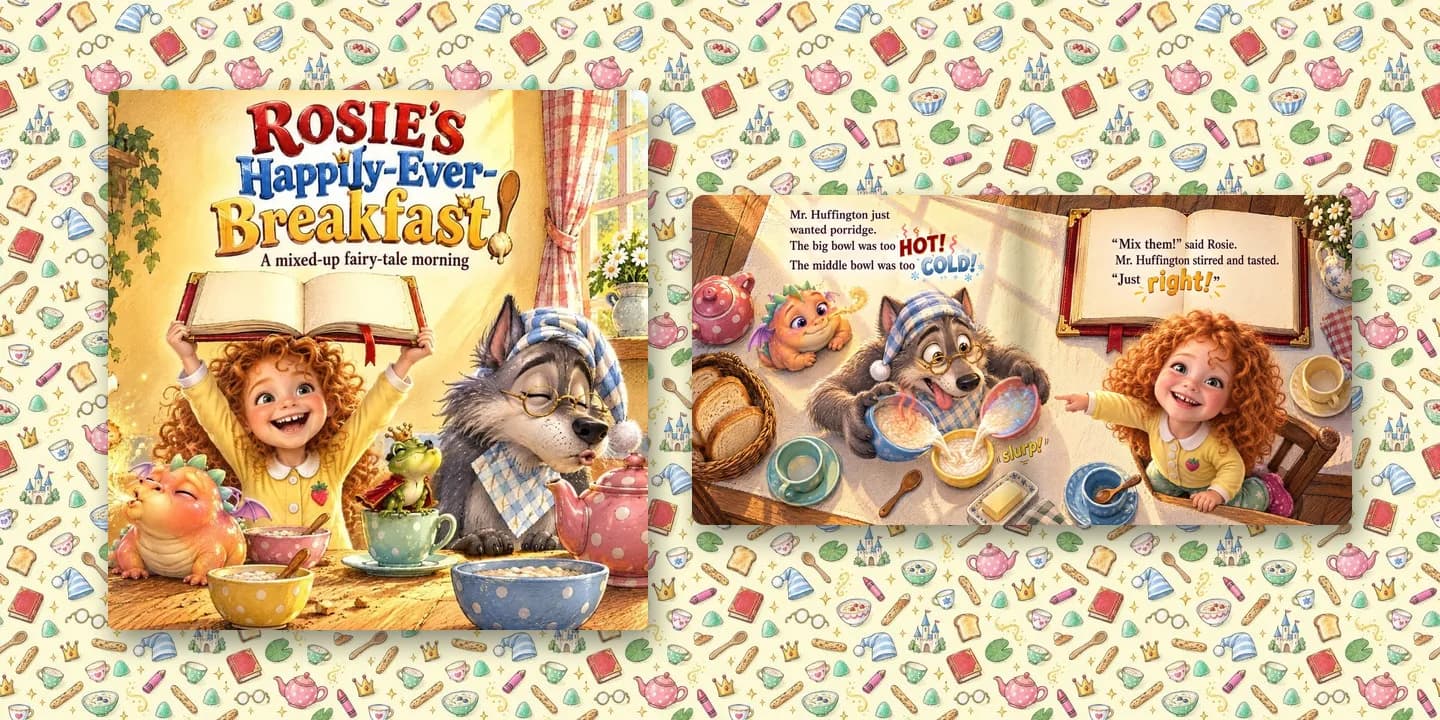
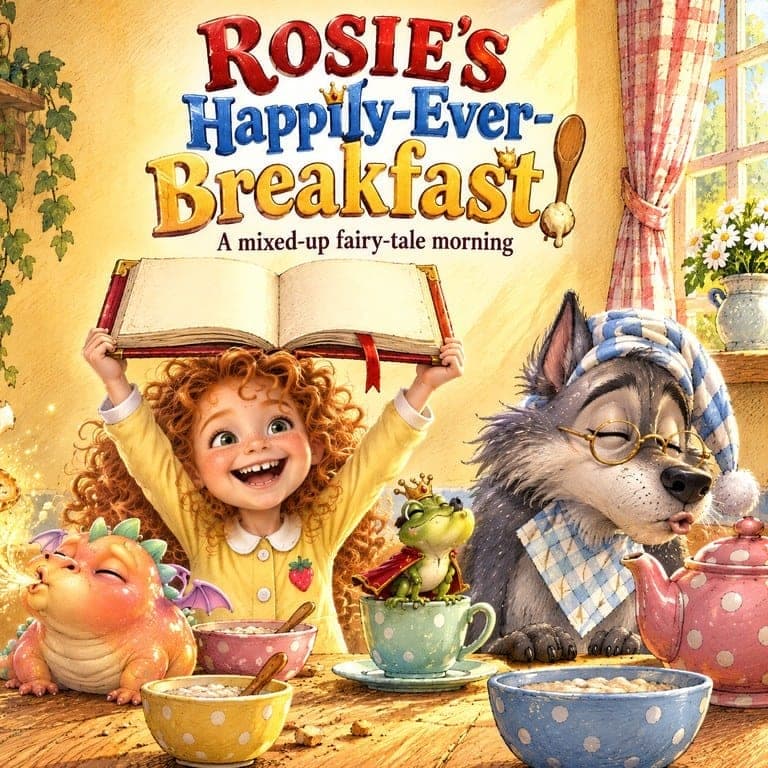
Your Child's Happily-Ever-Breakfast! sets the whole story at the breakfast table. Your child's storybook is empty: its frog prince, its very polite wolf and its small sneezy dragon have hopped out for breakfast, and each one is trying somebody else's fairy tale. The wolf's porridge is too hot, then too cold, until your child says "Mix them!" — and it is just right. By the end, everyone has a picnic breakfast together.
For a younger child, Your Child-a-Saurus and the Big Bedtime Battle turns dinner into the Broccoli Forest — chomp, chomp, CHOMP! — which is exactly the kind of playful reframing the research and the best picky-eater books recommend.
How do I make a mealtime book starring my child?#
- Pick a story — start with Happily-Ever-Breakfast, or begin your own at /create and put your child's own least-favourite vegetable in it.
- Add your child's name and age, so the words fit the reader.
- Upload one clear photo and tick the consent box. Your child becomes the character on every page, with the same face from the cover to the last page.
- Tell the story box about your table — the food they love, the one they won't touch, the dog waiting under the chair — and choose an art style.
- See the cover before you pay. The painted cover is free to look at; nothing is charged until you decide.
- Choose the format. The hardcover comes with narration and a song of the story, and the digital book is ready the same day. Prices are on one page.
Here is one, read in full. Rosie is the sample child; your copy stars yours.

A book from our shop · ages 3–6
Your Child's Happily-Ever-Breakfast!
“That's NOT how the story goes!” Your child's storybook is empty — its frog prince, its very polite wolf and its small sneezy dragon have hopped out for breakfast, and each one is trying somebody else's fairy tale. A kiss for the teapot, a huffed-and-puffed breadstick house, porridge too hot and too cold… until your child picks up a raspberry crayon and draws them a brand-new happily-ever-after. A personalised fairy tale book, mixed up and rewritten by your child.
Shown here starring Rosie, 4. Yours is painted with your own child’s face and name on every page, from $39 — and you see the pages before you pay.
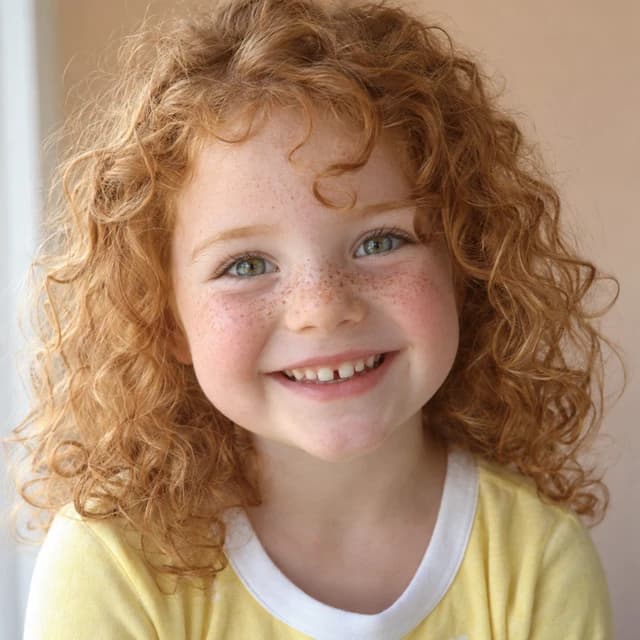
The photo they uploaded
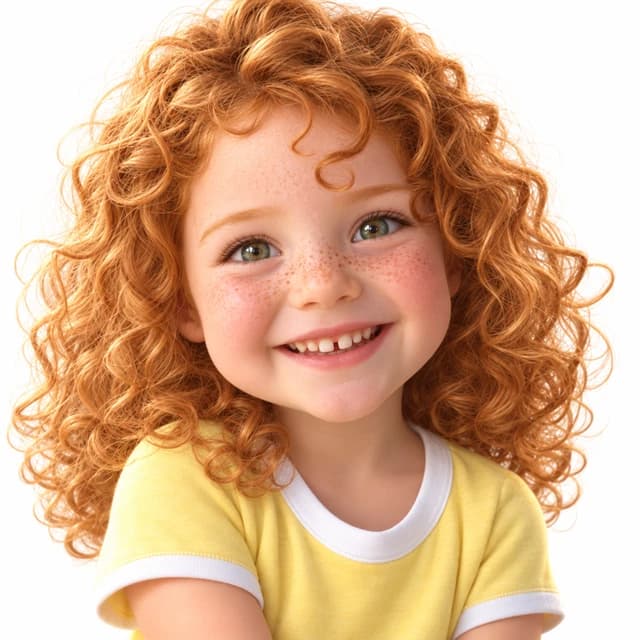
The character we drew
Written from this story — not a stock track with a name dropped in. Free with every book.
How the story begins
- 1Once upon a Saturday, Rosie opened her storybook. The pages were EMPTY! No frog. No wolf. No dragon. Then, down in the kitchen, something went... ACHOO!
- 2Rosie tiptoed down the stairs... past tiny wet footprints... past a fluffy grey tuft... past a trail of toasty crumbs... around the corner... and peeked into the kitchen.
- 3Around the table sat a very polite wolf, a frog in a crown, and a small round dragon. You're from my storybook! Good morning! Pardon me, please, thank you! Ribbit, rather! I am a PRINCE!
The rest of the story is in Your Child's Happily-Ever-Breakfast!.
The words to the song
[Verse 1]
I opened up my storybook,
the pages blank, come take a look!
Down in the kitchen — ACHOO! — hooray,
my storybook friends came out to play!

[Chorus]
That's NOT how the story goes!
A wolf wants a kiss and a frog says so,
a dragon who sneezes the toast just right —
let's mix it all up, from morning to night!

[Verse 2]
Too hot, too cold, so mix the two,
a hundred-year nap — three seconds, it's through!
I grab my crayon, raspberry bright,
and draw us a story that feels just right.

[Chorus]
That's NOT how the story goes!
A wolf wants a kiss and a frog says so,
a dragon who sneezes the toast just right —
let's mix it all up, from morning to night!

[Outro]
Once upon a breakfast, once upon a YOU,
pick up your crayon, your story's new!
Happily ever after... happily ever... ACHOO!