Parents looking for books like Goodnight Moon are usually handed a list of other quiet books. That is the wrong list, because Goodnight Moon is not one thing. It is four settling devices running at once — a naming ritual, a rhythm that slows, a room that gets darker, and a mouse to find — and most children are holding on to one of them, not all four.
The eleven books below are grouped by which one. Watch what your child does during the last book of the night, then read the row that matches.
Which book should I read after Goodnight Moon?#
Ages are the publisher's banding. The age column matters more on a bedtime list than anywhere else, because the book that works at half past seven is rarely the book that works at four in the afternoon.
| What your child does at bedtime | What they are settling to | Read next | Age |
|---|---|---|---|
| Says the goodnights with you, or finishes your line | The naming ritual — everything put away, one at a time | Big Red Barn · Time for Bed · Ten, Nine, Eight | 0–4 |
| Goes still as your voice drops | The rhythm winding down — language that decelerates | The Runaway Bunny · Guess How Much I Love You | 0–5 |
| Asks about the moon, or about the dark outside | The darkening room — night as a place rather than a threat | The House in the Night · Little Owl's Night · Owl Moon | 2–7 |
| Hunts for the mouse before you turn the page | Something to find — a job that keeps them on the page | Good Night, Gorilla · Where's Spot? | 0–4 |
If your child does all four, start with the naming ritual. It is the one they can perform back to you, and a child performing the ending is a child agreeing to it.
What is Goodnight Moon actually doing?#
Goodnight Moon is a 1947 picture book by Margaret Wise Brown, illustrated by Clement Hurd, in which a young rabbit in a green bedroom names everything in the room and then says goodnight to each thing in turn. Nothing happens. That is the design, and four separate devices are doing the work.
A ritual with a guaranteed ending. The first half lists what is in the room; the second half closes it down, object by object. A child who cannot read still knows the shape: once the goodnights start, the book is going to finish. Predictability is the whole point of a bedtime book — this is the one corner of children's publishing where surprise is a defect.
A rhythm that decelerates. The lines get shorter and plainer as it goes, so read at the speed the text asks for, the book slows your own voice without you deciding to. A child listening to a voice that is slowing down does not stay wound up for long.
A room that dims. Hurd's colour spreads of the green room alternate with black-and-white ones, and the light in the room drops as the pages turn. The picture is doing the same job as the words: turning the lights off while you read.
One thing to find. A small mouse is somewhere on each of the colour spreads. It gives a child a job that keeps them on the page instead of asking for a different book — a very different device from everything else here, and for some children it is the only part they care about.
The book was not welcomed. The Association for Library Service to Children, a division of the American Library Association, records that it was "essentially banned from the New York Public Library from 1947 to 1972" — through no formal ban, but because an enormously influential children's librarian would not recommend it for purchase and other libraries followed her lead.
If they say the goodnights with you: books built on the naming ritual#
These are the books a child joins in on. The room, the farm or the day is inventoried, and then it is closed down piece by piece, and your child takes over the closing.
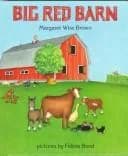
1. Big Red Barn#
- Written by
- Margaret Wise Brown
- Illustrated by
- Felicia Bond
- First published
- 1956
- Ages
- 0–4
- Format
- Board book and picture book
Margaret Wise Brown again, with the same shape moved outdoors: a farm is named animal by animal through a whole day, and then every animal goes to sleep. It is roomier and less strange than the green bedroom, which suits a child who finds Goodnight Moon too still.
A note on the credits: Brown died in 1952 and this was published in 1956. The edition in shops carries Felicia Bond's illustrations, added in 1989, not the original ones.
Reading it aloud: nobody is awake in the last few spreads. Drop your voice one notch per page, and do not go back to the beginning of the barn however much they ask.
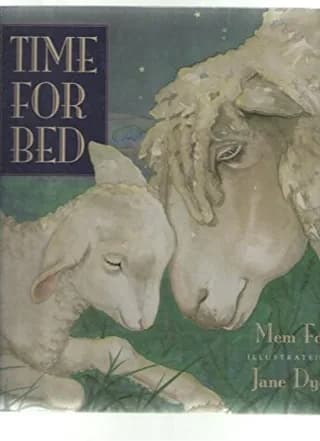
2. Time for Bed#
- Written by
- Mem Fox
- Illustrated by
- Jane Dyer
- First published
- 1993
- Ages
- 0–4
- Format
- Board book and picture book
Mem Fox writes in couplets and Jane Dyer paints one animal parent per spread putting one baby down, ending with a human mother and child. It is the shortest genuine wind-down here and the easiest to end up knowing by heart.
Reading it aloud: the second line of each couplet is the one children take over. Leave the last two words off and let them land it — then say nothing. The urge to add a comment after the final page is what undoes this book.
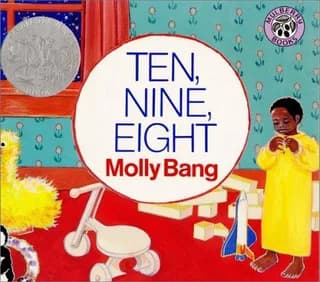
3. Ten, Nine, Eight#
- Written by
- Molly Bang
- First published
- 1983
- Ages
- 0–4
- Format
- Board book and picture book
A father puts his daughter to bed while the room counts down: ten small toes, nine soft friends, and on down to one. Published in 1983, and the American Library Association lists it as a 1984 Caldecott Honor Book.
Reading it aloud: a countdown is a promise with a number attached, so a child who stalls can hear exactly how many pages are left. It is the most useful structure on this list for the child who negotiates.
If they go still as your voice drops: books that wind down#
Here the settling is in the language rather than the ritual. Both of these end quieter than they start, which is a rarer quality than the bedtime shelf suggests.
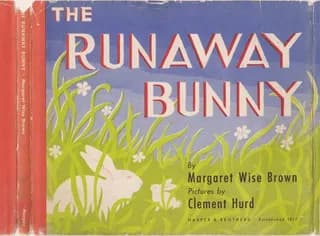
4. The Runaway Bunny#
- Written by
- Margaret Wise Brown
- Illustrated by
- Clement Hurd
- First published
- 1942
- Ages
- 0–4
- Format
- Board book and picture book
The same author and the same illustrator, five years earlier. A small rabbit announces every escape he can think of and his mother answers each one with how she would follow. It is call and response rather than a list, and it ends with the bunny staying where he is.
An honest note: some adults hear the mother's answers as devotion and some hear them as a house with no exits. Read two spreads aloud before you commit; you will know within a page which one you are.
Reading it aloud: read the mother slower than the bunny, never louder. The reassurance lives in the tempo, not the volume.
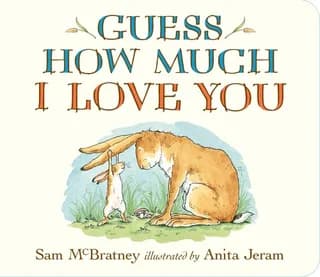
5. Guess How Much I Love You#
- Written by
- Sam McBratney
- Illustrated by
- Anita Jeram
- First published
- 1994
- Ages
- 0–5
- Format
- Board book and picture book
Two hares compete over who loves whom more, in arm-spans and hop-heights, until the little one runs out of comparisons and falls asleep mid-sentence. Anita Jeram's washed ink is half of why it lasts.
Reading it aloud: it is short and it ends on a whisper. This is a closing book rather than an opening one — read it after the long one, not instead of it.
The two bedtime books we would not read last#
- Written by
- Audrey Wood
- Illustrated by
- Don Wood
- First published
- 1984
- Ages
- 2–6
- Format
- Board book and picture book
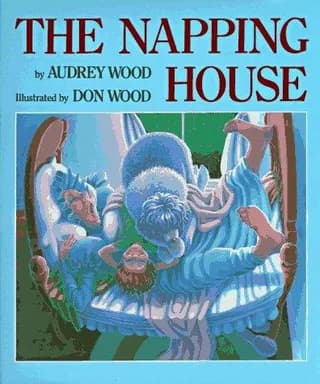
The Napping House stacks a cumulative pile of sleepers onto one bed in the rain, and then a flea bites the mouse and the whole pile wakes up in reverse, in daylight.
Where we disagree with the consensus: this sits on nearly every bedtime list and it is the wrong last book. It is beautiful, funny and superbly built, and it finishes with a household wide awake — which is the precise opposite of a wind-down. Read it at bath time. Llama Llama Red Pajama earns the same warning: it is about a bedtime, and it accelerates the whole way through one.
If they ask about the dark: books where night is a place#
Some children are not settling to the ritual at all. They are watching the window. These three treat the dark as somewhere you can be rather than something to get past.
6. The House in the Night#
- Written by
- Susan Marie Swanson
- Illustrated by
- Beth Krommes
- First published
- 2008
- Ages
- 2–6
- Format
- Picture book
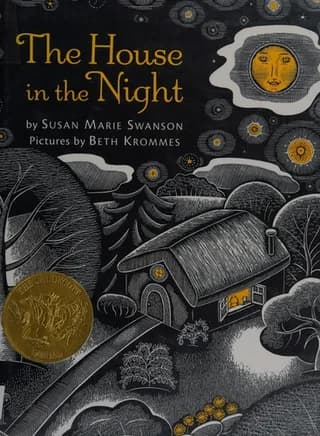
A key, a house, a light, a bed, a book, a bird — out into the night sky and back again. Beth Krommes won the 2009 Caldecott Medal for it, and the American Library Association's citation is the best short account of what the book is for: "richly detailed black-and-white scratchboard illustrations expand this timeless bedtime verse, offering reassurance to young children that there is always light in the darkness."
Reading it aloud: gold is the only colour on the page, so a child's eye follows it without being told to. Point at nothing and let them track it themselves.
7. Little Owl's Night#
- Written by
- Divya Srinivasan
- First published
- 2011
- Ages
- 0–4
- Format
- Board book and picture book
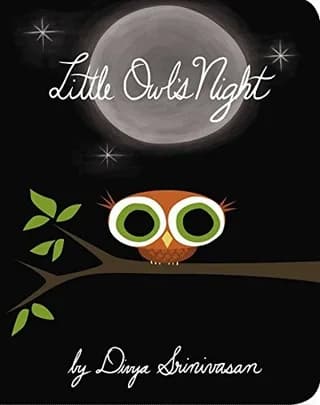
Night from the other side. Little Owl is awake for all of it, visiting a hedgehog, a bear and a raccoon, until his mother describes how the day begins and he falls asleep at dawn.
Reading it aloud: this is the book for the child who is furious about being the only person in the house going to bed. Somebody in it is up all night, and it is still unmistakably calm.
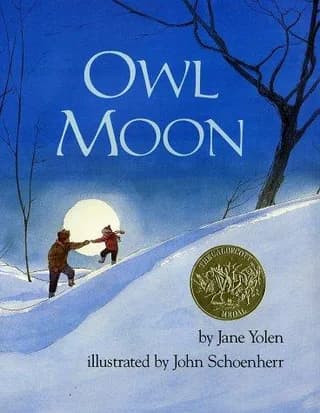
8. Owl Moon#
- Written by
- Jane Yolen
- Illustrated by
- John Schoenherr
- First published
- 1987
- Ages
- 4–8
- Format
- Picture book
Older, and worth waiting for. A child goes out into the snow at night with their father to look for an owl, and almost nothing is said, because talking would ruin it. The American Library Association's 1988 Caldecott Medal citation calls it "an evocative adventure shared by a father and his young child, as they explore the nighttime world in search of owls."
Reading it aloud: whisper it. The book is about being quiet outdoors in the dark, and reading it at a normal volume is the one reliable way to lose it.
If they hunt for the mouse: books with something to find#
The device parents most often miss when they pick the next bedtime book. A small search that is guaranteed to succeed keeps a child on the page instead of asking for another one.
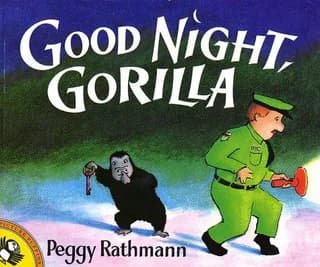
9. Good Night, Gorilla#
- Written by
- Peggy Rathmann
- First published
- 1994
- Ages
- 0–4
- Format
- Board book and picture book
Almost wordless. The gorilla lifts the zookeeper's keys and lets every animal out, and they all follow him home to bed. A mouse tows a banana across the entire book, one spread at a time, and there is a full round of good nights at the end.
Reading it aloud: with barely any text, your child narrates it to you. That reversal is a real developmental shift, and it makes this the best book here for a grandparent who is nervous about reading aloud.
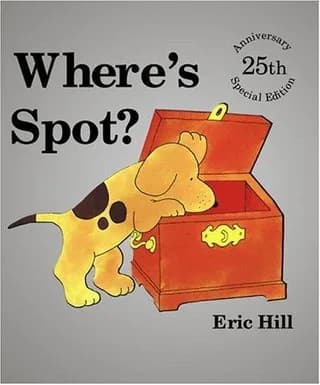
10. Where's Spot?#
- Written by
- Eric Hill
- First published
- 1980
- Ages
- 0–3
- Format
- Lift-the-flap board book
A mother dog looks for her puppy behind eight flaps and finds the wrong animal every time. A hunt with a guaranteed ending, which is the bedtime-safe version of a find-it book.
Reading it aloud: ask "is he in the piano?" and let them answer. They will know by the third reading and tell you anyway. The flaps take an astonishing amount of punishment.
How do I read a bedtime book so it actually ends the day?#
The American Academy of Pediatrics puts the book inside the routine rather than beside it: for young children it advises starting early with a routine "such as brush, book, bed". A 2018 review of bedtime routines in BMC Public Health by Kitsaras and colleagues describes an optimal routine as one that should "include book reading and book sharing activities before sleep". The book is not the reward at the end of the routine. It is the part of the routine that does the settling.
Read it slower than feels right. Most adults read a picture book at conversational speed. Take a beat on each page turn and let the pace of your voice be the instruction.
Do not ask questions. Reading Rockets, the literacy service of WETA in Washington, D.C., describes dialogic reading as the method where "the adult helps the child become the teller of the story". It is the single best thing you can do for a child's language, and at seven in the evening it is the wrong tool — a child predicting, naming and explaining is a child waking up. Save it for the morning book.
Make the last book the short one. Two books, long then short, beats one long book. The short one is the signal, and it works better than any announcement that this is the last one.
Reread the same book. Parents tire of a bedtime book long before children do. Repetition is what turns listening into predicting into performing, and swapping in something new every night quietly removes the ritual you were trying to build.
What to read next#
- You want the wider shelf, sorted by the age each book lands at → the best children's books of all time.
- Their favourite is the Caterpillar rather than the moon → books like The Very Hungry Caterpillar, grouped the same way, by what the child does while you read.
- What they love is the goodnight itself, said back to them → books like Guess How Much I Love You, where the affection is the plot rather than the sign-off.
- You want to know why a few of these last eighty years and most books do not → what makes a good children's story, and child-hero bedtime stories for what changes when the child in the book is yours.
Can a personalized audiobook for kids run the same settling ritual?#
If you remember one thing, remember who each book is for:
- The one who says the goodnights with you → Big Red Barn, then Ten, Nine, Eight once they start negotiating.
- The one who goes still as your voice drops → Time for Bed under two, Guess How Much I Love You after.
- The one who asks about the dark → The House in the Night, and Owl Moon from around five.
- The one who hunts for the mouse → Good Night, Gorilla, and Where's Spot? if they want flaps.
Eleven books, and the ritual in every one of them belongs to somebody else. A rabbit's room, a farm at dusk, a zoo, a girl counting down her own toes. Your child is the audience for a settling that is happening to another child.
Saying goodnight to everything is older than any of these books — it is what a parent does out loud on the stairs. What a book adds is that the ritual comes out the same way twice. What no book on a shelf can do is put your child inside it.
That is what we make at KindFable. You upload one photo, type a few lines about your child — what they are into, something that actually happened this month — and we paint them as the hero of a full 32-page storybook. Not a name dropped into a template: their face, drawn as a character, on every page, with up to three companions beside them. A grandparent, the dog, an imaginary friend who lives on the ceiling.
Bedtime is also the one place a personalized audiobook for kids earns its keep for a reason that has nothing to do with novelty. The ritual survives the nights you are not the one doing it — a grandparent's house, a late shift, a hospital week. Same story, same order, told the same way.
Here is a complete one. Peek-a-Boo, Little Cloud! is a finished story in our shop for ages 0–3, and it runs the same device Goodnight Moon runs: a small thing to find on every page, named out loud, until the finding becomes the ritual. The sample below stars Remi, who is two; a parent adds their own child's photo and name, and every page is painted with that child instead.
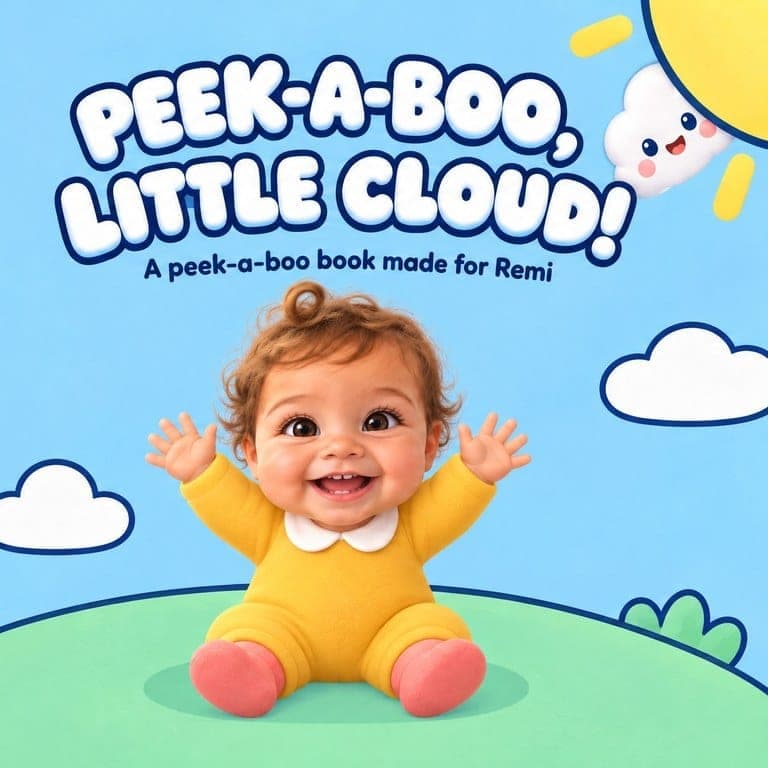

A book from our shop · ages 0–3
Peek-a-Boo, Little Cloud!
Where's Little Cloud? Behind the sun? In the bubbles? With the sheep? A peek-a-boo board-style book for the littlest readers — big shapes, big words, one giggle on every page — and at the end it's your little one who hides.
Shown here starring Remi, 2. Yours is painted with your own child’s face and name on every page, from $39 — and you see the pages before you pay.
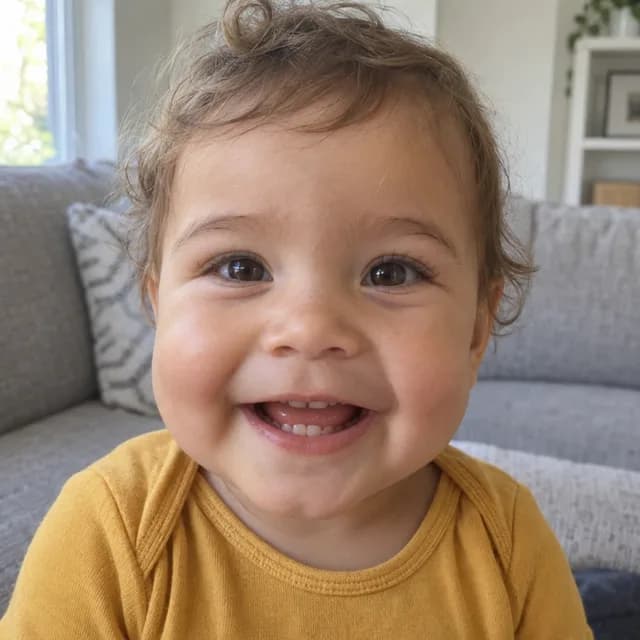
The photo they uploaded

The character we drew
Written from this story — not a stock track with a name dropped in. Free with every book.
How the story begins
- 1This is Little Cloud. Little Cloud loves PEEK-A-BOO.
- 2Where's Little Cloud? Is it behind the SUN?
- 3PEEK-A-BOO! There you are!
The rest of the story is in Peek-a-Boo, Little Cloud!.
The words to the song
[Verse 1]
Where's Little Cloud? Is it behind the sun?
Peek-a-boo! There you are, little one!
Where's Little Cloud? In the bubbles, maybe?
Peek-a-boo! There you are, my baby!

[Verse 2]
Where's Little Cloud? With the sheep so white?
Peek-a-boo! There you are — what a sight!
Where's Little Cloud? In the pillows, hiding?
Peek-a-boo! There you are — no more hiding!

[Verse 3]
Now where's REMI? Under the blanket, I see...
Peek-a-boo! There you are, right here with me!

[Outro]
Little Cloud is sleepy, Little Cloud is soft,
Little Cloud's a pillow now — the moon is up aloft.
Goodnight, Little Cloud. Goodnight, Remi, too.
Close your eyes... and tomorrow — peek-a-boo!
It opens as plainly as a bedtime book should — "This is Little Cloud. Little Cloud loves PEEK-A-BOO." — and page after page asks the same question, "Where's Little Cloud?", so a toddler knows the shape of the next page before you turn it. The lesson underneath is a good one for lights-out: what hides always comes back.
You can pick a finished story like this one from the shop, or write your own on KindFable: name and age, one photo, a tick box for consent, a few lines about your child, and one of nine art styles. You see the pages painted before you pay for anything — the softcover and hardcover prices sit on one page, the hardcover adds a narrated audiobook, and every book includes its own song, free. After that it lives in your dashboard: the page-flip reader, the audio studio, and a reorder button for when the grandparents ask.
Read Goodnight Moon until you can do it with your eyes shut. Then, when you want to tell one of your own, how to make a bedtime storybook is the shortest honest version of the craft — and when you want the book where the child being tucked in is yours, a personalized storybook takes one photo and a few lines. Start with the photo and see the cover before you decide anything.
Book covers are shown unaltered for identification, sourced from Open Library. Each cover remains the property of its publisher and illustrator. KindFable is not affiliated with any of the books recommended here.