If your child keeps handing you Guess How Much I Love You, the six books below are the natural next reads — but which one you reach for depends on which part they are asking for. Some want the measuring game. Some want the going-away and the coming back. Some just want the settling down. Those are three different requests.
Which book should I read after Guess How Much I Love You?#
Watch which part they wait for on the next reading, then take the row that matches. Ages are the publisher's banding. The format column matters more than parents expect: under two, the board book is the one that survives.
| What they wait for | What they are responding to | Read next | Age |
|---|---|---|---|
| Stretching their arms as wide as they go | The measuring game — love made physical | The Runaway Bunny · The Kissing Hand | 2–5 |
| "Where did the mummy go?" | The going-away, and the coming back | Owl Babies · Llama Llama Misses Mama | 2–5 |
| Going quiet and heavy on your arm | The settling down — the wind-down itself | Time for Bed | 0–4 |
| Asking what a feeling is called | The naming of something large and vague | In My Heart | 2–6 |
If they wait for all four, you have a three-year-old. Start with the measuring row — it is the one they can perform back at you, and they will.
What is Guess How Much I Love You actually doing?#
Sam McBratney's text, illustrated by Anita Jeram, was published by Walker Books in 1994 and has since sold more than 43 million copies in 57 languages (Wikipedia, as of 2026-08). It was an ALA Notable Children's Book in 1996.
Most lists describe it as a story about a father and son who love each other very much, which is true and explains nothing. Here is the mechanism:
It is a competition the child is meant to lose. Little Nutbrown Hare reaches as high as he can reach, and Big Nutbrown Hare reaches higher — because he is bigger. He hops as high as he can hop, and is out-hopped. Every single escalation ends the same way, and the book never once lets the small one win.
That should be a miserable book. It is the opposite, because losing is the reassurance. A very small child's actual anxiety is not am I loved as much as I love — it is is the big one bigger than everything. The book answers by demonstrating, five times, that whatever the child can produce, the adult has more of it in reserve.
And then the ending does something almost no picture book dares. Little Nutbrown Hare gets as far as the moon and falls asleep mid-measure. Big Nutbrown Hare answers anyway — up to the moon, and back — and the child never hears it. The last word is spoken over a sleeping child. It is written for the adult holding the book, and every parent who has read it aloud at the right moment knows exactly what it does to them.
Read that final line quietly, and then stop. Rushing it is the one way to spoil the book.
The six books, and who each one is for#
- Written by
- Margaret Wise Brown
- Illustrated by
- Clement Hurd
- First published
- 1942
- Ages
- 2–5
- Format
- Board book and picture book
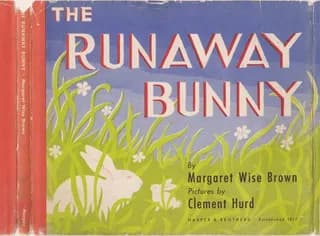
The Runaway Bunny — Margaret Wise Brown, illustrated by Clement Hurd, 1942. The same un-winnable escalation, fifty-two years earlier: a small rabbit announces every escape he can imagine, and his mother answers each one with the shape she will take to follow. It is the better book of the two, and that is not a close call: the imagery is stranger and lasts longer, and the small one's half of the dialogue is genuinely inventive rather than a series of comparisons.
But it is the one to skip for some children. A mother who follows you if you become a fish, a rock, a bird, reads as devotion to most toddlers and as pursuit to a few. If your child is anxious about separation rather than curious about it, this is the wrong week for it — take Owl Babies instead, which lets the worry exist and then ends it.
Read-aloud note: the escapes work best if you let the child answer for the little rabbit. By the third reading most three-year-olds are inventing their own.
- Written by
- Martin Waddell
- Illustrated by
- Patrick Benson
- First published
- 1992
- Ages
- 2–5
- Format
- Board book and picture book
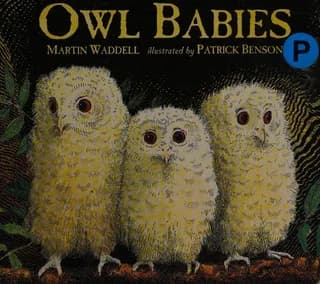
Owl Babies — Martin Waddell, illustrated by Patrick Benson, 1992. Three owlets wake to find their mother gone, and talk each other through the wait. It does the thing Guess How Much I Love You never has to: it names the fear directly. Bill, the smallest, says only "I want my mummy" — the same four words, every time.
Read-aloud note: say Bill's line in exactly the same small voice each time. Children join in on it before they join in on anything else in the book, and by the third read they will say it with you.
- Written by
- Audrey Penn
- Illustrated by
- Ruth E. Harper and Nancy M. Leak
- First published
- 1993
- Ages
- 3–6
- Format
- Picture book
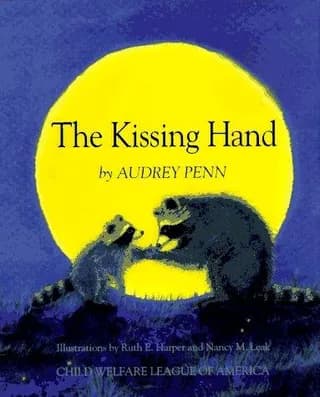
The Kissing Hand — Audrey Penn, illustrated by Ruth E. Harper and Nancy M. Leak, 1993. A raccoon dreading his first night at school is given a kiss in the palm of his hand to keep. It converts an abstract reassurance into a physical object a child can carry, which is why nurseries and reception classes reach for it every September.
Read-aloud note: do the kiss. Press it into their palm and fold their fingers over it. The book barely works read straight through and works enormously well done properly.
- Written by
- Anna Dewdney
- First published
- 2009
- Ages
- 2–5
- Format
- Board book and picture book
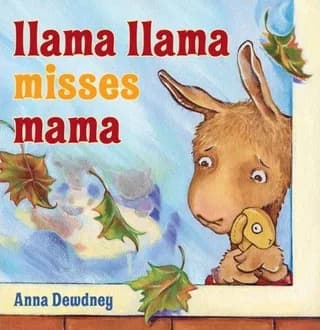
Llama Llama Misses Mama — Anna Dewdney, 2009. The first morning at nursery, in rhyme that a toddler can predict. Dewdney's llama is more visibly upset than most picture-book children are allowed to be, and the recovery is gradual rather than instant.
Read-aloud note: this one is for the afternoon, not for bedtime. It ends happily but it stirs the subject up first, and a child who has just heard it takes longer to settle.
- Written by
- Mem Fox
- Illustrated by
- Jane Dyer
- First published
- 1993
- Ages
- 0–4
- Format
- Board book and picture book
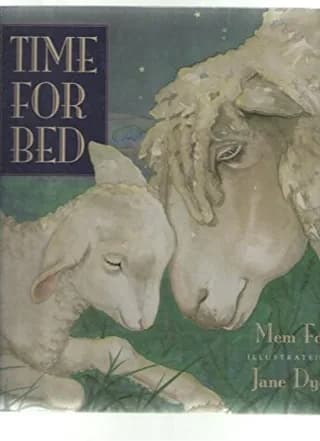
Time for Bed — Mem Fox, illustrated by Jane Dyer. Animal parents putting animal children to bed, in couplets that get slower as the book goes on. There is no plot at all, which is the point: it is a wind-down rather than a story, and it is the right last book of the night.
Read-aloud note: the pace is the whole design. Take each spread slower than the one before, and read the last two almost at a whisper.
- Written by
- Jo Witek
- Illustrated by
- Christine Roussey
- First published
- 2014
- Ages
- 2–6
- Format
- Board book
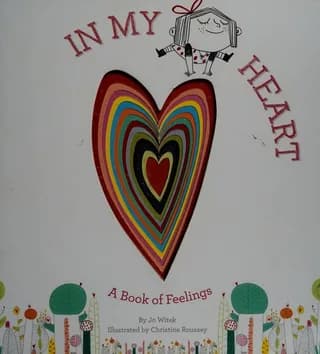
In My Heart: A Book of Feelings — Jo Witek, illustrated by Christine Roussey, 2014. One feeling per spread, each described by what it does in the body — happiness that makes you want to jump, anger that makes you want to shout. It answers the question Guess How Much I Love You leaves open: what do I call this large thing I feel.
Read-aloud note: stop on the spread they linger on. That is the feeling they are working on this month, and it is usually not the one you would have guessed.
Where these lists usually go wrong#
Page one for this search is mostly automated "similar books" aggregators, and the strongest human-made result — BookTrust's — gives an age and a year for every recommendation and then drifts. Its list for a 0–4 bedtime book includes titles banded 4–9, 5–9 and 4–14.
Those are good books. They are not the next read for a family whose two-year-old is stretching their arms out as wide as they will go tonight. Age-fit is the whole job in this band, because the gap between a two-year-old and a five-year-old is larger than the gap between a five-year-old and an adult — and no list that spans 0 to 14 has made a recommendation at all.
Which format to buy: Nobody on page one states the format either, which is the actual purchase decision here. Four of the six books above exist as both a board book and a picture book. Under two, buy the board book; it is not a downgrade, it is the edition built for a reader who turns pages with their whole fist. And do not worry about finishing it: Reading Rockets' advice for parents of toddlers is to "read a little bit, several times a day", which is exactly how a two-year-old uses this book — one stretch of the arms, then off.
What pediatricians say: The American Academy of Pediatrics' 2024 policy statement on literacy promotion treats reading aloud from infancy as part of ordinary child health care, and shared reading is also time a small child spends close to a parent's voice. That is the whole plot of Guess How Much I Love You, which may be why it has lasted.
What to read next#
- The list this belongs to: the best children's books of all time
- If the caterpillar is also in rotation: books like The Very Hungry Caterpillar
- If bedtime is the real subject: books like Goodnight Moon
What would a personalized book for grandchild gifts do that these cannot?#
Here is the honest weakness of Guess How Much I Love You as a present: it is one of the most-given baby books in the world. Forty-three million copies have gone somewhere, and a good number of them went to families who already had one.
That is not a flaw in the book. It is a flaw in giving it, and it points at what none of the six above can do. Every one of them is a story about a child. None of them is a story about your child.
Why a personalized book fits: A personalized book for grandchild presents solves the duplicate problem by construction — nobody else can have given it — but that is the small reason. The larger one is the mechanism at the top of this article. Little Nutbrown Hare is reassured because someone bigger has more love in reserve than he can measure. A book in which the child is named on every page, doing something they actually did, says the same thing in the only register a small child fully trusts: we were paying this much attention to you.
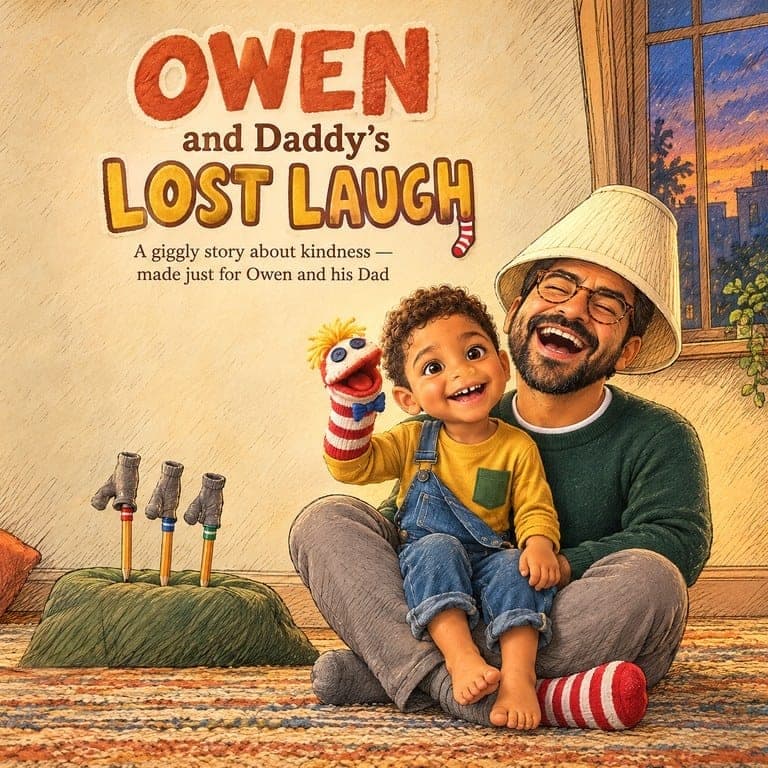
From our shop: The closest thing in our shop to Big and Little Nutbrown Hare is a father and a child. Your Child and Daddy's Lost Laugh is our personalized fathers day book, and a finished story: the sample shown stars Owen, who is five, and his Dad. When you order it, you add your child's photo and name, and every page is painted with your child instead.
"Every evening, Owen did his welcome dance, and every evening Dad laughed. But tonight Dad came home, and sat down, and yawned the biggest yawn in the world." So a small child and a very bossy sock puppet called Mister Toes draw a Laugh Map to find it. Nutbrown Hare measures love with his arms; this one measures it in funny faces and pillow forts. It suits ages 3 to 6 — the age just after Guess How Much I Love You.

A book from our shop · ages 3–6
Your Child and Daddy's Lost Laugh
Dad comes home too tired to laugh at the welcome dance — so your child and Mister Toes, a very bossy sock puppet, draw a Laugh Map: a funny face, a cardboard-box show, the biggest pillow fort ever… and one last secret, level FOUR.
Shown here starring Owen, 5. Yours is painted with your own child’s face and name on every page, from $39 — and you see the pages before you pay.
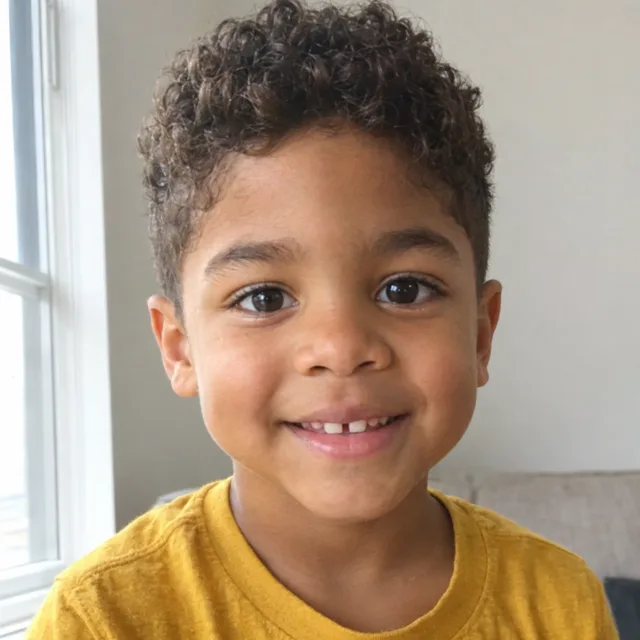
The photo they uploaded
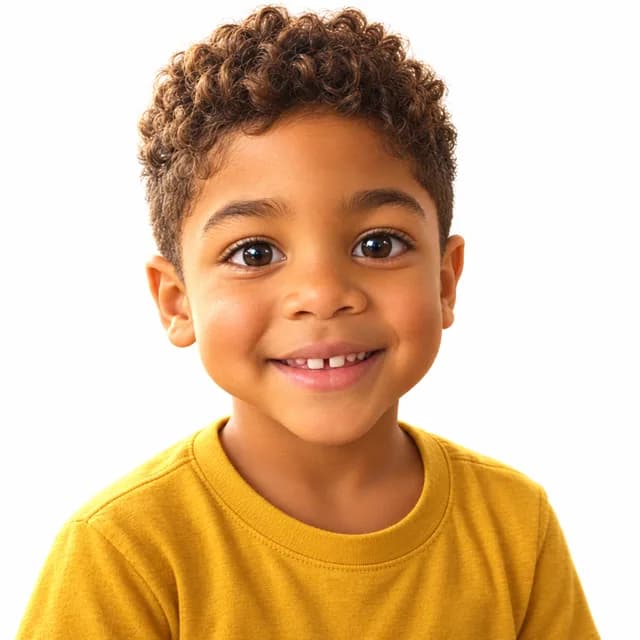
The character we drew
Written from this story — not a stock track with a name dropped in. Free with every book.
How the story begins
- 1Every evening, Owen did his welcome dance, and every evening Dad laughed. But tonight Dad came home, and sat down, and yawned the biggest yawn in the world. He did not laugh. Not even a little. “Dad's laugh,” said Owen, “is MISSING.”
- 2A missing laugh needs a map. Owen drew five ways to find one. Mister Toes had opinions about all of them. Funny face FIRST! “Funny face first,” agreed Owen. “Then the show. Then the fort. Then... we'll see.”
- 3First, practice. Owen pulled his cheeks. He crossed his eyes. He gave himself a toothpaste moustache. Mister Toes pulled the same face. The mirror nearly laughed. “Ready,” said Owen.
The rest of the story is in Your Child and Daddy's Lost Laugh.
The words to the song
[Verse 1]
Dad came home and sat right down and yawned a yawn so wide,
He didn't laugh at the welcome dance — the laugh had gone to hide.
So Owen grabbed a sock and said, “Now Mister Toes, let's go —
A missing laugh needs a map, and we've got five plans in a row!”

[Chorus]
Level one — one corner up! Level two — a smile!
Level three — a great big HA! Now hold on for a while...
Level four is the tickle spot, and once you've found the door,
You'll never lose a laugh again — it's right behind yours!

[Verse 2]
A toothpaste moustache, crossy eyes — one corner of a grin.
A cardboard show, the curtain fell — “Heh,” said Dad. That's a win!
The biggest fort of pillows, Dad crawled inside — too tall —
His head came through the roof in a lampshade. “HA!” That's three! That's all?

[Verse 3]
Mister Toes knew one more thing, he whispered it in the dark:
“Laughs hide in the ticklish spot.” And Owen's fingers found the mark.
The fort came down, the socks flew up, and Dad went HA HA HA —
And Owen laughed so hard he fell right off his dad's big arm. Ta-da!

[Chorus]
Level one — one corner up! Level two — a smile!
Level three — a great big HA! Now hold on for a while...
Level four is the tickle spot, and once you've found the door,
You'll never lose a laugh again — it's right behind yours!

[Outro]
“Dad, where was your laugh?” said Owen, tucked in for the night.
“Right behind yours,” said Dad. “It always is.” Goodnight.
You see your child's painted pages before paying anything, and it will be the only copy of its kind — or you can write a story of your own about a walk you took together. For a five-year-old heading to school, our list of read-aloud books for kindergarten picks up where the hares leave off.
Book covers are shown unaltered for identification, sourced from Open Library. Each cover remains the property of its publisher and illustrator. KindFable is not affiliated with any of the books recommended here.