If your child asks for The Rainbow Fish again, the useful question is not whether the book is any good. It is which of its three lessons they walked away with — that you give pieces of yourself away to be liked, that being unusual is a problem, or simply that they would like a friend. Those are three different children, and the nine books below are grouped that way.
Which book should I read after The Rainbow Fish?#
| What your child says or does | What they took from it | Read next | Ages |
|---|---|---|---|
| Offers you a toy, watching your face | Giving buys affection | Stone Soup | 3–7 |
| Asks why the fish had to give the scales away | They have spotted the problem | The Giving Tree | 5–9 |
| Wants to know if being different is bad | The lesson landed as "fit in" | Elmer | 2–6 |
| Keeps talking about the fish being alone | The exclusion, not the sharing | Each Kindness | 5–9 |
| Mentions a child nobody plays with | They are seeing it at school | The Invisible Boy | 5–9 |
| Just wants a story about having a friend | Friendship, plainly | Frog and Toad Are Friends | 4–8 |
| Goes quiet and leans in | Something is sitting heavily | The Rabbit Listened | 3–7 |
| Loves the shimmer more than the story | It was always the pictures | Little Blue and Little Yellow | 3–7 |
| Asks about people who have less | Fairness, out in the world | Last Stop on Market Street | 4–8 |
What is The Rainbow Fish actually saying?#
- Written by
- Marcus Pfister
- First published
- 1992
- Ages
- 3–7
- Format
- Picture book and board book
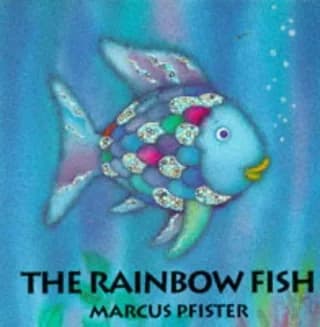
The Rainbow Fish was written and illustrated by Marcus Pfister and first published in German in 1992 as Der Regenbogenfisch. It has sold more than thirty million copies. A beautiful fish with shining scales is lonely; on an octopus's advice he gives the scales away one at a time; by the end he has one shimmering scale left and a great many friends.
Here is the position, and it is the reason this article is organised the way it is: the book is worth reading and its moral is worth arguing with. Both readings are genuinely in the text. Publishers Weekly described it as a cautionary tale about selfishness and vanity — the fish is proud, he learns, he joins the group. Critics read the same pages and see conformity enforced by peer pressure: the fish is ostracised until he hands over his body parts on demand. In 2020 the playwright Topher Payne wrote an alternate ending on exactly that objection.
You do not have to pick a side to use the book well. You have to notice which reading your four-year-old took.
And there is a reason to care. Generosity in small children does not appear to work like a trade. Rodolfo Cortes Barragan and Carol Dweck, writing in PNAS in 2014, found that simple reciprocal interaction — ordinary back-and-forth play — triggered children's benevolence, and they note that earlier research found the opposite of what you might expect: explicitly rewarding or encouraging helping lowers it. Warneken and Tomasello had shown in 2008 that twenty-month-olds who were given a material reward for helping went on to help less than those given nothing at all.
Read that beside the plot and the discomfort has a name. The Rainbow Fish's generosity is a transaction — scales for acceptance — and transaction is the one shape the research says does not build the habit.
If they took "give things away to be liked"#
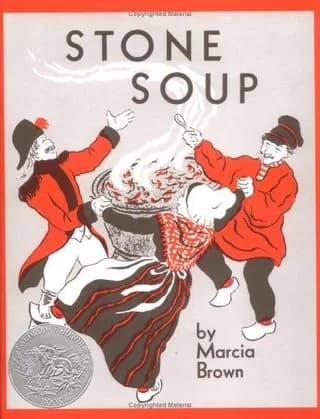
1. Stone Soup — Marcia Brown (1947). Ages 3–7.
- Written by
- Marcia Brown
- First published
- 1947
- Ages
- 3–7
- Format
- Picture book
The direct answer, and the reason it belongs first. Three hungry soldiers set a pot of water boiling with a stone in it; one villager offers a carrot, another an onion, and by the end the whole village eats. Nobody has less than they started with. That is generosity that multiplies instead of subtracting, which is exactly what the Rainbow Fish never gets to experience. Children who have just watched a fish dismantle himself find this enormously satisfying, and the suspicious-villagers opening reads beautifully out loud.
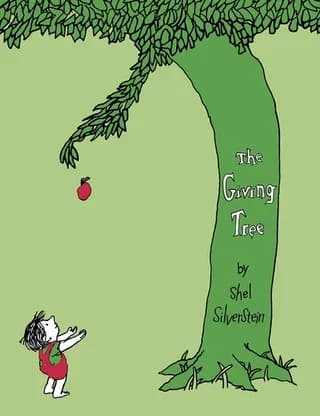
2. The Giving Tree — Shel Silverstein (1964). Ages 5–9.
- Written by
- Shel Silverstein
- First published
- 1964
- Ages
- 5–9
- Format
- Picture book
The other famous book about giving yourself away, and I would hand it to an older child deliberately rather than as a comfort. The tree gives the boy her apples, her branches, her trunk, and ends a stump. It has divided readers for sixty years for the same reason the Rainbow Fish does. Read them as a pair with a six-year-old and you have the best conversation either book can give you. ⚠️ Do not reach for it if the sharing question has already made your child anxious — it does not resolve.
If they took "being different is a problem"#
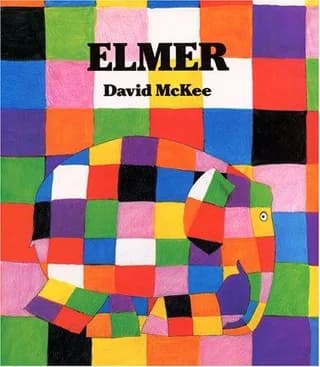
3. Elmer — David McKee (1989). Ages 2–6.
- Written by
- David McKee
- First published
- 1989
- Ages
- 2–6
- Format
- Board book and picture book
The patchwork elephant paints himself grey to be like everyone else, and the herd is duller for it. It is the cleanest available rebuttal: the thing that makes Elmer unusual is the thing his friends actually want back. Where the Rainbow Fish subtracts to belong, Elmer discovers he was already what the group needed. Bright, funny, and short enough for a three-year-old.
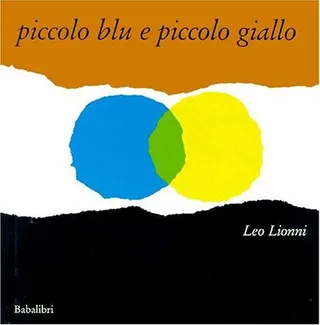
4. Little Blue and Little Yellow — Leo Lionni (1959). Ages 3–7.
- Written by
- Leo Lionni
- First published
- 1959
- Ages
- 3–7
- Format
- Picture book
Two torn-paper blobs hug until they turn green and their parents no longer recognise them. It is almost abstract, and small children accept it completely. For a child who loved the Rainbow Fish's shimmer more than its plot, this is the same pleasure — colour doing the storytelling — without any lesson about earning friends.
If what stung was the exclusion#
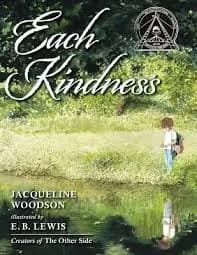
5. Each Kindness — Jacqueline Woodson, illustrated by E. B. Lewis (2012). Ages 5–9.
- Written by
- Jacqueline Woodson
- Illustrated by
- E. B. Lewis
- First published
- 2012
- Ages
- 5–9
- Format
- Picture book
The bravest book on this list. A new girl arrives, the narrator freezes her out, and then the girl leaves — and there is no chance to make it right. It refuses the tidy ending, which is precisely why children remember it. If your child's takeaway from the Rainbow Fish was that being left out is fixed by giving something away, this quietly says the real repair is not to leave someone out in the first place. Read it when you have ten minutes afterwards to sit with it.
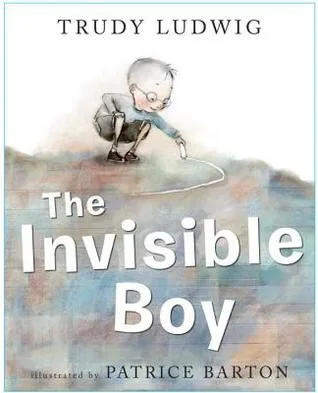
6. The Invisible Boy — Trudy Ludwig, illustrated by Patrice Barton (2013). Ages 5–9.
- Written by
- Trudy Ludwig
- Illustrated by
- Patrice Barton
- First published
- 2013
- Ages
- 5–9
- Format
- Picture book
Gentler, and the practical companion to Each Kindness. A boy nobody notices is drawn in grey while the class is in colour, and he gains colour as one classmate includes him. The illustration does the argument, so a five-year-old follows it without being told what to feel.
If they simply want a book about having a friend#
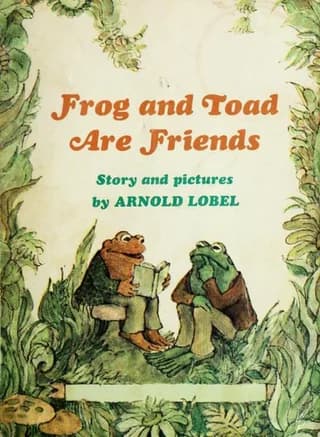
7. Frog and Toad Are Friends — Arnold Lobel (1970). Ages 4–8.
- Written by
- Arnold Lobel
- First published
- 1970
- Ages
- 4–8
- Format
- Picture book
After a book where friendship is bought, this is friendship as ordinary practice: waiting for a letter, looking for a lost button, swimming in a silly bathing suit. Five short stories, so it works as one bedtime each. It is also an early reader, which makes it the natural next step for a child moving past picture books.
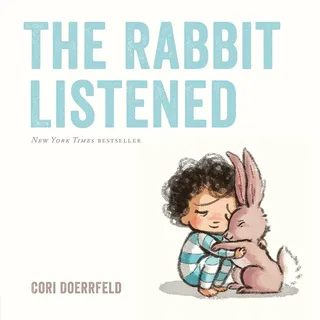
8. The Rabbit Listened — Cori Doerrfeld (2018). Ages 3–7.
- Written by
- Cori Doerrfeld
- First published
- 2018
- Ages
- 3–7
- Format
- Picture book
Taylor's block tower falls and every animal arrives with advice; only the rabbit sits beside Taylor and says nothing. Short, very quiet, and the one to reach for when your child has gone still after a story rather than chatty. It teaches the opposite of the octopus's advice.
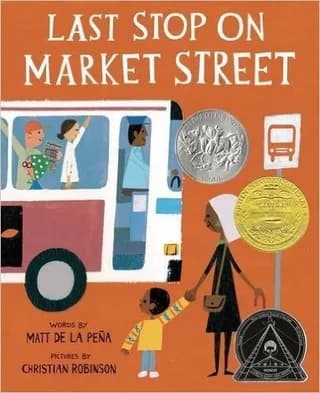
9. Last Stop on Market Street — Matt de la Peña, illustrated by Christian Robinson (2015). Ages 4–8.
- Written by
- Matt de la Peña
- Illustrated by
- Christian Robinson
- First published
- 2015
- Ages
- 4–8
- Format
- Picture book
CJ rides across town with his grandmother, asking why they do not have a car, and she keeps turning his questions into something better. It moves the conversation from "should I give my things away" to noticing what is already around you — which is where a six-year-old asking fairness questions actually wants to go.
How do you read The Rainbow Fish aloud without teaching the wrong lesson?#
You do not have to skip it, and you should not lecture over it. Two small things are enough:
- Stop on the page where he gives away the first scale and ask what your child thinks will happen. Their answer tells you which reading they are running.
- Ask one question at the end. "Did he have to give his scales away to have friends?" Then say nothing. Four-year-olds have opinions about this and they are worth hearing.
- Do not correct the book. A story your child is allowed to disagree with is a better story than one they are told the meaning of.
What to read next#
- Books about kindness for kids — the same territory, sorted by the situation a parent is actually facing.
- Books like Brown Bear, Brown Bear — for a younger child who is in it for the rhythm rather than the moral.
- Books like The Giving Tree — the other famous book about giving pieces of yourself away, and what to read if that one troubled you too.
- Every article in the journal — all our reading guides in one list.
What if the fish who gives something away is your child? A personalized storybook, answered#
Every book above is somebody else's child learning the lesson. That is most of what a shelf can offer, and it is why the same question comes back at the end of a bedtime: would I have given the scales away?
There is one version of that story no publisher can print in advance — the one where the child being generous is yours. KindFable takes one photo and a few sentences about something that actually happened, and paints a 32-page picture book where your child is the hero on every page, in one of nine art styles. Up to three companions can come along: a sibling, a grandparent, the dog. If the thing you want them to keep is the memory of being kind to someone last week, that is the book — not a fish, and not a moral, but them.
Write the real moment into the story box and the book argues nothing; it just shows your child doing the thing. If you want to see the shape of one first, a personalized storybook walks through what a whole one holds.
You can also start from a finished story in our shop. The one closest to the Rainbow Fish's sea is a personalized mermaid book for ages 3 to 7 — and it takes the opposite side of the argument above. Its lesson is that your own voice is worth keeping, loud and wobbly and yours, not something to trade away to fit in. The sample shown stars Sofia, five:
Sofia's singing was LOUD. Sofia's singing was WOBBLY. Once, somebody laughed.
So Sofia stopped singing. Except into her hood, where nobody could hear.
Down by the rock pools a mermaid has lost her song, and a crab in a teacup called Pinch knows things. A parent adds their own child's photo and name, and every page is painted with that child.
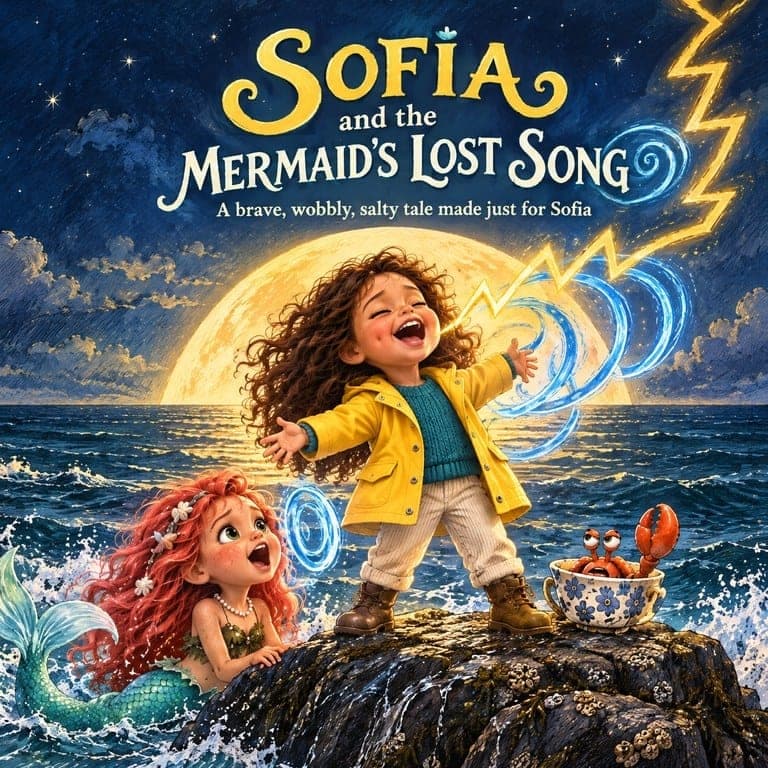

A book from our shop · ages 3–7
Your Child and the Mermaid's Lost Song
A mermaid has lost her song, a crab in a teacup knows things, and your child only sings into a raincoat hood since somebody laughed. On the night of the tide, somebody has to sing the moon up — loud, wobbly, and their own.
Shown here starring Sofia, 5. Yours is painted with your own child’s face and name on every page, from $39 — and you see the pages before you pay.

The photo they uploaded

The character we drew
Written from this story — not a stock track with a name dropped in. Free with every book.
How the story begins
- 1Sofia's singing was LOUD. Sofia's singing was WOBBLY. Once, somebody laughed. So Sofia stopped singing. Except into her hood, where nobody could hear.
- 2Down by the rock pools, somebody was crying. It was a mermaid. “She's lost her song,” said a crab in a teacup. “I'm Pinch. I know things.”
- 3“Every mermaid sings the moon up,” said Pinch. “Her song was a BOOM. Not a tinkle. So she borrowed a tinkle. A borrowed song doesn't fit.” Marina opened her mouth. Nothing came out.
The rest of the story is in Your Child and the Mermaid's Lost Song.
The words to the song
[Verse 1]
Sofia sang, and somebody laughed,
So she sang in her hood like a boat in a draft.
Down by the pools was a mermaid in tears —
"I borrowed a tinkle. Now nothing appears."

[Chorus]
A borrowed song doesn't fit, doesn't fit,
Says the crab in the teacup — that's it, that's it.
Loud and wobbly, deep and BOOM,
Sing your own and you'll sing up the moon.

[Verse 2]
They looked in a shell — only hush, hush, hush.
They looked in a cave — boom... boom... in the dark and the rush.
They looked in the lighthouse — the foghorn went BOOM!
"It sounds like you!" laughed Sofia in the gloom.

[Chorus]

[Verse 3]
Hood down. "Somebody laughed at me too."
Two lost songs on one rock, and the sea turning blue.
No moon, no moon, and the tinkles far away —
So Sofia stood up. And she sang anyway.

[Verse 4]
Loud! Wobbly! Terrible! Hers!
And BOOM came the answer through the wind and the whirs,
Gold and blue in a braid to the top of the sky —
And the moon came up like a plate. Oh my.

[Outro]
Now the window is open, the hood's on the chair,
And a gold zigzag flies out into the air,
And far out at sea, in the dark, in the foam,
A BOOM says goodnight — and Sofia sings home.
Your child's pages are free to see — you see your child in their own book, with their name on it, before you decide anything. After that it is a softcover or a hardcover (the current prices sit on one page, and the hardcover ships free with the whole story narrated), and every book comes with its own song written from the text.
Start with the photo, or read a real book first.
Book covers are shown unaltered for identification, sourced from Open Library. Each cover remains the property of its publisher and illustrator. KindFable is not affiliated with any of the books recommended here.