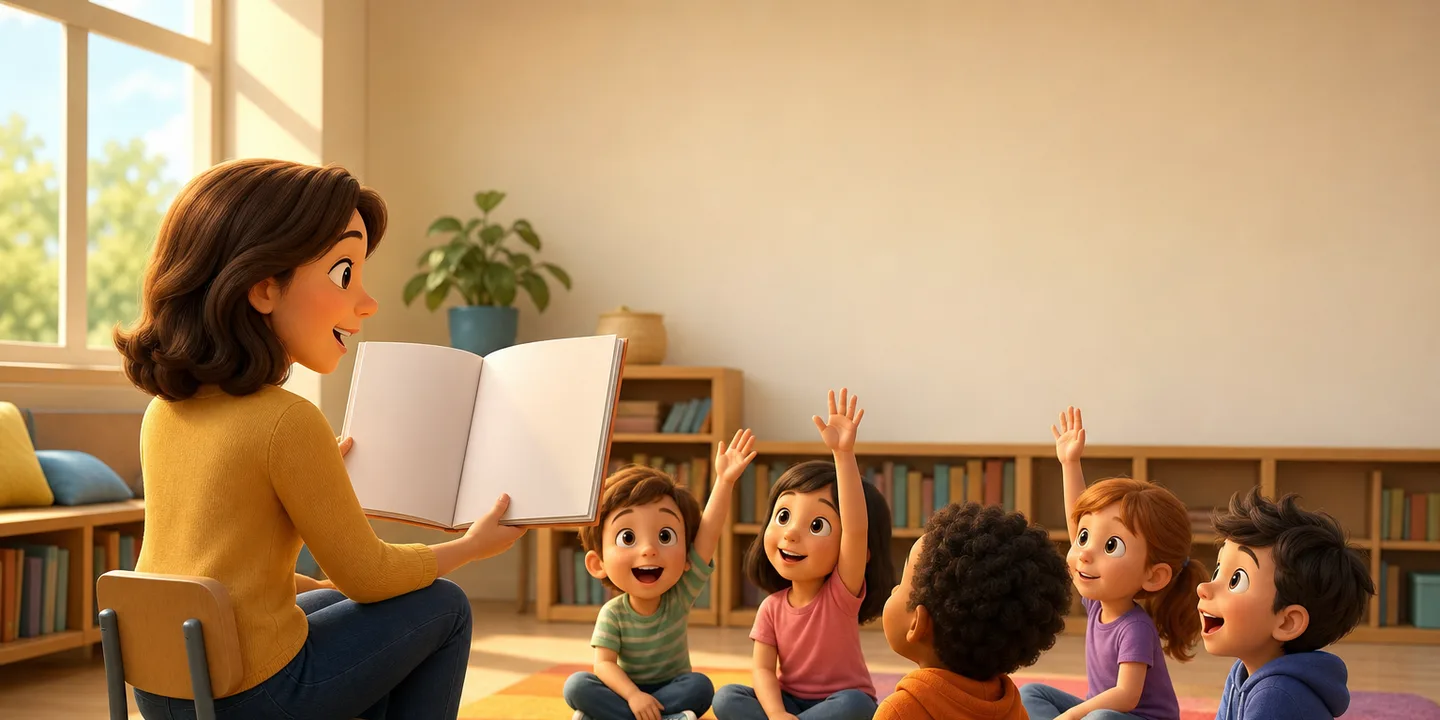
The books that work read aloud to twenty five-year-olds are not simply the best picture books. They are the ones built for a room: a line everybody can say with you, a joke that lands the first time, and pictures big enough to read from the back of the carpet. The ten below are grouped by the job they have to do, because a book that gets a room joining in and a book that settles one after lunch are not the same book.
Which read-aloud does this room need?#
| What is happening in the room | What you need | Read |
|---|---|---|
| Blank faces, nobody joining in | A book that demands an answer | Don't Let the Pigeon Drive the Bus! |
| Everyone talking at once | A rhythm to march them into | We're Going on a Bear Hunt |
| They know their letters and are bored | A chant that hides the alphabet | Chicka Chicka Boom Boom |
| One child cannot sit still | Almost no words, big laugh | No, David! |
| Something has frightened them | A fear they can send away | Go Away, Big Green Monster! |
| You want them looking, not listening | Pictures that contradict the words | Rosie's Walk |
| Long attention, want a proper story | Rhyme with a plot underneath | The Gruffalo |
| After lunch, wound up | Quiet, slow, inevitable | Harold and the Purple Crayon |
| A new child, or a lonely one | A conversation, not a lesson | The Day You Begin |
| Something happened at playtime | The hard one | Each Kindness |
What makes a book work aloud that does not work on a lap?#
A book read to one child on a lap can be dense, quiet and full of small detail. The same book in front of a carpet of five-year-olds dies in ninety seconds. Three things separate them:
- A line the room can supply. Not just repetition — a repeated line with a gap in it, so twenty children finish it before you do.
- Scale. Bold shapes and few elements per page. A beautifully detailed spread is invisible past the second row.
- A turn that lands the first time. On a lap you can reread the joke. In a room you get one go.
And here is the position, because most lists sort by the wrong thing entirely: the seasonal lists — Halloween, Thanksgiving, spring — are choosing by calendar. The calendar does not tell you whether the room can sit still today. Pick by the job, and keep a season book for the day it is actually about.
⚠️ One honest note on this search. A large share of people looking for "read aloud books for kindergarten" want videos — the autocomplete fills in free, YouTube, PDF. If you want something to play, that is a different search and this is not it. Everything below assumes you are the one doing the reading.
Books that make them join in#
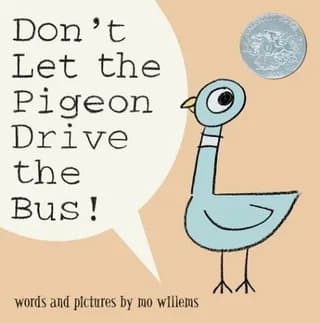
1. Don't Let the Pigeon Drive the Bus! — Mo Willems (2003).
- Written by
- Mo Willems
- First published
- 2003
- Ages
- 3–6
- Format
- Picture book
The one to start with, and the strongest read-aloud on this list. The pigeon asks the reader to let him drive the bus, and a room of five-year-olds discovers within two pages that it is allowed to shout back. A child who has shouted at a book is listening to it. It also teaches you the most useful read-aloud habit there is: stop, wait, and let them answer.
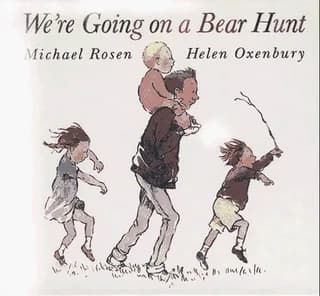
2. We're Going on a Bear Hunt — Michael Rosen, illustrated by Helen Oxenbury (1989).
- Written by
- Michael Rosen
- Illustrated by
- Helen Oxenbury
- First published
- 1989
- Ages
- 2–6
- Format
- Picture book and board book
Whole-body participation: the grass, the mud, the river, all with actions, and then the entire book sprints backwards. Best on a carpet where they can do the movements sitting down. By the third reading they run the retreat without you.
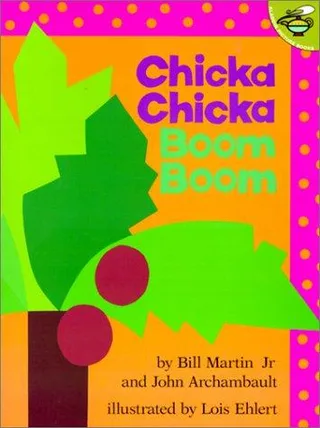
3. Chicka Chicka Boom Boom — Bill Martin Jr. and John Archambault, illustrated by Lois Ehlert (1989).
- Written by
- Bill Martin Jr. and John Archambault
- Illustrated by
- Lois Ehlert
- First published
- 1989
- Ages
- 2–6
- Format
- Board book and picture book
A chant that happens to be about letters, which is why it works where an alphabet book does not. Set the tempo on page one and hold it — read at story pace it falls flat. Note the credit: John Archambault is a full co-author and is routinely dropped from listings.
For the child who cannot sit still#
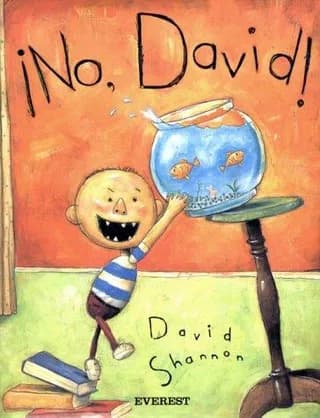
4. No, David! — David Shannon (1998).
- Written by
- David Shannon
- First published
- 1998
- Ages
- 3–6
- Format
- Picture book
Perhaps twenty words in the whole book, all of them things a child has been told. The laugh is immediate and it belongs to the wriggler at the back specifically — this is a book about being in trouble, read to children who are frequently in trouble, and it ends kindly. Ninety seconds long, which is exactly the point on a bad morning.
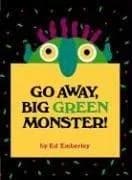
5. Go Away, Big Green Monster! — Ed Emberley (1992).
- Written by
- Ed Emberley
- First published
- 1992
- Ages
- 3–6
- Format
- Picture book
Die-cut pages build a monster face and then take it away, feature by feature, while the room tells it to go. It hands a frightened child a script for control, and it is genuinely satisfying to perform. Hold it high — the cut-outs only work if everyone can see the layers.
Books where the pictures argue with the words#
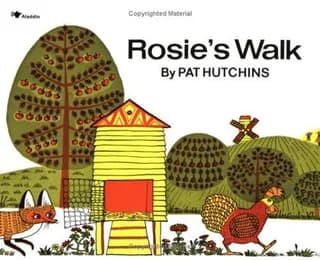
6. Rosie's Walk — Pat Hutchins (1968).
- Written by
- Pat Hutchins
- First published
- 1968
- Ages
- 3–6
- Format
- Picture book
Thirty-two words describe a hen's calm walk around the farmyard. The pictures show a fox being destroyed by it, and the text never mentions the fox at all. Five-year-olds catch the gap and become desperate to tell you about it, which makes it the best discussion book here — and the easiest place to practise stopping and asking.
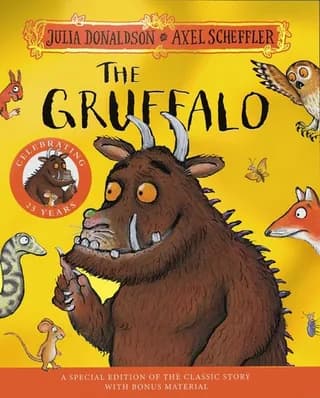
7. The Gruffalo — Julia Donaldson, illustrated by Axel Scheffler (1999).
- Written by
- Julia Donaldson
- Illustrated by
- Axel Scheffler
- First published
- 1999
- Ages
- 3–7
- Format
- Picture book and board book
Rhyme carrying an actual plot, with a repeated structure they can predict by the second animal. The longest sit on this list, so save it for a room that has already settled. The pay-off works only if you have not rushed the middle.
To settle a room#
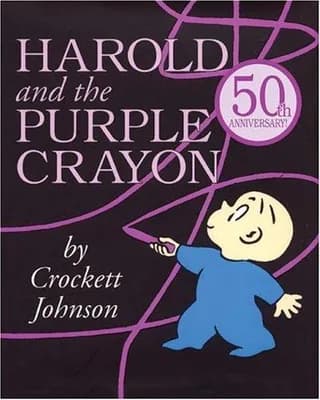
8. Harold and the Purple Crayon — Crockett Johnson (1955).
- Written by
- Crockett Johnson
- First published
- 1955
- Ages
- 3–6
- Format
- Picture book
Quiet, slow, and inevitable — a small boy draws his way through a night and back to his own bed. Nothing shouts. It is the one to reach for after lunch, or after something has gone wrong outside, and it ends with sleep, which does half your work for you.
The two for a real conversation#
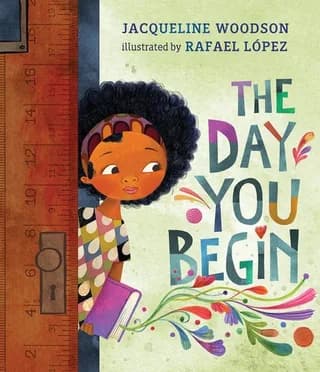
9. The Day You Begin — Jacqueline Woodson, illustrated by Rafael López (2018).
- Written by
- Jacqueline Woodson
- Illustrated by
- Rafael López
- First published
- 2018
- Ages
- 5–8
- Format
- Picture book
For the week a new child arrives, or when someone is being left out. It is about walking into a room where nobody looks like you and finding a way to speak anyway. Woodson does not resolve it cheaply, and López's illustration carries children who cannot yet follow the language.
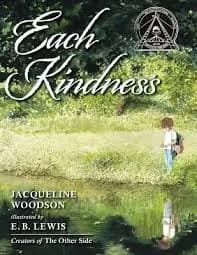
10. Each Kindness — Jacqueline Woodson, illustrated by E. B. Lewis (2012).
- Written by
- Jacqueline Woodson
- Illustrated by
- E. B. Lewis
- First published
- 2012
- Ages
- 5–9
- Format
- Picture book
The hard one, and I would not read it cold. A new girl is frozen out and then leaves, and there is no chance to put it right. It refuses the tidy ending, which is why children remember it — and why you should only read it on a day you have time to sit in the silence afterwards.
Read it three times, not three books once#
This is the change with the most evidence behind it, and almost no list mentions it.
Lea McGee and Judith Schickedanz, in The Reading Teacher, set out repeated interactive read-alouds for preschool and kindergarten: the same book, three times, with each reading doing a different job.
- First reading — introduce the problem, support vocabulary with gestures and quick definitions, model your own thinking aloud, ask why.
- Second reading — remind them what happened, define more words in words, ask more inference questions about what characters want.
- Third reading — hand it over. The children retell the story from the illustrations while you help, explaining causes and what characters were thinking.
By the third reading they are not listening, they are telling. That is the outcome, and you cannot get there by reading a different book every day. It also means the ten books above are not a ten-week plan — they are closer to a term.
It is also why the reading is worth protecting when the timetable gets tight. The American Academy of Pediatrics, in its policy statement Literacy Promotion: An Essential Component of Primary Care Pediatric Practice, recommends reading aloud with children from soon after birth and continuing at least to kindergarten entry — because shared reading builds language, early literacy and the relationship between the adult and the child at the same time. Kindergarten is the end of that window, not a point past it.
What to read next#
- Books about starting kindergarten — the transition itself, which is a different shelf from this one.
- Books like Chicka Chicka Boom Boom — where to go when the chant is the part they love.
- Books like The Rainbow Fish — for the read-aloud that starts a conversation about sharing.
- Every article in the journal — all our reading guides in one list.
Can a personalized audiobook for kids do the reading?#
Not instead of you — and that is worth saying first, because the research above is about what happens between an adult and a child, not about audio.
But there is a gap it fills. A child who has heard a book three times and can now tell it back wants to hear it again on the fourth, fifth and twentieth time, and that is where an adult runs out. KindFable makes a book from one photo and a few sentences you write — your child as the hero on every page — and the hardcover arrives with the whole story narrated, plus a song written from the text. The narration carries the car journey and the twentieth retelling; you keep the first three readings, which are the ones that count.
For what narration adds and where it does not help, a personalized audiobook for kids goes through it honestly.
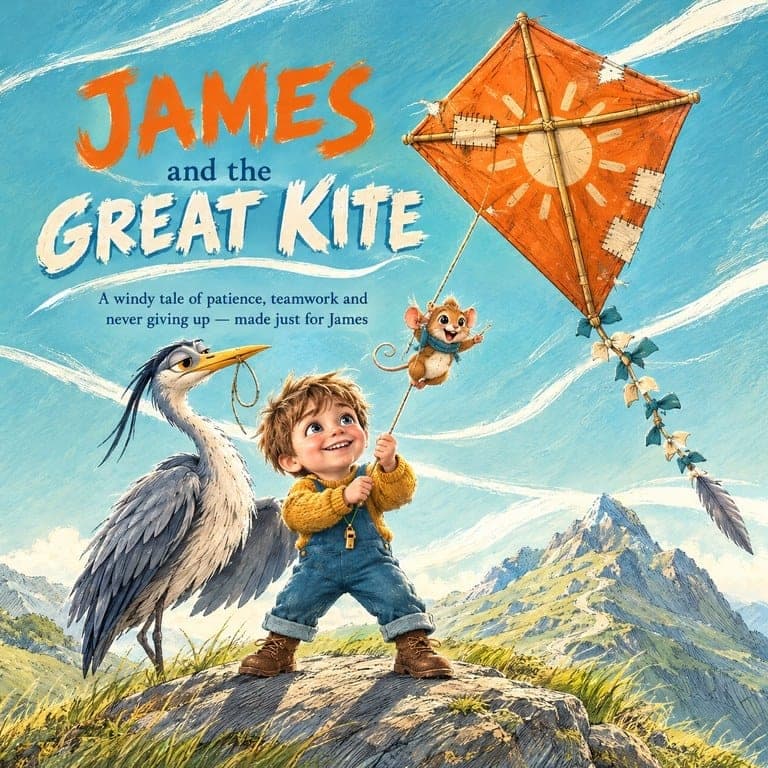
Here is a complete one from our shop, made for reading aloud. The Great Kite is a finished story for ages 3 to 7; the sample you can read stars James, who is six, and when you order it your own child's face and name take his place on every page. It has the two voices a kindergartner loves to do: a mouse tangled in the string squeaking "Go go GO!" and a heron standing in a pond answering "Wait... for... the wind." By the second reading your child will be doing one of them for you.

A book from our shop · ages 3–7
Your Child and the Great Kite
An old torn kite, a mountain whose wind "eats kites", a mouse who wants to go-go-go and a heron who says wait. Three tries, three tumbles, three "Not yet"s — until nobody runs, everyone counts the wind's breaths, and the kite flies higher than any kite ever has.
Shown here starring James, 6. Yours is painted with your own child’s face and name on every page, from $39 — and you see the pages before you pay.
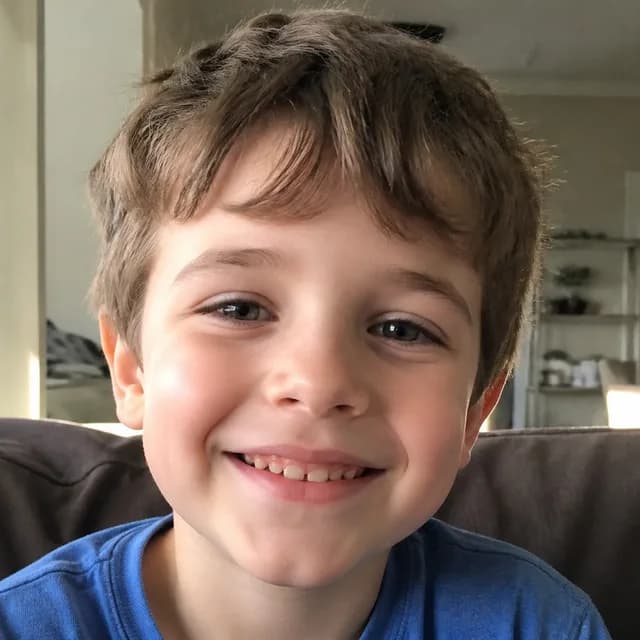
The photo they uploaded
The character we drew
Written from this story — not a stock track with a name dropped in. Free with every book.
How the story begins
- 1James found the Great Kite at the back of the shed. It was old. It was torn. It was bigger than James. “Nobody has ever flown a kite from Whistle Peak,” he said. “The wind up there EATS kites.” James smiled. “Let's see.”
- 2Whistle Peak was very tall. The path was very long. James blew his whistle for the wind. Nothing came. Far, far up, the wind was only just waking...
- 3“Go go go!” squeaked Pip, who was tangled in the string. “Go go GO!” “Wait,” said Marlow, who was standing in a pond. “Wait... for... the wind.”
The rest of the story is in Your Child and the Great Kite.
The words to the song
[Verse 1]
An old paper kite at the back of the shed,
“The wind up there eats them,” everybody said.
But James took the string and he looked at the sky —
“Let's see,” said James. “Let's see if it flies.”

[Chorus]
In... and out. In... and out.
That's what the wind is all about.
Don't run, don't rush, don't quit, don't cry —
One breath at a time, and the kite will fly!

[Verse 2]
A mouse said “Go go go!” and he ran through the mud,
A heron said “Wait...” standing still in the flood.
The kite went up — then SNAP! — and down,
“I quit!” squeaked the mouse. “Not yet,” said James, no frown.

[Verse 3]
They patched it and knotted it, feather for a tail,
They hid from the rain and they didn't wail.
The wind was so big it took James for a ride —
Mouse grabbed heron, heron grabbed boy, all side by side!

[Chorus]
In... and out. In... and out.
Nobody ran and nobody shouted.
“ONE... TWO... THREE!” — up, up, so high —
One breath at a time, and the kite will fly!

[Outro]
The sun went down and they wound up the string,
Tomorrow they'll fly it higher than anything.
Patched and proud on the wall it will climb —
Not yet... not ever... one breath at a time.
You can order The Great Kite with your child as the one holding the string, or write a story of your own from a few sentences.
The painted cover is free — you see your child on the front of their own book before deciding anything. After that it is a softcover or a hardcover (the current prices sit on one page, and the hardcover ships free with the narration included).
Start with the photo, or read a real book first.
Book covers are shown unaltered for identification, sourced from Open Library. Each cover remains the property of its publisher and illustrator. KindFable is not affiliated with any of the books recommended here.