To prepare your child for their first dentist visit, rehearse it at home: tip Teddy back in a chair, count his teeth with a torch and a spoon, and "tickle" them with a toothbrush — then read a story about the dentist the night before. Use calm, positive words ("count", "look", "shiny"), never "hurt" or "needle", and let the dentist explain each tool. The American Academy of Pediatric Dentistry recommends a first visit when the first tooth appears or by the first birthday. Below is when to go, what happens in the chair step by step, the words to use, a plan for a child who is already scared, and the books that help.
When should a child first see a dentist?#
Earlier than many parents think. The American Academy of Pediatric Dentistry's parent FAQ says a child "should see a pediatric dentist when the first tooth appears, or no later than his/her first birthday", and then have a check-up "every six months" unless the dentist suggests otherwise.
Nationwide Children's Hospital's first dental visit fact sheet gives the same window: within six months of the first tooth coming in, or by about 12 months at the latest.
If your child is already two, three or four and has never been, that is fine — book now. The preparation below works at any age.
Why does the first dentist visit matter so early?#
Tooth decay starts young and is common. The CDC's page on cavities reports that "half of children (50%) aged 6 to 9 years have had at least one cavity in their primary (baby) or permanent teeth".
An early visit is mostly about prevention and comfort:
- Catching problems early, before a small spot becomes a painful cavity.
- Advice for you on brushing, toothpaste, bottles, cups, snacks and pacifiers.
- Fluoride, often painted on as a quick varnish to strengthen the enamel.
- Familiarity. A child whose first visits are short and pleasant learns that the dentist is a friendly place before they ever need treatment.
That last point is the one this guide is about. A child's first experience sets the tone for years.
What happens at a child's first dental visit?#
Knowing the sequence lets you rehearse it. For a toddler, a typical first visit is short — often under half an hour of actual time in the room.
| What happens | What it looks like | How to rehearse it at home |
|---|---|---|
| Waiting room | Toys, books, other children | Pack a book and a comfort toy |
| Meeting the team | A dental assistant says hello, maybe gives a sticker | Practise saying hello and your name |
| The chair | Toddlers often sit on a parent's lap, knee to knee with the dentist; older children ride in the chair as it tips back | Tip back in a recliner or on cushions |
| The light | A bright lamp above the chair | Shine a torch on the ceiling: "the sun!" |
| Counting teeth | The dentist uses a small mirror and counts | Count Teddy's teeth with a spoon |
| Checking gums and bite | Looking at how the teeth meet | "Bite down like a crocodile!" |
| Cleaning | A soft brush or a "tickle" brush polishes the teeth | Brush with a giggle |
| Fluoride | A sticky coating painted on, sometimes flavoured | Pretend paint with a cotton bud |
| Talk with you | Brushing, diet, habits, next visit | Bring your questions written down |
| The end | A sticker or a new toothbrush | Plan a small treat (not a sweet one) afterwards |
Older children may also have X-rays at later visits. If so, the dentist will explain the "camera" and the heavy, warm apron.
How do I prepare my child for the dentist at home?#
A week or two before the appointment, start making the dentist familiar.
- Play dentist. Your child is the dentist and Teddy is the patient. Tip Teddy back, shine a torch, count his teeth, give him a sticker. Then swap.
- Read a book about the dentist several times (see the list below).
- Watch a short, calm video of a child at the dentist, if your child likes videos.
- Practise opening wide. "Show me your lion roar!" Count your child's teeth with a finger while they hold their mouth open.
- Brush in the bathroom mirror together and talk about keeping teeth shiny.
- Talk about it simply. "On Thursday we're going to see Dr. Sam. She will count your teeth and make them shiny."
- Visit just to look around, if the practice allows it. Seeing the room and the chair once without anything happening takes away the unknown.
What words should I use — and avoid?#
Children take their cue from your words and your face. A word you meant as reassurance — "it won't hurt" — still contains the word "hurt".
| Instead of | Try |
|---|---|
| "It won't hurt." | "The dentist will count your teeth." |
| "Needle" or "shot" | Leave it to the dentist, who has gentle words for it |
| "Drill" | "A tooth cleaner that buzzes" — or let the dentist name it |
| "Pull" | "Wiggle out" (for older children) |
| "Be brave, don't cry." | "You can hold my hand the whole time." |
| "If you're good, you'll get a lolly." | "After the dentist, we'll go to the park." |
| "I hate the dentist too." | "I go to the dentist to keep my teeth healthy." |
Pediatric dentists use a technique often called tell-show-do: they tell the child what they will do, show the tool (sometimes on a finger or a toy), then do it. Let them lead with their own vocabulary — they have explained a tooth mirror to thousands of children.
How should I book the appointment?#
- Choose a pediatric dentist if you can. They are trained to work with young and anxious children, and their offices are set up for them.
- Book a morning slot or a time after a nap, when your child is rested and fed.
- Avoid rushing. Leave time to arrive early and settle in the waiting room.
- Tell the office if your child is anxious or has additional needs. They can plan for it.
- Bring your child's health history and a list of medicines.
- Write down your questions — about teething, thumb-sucking, pacifiers, bottles, toothpaste.
What should I do on the day?#
- Keep the morning ordinary and calm; do not talk about the visit all day.
- Bring the comfort toy and the dentist book.
- Stay relaxed yourself. Children read their parent's tension far better than their words.
- Let the dentist and the child talk directly; step in only if your child looks to you.
- Praise effort, not perfection: "You opened so wide!" works even if there were tears.
- Plan something nice afterwards — a walk, the playground, a phone call to a grandparent.
How do I help a child who is scared of the dentist?#
Some children are anxious before they ever arrive — because of an earlier experience, a sibling's story or just temperament. A slower plan helps.
Name the worry without growing it. "You feel worried about the dentist. Lots of children do." Then ask what part worries them: the chair, the light, the noise, being away from you.
Break it into small pieces. A first visit can be just sitting in the chair and riding it up and down. The next can be counting teeth. Many pediatric dentists welcome this kind of "happy visit".
Give your child a job. Holding the mirror, choosing the toothbrush colour, counting along with the dentist, or raising a hand as a stop signal. A child who has some control feels less afraid.
Bring a stand-in. A plush toy can go first — the dentist can count Teddy's teeth before your child's.
Use stories. Hearing a story about another child who was nervous and managed it is a gentle way to rehearse courage. A story about your own child doing it is more persuasive still.
Tell the team. Dental teams who know a child is anxious can slow down, explain more and keep the visit short.
For a child who needs help with brave feelings more generally, the guide to books about confidence for kids is a good companion.
How do I keep my child's teeth healthy between visits?#
The dentist's advice will be specific to your child, but these basics come from the main health bodies.
| Habit | Guidance |
|---|---|
| Toothpaste amount | The AAP's toothbrushing tips: a smear about the size of a grain of rice under 3, a pea-sized amount from 3 to 6 |
| Brushing | Twice a day, morning and before bed |
| Helping | Nationwide Children's advises helping your child brush until about age 7 or 8 |
| Bottles | Finish bottles before sleep and brush afterwards; move to a cup around the first birthday |
| Snacks and drinks | Limit sugary snacks and drinks between meals; water is the best drink |
| Pacifiers | The AAPD recommends stopping pacifier habits by 36 months — see our guide to weaning off the pacifier |
Brushing is easiest as part of a routine. The guides to the morning routine chart for kids and the toddler bedtime routine show where it fits.
Which books help prepare a child for the dentist?#
Reading a dentist story several times before the visit is one of the easiest ways to make the day feel familiar.
| Book | Author | Why it helps |
|---|---|---|
| The Berenstain Bears Visit the Dentist | Stan and Jan Berenstain | A classic walk through a check-up |
| Just Going to the Dentist | Mercer Mayer | Little Critter's honest, funny visit |
| Daniel Goes to the Dentist | Adapted from Daniel Tiger's Neighborhood | A familiar character, short and reassuring |
| Your Child's Big Shiny Roar! | KindFable | Your child's own first visit, with a plush lion that goes first |
For more reading by age, see the best books for 3-year-olds and the best books for 4-year-olds.
Can a book where my child is the main character make the dentist less scary?#
A child who has seen themselves in the dentist's chair — and seen it go well — walks into the real room with a memory of success. That is what a personalized dentist story offers.
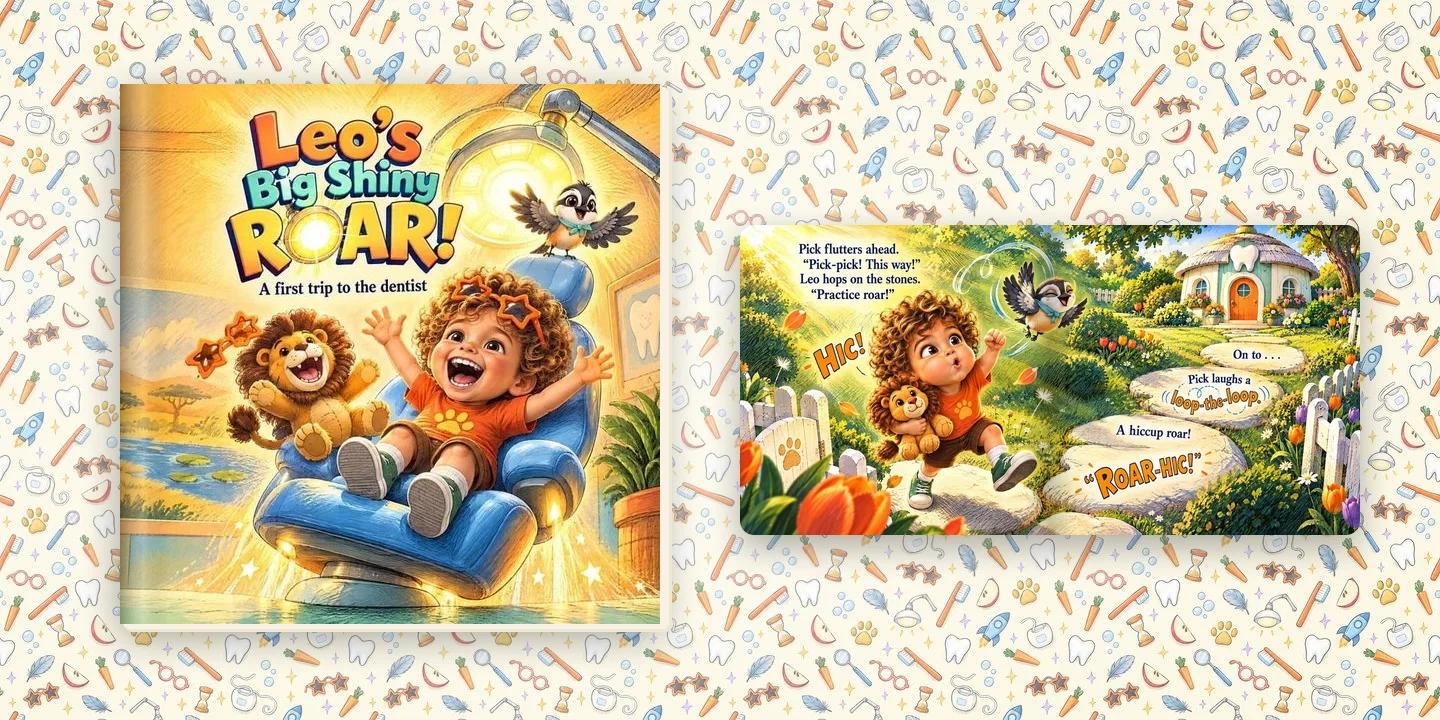
In Your Child's Big Shiny Roar!, your child wants to be brave like a lion at their very first dentist visit, but their tummy roars first. Three practice roars go wrong — a hiccup, a kitty mew, an EEP at Dr. Pippa the hippo's giant shiny smile. Then Roary, the plush lion, goes first: the tooth mirror, the tooth counter, the tickler and the slurpy straw are all tried on Roary. The big chair blasts off like a rocket, out comes a real ROAR, and the visit ends with a lion's reminder to brush two minutes, morning and night. No needles, no drills.
It mirrors the advice above — a stand-in that goes first, friendly names for every tool, a chair that feels like a ride. The hardcover comes with narration in your child's name and a song to sing in the car on the way.
Here it is in full. Leo is the sample child; your copy stars yours.
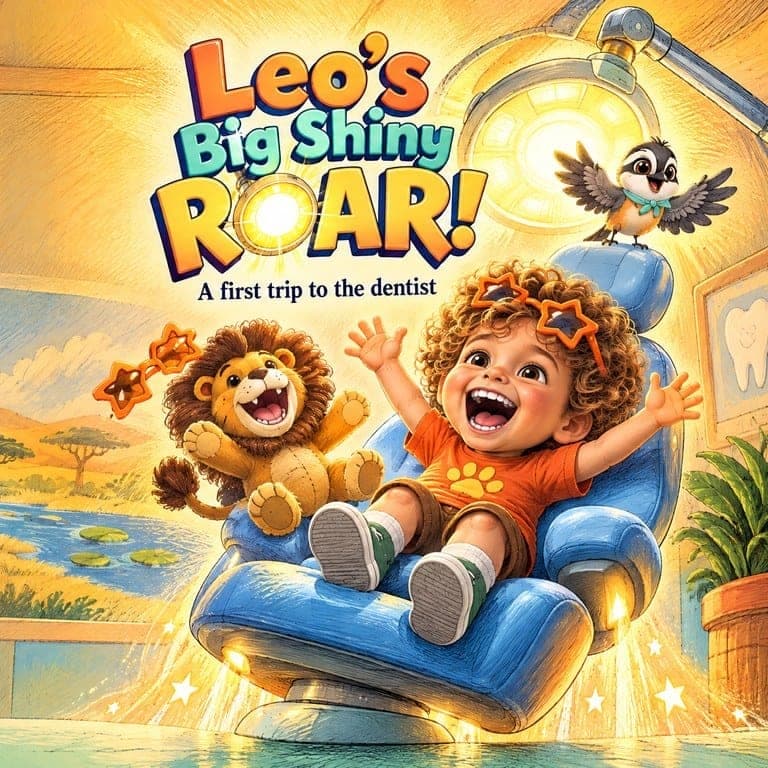
A book from our shop · ages 3–6
Your Child's Big Shiny Roar!
Your child wants to be brave like a lion at the first dentist visit — but the tummy roars first. GRRR! A hiccup roar, a kitty mew, an EEP at Dr. Pippa the hippo's GIANT shiny smile… then Roary the plush lion goes first, every friendly tool is tried on Roary, and the big chair blasts off like a rocket: ROAR! No needles, no drills — just a brave, shiny smile.
Shown here starring Leo, 4. Yours is painted with your own child’s face and name on every page, from $39 — and you see the pages before you pay.
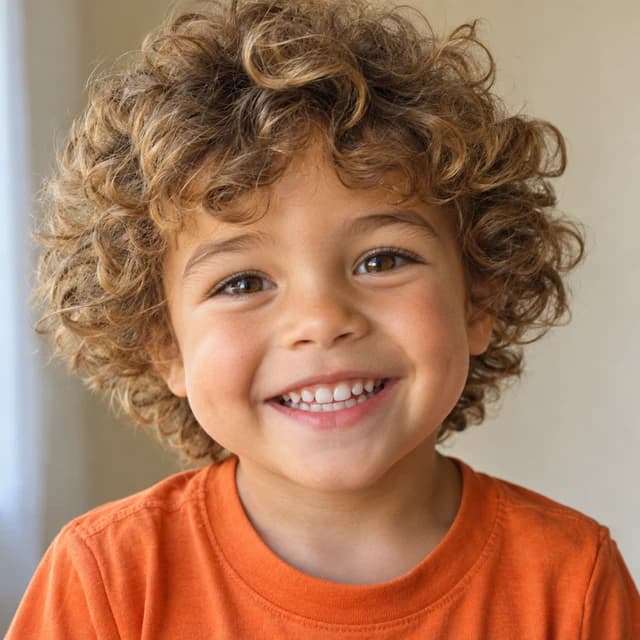
The photo they uploaded
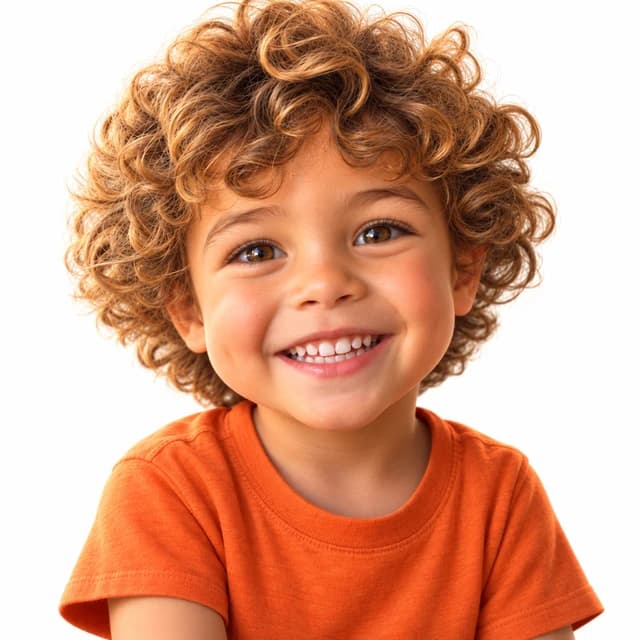
The character we drew
Written from this story — not a stock track with a name dropped in. Free with every book.
How the story begins
- 1Leo has a mane like a lion. Today, Pick the bird brings a card: Leo's first Tooth Hut checkup! “I'll be BRAVE, like a lion!” But his tummy roars first. GRRR . . .
- 2Pick flutters ahead. “Pick-pick! This way!” Leo hops on the stones. “Practice roar!” “ROAR-HIC!” A hiccup roar! Pick laughs a loop-the-loop. On to . . .
- 3Blub, blub, go the bubbles. Leo puffs up his mane. Practice roar number two . . . Out comes . . . “mew?” One teeny bubble. Blub. “Pick-pick! A kitty roar!”
The rest of the story is in Your Child's Big Shiny Roar!.
The words to the song
[Verse 1]
"Pick-pick!" at my window — Tooth Hut today!
I practiced my roar all along the way:
A hiccup, a "mew?", and a squeaky "Eep!" —
Then a giant shiny smile made my tummy leap!

[Chorus]
Open wide... and ROAR!
That's what lion teeth are for!
Big teeth, little teeth, morning and night,
Brush them shiny, strong and bright!

[Verse 2]
Roary went first — whirr, psst, slurp!
Three, two, one, my rocket chair went up!
Pick-pick counted, one to twenty,
Strong little teeth, and I've got plenty!

[Chorus]
Open wide... and ROAR!
That's what lion teeth are for!
Big teeth, little teeth, morning and night,
Brush them shiny, strong and bright!

[Outro]
"A lion's roar needs strong teeth," says the hippo with a grin,
Two whole minutes, round and round again...
ROAR!
How do I make my child's dentist book with a photo?#
- Open Your Child's Big Shiny Roar! in the shop, or start your own at /create.
- Add your child's name and age.
- Upload one clear photo and tick the consent box. Your child appears on every page with the same face.
- Tell the story box about the comfort toy that will come along, and choose an art style.
- See the painted cover before you pay. Nothing is charged until you decide.
- Choose the format. The digital book is ready the same day — useful if the appointment is close; the hardcover comes with the narration and the song. See pricing.
Your dashboard keeps the book, so your child can reread it in the page-flip reader in the waiting room.
A checklist for the week before#
- Appointment booked in the morning or after a nap
- Office told about any worries or needs
- Questions written down
- Dentist book read several times
- Teddy has had his teeth counted at home
- Comfort toy packed
- A small, non-sugary treat planned for afterwards