To wean a toddler off the pacifier, first limit it to sleep, then choose a calm week, prepare your child with a story, and say goodbye with a ritual — a Bye-Bye Box, a pacifier fairy or a trade at the shop — while a comfort toy takes its place. Most children protest for two to four nights and then move on. The American Academy of Pediatric Dentistry recommends stopping pacifier habits by 36 months. Below is the evidence on timing, seven methods compared by age and speed, a first-week plan for nights, the words to use, and the books that make the goodbye feel like your child's own idea.
When should a toddler stop using a pacifier?#
A pacifier is a real comfort for babies, and there is no need to feel guilty about using one. The question is when its benefits are outweighed by its downsides.
The American Academy of Pediatric Dentistry's Policy on Pacifiers (revised 2024) sets out both sides:
| Age | What the AAPD policy says |
|---|---|
| Infancy | Pacifiers have benefits, including a decreased incidence of SIDS |
| After 12 months | Use "can increase the risk of acute otitis media" (middle-ear infections) |
| Beyond 18 months | Use "can influence the developing orofacial complex", including open bite and crossbite |
| By 36 months | The AAPD encourages "discontinuance of nonnutritive sucking habits by 36 months of age" |
The American Dental Association's MouthHealthy guide makes a related point: after the permanent teeth come in, sucking may cause problems with the growth of the mouth and alignment of the teeth. Many early changes to the bite improve once the habit stops, which is one reason to stop before the adult teeth arrive.
In practice, many families start limiting the pacifier between 12 and 18 months and finish between two and three. If your child is older than three and still uses one, it is not too late — the methods below work at four, too.
Does limiting the pacifier help before it goes completely?#
Yes, and there is good evidence for it. In a trial published in Pediatrics (Niemelä and colleagues, 2000), nurses at randomly chosen Finnish well-baby clinics advised parents to restrict pacifier use to the moment the child was falling asleep. Continuous pacifier use at 7 to 18 months fell by 21%, and ear infections were 29% lower among children at those clinics. The authors concluded that restricting the pacifier to falling asleep "effectively prevented episodes" of ear infection.
So the first step of any weaning plan is the same: the pacifier stays in bed. No pacifier in the car, at the park or in front of the television. This alone shrinks the habit, and it makes the final goodbye smaller.
When is a bad time to take the pacifier away?#
Timing matters as much as method. Avoid starting when your child is already coping with a big change:
- a new baby in the family (the guide to the new sibling book has ideas for that transition)
- moving house or starting nursery
- potty training — one big change at a time
- illness or teething
- travel, holidays or a busy family event
Choose a calm fortnight with no big plans, when you can tolerate a few short nights.
What are the methods to wean a toddler off the pacifier?#
There is no single right way. The best method is the one that fits your child's age and temperament — and that you can stick to.
| Method | Best age | Speed | What to expect |
|---|---|---|---|
| Gradual limits (bed only, then sleep only) | 12 months+ | 2–6 weeks | Fewer tears, but needs consistency |
| Cold turkey | 2½+ | 3–5 days | A few hard nights, then over |
| Bye-Bye Box or goodbye ceremony | 2½–4 | 1 day + a few nights | The child takes part in the decision |
| Pacifier fairy | 2½–4 | 1 day + a few nights | Magic and a small present make it exciting |
| Trade at the shop | 3–4 | 1 day | The child "buys" a toy with the pacifiers |
| Give to a baby | 3–4 | 1 day | Pride in being "big" and helping someone small |
| Build-a-bear or stuffed-toy swap | 3–4 | 1 day | The pacifier goes inside a new comfort toy |
Method 1: gradual limits#
Start in bed only. Keep the pacifier only in the cot or bed. After a week or two, offer it only at the start of sleep and take it out once your child is asleep. Then drop it at naps, and finally at night.
This suits younger toddlers who cannot yet understand a plan. It needs patience: the most common reason it fails is that the pacifier creeps back into the day after a bad afternoon.
Method 2: cold turkey#
Pick a day. Tell your child it is coming, and on that day the pacifiers go. Expect protest at bedtime for two to four nights. Stay close, keep the routine the same, and do not bring one back — giving in on night three teaches your child that crying long enough works, which makes the next attempt harder.
Cold turkey is quick and, for many families, kinder overall than a long negotiation.
Method 3: the Bye-Bye Box#
Make it a ceremony. Your child collects every pacifier in the house, puts them in a decorated box, and says goodbye — a wave, a kiss, a song. The box goes away (to the attic, to the dentist, to the "pacifier recycling"). Making the box is part of the ritual: stickers, drawings, your child's name on the lid.
Method 4: the pacifier fairy#
A little magic. Like the tooth fairy, the pacifier fairy collects pacifiers and takes them to new babies who need them. Your child leaves the pacifiers out at bedtime, perhaps with a note, and finds a small present in the morning. Some families pick a date and count down to it on a calendar.
Method 5: the shop trade#
A grown-up deal. Your child takes their pacifiers to a toy shop and "pays" for a chosen toy with them (a quiet word with the shop staff beforehand helps). The child walks out having made a grown-up deal.
Method 6: give them to a baby#
A gift for someone small. Your child gives the pacifiers to a baby they know (or to a "new baby" via the fairy or the post). Children who like being the big one often love this.
Method 7: the stuffed-toy swap#
The pacifier goes inside a new soft toy — at a workshop that makes stuffed animals, or sewn into one at home — so your child keeps it close without sucking on it.
Should I cut the pacifier tip?#
Some parents snip off the tip of the pacifier so that sucking is no longer satisfying, and the child loses interest. We do not recommend it. A cut pacifier can tear further, and loose pieces of silicone are a choking hazard — the American Academy of Pediatrics lists toys with small parts among the household items to keep away from young children. Check every pacifier regularly for tears whatever method you use, and throw away any that are damaged.
How do I get rid of the pacifier at night?#
Nights are where weaning is won or lost. This plan works with most of the methods above.
Before the goodbye day:
- Limit the pacifier to the bed for at least a week.
- Introduce a comfort object — a soft toy or a small blanket — that goes to bed every night.
- Read a book about saying goodbye to the pacifier every night for a week.
- Tell your child the date: "On Saturday, the pacifiers go to the Bye-Bye Box."
The first week:
| Night | What usually happens | What helps |
|---|---|---|
| 1 | Protest at bedtime; maybe waking | Stay close, the same routine, the comfort toy, calm words |
| 2 | Often the hardest night | Praise in the morning for every bit of bravery |
| 3 | Shorter protest | Keep the decision; do not bring one back |
| 4–5 | Most children settle | Add a sticker chart if your child likes them |
| 6–7 | A new normal | Celebrate: a special breakfast, a call to Grandma |
A predictable bedtime routine does a lot of the work. The guide to the toddler bedtime routine shows how to build one in four short parts.
What should I say to my toddler about giving up the pacifier?#
Short, warm, honest and confident works best. Some words to borrow:
- Before: "Pacifiers are for babies. You are getting big. On Saturday, we will say bye-bye to your pacifiers."
- On the day: "You did it! You put them in the box all by yourself. That was so brave."
- At bedtime: "Your pacifiers have gone. You have Bunny. I'm right here."
- When they cry: "You miss your pacifier. That's sad. I'll sit with you." (Then do not negotiate.)
- In the morning: "You slept without your pacifier! Let's tell Daddy."
Avoid shaming ("only babies have dummies"), scary stories about teeth, and promises you will not keep. If big feelings spill over into the day, the guide to books about tantrums can help.
What if my toddler keeps asking for the pacifier?#
Asking is normal for a week or two. Answer the same way every time, kindly and briefly: "The pacifiers went to the babies. You have Bunny." Then offer a hug or something to do.
Watch for substitutes. Some children start sucking a thumb or a sleeve. A thumb is harder to take away than a pacifier, so if it starts, keep giving a comfort object and praise, and talk to your dentist if it continues.
Very rarely, a child truly struggles for weeks. If your child is distressed in the day, not sleeping, or there is a lot going on in the family, it is fine to pause, keep the pacifier to bed only, and try again in a month or two.
What do dentists check if my child used a pacifier?#
At dental check-ups, the dentist looks at how the upper and lower front teeth meet and whether the back teeth line up. Signs of a long pacifier habit can include a gap between the front teeth when the back teeth are closed (an open bite) or the upper teeth sitting inside the lower ones (a crossbite). Your dentist can tell you whether anything needs watching. The guide to preparing your child for their first dentist visit explains what to expect at that appointment.
Which books help toddlers say goodbye to the pacifier?#
A book about giving up the pacifier lets a child practise the goodbye — and the feeling — many times before the real day.
| Book | Author | Why it helps |
|---|---|---|
| Pacifiers Are Not Forever | Elizabeth Verdick | Gentle, practical words for toddlers |
| The Last Noo-Noo | Jill Murphy | A funny, honest story about a young monster who will not give his up |
| Your Child Says Bye-Bye, Binky! | KindFable | Your own child makes the brave choice |
For more toddler reading, see the list of the best books for 2-year-olds and the guide to books about feelings for toddlers.
Why does a personalized storybook help a toddler give up the pacifier?#
Children believe what they see themselves do. A book in which your child decides — on their own — that they are big enough to say goodbye turns the weaning plan from something done to them into something they chose.
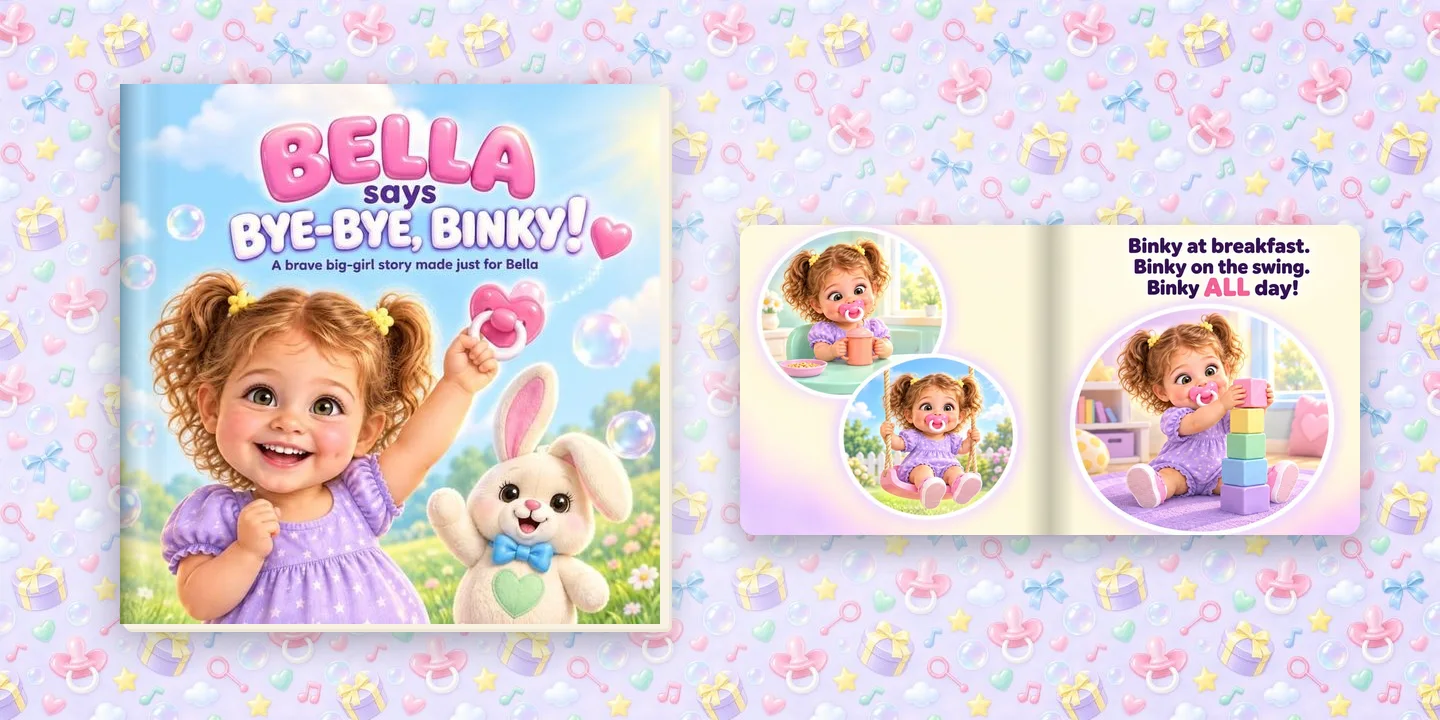
Your Child Says Bye-Bye, Binky! follows that idea closely. Your little one has a pacifier at breakfast, on the swing, all day. But with it in, singing comes out as "MMM-MMM", bubbles will not blow and "I love you" gets stuck. So your child has an idea: POP! Out it comes. "I am BIG now. Bye-bye, Binky!" The pacifier goes into a Bye-Bye Box at sunset, there is one hard night hugging a plush bunny, and then a sunshine HOORAY.
That is the same plan this guide recommends — a comfort toy, a goodbye box, one hard night — told as your child's own story. Read it every night for a week before the goodbye day, and on the night itself. The hardcover comes with narration in which your child hears their own name, and a song.
Here it is in full. Bella is the sample child; your copy stars yours.
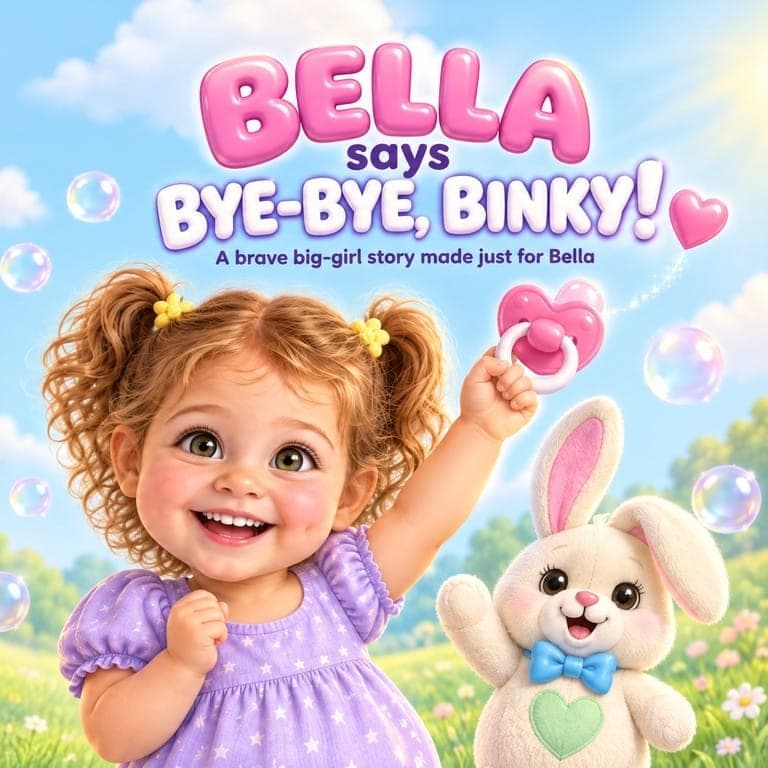
A book from our shop · ages 1–3
Your Child Says Bye-Bye, Binky!
Binky at breakfast. Binky on the swing. Binky ALL day! But when your little one wants to sing, blow bubbles or say “I love you” — MMM-MMM! So one day: POP! Out it comes. “I am BIG now. Bye-bye, Binky!” A sunny, gentle book about saying goodbye to the pacifier — the child's own brave choice.
Shown here starring Bella, 2. Yours is painted with your own child’s face and name on every page, from $39 — and you see the pages before you pay.
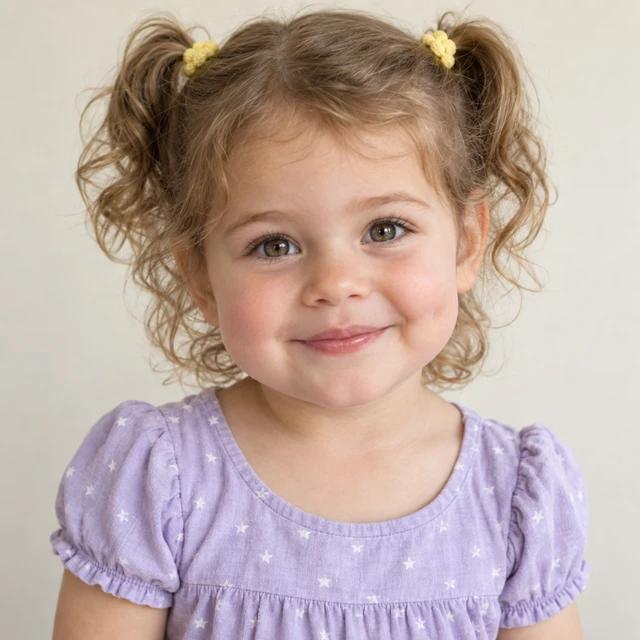
The photo they uploaded
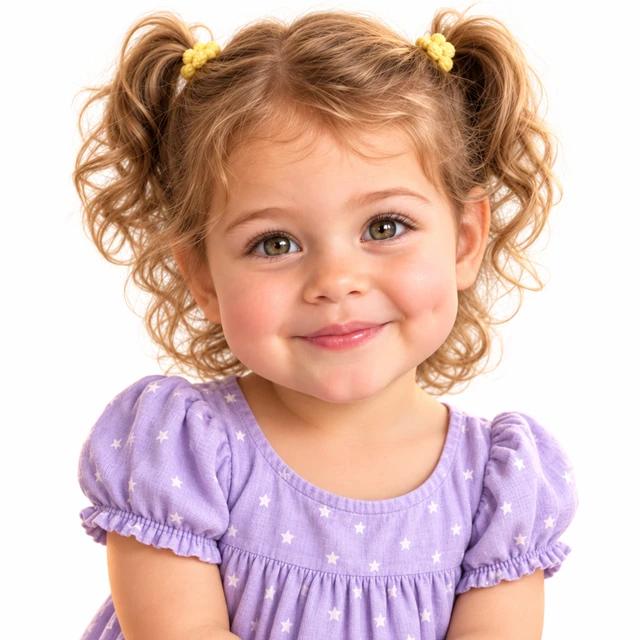
The character we drew
Written from this story — not a stock track with a name dropped in. Free with every book.
How the story begins
- 1This is Bella. And this is BINKY.
- 2Binky at breakfast. Binky on the swing. Binky ALL day!
- 3Here comes Bun-Bun! HOP, HOP!
The rest of the story is in Your Child Says Bye-Bye, Binky!.
The words to the song
[Verse 1]
Little pink Binky, all day long,
At breakfast, on the swing, in every song.
But when Bella sings, what comes out?
Just a tiny little mmm, not a shout!

[Chorus]
Mmm-mmm! (Mmm-mmm!)
Pop! Pop! Out it goes!
La-la-la! (La-la-la!)
Big, brave Bella, everybody knows!

[Verse 2]
Into the box with a kiss goodnight,
Hug your Bun-Bun, hold him tight.
Morning sun says, "Hooray, you're big!"
Bun-Bun hops a happy jig!

[Chorus]
Mmm-mmm! (Mmm-mmm!)
Pop! Pop! Out it goes!
La-la-la! (La-la-la!)
Big, brave Bella, everybody knows!

[Outro]
Bye-bye, Binky, sleep so sweet.
Hello, big Bella, on happy feet!
How do I make a goodbye-pacifier book with my child's photo?#
- Open Your Child Says Bye-Bye, Binky! in the shop, or start a story of your own at /create.
- Add your child's name and age.
- Upload one clear photo and tick the consent box. Your child appears on every page with the same face.
- Tell the story box about the comfort toy — its name, its colour — and choose an art style.
- See the painted cover before you pay. Nothing is charged until you decide.
- Choose the format. The digital book is ready the same day, so you can start reading it tonight; the hardcover arrives with the narration and the song. See pricing.
Your dashboard keeps the book, so your child can reread it in the page-flip reader whenever they miss the pacifier.
A one-page weaning plan#
- Week 1: the pacifier stays in bed only. Introduce the comfort toy. Start reading the book.
- Week 2: choose the goodbye day and mark it on a calendar. Make the Bye-Bye Box together.
- Goodbye day: collect every pacifier, say goodbye, celebrate.
- Nights 1 to 3: same routine, comfort toy, stay close, keep the decision.
- Nights 4 to 7: praise, stickers, a phone call to someone proud.
- Week 3 onwards: answer questions the same way, every time. Then enjoy the next milestone — the guide to potty training books is a good next read when your child is ready.