The best books for 4-year-olds are the first ones a child can be genuinely in on.
At three, a book is something to join in with — a line to shout, a rhyme to finish. Somewhere in the fourth year that turns into something stranger and much more fun. Your child starts noticing that a character is wrong. They laugh before the joke arrives. They ask why he did that. And for the first time they can hold a whole story in their head from the first page to the last.
So this list is not sorted by theme. It is sorted by the three things that are new at four, because those three are what make a book work now that did not work a year ago.
Which book should I read to a 4-year-old?#
Find the row that sounds like your house, and read across.
| What your four-year-old does | What is new at four | Read next | Ages |
|---|---|---|---|
| Tells you a joke with no punchline, then laughs at it themselves | Humour has arrived, and they are testing what counts as funny | Don't Let the Pigeon Drive the Bus! · The Day the Crayons Quit | 3–8 |
| Asks "but why did he do that?" and will not let it go | They want a character's reasons, not only the events | The Gruffalo · Corduroy | 3–7 |
| Retells the story to somebody else, mostly right | They can hold a plot across pages for the first time | Where the Wild Things Are · The Snowy Day | 3–7 |
| Sits happily through a longer one, and you start eyeing chapter books | Listening runs years ahead of reading | Frog and Toad Are Friends · Winnie-the-Pooh, aloud | 4–9 |
If all four describe your child, start with the joke row. It is the one they will perform back to you at dinner, badly, for a fortnight.
What is a four-year-old actually doing with a book?#
Four things are true at four that were not reliably true at three, and each one changes what is worth buying.
They can hold the story. The American Academy of Pediatrics lists recalling part of a story and telling longer stories among the language milestones for four- and five-year-olds. A book with a plot is no longer a book with a plot your child is missing.
"Why" becomes the whole conversation. The American Academy of Pediatrics notes that "your four-year-old probably will ask many 'universal' questions about subjects such as the origin of the world, death and dying, and the composition of the sun and the sky". The same child asks why the mouse invented the Gruffalo. Books where somebody has a plan suddenly have something to answer.
They invent stories of their own. The American Academy of Pediatrics describes children's invented tales this way: "The 'monsters' they talk with at school or the 'dragon' who helps them across the street are normal tall tales for 4- to 5-year-olds." This is the year the imaginary friend gets a name, a job and firm opinions.
A book can finally be discussed. Asking questions and letting the child do the talking has a name — dialogic reading — and its two hardest prompt types are recall (retell the story back to me) and distancing (what does this remind you of in your own life). Reading Rockets, the literacy service of WETA, the public television station in Washington, D.C., states that "frequent use of distancing and recall prompts should be limited to four- and five-year-olds", because they are harder than the fill-in-the-blank prompts that work earlier. Four is when they start landing.
If they have started telling jokes: books that are funny on purpose#
Humour at four is almost entirely about knowing something the character does not. Your child is not laughing at the words — they are laughing at being right.
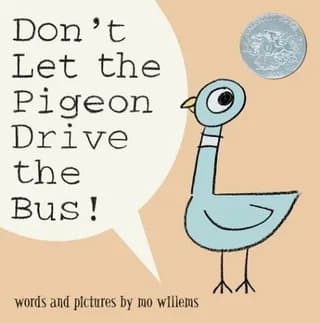
1. Don't Let the Pigeon Drive the Bus!#
- Written by
- Mo Willems
- First published
- 2003
- Ages
- 3–7
- Format
- Picture book
A pigeon wants to drive a bus, and spends the whole book working on the reader for permission — reasoning, bargaining, offering a deal, and finally shouting. Saying no is the entire job, and at four the refusal turns into negotiation, because a child can now hold the pigeon's goal in mind while they block it.
Reading it aloud: stop before one of the pleas and ask what the pigeon will try next. Inventing the argument is a different game from shouting the answer, and it is the game four is ready for.
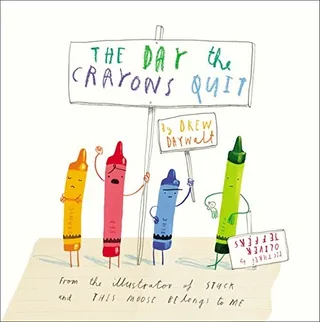
2. The Day the Crayons Quit#
- Written by
- Drew Daywalt
- Illustrated by
- Oliver Jeffers
- First published
- 2013
- Ages
- 4–8
- Format
- Picture book
The crayons write letters of complaint and go on strike. Beige is tired of being second to brown; grey is exhausted from colouring elephants. The joke only works for a child who already knows what a crayon is for, which is why it lands at four and slides straight off a two-year-old.
Reading it aloud: every crayon needs a different voice, and the letters are short enough that you can commit to all of them. Peach, who has lost his wrapper and will not leave the box, is the one to save for last.
If they ask why: books where somebody has a plan#
The "why" year needs books that have an answer. What changes at four is that a child can hold a character's motive in mind across pages, which is the whole machinery of plot.
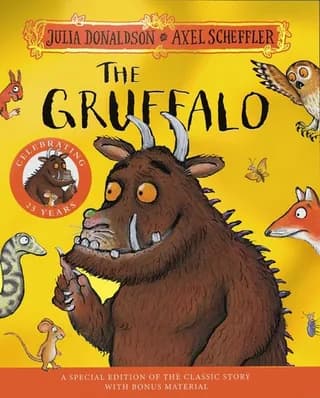
3. The Gruffalo#
- Written by
- Julia Donaldson
- Illustrated by
- Axel Scheffler
- First published
- 1999
- Ages
- 3–7
- Format
- Board book and picture book
Walking through a wood, a mouse talks his way past three animals that want to eat him — and then walks straight into the monster he invented. At three this is a rhyme to recite. At four it becomes a plan with a twist in it, and children start asking whether the mouse knew all along.
Reading it aloud: pick a voice for the mouse and keep it. When they ask whether the Gruffalo was real, do not answer — ask them what they think, which is exactly the kind of prompt that starts working at this age.
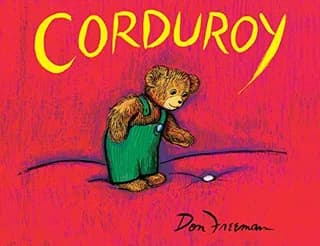
4. Corduroy#
- Written by
- Don Freeman
- First published
- 1968
- Ages
- 3–7
- Format
- Board book and picture book
A department-store bear with a missing button waits to be chosen, goes looking for the button at night, and is bought the next morning by a girl who never cared about the button at all. One want drives the entire book, which is the cleanest example of motive a four-year-old will meet.
Reading it aloud: the escalator and the night-watchman pages are the first real jeopardy in the book. A good test of whether your child enjoys a bit of it yet.
If they retell the story: books with a plot that holds#
A four-year-old who narrates the book back to a grandparent — out of order, with the good bits enlarged — is doing something genuinely new. These two reward it.
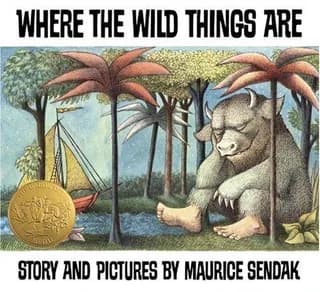
5. Where the Wild Things Are#
- Written by
- Maurice Sendak
- First published
- 1963
- Ages
- 4–8
- Format
- Picture book
A boy in a wolf suit is sent upstairs hungry, and a forest grows in his bedroom. He rules the monsters he finds there, gets lonely at the top of it, and sails back to a supper that is still hot. It won the 1964 Caldecott Medal, and by EBSCO's count ten sentences and 338 words carry the entire emotional arc of a tantrum.
Why it belongs at four and not three: we say elsewhere that three-year-olds are better off waiting for this one. The book is written from above the tantrum, by someone who already knows it will end, and standing outside your own anger is a four-year-old's trick. This is the year it converts from frightening to thrilling.
Reading it aloud: the wild rumpus is three wordless spreads. Say nothing at all and let them look — it is the easiest part of the book to rush, and the best part to sit in.
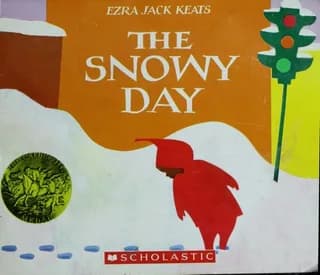
6. The Snowy Day#
- Written by
- Ezra Jack Keats
- First published
- 1962
- Ages
- 3–7
- Format
- Board book and picture book
A small boy wakes to snow and spends a day in it. Nothing happens, beautifully. Long recognised as a landmark for putting a Black child at the centre of an American picture book, it won the 1963 Caldecott Medal.
Reading it aloud: the snowball Peter puts in his pocket, and what has happened to it by the evening, is the moment worth pausing on. Let them work it out before you tell them.
Should a 4-year-old be able to read?#
No. Reading words is not expected at four, and pushing it buys nothing.
What a four-year-old does instead is more useful than decoding. They retell a familiar story mostly correctly, predict what comes next, and argue about a character's reasons. Those are the foundations reading is later built on top of, and they are built by being read to.
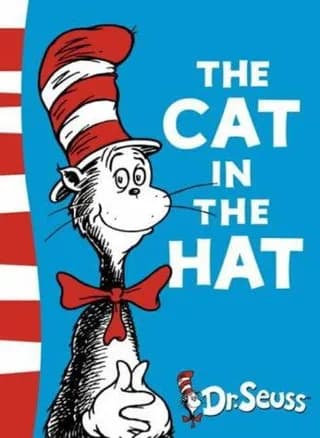
The one on every list that is not a read-aloud. The Cat in the Hat appears on essentially every four-year-old list, and it is worth knowing what it actually is.
- Written by
- Dr. Seuss
- First published
- 1957
- Ages
- 3–7
- Format
- Beginning reader
Published in 1957, it is sold by Penguin Random House in the Beginner Books series, which the publisher describes as motivating "children to read on their own by using simple words". That is a beginning reader — a book engineered for a child who is already decoding — rather than a read-aloud.
So read it for pleasure, not for progress. It is a fine, mad bedtime story at four. Buying it because it will teach a four-year-old to read is the mistake, and it can leave a parent thinking their child is behind. They are not — the book was aimed a couple of years past them.
Are chapter books right for a 4-year-old?#
This is where most parents move too early, and the reason is understandable: a four-year-old sits still for longer, so a chapter book looks like the natural next thing. Two different questions are hiding inside one.
| The question | The honest answer |
|---|---|
| Can a four-year-old read a chapter book? | Almost never, and it is not a goal worth having at four |
| Can a four-year-old enjoy one read aloud? | Yes, and this is where the good stuff is |
| Should I stop buying picture books? | No. The richest picture books are pitched at exactly this age |
The reason the read-aloud version works is that comprehension by ear runs ahead of comprehension by eye for years. Summarising the research, Tiffany Hogan and colleagues, writing in the International Journal of Speech-Language Pathology and republished by Reading Rockets, note that "listening comprehension becomes the dominating influence on reading comprehension starting even in the elementary grades". A four-year-old can follow a story far above anything they could ever decode.
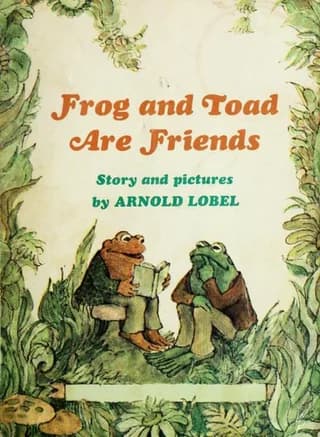
7. Frog and Toad Are Friends#
- Written by
- Arnold Lobel
- First published
- 1970
- Ages
- 4–8
- Format
- Chapter book
Five short stories about two amphibians of opposite temperaments. Frog is cheerful, Toad is not, and the book never once suggests Toad should change. It was named a 1971 Caldecott Honor Book.
Reading it aloud: one story a night. Each chapter is a complete story at picture-book length, which is precisely the bridge a four-year-old needs — a chapter break with no cliffhanger to hold overnight.
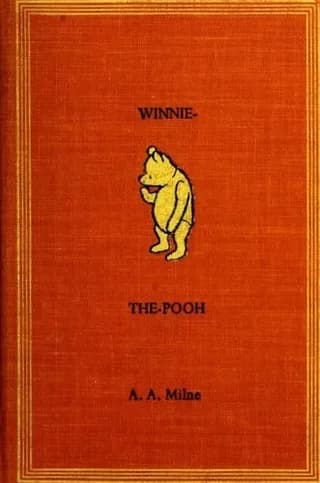
8. Winnie-the-Pooh#
- Written by
- A. A. Milne
- Illustrated by
- E. H. Shepard
- First published
- 1926
- Ages
- 5–9
- Format
- Chapter book
The original 1926 stories, which are drier, funnier and considerably stranger than the adaptations. Eeyore is genuinely depressed and nobody tries to fix him.
Reading it aloud: the jokes live in the sentence rhythm, so read slowly and do not explain them. A four-year-old will miss half and laugh at the other half, which is the correct ratio.
The one we would wait three years for#
- Written by
- E. B. White
- Illustrated by
- Garth Williams
- First published
- 1952
- Ages
- 7–10
- Format
- Chapter book
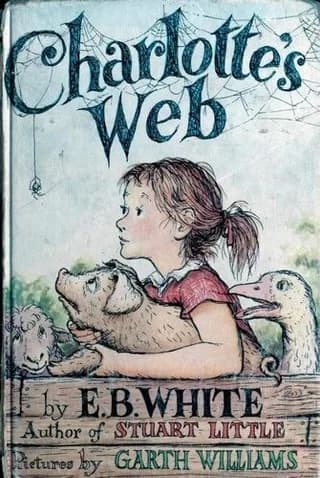
Charlotte's Web turns up on four-year-old lists constantly, and we think that is a genuine mistake. A pig is to be slaughtered, a spider saves him by writing in her web, and the spider dies. It is the best book about death ever handed to a child, and all of that requires a reader who can carry a worry across several nights.
Hand it over at four and your child remembers being bored. The same child at seven remembers the ending for the rest of their life. Read it to them at seven and it lands; hand it to them now and it does not.
How do I read to a four-year-old so it lands?#
Four is the first age where the conversation around the book matters as much as the book. Three things that work across all eight above:
1. Ask them to tell it back. Not "did you like it?" but "what happened to Corduroy at night?" This is a recall prompt — the type Reading Rockets says should be used frequently only with four- and five-year-olds, because it is harder than a fill-in-the-blank — and it is the fastest way to find out whether a book actually landed.
2. Answer "why" with "what do you think?" The why questions are not requests for information so much as invitations to think out loud. A four-year-old handed the question back will usually produce a better theory than the one you were about to supply.
3. Let the funny book be genuinely funny. Adults reflexively soften a joke book into a lesson. The Pigeon is not teaching patience and the crayons are not teaching fairness — they are jokes, and being allowed to find them hilarious is what makes a four-year-old ask for a book again.
What to read next#
- The whole shelf, sorted by the age each book lands at → the best children's books of all time.
- You have a three-year-old too, or you are wondering what you missed → the best books for 3-year-olds, sorted by what they say rather than by what they can do.
- They have worn out one particular book and you want the next → books like The Very Hungry Caterpillar.
- Why some books survive forty readings → what makes a good children's story, and books about starting kindergarten for the year ahead.
Can a book where my child is the main character keep up with what they invent at four?#
If you keep one thing from this page, keep who each book is for:
- The one who has started telling jokes → the Pigeon, then The Day the Crayons Quit.
- The one who asks why → The Gruffalo, then Corduroy for a want that drives a whole book.
- The one who retells the story → Where the Wild Things Are, at last, and then books like Where the Wild Things Are for the next.
- The one who sits for a longer one → Frog and Toad Are Friends, then Winnie-the-Pooh.
- The one you are tempted to hand a chapter book → wait. Seven is three years away, and it is a different book by then.
Eight good books, and every one of them was written before your child was born.
That is the deal a classic makes. It lasts fifty years by being about everyone, which is exactly why it can never be about anyone in particular. And this is the year that starts to matter, because a four-year-old has just worked out that a story can have somebody inside it — and has begun putting themselves there: the dragon in the garden, the friend on the ceiling, the version of this afternoon where they were braver. The American Academy of Pediatrics calls those normal tall tales at four and five.
They are also, quietly, the same thing a picture book is. So a four-year-old is doing the exact work the shelf is doing — and every book on the shelf is about somebody else.
That is what we make at KindFable. You upload one photo, type a few lines about your child — what they are into, something that actually happened this month — and we paint them as the hero of a full 32-page storybook. Not their name dropped into a template: their face, drawn as a character, on every page, with up to three companions beside them. A grandparent, the dog, an imaginary friend who lives on the ceiling.
At four that last one matters more than it sounds. A book where my child is the main character can hold the invented friend as well as the real child, which no publisher can do in advance, because the friend was invented last Tuesday.
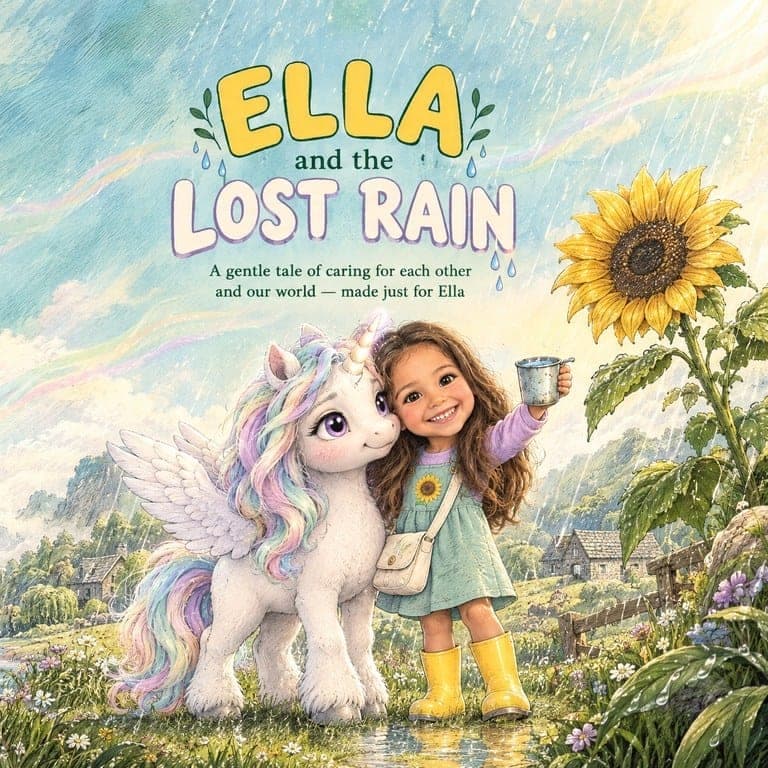
Here is a complete one, from our shop. The Lost Rain is a finished story for ages 3 to 7; the sample you can read stars Ella, who is six, and when you order it your own child's face and name take her place on every page. It has not rained for forty days, and then a small grey cloud-unicorn falls into the garden. The first question the hero asks him is not "what are you?" but "Are you hurt?" — which is exactly the kind of reason a four-year-old has just started wanting from a character. Look inside it, and press play on the song.

A book from our shop · ages 3–7
Your Child and the Lost Rain
It hasn't rained for forty days — then a small grey cloud-unicorn falls into the garden. One bottle, one bag, one cloud at a time, a child who cannot walk past anything that needs looking after brings the rain back to the whole valley.
Shown here starring Ella, 6. Yours is painted with your own child’s face and name on every page, from $39 — and you see the pages before you pay.
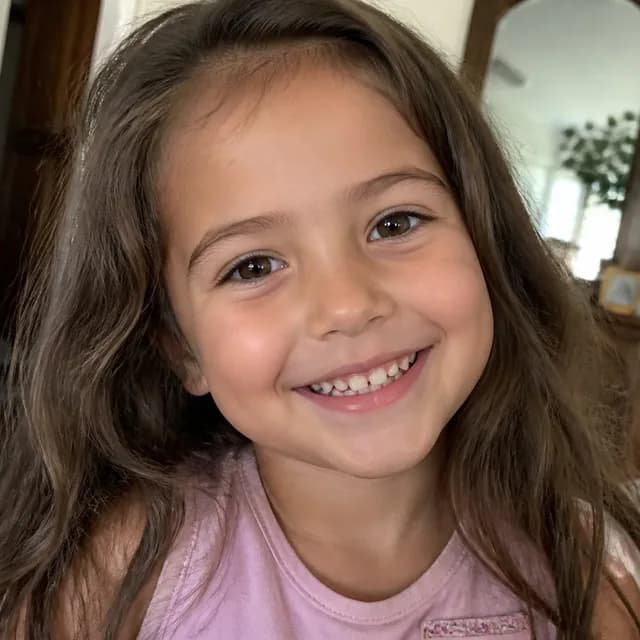
The photo they uploaded
The character we drew
Written from this story — not a stock track with a name dropped in. Free with every book.
How the story begins
- 1It had not rained in Willowmere for FORTY days. The river was a thread. The garden was dust. Ella gave her sunflower the very last cup. “Hold on,” she said. “The rain will come.”
- 2That night, something fell out of the sky. It landed in the garden with a soft, dusty THUMP. It was small. It was grey. It was coughing. Ella did not ask what it was. She asked, “Are you hurt?”
- 3Ella washed the grey out of his mane with the last water in the house. She wrapped him in her blanket. And one small streak of colour came back. “I'm Nimbus,” he whispered. “I comb the clouds, so they rain. But the clouds stopped growing. Because the mist stopped rising. Because the river stopped singing.”
The rest of the story is in Your Child and the Lost Rain.
The words to the song
[Verse 1]
Forty days and the garden was dust,
The river a thread and the sky was rust.
But Ella wore her yellow boots each day —
“The rain will come,” is all she'd say.

[Chorus]
One small thing... then another!
Look after something, and it looks after another.
A cup for a flower, a cloth for a mane,
One small thing — and here comes the rain!

[Verse 2]
Down fell a unicorn, grey as a ghost,
She didn't ask what — she asked what hurt most.
She washed him clean with the last of the water,
And a lavender streak came back — she'd caught her!

[Verse 3]
The river was full of the things that don't belong,
Bottles and bags where the water should be strong.
“Too much!” said Nimbus. Ella picked up one.
Then another. Then another. Till the singing had begun!

[Chorus]
One small thing... then another!
Mist from the well and a stalk tied together.
White went the clouds, and silver, and then —
One fat drop... and RAIN again!

[Outro]
The sunflower lifted its face to the sun,
The river sang all day when the caring was done.
“Everything you care for cares for something too” —
One small thing, then another. Starting with you.
You can order The Lost Rain with your child as the hero, or write your own story instead. On KindFable it goes: name and age, one photo, a tick box for consent, a few lines about your child, and one of nine art styles. You see your child painted into the book before you pay for anything — the softcover and hardcover prices sit on one page, every book includes its own song, free, and the hardcover adds the narrated audiobook.
Read the eight first. Then, when they tell you about the dragon in the garden, start with the photo.
Book covers are shown unaltered for identification, sourced from Open Library. Each cover remains the property of its publisher and illustrator. KindFable is not affiliated with any of the books recommended here.