Somewhere in the last weeks of summer, most parents of a four- or five-year-old have the same quiet realisation: the uniform is hanging on the door, the tiny backpack is packed, and the small person it belongs to has started asking very big questions at bedtime. Will you stay? What if I can't find the toilets? What if nobody plays with me?
Starting school is one of the first genuinely large transitions of childhood. And one of the gentlest, most reliable tools for it has been sitting on the bookshelf all along: a story.
Why a book works when a pep talk doesn't#
Telling a child "you'll be fine" rarely lands, because the worry isn't a fact problem — it's an imagination problem. Your child has never seen the inside of that classroom, so the mind fills the blank with monsters, or at least with a very large room full of strangers.
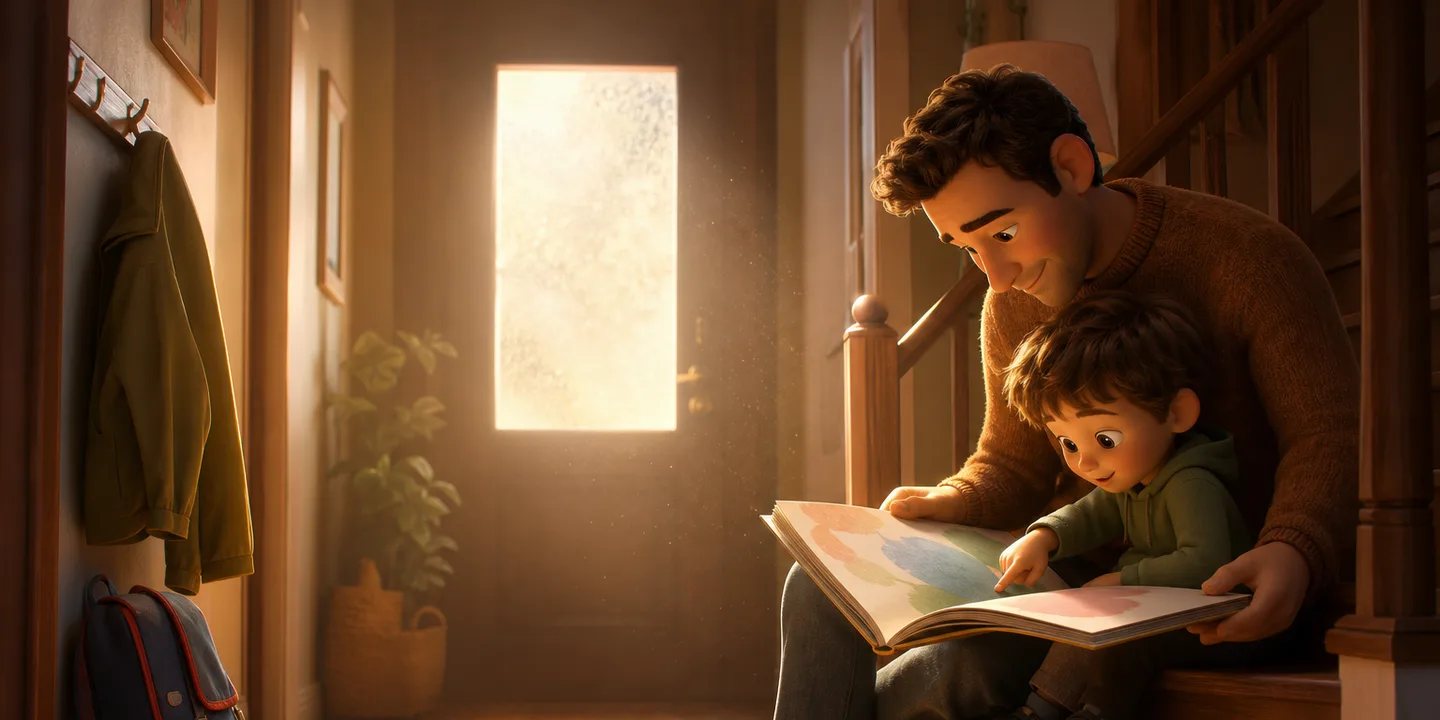
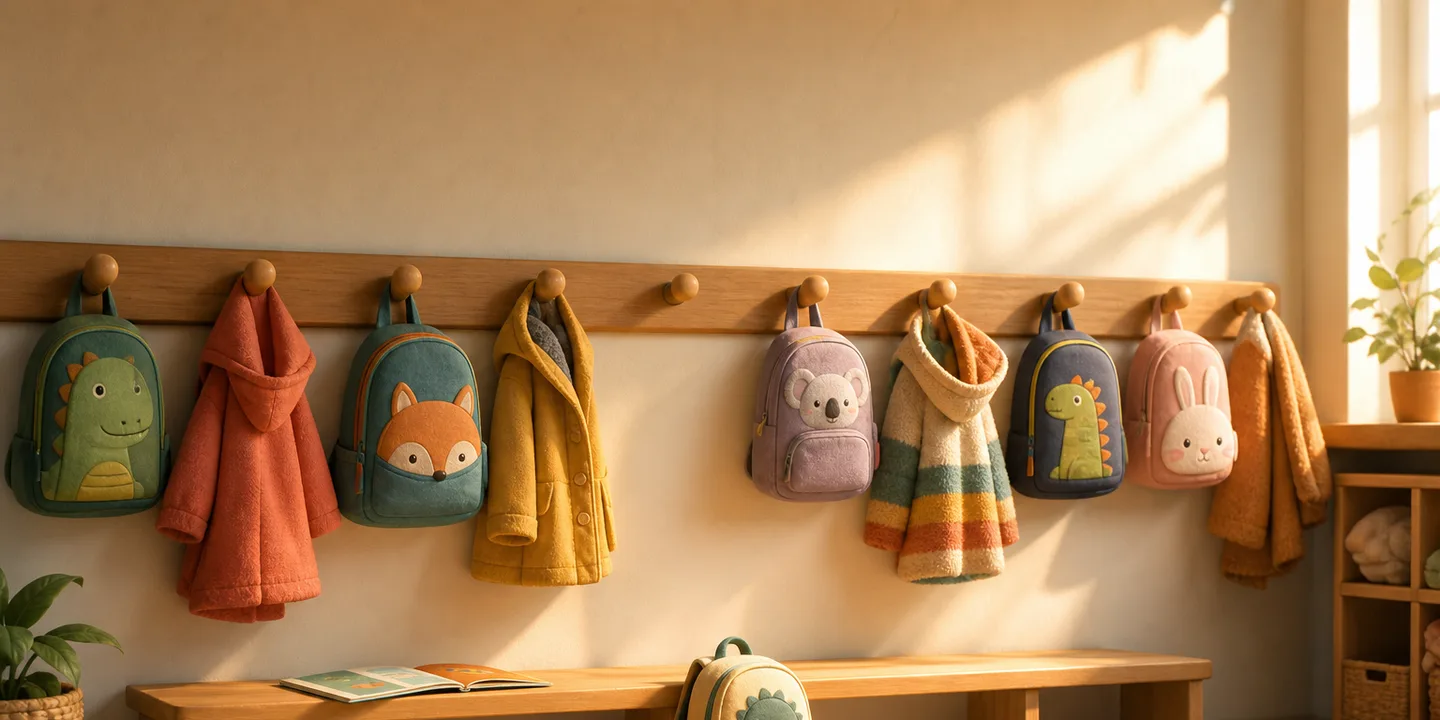
A story fixes the blank. Reading about a first day — the goodbye at the gate, hanging a coat on a peg, sitting on the carpet, the moment another child says "want to play?" — lets your child rehearse the day from the safest place in the world: your lap. By the third or fourth read, the sequence is familiar. Reading Rockets' guide to repeated interactive read-alouds describes the same thing from the classroom side: each new reading of the same book lets a child notice more and say more. Carpet time is not a mystery any more. The goodbye has a shape, and the story keeps proving that the goodbye is followed by a pickup, every single time.
Teachers have recommended first-day picture books for exactly this reason for generations. Any good one helps, and the classroom favourites in read-aloud books for kindergarten are the ones your child is likely to hear again on the carpet.
Timing matters too. The American Academy of Pediatrics notes on HealthyChildren.org that in most parts of the United States the age requirement for kindergarten is five, so this is usually a five-year-old's first big threshold.
Why a book about your child works even better#
Here is the limit of the classic starting-school book: the brave one walking through the gate is a badger, or a rabbit, or somebody else's child. Your child watches the story from the outside — never from inside it.
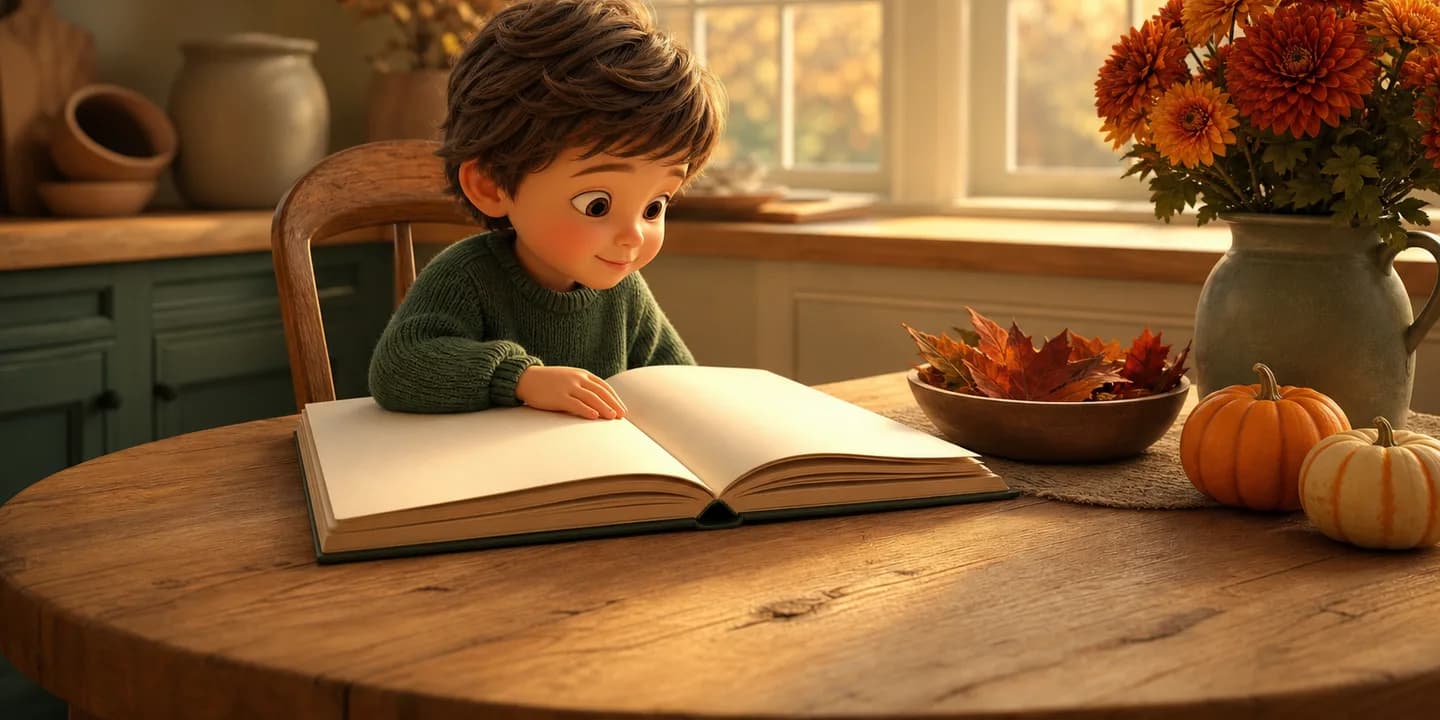
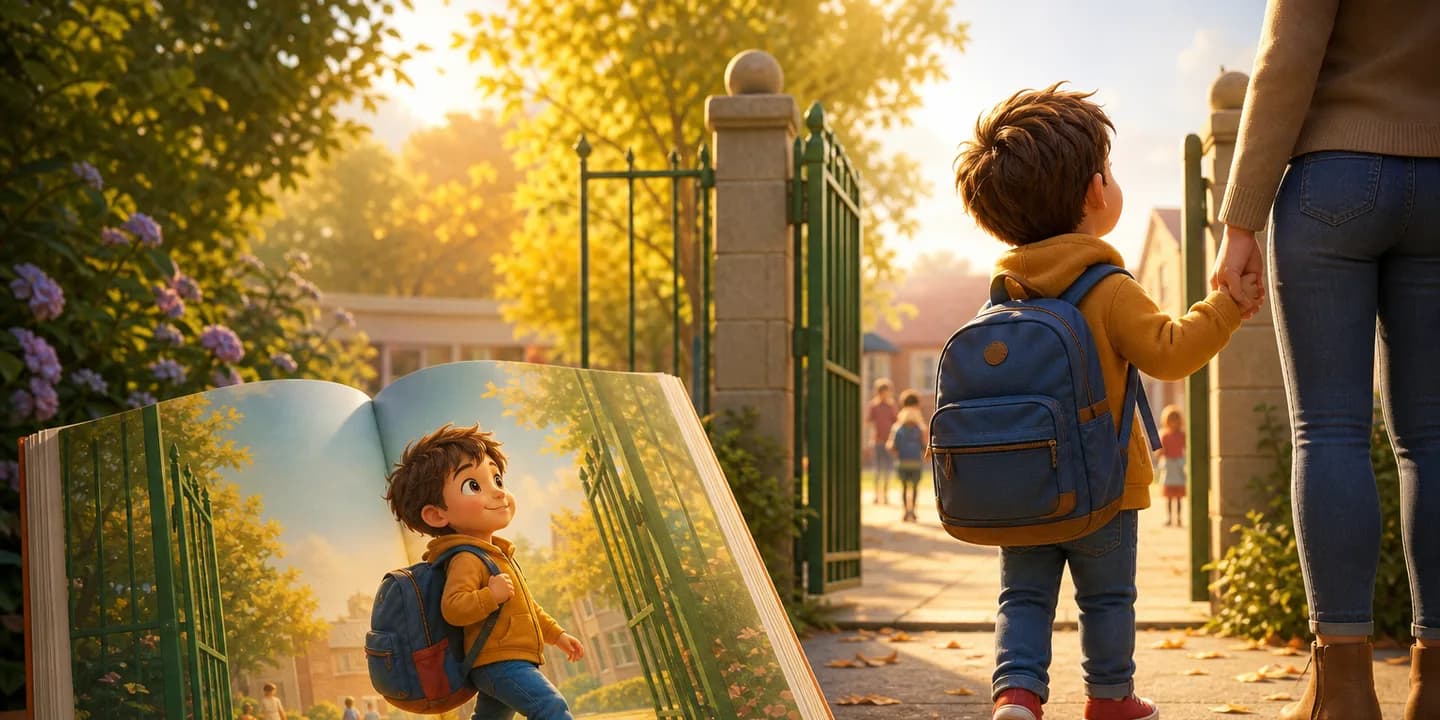
A personalized book removes that gap. When the child on the cover has your child's face — same hair, same grin, drawn as the hero on every page — the rehearsal stops being secondhand. Your child watches themselves hug you at the gate, find the peg with their name on it, and sit down next to a new friend. Children re-read books like this obsessively, which is precisely what you want in the two weeks before term starts: the brave version of the first day, replayed nightly until it feels like a memory.
There's a bonus effect: the book gives the two of you a shared script. On the real first morning you can say "just like in your book — coat on the peg, then carpet time" — and the day snaps onto the rails the story already laid down.
A book about being the smallest one there#
Not every book that helps a new starter has to be set in a classroom. A lot of the first-day worry is really about being small in a big place, and that is a story children already understand.
Your Child and the Little Red Racer is one of the finished stories in our shop, written for ages 3–7. The sample shown stars Lucas, 6, whose home-made car is "the littlest car on Windy Hill. LITTLE SIX." When the others laugh at it, Lucas pats his car and says, "I BELIEVE it will." The book's three words, believe, try, keep going, are a good thing to have in a pocket at the school gate. A parent adds their own child's photo and name, and every page is painted with that child.


A book from our shop · ages 3–7
Your Child and the Little Red Racer
The littlest car in the Great Hill Race, a wobbly wheel, an enormous puddle — and three words stronger than any engine: Believe. Try. Keep going.
Shown here starring Lucas, 6. Yours is painted with your own child’s face and name on every page, from $39 — and you see the pages before you pay.
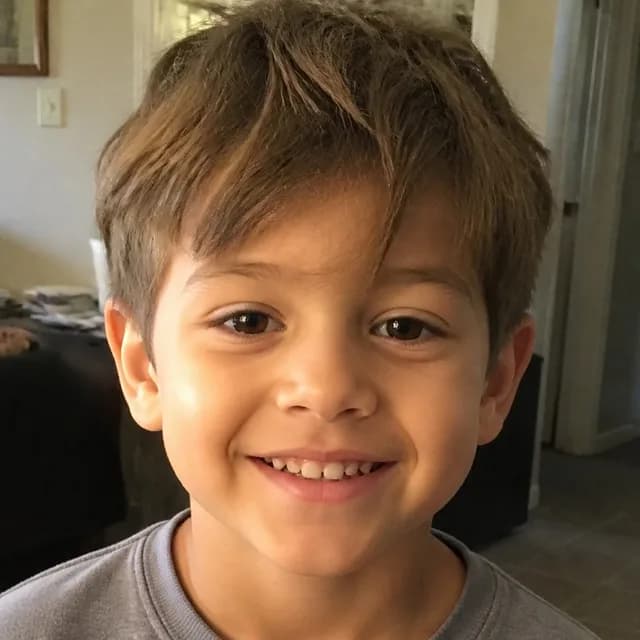
The photo they uploaded

The character we drew
Written from this story — not a stock track with a name dropped in. Free with every book.
How the story begins
- 1Lucas built his racing car all by himself. It had four wobbly wheels, one squeaky horn, and a great big number 6. It was the littlest car on Windy Hill. LITTLE SIX.
- 2On race day, the other cars were big and shiny and fast. “That little thing?” laughed Violet. “It'll never make it up the first hill.” Lucas patted his car. “I BELIEVE it will.”
- 3THREE... TWO... ONE... GO! Everybody zoomed away. Everybody except Little Six. Clunk. Clatter. PLOP.
The rest of the story is in Your Child and the Little Red Racer.
The words to the song
[Verse 1]
Four wobbly wheels and a squeaky horn,
The littlest car since cars were born.
They laughed and said, "It's far too small!"
But Lucas didn't mind at all.

[Chorus]
Believe! (I believe!) Try! (I'll try!)
Keep going, going, up to the sky!
When the hill is steep and the road is long,
Three little words will keep you strong:
Believe. Try. Keep going.

[Verse 2]
A wheel fell off at the starting line,
One twist, two taps, and it's fine, just fine.
The hill said "NO," so he got out and pushed,
Through mud and rain and a great big SPLOOSH!

[Verse 3]
He sat in the puddle and hung his head,
"Maybe I'm just too small," he said.
Then up came Pepper, all soaking wet,
With a wheel in his mouth — we're not done yet!

[Chorus]
Believe! (I believe!) Try! (I'll try!)
Keep going, going, up to the sky!
And if a friend has stopped on the way,
Throw them a rope, and together say:
Believe. Try. Keep going.

[Outro]
Not first, not fastest — but who could doubt
The loudest cheer when they rolled out?
Goodnight, Little Six. Goodnight, Lucas, too.
There's always another hill for you.
How to make one (in an evening)#
On KindFable the whole thing takes a few minutes of your time:
- Add a photo of your child. One clear, front-facing snapshot is enough — it becomes a storybook character that looks like your child on every page, and we never save the original photo — only that character.
- Add the supporting cast. Up to three companions, each from a photo of their own — a little brother waving from the buggy, grandma doing the pickup, or the dog who waits at the gate.
- Tell us what the story should be about. This is where the magic is. Don't just say "starting school" — give it the real details of your child's September.
- Pick an art style and meet your child on the painted cover — free. Only go ahead if you love it. The full book is ready the same day; a printed copy arrives in about two to three weeks.
What to put in the story — the details that do the work#
The rehearsal effect comes from specifics. When you tell us what the story should be about, consider weaving in:
- The real route — "we walk past the postbox and the bakery, then we see the green gate."
- The school's and teacher's real names — hearing "Miss Kelly" in a bedtime story makes the real Miss Kelly feel like an old friend by day one.
- The goodbye ritual you actually plan to use — two hugs and a high-five at the gate, and then the story shows the day going well without you. This is the single most useful scene for a clingy goodbye.
- The one thing your child worries about most — can't do up the coat zip, scared of the big toilets, worried about lunch. Let the hero of the book meet exactly that problem and handle it (with a wobble first — a story where nothing is hard doesn't reassure anyone).
- The friend from nursery who is starting the same week, if there is one.
- Pickup. End the story where the worry actually lives: the door opens, and there you are. Every read-through is another proof that grown-ups come back.
When to make it#
Work backwards from the first day of term. The digital book is same-day, so even the night before isn't too late for the story itself — but if you want the printed book in those small hands for the first week of September, start in August: printing and delivery take about two to three weeks together.
The sweet spot is three to four weeks before term: enough time for the printed copy to arrive, and enough evenings for the story to do its quiet rehearsal work before the real green gate.
After the first day#
Keep the book. Not for the shelf — for the wobbly mornings in week three, when the novelty has worn off and the goodbye gets hard again. The Kids Mental Health Foundation, founded by Nationwide Children's Hospital, says on its back-to-school anxiety page that "most kids adjust to the new school year within two to three weeks", and advises asking your pediatrician if a child stays anxious beyond that. The story still works. And at the end of the year, a book about the September when everything was new becomes something else entirely: proof of how far your child has come.
Ready to make September easier? Start your child's starting-school story — add a photo, tell us about the school gate, and see your child painted on the cover before you decide anything. Or look through the books in our shop first to see how a finished book looks.
If you would rather read your way in first: first day of school books collects the classics worth borrowing from the library this month, books about starting kindergarten covers the year before, and turning a photo into a children's book explains how the painting part actually works.