Search for first day of school books and most of page one is written for a teacher choosing one read-aloud for thirty children. That is a real job and those lists do it well. It is not your job. You have one child, and you probably already know which part of the day they are dreading.
There is also no such thing as the first day. There is the first morning at nursery at two and a half. The enormous one at four or five. The autumn when the building is the same and the teacher is not. And the hardest of the four, which almost nobody writes a list for: the day your child walks into a class that has been friends since last year.
Nine books below, sorted by which of those you are actually facing — plus an honest answer on when to read them, including the one moment you should not.
Which first day is your child actually having?#
Find the row that matches the week you are in. Ages are our call on where each book lands in a real room; where a publisher states its own banding, we have said so.
| The first day you are facing | What your child is actually asking | Read them | Ages |
|---|---|---|---|
| First mornings at nursery or preschool | "Will you come back?" — and they have no way to measure a morning | Owl Babies · Llama Llama Misses Mama | 2–5 |
| The big one: kindergarten or reception | "What happens, and in what order?" | The Kissing Hand · The King of Kindergarten · The Pigeon HAS to Go to School! | 3–6 |
| Moving up a grade — same school, new room | "Will I be able to do the work, and will my friend be in my class?" | First Day Jitters | 5–8 |
| A new school where everyone already knows everyone | "How do I get into a game that has already started?" | The Name Jar · The Day You Begin | 3–8 |
| Worries about everything, whichever day it is | "Is it only me?" | Wemberly Worried | 4–7 |
| The younger sibling, who is not starting anything | "Where did they go, and am I next?" | Owl Babies · Llama Llama Misses Mama | 2–5 |
Buy by worry, not by grade. What decides whether a book helps is not your child's age. It is whether the book happens to be about the thing they are frightened of — and a four-year-old frightened of the toilets is not served by a beautiful book about missing you.
Books for a first day at nursery or preschool#
Under about four this is not a school problem at all. It is a separation problem in a school-shaped hat, and the two best books for it never mention school.
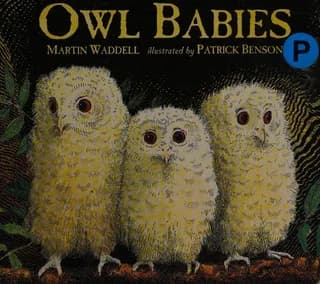
Owl Babies#
- Written by
- Martin Waddell
- Illustrated by
- Patrick Benson
- First published
- 1992
- Ages
- 2–5
- Format
- Board book and picture book
Martin Waddell and Patrick Benson's three owlets wake in the dark and their mother is gone. They think about it, they sit closer together on the branch, they think about it some more, and then she comes back. First published in 1992, and still the most exact book here about what a very small child actually fears.
Reading it aloud: Bill's line is the whole book — "I want my mummy!" — and it repeats. Hand it over by the third reading. A child saying the frightening thing out loud in a safe room is a child rehearsing.
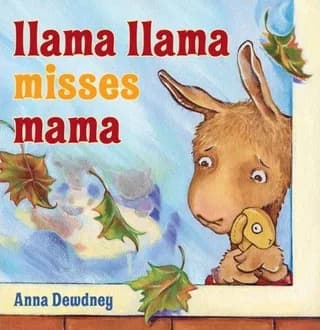
Llama Llama Misses Mama#
- Written by
- Anna Dewdney
- First published
- 2009
- Ages
- 2–5
- Format
- Picture book
Anna Dewdney's llama is dropped off at nursery, panics, plays anyway, and is collected. The order of those four things matters more than any line in it: the panic happens, and the day carries on regardless.
Reading it aloud: say the last page in the same voice every single time, until it is boring. You are building a rule, not a moment, and rules have to be dull to be believed.
Books for the biggest first day: kindergarten or reception#
This is the one everybody writes about, and we have too — at length, and with the research on why rehearsing the sequence of a day beats naming the feeling: books about starting kindergarten. The short version, so this list stands on its own:
- Written by
- Audrey Penn
- Illustrated by
- Ruth E. Harper and Nancy M. Leak
- First published
- 1993
- Ages
- 3–7
- Format
- Picture book
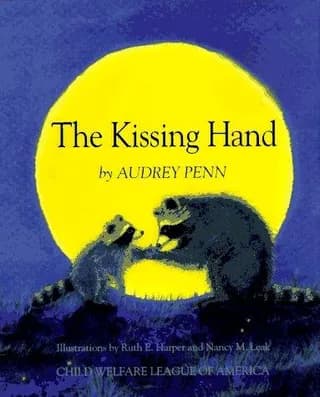
The Kissing Hand (Audrey Penn, 1993) is worth owning for the palm rather than the sadness — a physical action your child can perform mid-morning without asking permission.
- Written by
- Derrick Barnes
- Illustrated by
- Vanessa Brantley-Newton
- First published
- 2019
- Ages
- 3–6
- Format
- Picture book
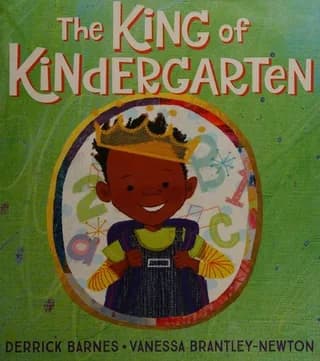
The King of Kindergarten (Derrick Barnes and Vanessa Brantley-Newton, 2019) is the best-written of them and the only one whose register is not anxious. The day is not survived in it. It is presided over.
The Pigeon HAS to Go to School!#
- Written by
- Mo Willems
- First published
- 2019
- Ages
- 3–5
- Format
- Picture book
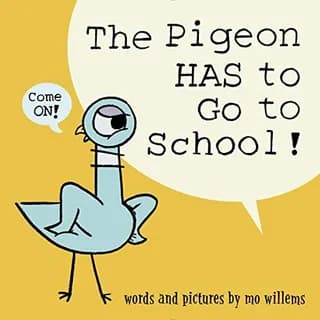
Mo Willems wrote and drew this one in 2019, and his pigeon produces every excuse going — he already knows everything, what if he does not like it, what if the teacher does not like him — with the question underneath the comedy that a small child cannot yet phrase: what if I am not good at it.
Where the rest of the shelf files it wrong. Half the internet lists the Pigeon as a big-kid book. Hyperion bands it 3–5, up to kindergarten, and the publisher has it right: every joke depends on never having done school. Give it to a seven-year-old who has already met a teacher and the excuses stop being funny.
Reading it aloud: argue back. The book is built to be shouted at, and a child telling the pigeon he will be fine is telling himself, which is a much easier sentence to say.
Books for moving up a grade#
Around five or six the question changes, and most first-day lists do not notice. A child going from kindergarten into first grade knows the building and knows lunch, and is not worried that you will vanish.
The new worries are competence and allocation. Will the work be too hard? and is my friend in my class? Neither is soothed by a raccoon missing his mother, which is why The Kissing Hand stops working around five and parents keep buying it anyway.
First Day Jitters#
- Written by
- Julie Danneberg
- Illustrated by
- Judy Love
- First published
- 2000
- Ages
- 5+
- Format
- Picture book
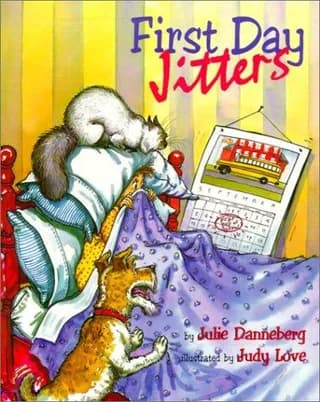
Julie Danneberg and Judy Love's book, first published in 2000, has one joke and it is a good one: the person refusing to get out of bed turns out to be the teacher. Charlesbridge bands it 5 and up, and that is the honest floor — the gag needs a child who already knows what a first day is supposed to feel like.
When to read it: not before the day. The twist only pays for a child who already has a mental model of a first day, and it lands far better in week one — as evidence that the nerves were shared by everyone in the room, including the adult at the front.
If your child is refusing outright, go younger, not older. Flat refusal at five or six is the fear The Pigeon HAS to Go to School! is built on, and Mo Willems's pigeon is the one book here a child can argue with instead of being reasoned at.
What do you read to a child joining a class that already has friends?#
This is the version of the first day nobody organises a list around, and it reaches about two children in three.
The scale of it. In its 2010 report on student mobility, the US Government Accountability Office reported Department of Education data following the kindergarten class of 1998–99 through to eighth grade: 31% of those children changed schools once, 34% twice, 18% three times and 13% four or more times. A single change is usually the ordinary promotion into middle school, where nobody arrives alone. Two or more is the arriving-alone kind, and that is 65% of the cohort.
Why it is the harder day. On a normal first day everybody is new, so being lost is the group condition. A child arriving into a class that already exists is the only one who does not know where anything is, and the friendships were made a year ago without them.
The Name Jar#
- Written by
- Yangsook Choi
- First published
- 2001
- Ages
- 3–7
- Format
- Picture book
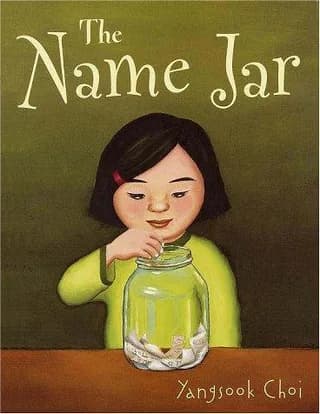
Unhei has just moved from Korea and cannot face a classroom mispronouncing her name, so she says she has not chosen one yet — and a glass jar of suggestions appears on her desk. Yangsook Choi wrote and illustrated it, and it was first published in 2001; Penguin Random House bands it 3–7 and puts the premise in one line: "Being the new kid in school is hard enough, but what happens when nobody can pronounce your name?"
Reading it aloud: stop before the last page and ask your child what she should do. The answer the book is steering towards is use her real name — and a child who has said it out loud owns the argument rather than receiving it.
The Day You Begin#
- Written by
- Jacqueline Woodson
- Illustrated by
- Rafael López
- First published
- 2018
- Ages
- 5–8
- Format
- Picture book
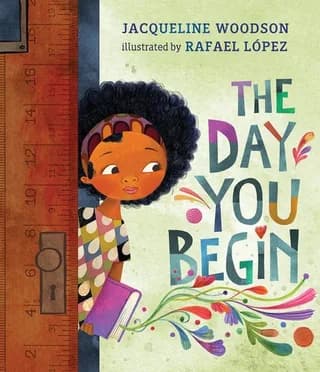
Jacqueline Woodson and Rafael López published this in 2018 with Nancy Paulsen Books, who band it 5–8, and it opens on the sentence the whole book is about: "There will be times when you walk into a room and no one there is quite like you." It resolves on telling your own story rather than on being rescued, which is the right ending and a rarer one than it sounds.
Reading it aloud: a lap book, not a bedtime book. It is slow, the language is doing real work, and a tired child will not stay with it. Read it on a Sunday afternoon.
Wemberly Worried#
- Written by
- Kevin Henkes
- First published
- 2000
- Ages
- 4–7
- Format
- Picture book
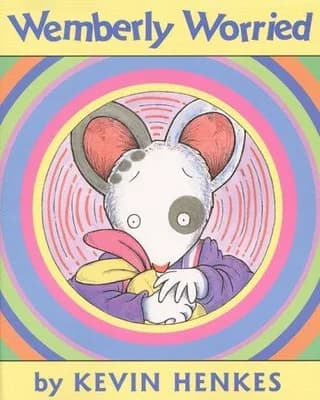
Kevin Henkes's mouse worries about everything, and the book is unusually honest: the worrying never stops, she simply finds someone who does it too. For a child whose anxiety is a temperament rather than an event, this is the most accurate book here.
Reading it aloud: resist solving it. Wemberly's worries are never argued away, and a child who worries has heard "there's nothing to worry about" enough times to have stopped listening.
Where we disagree with the whole shelf#
Almost every first-day book, including three above, works on feelings. But a child walking into an established class does not have a feelings problem first. They have a logistics problem: how do you get into a game that started without you. That is a skill, and it has a known shape.
Writing in Language, Speech, and Hearing Services in Schools in 2003, Jill Selber Beilinson and Lesley B. Olswang taught three kindergartners to enter peer groups using a sequential peer-entry hierarchy moving "from low-risk strategies to high-risk strategies", centred on teaching the children "to use props to facilitate the production of high-risk verbal statements", and reported increases in cooperative play and in time spent with peers.
Three children is a case series, not proof. Take the method rather than the effect, because the method is the part parents are never told:
- Low risk first. Stand near, watch the game, work out what it is. Do not announce yourself in the first thirty seconds.
- Bring a prop. Something in your child's hand — a card, a small toy, a football — is a reason to be there that does not require a sentence, and it is what the study put at the centre of its teaching.
- Then speak, about the game. "Can I be on that team?" beats "will you be my friend?", because the first asks about something that already exists.
Rehearse those three at home in the week before, with you as the group. It is a strange thing to practise and it is the most useful thing on this page.
What about the sibling who is not starting school?#
They lose more than you think. The person who has been in the house all day, every day, is suddenly gone from breakfast until teatime, and a three-year-old has no way of knowing whether this is permanent or whether they are next.
Read them a separation book, not a school book. Owl Babies works for a four-year-old whose sister has vanished as well as it does at nursery drop-off.
Give them a job at pickup. Carrying the water bottle, pressing the crossing button. The younger sibling's version of the first day is the collecting.
When in the days around the first day should we read them?#
The timing matters more than the title, and this is where every list we read goes quiet.
Two or three weeks before, not the whole summer. Long enough for a book to become familiar; short enough that school stays a thing with a date on it rather than a thing permanently about to happen.
The night before: read something old. The counterintuitive one. The night before is not a rehearsal window, it is a sleep window, and a new story about the subject your child is already turning over is the opposite of settling.
The morning itself: nothing about school. Read the most familiar book in the house, in exactly the voice you always use, and connect it to nothing. Every other part of that morning is unfamiliar. Be the part that is not.
The walk home: do not ask how it went. "How was school?" produces "fine" at every age ever recorded. Read the book again at bedtime instead, stop on a page — the peg, the carpet, the lunch — and say "was yours like that?" The book asks the question better than you can.
Week three, on purpose. The Kids Mental Health Foundation, founded by Nationwide Children's Hospital, says on its back-to-school anxiety page that "most kids adjust to the new school year within two to three weeks", and advises that if a child stays anxious, refuses to go or is not engaging in class, you "ask your pediatrician for advice". Week three is where the novelty runs out, so keep one book back for it. By then your child can correct the book, which is a better conversation than any you could open cold.
What to read next#
- Your child is starting reception in September → a book for a child starting school covers what to put in the story itself.
- This is kindergarten specifically → books about starting kindergarten, sorted by whether your child needs the sequence of the day or the name of the feeling.
- You want the wider shelf → the best children's books of all time, sorted by the age each one actually lands at.
- This is a present rather than a preparation → the personalized book gift guide.
Can I get a book where my child is the main character of this first day?#
The decision first, so you leave with a title rather than a list:
- First mornings at nursery → Owl Babies, then Llama Llama Misses Mama for the drop-off itself.
- Kindergarten or reception → The Kissing Hand for the goodbye, The King of Kindergarten for the tone, The Pigeon HAS to Go to School! for outright refusal.
- Moving up a grade → First Day Jitters, in week one rather than before it.
- A new school that already has friends → The Name Jar at five and under, The Day You Begin from five up.
- Worries as a matter of course → Wemberly Worried, whichever first day it is.
And here is the thing none of them can do. Everything useful on this page came down to specificity — the real name, the real yard, the real thing your child is frightened of. Yet every book above names somebody else's school. None can say Mrs Okafor, or the blue doors past the bike rack, or the friend from nursery who is in the other class, and that is the actual problem.
A book where my child is the main character can say all three, because you write the brief.
That is what we make at KindFable. You upload one photo, type a few lines about your child — the school, the teacher, the break-time plan, the thing they keep asking at bedtime — and we paint them as the hero of a full 32-page storybook. Not a name dropped into a template: their face, drawn as a character, on every page, with up to three companions beside them. The little brother who is not starting anything. Grandma, who does Thursday pickup.
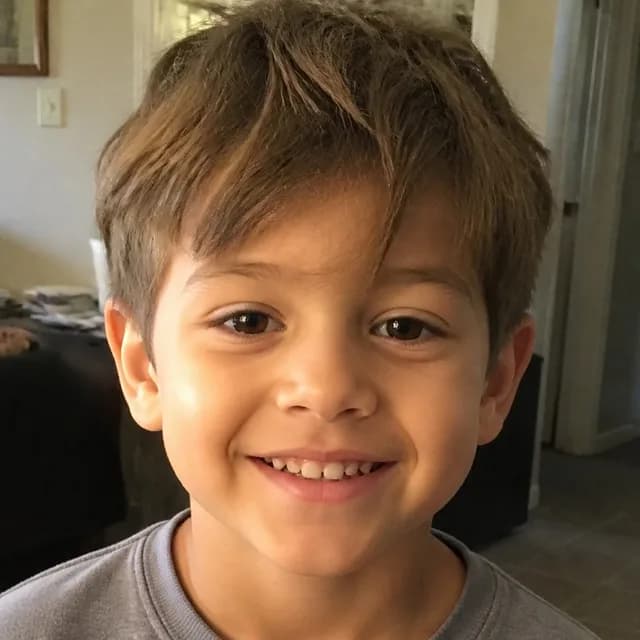
Here is a complete one, and it is deliberately not a school book. The Little Red Racer is a finished story from our shop for ages 3 to 7. The sample you can read stars Lucas, who is six, and when you order it your own child's face and name take his place on every page. He has built the littlest car on Windy Hill, and on race day a bigger child laughs: "It'll never make it up the first hill." Lucas pats his car. "I BELIEVE it will." That is the shape a first-day book needs — the smallest one in a new place, deciding to try anyway — and it is the same shape as a name said clearly to a class that has never heard it before.


A book from our shop · ages 3–7
Your Child and the Little Red Racer
The littlest car in the Great Hill Race, a wobbly wheel, an enormous puddle — and three words stronger than any engine: Believe. Try. Keep going.
Shown here starring Lucas, 6. Yours is painted with your own child’s face and name on every page, from $39 — and you see the pages before you pay.
The photo they uploaded

The character we drew
Written from this story — not a stock track with a name dropped in. Free with every book.
How the story begins
- 1Lucas built his racing car all by himself. It had four wobbly wheels, one squeaky horn, and a great big number 6. It was the littlest car on Windy Hill. LITTLE SIX.
- 2On race day, the other cars were big and shiny and fast. “That little thing?” laughed Violet. “It'll never make it up the first hill.” Lucas patted his car. “I BELIEVE it will.”
- 3THREE... TWO... ONE... GO! Everybody zoomed away. Everybody except Little Six. Clunk. Clatter. PLOP.
The rest of the story is in Your Child and the Little Red Racer.
The words to the song
[Verse 1]
Four wobbly wheels and a squeaky horn,
The littlest car since cars were born.
They laughed and said, "It's far too small!"
But Lucas didn't mind at all.

[Chorus]
Believe! (I believe!) Try! (I'll try!)
Keep going, going, up to the sky!
When the hill is steep and the road is long,
Three little words will keep you strong:
Believe. Try. Keep going.

[Verse 2]
A wheel fell off at the starting line,
One twist, two taps, and it's fine, just fine.
The hill said "NO," so he got out and pushed,
Through mud and rain and a great big SPLOOSH!

[Verse 3]
He sat in the puddle and hung his head,
"Maybe I'm just too small," he said.
Then up came Pepper, all soaking wet,
With a wheel in his mouth — we're not done yet!

[Chorus]
Believe! (I believe!) Try! (I'll try!)
Keep going, going, up to the sky!
And if a friend has stopped on the way,
Throw them a rope, and together say:
Believe. Try. Keep going.

[Outro]
Not first, not fastest — but who could doubt
The loudest cheer when they rolled out?
Goodnight, Little Six. Goodnight, Lucas, too.
There's always another hill for you.
You can order The Little Red Racer with your child behind the wheel, or write the term you are actually facing. On KindFable it goes: name and age, one photo, a tick box for consent, a few lines about the school, and one of nine art styles. You see your child painted into the book before you pay for anything — and the softcover and hardcover prices sit on one page, with every book including its own song free and the hardcover adding the narrated audiobook. Everything then lives in your dashboard: the page-flip reader, the audio studio, and a reorder button for when the grandparents ask. The books in our shop can all be read in full, if you would rather see finished ones first.
If your child's first day is one of the four above and you know which, that is the whole brief. Start with the photo and see the cover before you decide anything.
Book covers are shown unaltered for identification, sourced from Open Library. Each cover remains the property of its publisher and illustrator. KindFable is not affiliated with any of the books recommended here.