Start reading to your baby from birth. A newborn will not follow the story, but they will hear your voice, feel the closeness and start to hear the rhythm of language — and the habit you start now lasts. Choose the book by what your baby can do: high-contrast pictures for a newborn, sturdy board books to pat and chew at six months, flaps and mirrors to explore by eleven months. Below is what to read month by month, how to read to a baby who cannot sit still, and the best books for babies at each stage.
Why read to a baby who doesn't understand words yet?#
Because a baby is learning long before they understand.
They are listening for their name. Denise Mandel, Peter Jusczyk and David Pisoni showed in Psychological Science (1995) that babies only four and a half months old already listen longer to their own name than to other names. Your voice, reading their name, is one of the first things that is theirs.
Books carry more words. Picture books contain more unique words than everyday speech to children, according to a study of 100 books in Psychological Science (2015), and reading one picture book a day adds up to about 78,000 words a year, according to an estimate in the Journal of Developmental and Behavioral Pediatrics (2019).
The experts say start at birth. The American Academy of Pediatrics' 2024 technical report on literacy promotion supports parents in reading with their children from birth, and Ireland's HSE advises sharing books with your baby from birth too — noting that hearing your voice calms a baby, who recognises it from before birth.
Can you read to a baby in the womb?#
You can, and it is not wasted. Ireland's HSE notes that hearing your voice calms a newborn because they recognise it from before birth. Reading aloud in late pregnancy — a favourite picture book, a nursery rhyme, the same short poem each night — is a gentle way to start the habit, and partners and older siblings can join in. After the birth, the same book, in the same voice, is something familiar in a world where almost nothing is.
What should you read to your baby, month by month?#
The American Academy of Pediatrics' guide to sharing books with your baby describes what babies can do with books at each stage. Here it is side by side with what to read:
| Age | What your baby can do with a book | What to read | How to read it |
|---|---|---|---|
| Newborn–3 months | Look at bold shapes up close; listen to your voice | High-contrast black-and-white books; nursery rhymes; anything you enjoy | Hold the book 15–25 cm (6–10 inches) from their face; sing and rhyme |
| 3–6 months | Widen their eyes or kick with excitement; touch the book; babble | Soft fabric and crinkle books; simple rhymes | Different voices and sounds; point at pictures |
| 6–8 months | Hold a book and pat the pictures; taste it; smile at your voice | Sturdy board books; touch-and-feel books | Name what they look at; act out pictures with your face and hands |
| 9–11 months | Reach for one of two books; explore flaps and mirrors; copy sounds | Lift-the-flaps; books of everyday things — balls, cups, dogs | Let them choose; follow their lead; ask "Where's the dog?" |
| 12 months+ | Turn chunky pages; point when you ask; say first words | Books with one thing per page; animal sounds; peek-a-boo | Pause and let them fill in the sound or word |
The AAP's advice for every age is the same: find a comfortable spot, hold your baby on your lap, make eye contact, and don't worry about finishing the book. Shared reading should be fun, not forced.
Which books are best for babies?#
These are long-loved books that fit each stage. First-publication years checked against library catalogue records.
| Stage | Book | First published | Why it works |
|---|---|---|---|
| Newborn | Look, Look! by Peter Linenthal | 1998 | Bold black-and-white faces and shapes a newborn can see |
| 0–6 months | Peek-a-Who? by Nina Laden | 2000 | Rhyme, die-cut holes and a mirror at the end |
| 3–9 months | Baby Faces by Margaret Miller | 1998 | Photographs of real babies' faces, which babies love to look at |
| 6–12 months | Ten Little Fingers and Ten Little Toes by Mem Fox, illustrated by Helen Oxenbury | 2008 | Counting your baby's own fingers and toes |
| 6–12 months | Pat the Bunny by Dorothy Kunhardt | 1940 | The original touch-and-feel book |
| 9–12 months | Where's Spot? by Eric Hill | 1980 | Flaps to lift and a dog to find |
| 9–12 months | Dear Zoo by Rod Campbell | 1982 | Flaps, animals and a satisfying ending |
| 9–12 months | Moo, Baa, La La La! by Sandra Boynton | 1982 | Animal sounds a baby can copy |
| 12 months+ | Goodnight Moon by Margaret Wise Brown, illustrated by Clement Hurd | 1947 | A calm bedtime book of naming |
| 12 months+ | Brown Bear, Brown Bear, What Do You See? by Bill Martin Jr., illustrated by Eric Carle | 1967 | Repetition a toddler can soon finish |
Board books are not babyish — they are the right tool. Babies of six to eight months mouth books; the AAP calls it a normal developmental stage. Keep paper picture books for reading to your baby on your lap, and let them hold, chew and bang the board books.
If you only buy one book in the first year, make it a sturdy one with faces and a peek-a-boo: babies love faces more than anything else on a page.
How do you read to a baby who won't sit still?#
- Keep it short. A page or two counts. Babies show you they are done by looking away, arching their back or fussing — the AAP's own list.
- Read at the same time each day. Bedtime is easiest; the AAP suggests making a few minutes with books part of the nap or bedtime routine, so your baby knows what comes next.
- Talk about the pictures, not the words. "Look, a duck! Quack quack!" is reading.
- Use their name. Put your baby's name into the story — they are listening for it.
- Let them hold, turn and chew. That is how babies explore books.
- Repeat favourites. Babies love repetition; the AAP notes they may like the same book, or the same pages, again and again.
From about nine months, ask questions even though your baby can't answer — "Where's the bird?" The AAP calls this introducing the idea of conversation. That back-and-forth becomes dialogic reading once your child starts to talk.
What are the CDC milestones for babies and books?#
The CDC's milestone checklists list what most babies can do by each age. Several of them happen naturally while you read together:
| Age | A CDC milestone you will see at story time |
|---|---|
| 2 months | Smiles when you talk to or smile at them; looks at your face |
| 6 months | Laughs; takes turns making sounds with you; reaches to grab a toy they want |
| 9 months | Smiles or laughs when you play peek-a-boo; looks when you call their name |
| 1 year | Plays games like pat-a-cake; waves "bye-bye" |
If your baby is not meeting the milestones for their age, talk to your doctor. Reading is still good for every baby — but it is not a substitute for a check.
Is a personalized book for a grandchild a good first gift?#
It is one of the few baby gifts that grows with the child. A personalized book for a grandchild with the baby's own name and face is read to them now and read by them later, and a grandparent's message on its first page becomes part of the book. Babies listen for their name from a few months old, and a book that says it on every page gives them plenty of practice.
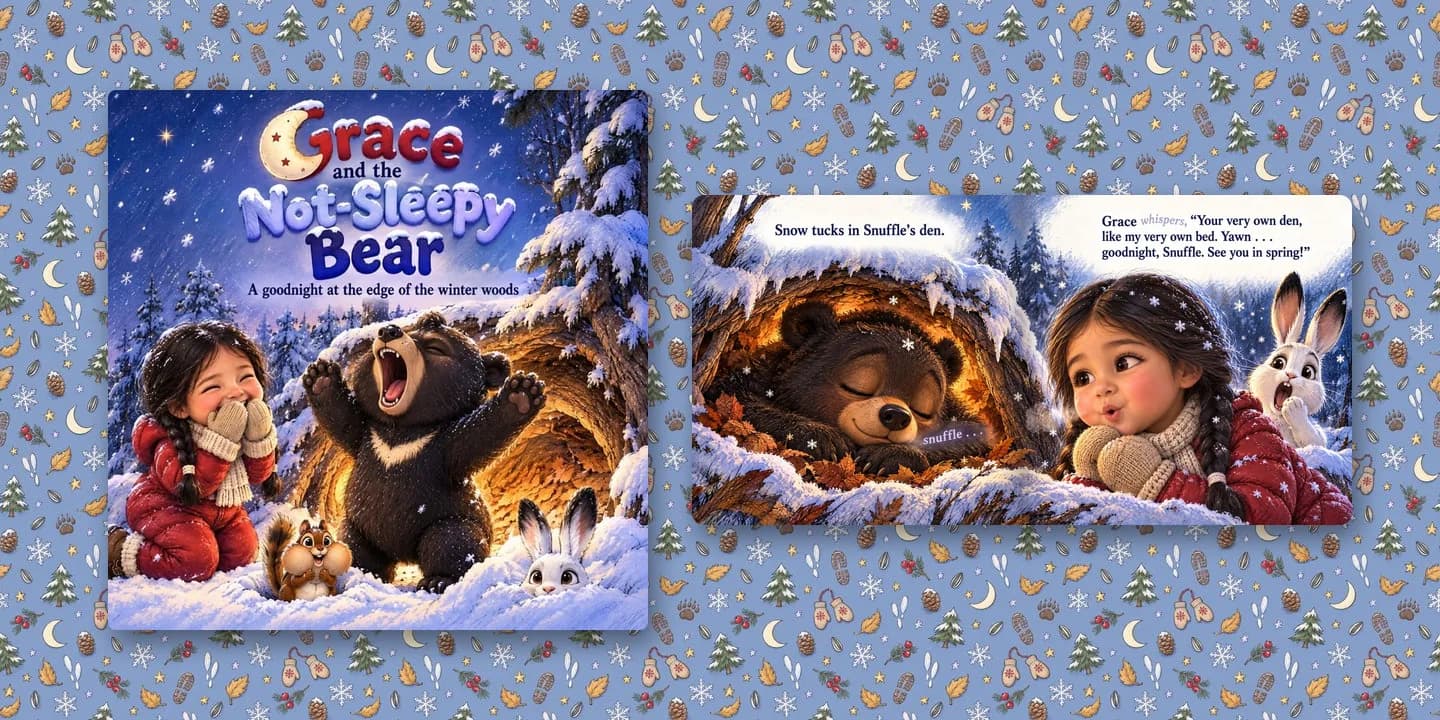
Several KindFable books are made for the first two years:
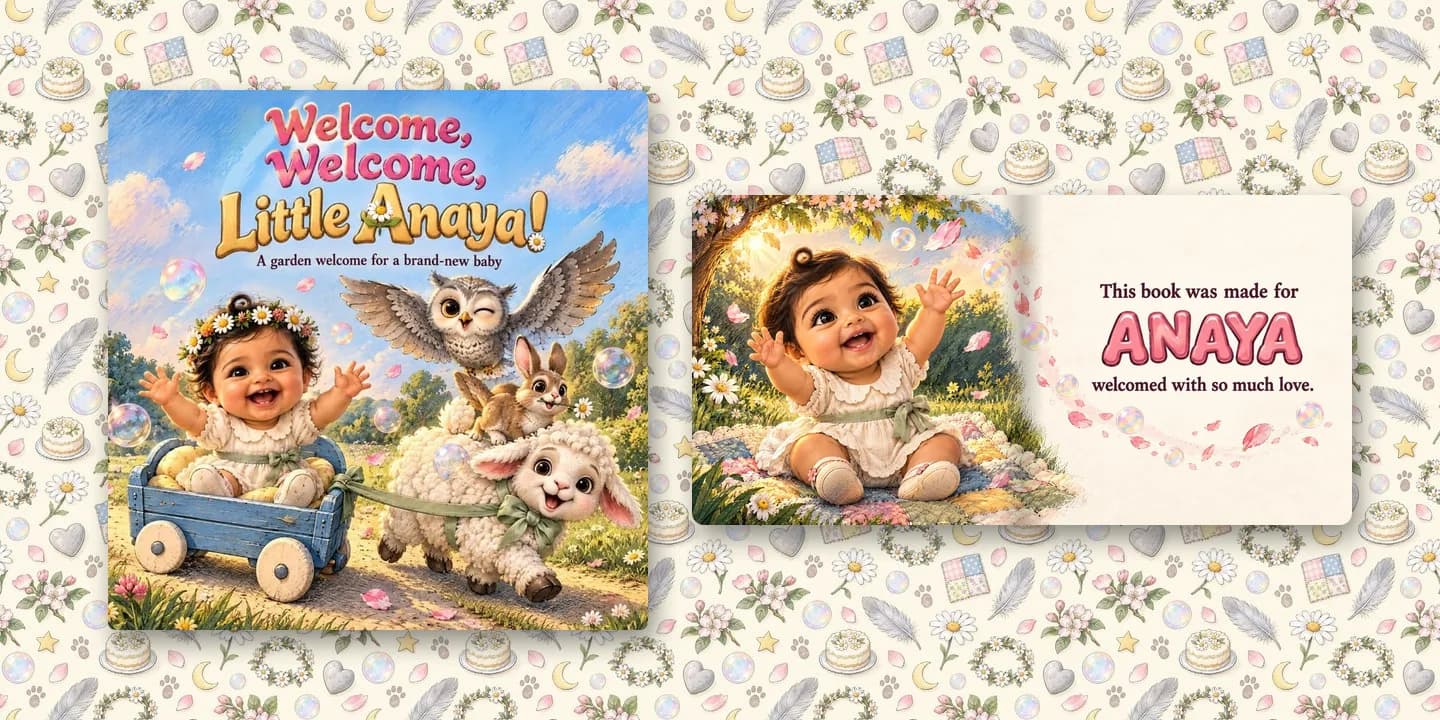
- Welcome, Welcome, Little Anaya! — with your baby's name in the title, a wise grey owl, a fluffy lamb and a nibbling bunny welcome a brand-new baby from sunrise to starlight, ending with a wish: may you be kind, may you be brave, may you be loved. A gentle keepsake for a welcome home, a christening or a naming day.
- Peek-a-Boo, Little Cloud! — big shapes, big words and one giggle on every page; at the end, it is your little one who hides.
- Your Child's Very First Christmas — for a baby's first December.
For a newborn, the guide to a personalized newborn book covers what to put in a book for someone who cannot read it yet.
How do I make a book for a baby?#
- Pick a story — start with Welcome, Welcome, or begin your own at /create.
- Add your baby's name and age, so the words fit a baby.
- Upload one clear photo and tick the consent box. Your baby becomes the character on every page, with the same face from the cover to the last page. A grandparent giving the book can make it together with the parents, since a child's photo is always added by their parent or guardian.
- Tell the story box about your baby's world — the pet, the nursery, the song you sing — and choose an art style.
- See the cover before you pay. The painted cover is free to look at; nothing is charged until you decide.
- Write a message on the book's own message page, for your baby to find one day.
- Choose the hardcover for the keepsake shelf. It comes with narration and a song of the story, and the digital book is ready the same day. Prices are on one page.
Every book stays in your dashboard as a custom storybook from a photo you can reread, play aloud, and reorder for the grandparents.
Here is one, read in full. Anaya is the sample baby; your copy stars yours.
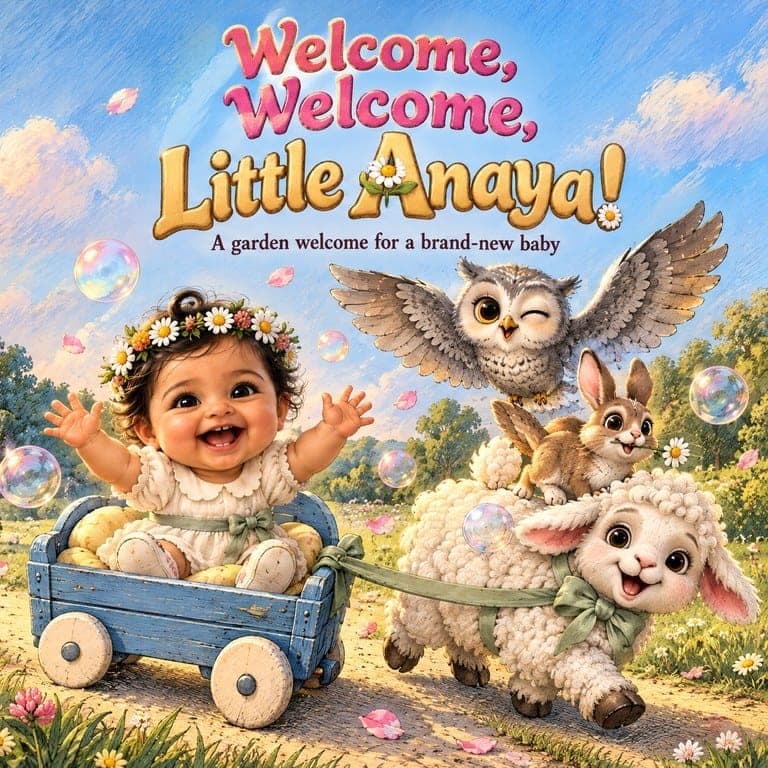

A book from our shop · ages 0–2
Welcome, Welcome, Little Your Child!
A garden welcome for a brand-new baby, from sunrise to starlight: a wise grey owl, a fluffy lamb and a nibbling bunny paint a WELCOME banner, sing a song, blow bubbles and bring three gifts from nature — then, at golden hour, a wish: may you be kind, may you be brave, may you be loved. A gentle keepsake with no religious symbols, for a christening, a baptism, a naming day or simply a welcome home.
Shown here starring Anaya. Yours is painted with your own child’s face and name on every page, from $39 — and you see the pages before you pay.
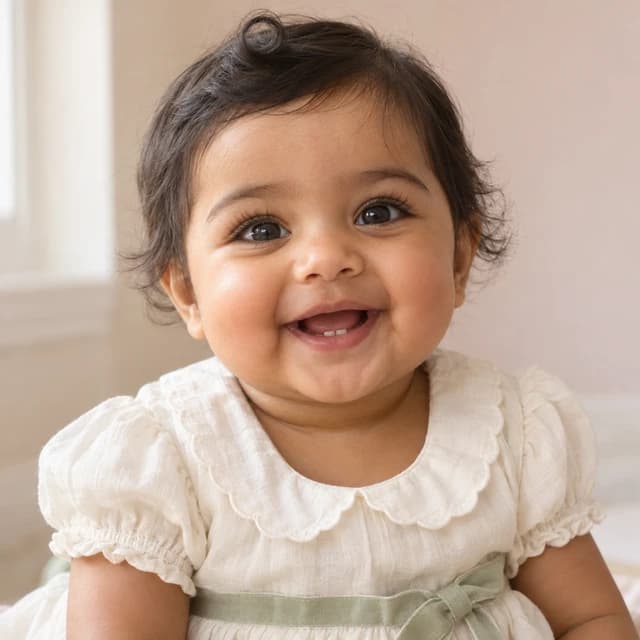
The photo they uploaded
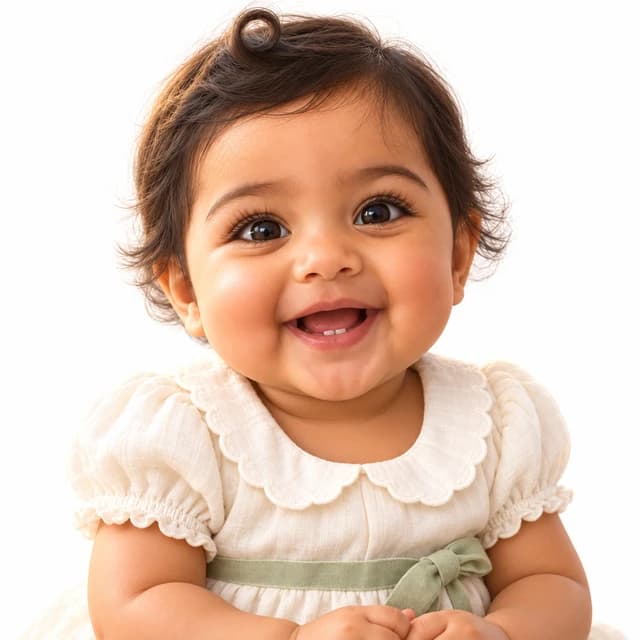
The character we drew
Written from this story — not a stock track with a name dropped in. Free with every book.
How the story begins
- 1The sun peeks up. Today is your day, little Anaya!
- 2Welcome, welcome, little Anaya!
- 3Flowers for you! A cake for you! Clover... not YET!
The rest of the story is in Welcome, Welcome, Little Your Child!.
The words to the song
[Verse 1]
The sun peeks up, the garden sighs,
a banner waves, the bubbles rise,
the petals fall like softest snow,
and every flower says hello.

[Chorus]
Welcome, welcome, little Anaya,
rock-a-bye, so new;
welcome, welcome, little Anaya,
the whole sky sings for you.

[Verse 2]
A feather soft, a smooth grey stone,
a crown of daisies all your own;
may you be kind, may you be brave,
may you be loved through all your days.

[Chorus]
Welcome, welcome, little Anaya,
rock-a-bye, so new;
welcome, welcome, little Anaya,
the whole sky sings for you.

[Outro]
The moon peeks up, the owl sings hoo...
sleep tight, little one, we love you.
For the year after, the guide to the first birthday book gift picks up where this one leaves off.