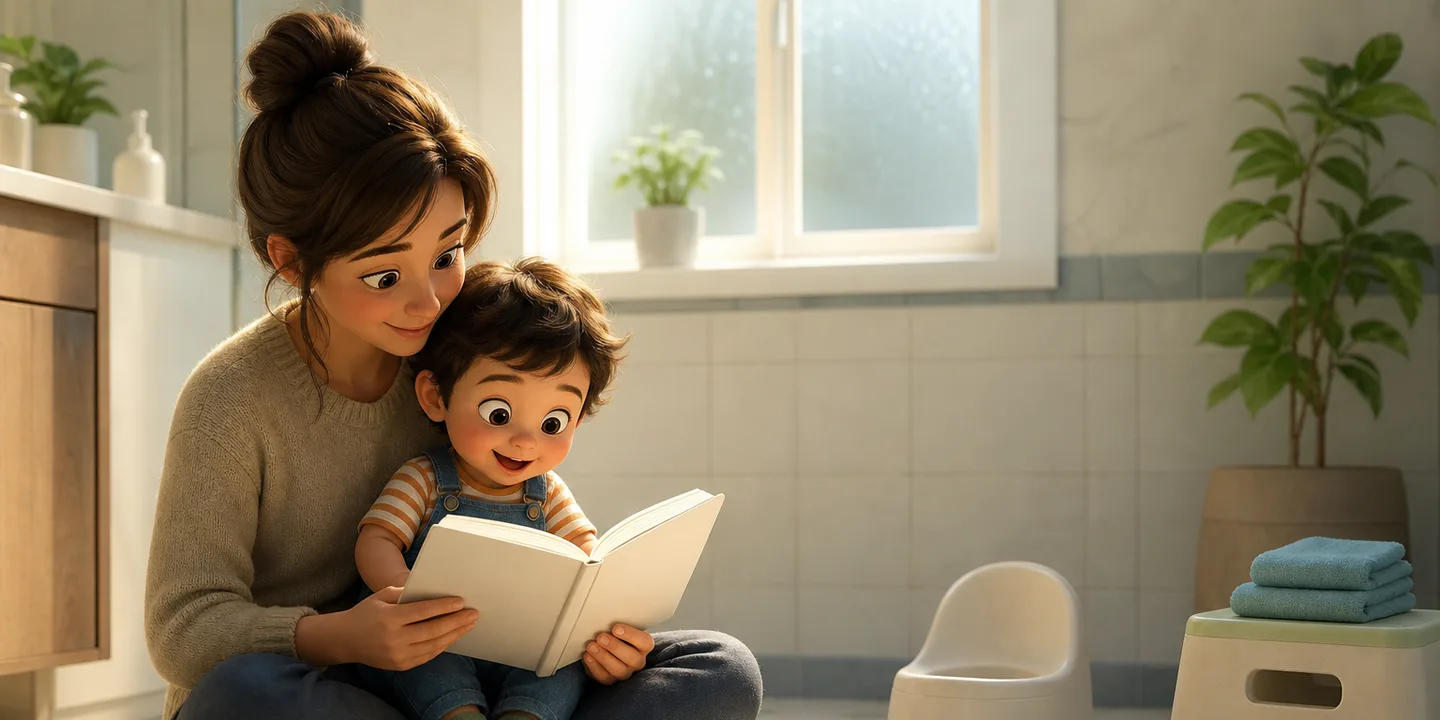
Potty training books split into two kinds, and mixing them up is why the pile on your shelf is not helping. One is a method book for you — a plan, written for an adult. The other is a story book for your child — a script, written to be read on the floor beside a small toilet. You probably need one of each, and you should buy them in that order.
Which potty training book do I actually need?#
| If you are… | You need | Start with |
|---|---|---|
| Deciding when and how to start | A method book, for you | Oh Crap! Potty Training |
| Ready, and want your child to know what happens | A first story book | Potty |
| Facing a flat refusal | Something funny, not instructive | Dinosaur vs. the Potty |
| Facing fear of the toilet or the flush | A joke that makes it small | Time to Pee! |
| Answering "why do I have to?" | The biology, plainly | Everyone Poops |
| Reading to a child who wants to do it alone | A lift-the-flap they control | A Potty for Me! |
Is my child ready? The part a book cannot tell you#
This is the question worth answering before you spend anything, and it does not come from a book list. The American Academy of Pediatrics, on the right age to potty train, says the average age toilet training begins in the United States is between two and three years of age, and lists what readiness actually looks like:
- Is dry at least two hours at a time during the day, or dry after naps.
- Shows signs they are about to pee or poop — grunting, freezing, or squatting.
- Can follow simple instructions.
- Does not like being in a wet nappy and wants to be changed.
If most of those are not true yet, no book on this page will change the outcome. That is not a reason to skip the books — it is a reason to buy one and not seven.
Buy the method book first#
Oh Crap! Potty Training — Jamie Glowacki (Touchstone edition, 2015). For the parent.
This is the book most parents end up at, and it is a method rather than a story: a staged plan, starting with a day at home with no nappy, and a lot of specific advice about what to do when it goes wrong. It has an opinion, which is the useful thing about it — most parenting books hedge.
Here is the position, and it is why this section comes before the picture books. A story book is a script for a plan you have already made. Read to a child whose parent has not decided anything, it is a picture of a toilet with a rhyme attached. Parents routinely buy four story books and no method book, and then conclude that potty training books do not work. The story books work fine; they were just never the plan.
The story books, sorted by what your child is actually saying#
1. Potty — Leslie Patricelli (2010). Board book, ages 1–3.#
The standard first one, and the right choice if your child has no strong feelings yet. Patricelli's bald, round baby considers the situation, weighs it up, and gets there — told in a handful of words per page with a lot of white space. It is short enough to read four times in a row, which is what will happen. Chewable board covers, which matters at eighteen months.
2. Dinosaur vs. the Potty — Bob Shea (2010). Ages 2–5.#
- Written by
- Bob Shea
- First published
- 2010
- Ages
- 2–5
- Format
- Picture book and board book
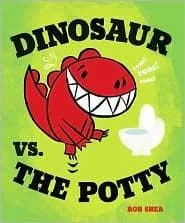
For the child who has said no. A small red dinosaur roars his way through the day insisting he does not need to go, through puddles and lemonade and a sprinkler, until he does. It never instructs; the joke does the work, and children who have dug in on this refuse a lecture but will happily laugh at a dinosaur losing the same argument. The loudest read-aloud on this list — the "ROAR" is meant to be shouted.
3. Time to Pee! — Mo Willems (2003). Ages 2–5.#
- Written by
- Mo Willems
- First published
- 2003
- Ages
- 2–5
- Format
- Picture book
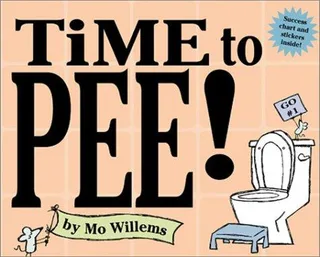
For fear rather than refusal. A crowd of encouraging mice hold up signs and talk a child through it, step by step, with Willems's timing doing the reassurance. The steps are genuinely sequential — notice, stop what you are doing, go, wash — so a child who is frightened of getting it wrong gets an order to hold on to. Some editions ship with a sticker chart, which parents either love or ignore.
4. Everyone Poops — Tarō Gomi (1993). Ages 2–5.#
- Written by
- Tarō Gomi
- First published
- 1993
- Ages
- 2–5
- Format
- Picture book and board book
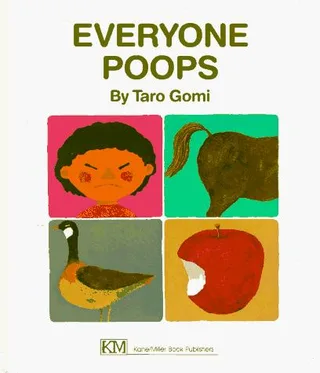
For "why do I have to?" An elephant makes a big one, a mouse makes a small one, and everybody does it. It answers the question by removing the strangeness rather than by persuading, and for some children that is the entire blocker. Written by Tarō Gomi, who both wrote and illustrated it; the English edition is from 1993, and the Japanese original, Minna Unchi, is from 1977. It is matter-of-fact rather than giggly, and a child who finds the subject enormously funny may prefer the dinosaur.
5. A Potty for Me! — Karen Katz (2005). Lift-the-flap, ages 1–3.#
- Written by
- Karen Katz
- First published
- 2005
- Ages
- 1–3
- Format
- Lift-the-flap board book
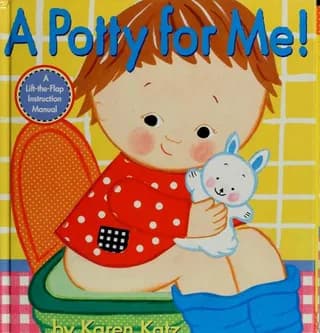
For the child who wants to do it themselves. Flaps put the child in charge of the reveal, which is the whole appeal at this age — the book asks and they answer with their hands. It also shows the accidents, plainly and without drama, which is a small kindness on about day two. The flaps take a beating; buy it knowing that.
The two moments none of these books cover#
Both are normal, both send parents back to search for another book, and neither is a book problem.
Your child was doing fine and has stopped. The American Academy of Pediatrics, on potty training regression, names the usual triggers plainly — a new sibling, a move, illness, family conflict, a change in childcare or the start of preschool. Their guidance is to look for the cause rather than the technique, and they are reassuring about the timeline: "regression usually doesn't last very long. In many cases, the child picks up where she left off… after a few days or weeks." A seventh book will not shorten that. Reading the one they already like, again, might. If the trigger is a new baby, the better next book is not about the potty at all — our list of books about becoming a big brother is sorted by exactly that moment.
They will wee but not poo. This one is common enough to feel personal and is not. Older toddlers can withhold deliberately — sometimes as stress, sometimes because a two-year-old has worked out this is a thing they get to decide. It can tip into real constipation, which is a reason to call your pediatrician rather than to buy Everyone Poops a second time.
⚠️ Neither of these is on any potty-book list, which is worth noticing: the lists are written to recommend books, so they describe the problems books solve.
Two things to skip#
Skip the gendered editions unless your child picks one. Several titles — the Potty Book pair, the Big Girl Panties and Big Boy Underpants pair — ship in matched boy and girl versions with almost nothing different in the text. They exist so a household with two children buys two copies. If your child has a preference, follow it; otherwise one book is one book.
Skip building a stack. Five potty books read once each do less than one book read twenty times. The value is the script becoming familiar, and familiarity needs repetition, not variety.
What to read next#
- Books about starting kindergarten — the next transition, handled the same way.
- Books about feelings for toddlers — for when the refusal is not about the toilet at all.
- Every article in the journal — all our reading guides in one list.
Can a personalized children's book with a photo help with potty training?#
It can, for one specific reason, and it is worth being precise about it.
Every book above is about a dinosaur, a mouse, or a round cartoon baby. That distance is often helpful — it is easier to laugh at a dinosaur refusing than to be told about yourself. But some children get stuck exactly there: they will happily read about the dinosaur and then not connect it to their own bathroom, their own step stool, the toilet that makes the loud noise.
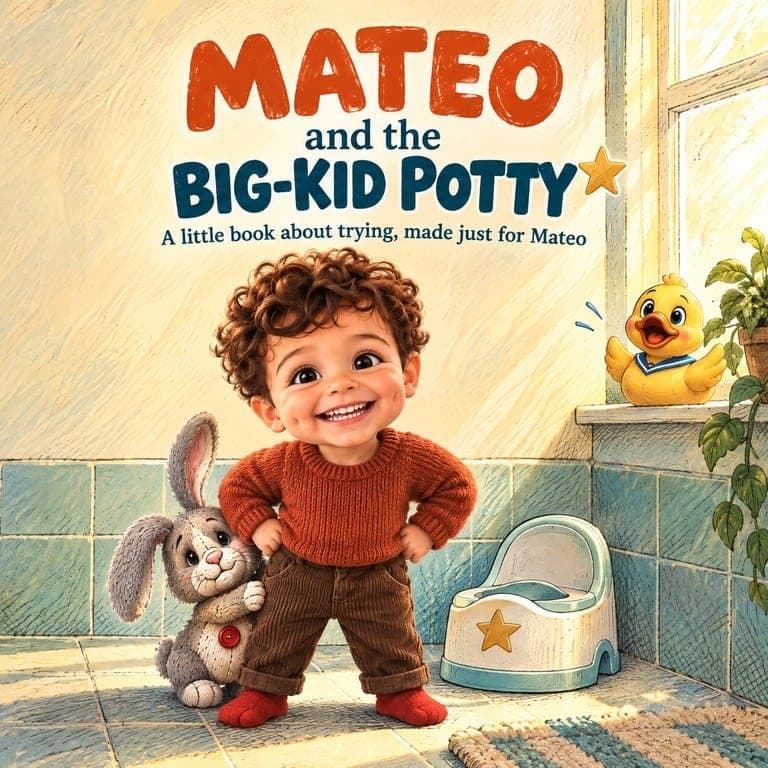
KindFable closes that gap. Our shop has a finished potty story, Your Child and the Big-Kid Potty, for ages 2 to 3. The sample shown stars Mateo, who is two; when you order it, you add your own child's photo and name, and every page is painted with your child as the one doing it.
It starts where a toddler's pride lives: "This is Mateo. He is TWO and a half. That is very big." Then something new arrives in the bathroom — "It was small. It had a star." — and two toys, Mr. Socks and Quackers, explain that it is a big-kid seat, for big kids like him. The book's lesson matches the AAP's reassurance above: trying counts, oops days are okay, and you don't have to be big all at once.
It is a script with their name in it. That is the whole idea, and it is the same reason a personalized children's book with a photo works for a new sibling or a first day at nursery — the child is not being taught, they are being shown themselves already managing it.

A book from our shop · ages 2–3
Your Child and the Big-Kid Potty
Something new has arrived in the corner of the bathroom. It is small. It has a star. Your little one tries, waits, hums — has an oops day (even ducks do) — and one morning: I DID IT! A gentle, funny book about trying, where every try counts.
Shown here starring Mateo, 2. Yours is painted with your own child’s face and name on every page, from $39 — and you see the pages before you pay.
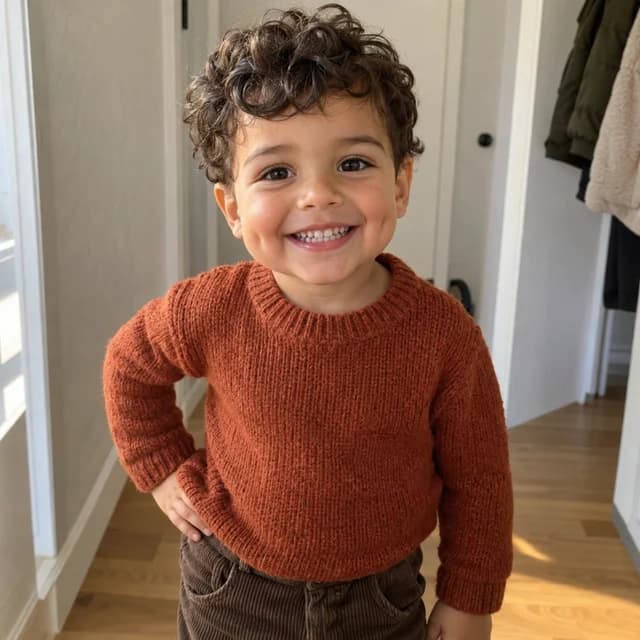
The photo they uploaded
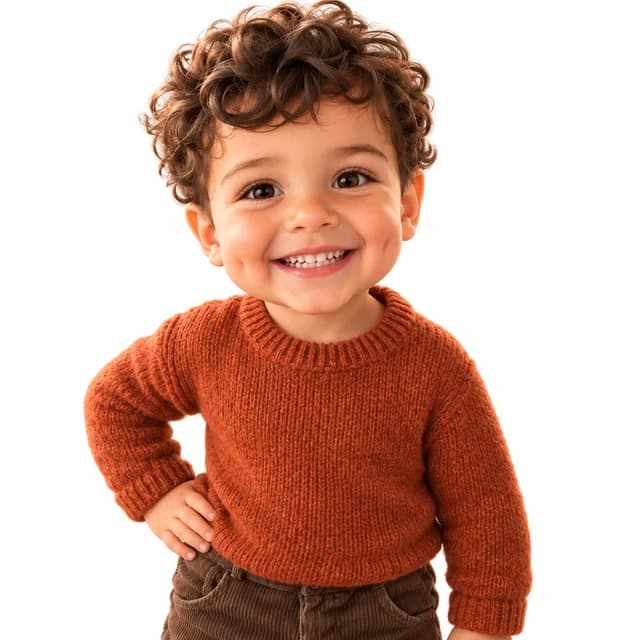
The character we drew
Written from this story — not a stock track with a name dropped in. Free with every book.
How the story begins
- 1This is Mateo. He is TWO and a half. That is very big.
- 2One morning, something NEW arrived. It was small. It had a star. “What is it?” whispered Mr. Socks.
- 3“It's a BIG-KID seat,” said Quackers. “For big kids. Like you.”
The rest of the story is in Your Child and the Big-Kid Potty.
The words to the song
[Verse 1]
Something new is in the corner,
Small and shiny, with a star.
Mr. Socks is hiding, hiding —
Mateo says, "I know who you are!"

[Chorus]
Try, and wait, and hum a song,
Nothing happens? Nothing's wrong.
Trying counts, trying counts,
Every single try amounts!

[Verse 2]
Oops days come to everybody,
Even ducks fall in the tub — SPLASH!
Dry your eyes and take a towel,
Tomorrow's try comes in a flash.

[Chorus]

[Verse 3]
First you try, and then you wait,
Then you wash your hands — that's three!
Being big is hard, but listen:
Just a bit at a time, you'll see.

[Verse 4]
One fine morning — "I DID IT!"
Quackers quacks and Socks goes wild,
One gold star upon the chart —
Mateo, you're a big, proud child.

[Outro]
Some days work and some days don't,
Every day you try — you won't
Ever have to be big all at once...
Trying counts. Trying counts.
If your child is nearer two than three, or laughs more easily than they sit still, the shop has a second potty story. Your Child and the Big Box Surprise, for ages 1 to 3, opens a big box with a yellow bow and finds a potty inside, and a plush T-rex called Rexy turns the whole thing into a silly adventure. A shorts-on oops is fine in this one, nothing happening is fine, and every try earns a gold star.
If your bathroom has its own details — the step stool, the toy that comes along, the flush they do not like — you can instead write a few sentences on the create page, and the story is written around them, with length following the age you enter.
Either way you see your child's painted pages before you decide anything. After that it is a softcover or a hardcover (the current prices sit on one page, and the hardcover ships free with the whole story narrated).
Open the Big-Kid Potty book, open the Big Box Surprise, or browse the whole shop.
Book covers are shown unaltered for identification, sourced from Open Library. Each cover remains the property of its publisher and illustrator. KindFable is not affiliated with any of the books recommended here.