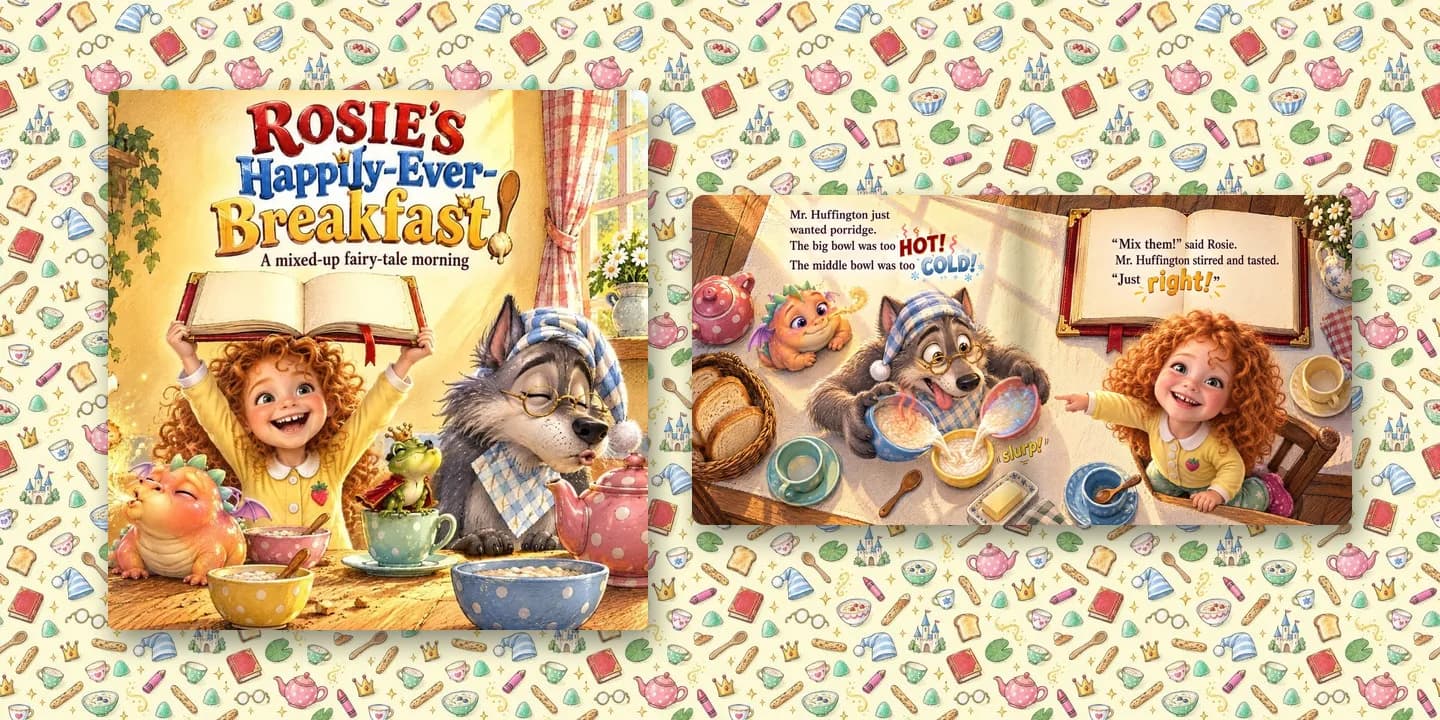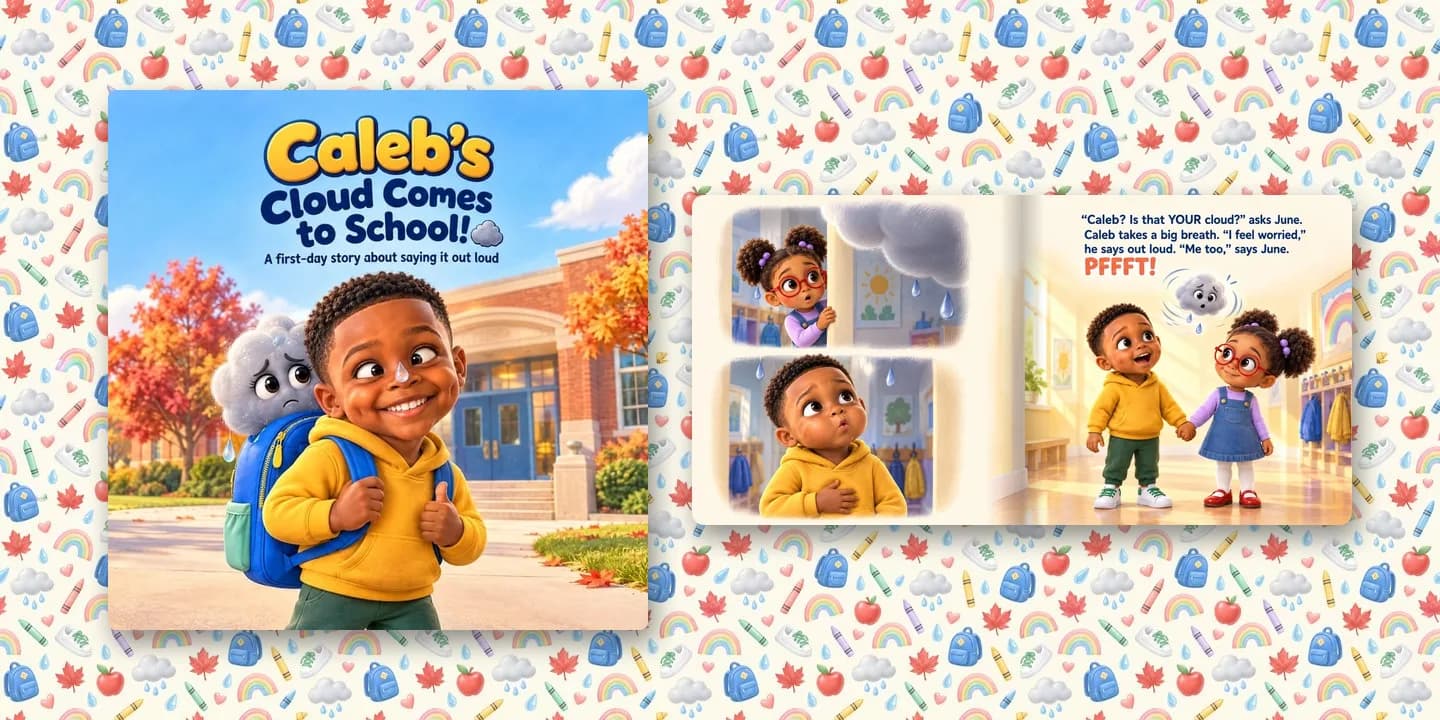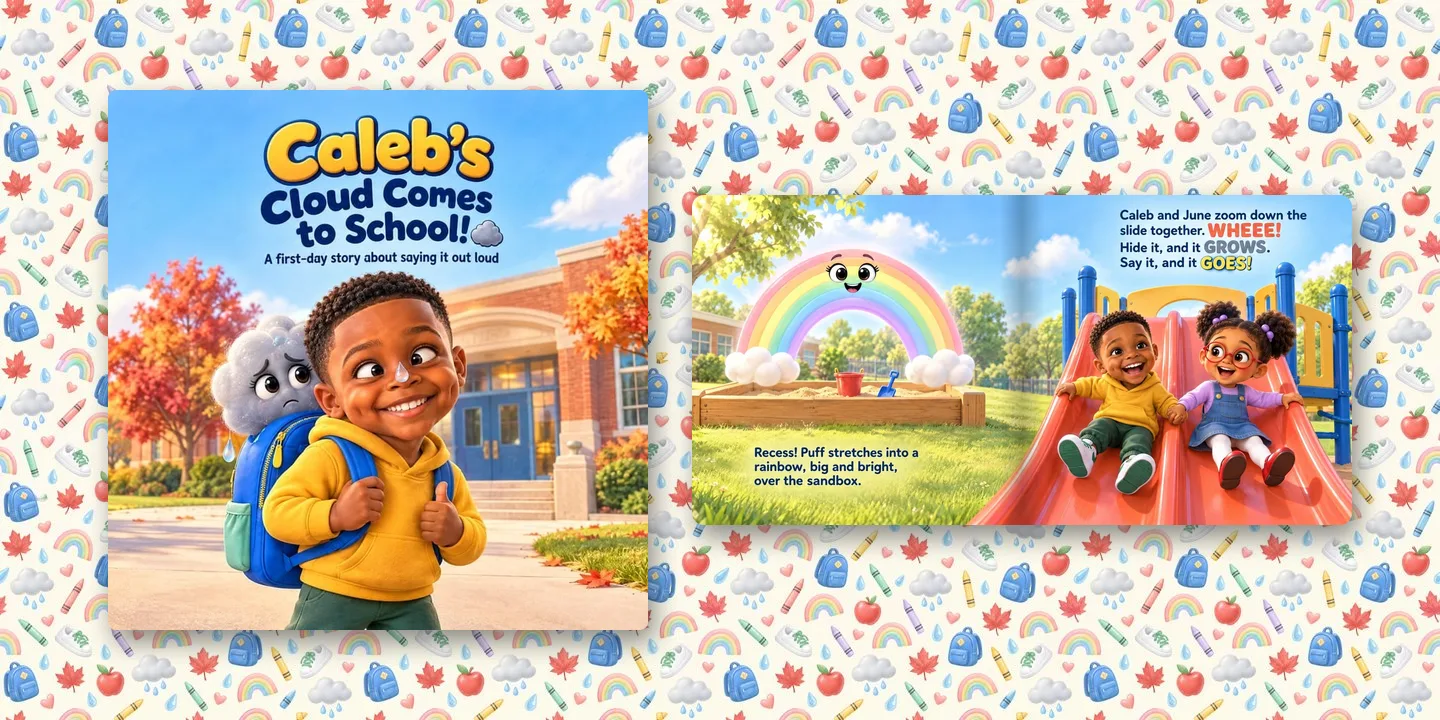
The best books for language development match the skill your toddler is working on right now — naming things, making sounds, finishing a line they have heard a hundred times, or answering "what's that?" A first-words book with one picture per page suits a one-year-old; a predictable rhyme suits a two-year-old who wants to join in. Below are 14 books for language development sorted by the skill they build, the CDC's milestones from 9 to 30 months, how to read so your toddler talks back, and when to stop reading lists and talk to your doctor.
Why are books so good for language?#
Books give children words that everyday talk does not. Jessica Montag, Michael Jones and Linda Smith compared 100 children's picture books with a matched sample of speech addressed to children and reported in Psychological Science (2015) that the books contained more unique words — and that individual books generally contained more unique words than length-matched conversations. "Spoon", "cup" and "ball" come up at breakfast; "burrow", "whisker" and "gallop" mostly come from books.
The amount adds up. Logan and colleagues estimated in the Journal of Developmental and Behavioral Pediatrics (2019) that reading one picture book a day exposes a child to about 78,000 words a year.
And the way you read matters. In the late 1980s Grover Whitehurst and colleagues showed that changing how parents read picture books — asking open questions, expanding on what the child said, praising attempts — improved toddlers' expressive language in a few weeks, in a study published in Developmental Psychology (1988). That style is now called dialogic reading.
What language milestones should you expect?#
The CDC's milestone checklists list what most children can do by each age. These are the language and communication ones:
| Age | Language and communication milestones (CDC) | Books that fit |
|---|---|---|
| 9 months | Makes lots of different sounds like "mamamama" and "bababababa"; lifts arms to be picked up | Sound books, peek-a-boo books |
| 1 year | Waves "bye-bye"; calls a parent "mama", "dada" or another special name; understands "no" | One-word-per-page board books |
| 18 months | Tries to say three or more words besides "mama" or "dada"; follows one-step directions | First-words books, lift-the-flaps |
| 2 years | Points to things in a book when asked, like "Where is the bear?"; says at least two words together, like "More milk"; points to at least two body parts | Body-part books, predictable rhymes |
| 30 months | Says about 50 words; says two or more words together with an action word, like "Doggie run"; names things in a book when you point and ask; says words like "I", "me" or "we" | Action-word books, longer stories |
Notice how often books appear in the milestones themselves: pointing to things in a book at two, naming things in a book at thirty months. Reading together is not just good for language — it is where many of these skills get practised.
Which books are best for language development?#
Sorted by the skill each one builds. First-publication years checked against library catalogue records.
| Skill | Book | First published | Ages |
|---|---|---|---|
| Peek-a-boo and sounds | Peek-a-Who? by Nina Laden | 2000 | 0–2 |
| First words (naming) | First 100 Words by Roger Priddy | 2005 | 1–3 |
| Questions and answers | Where's Spot? by Eric Hill | 1980 | 1–3 |
| Questions and answers | Dear Zoo by Rod Campbell | 1982 | 1–3 |
| Animal sounds | Moo, Baa, La La La! by Sandra Boynton | 1982 | 1–3 |
| Predictable repetition | Brown Bear, Brown Bear, What Do You See? by Bill Martin Jr., illustrated by Eric Carle | 1967 | 1–4 |
| Sounds and verbs | Polar Bear, Polar Bear, What Do You Hear? by Bill Martin Jr., illustrated by Eric Carle | 1991 | 2–4 |
| Body words and rhythm | Hand, Hand, Fingers, Thumb by Al Perkins, illustrated by Eric Gurney | 1969 | 1–4 |
| Body words and counting | Ten Little Fingers and Ten Little Toes by Mem Fox, illustrated by Helen Oxenbury | 2008 | 0–3 |
| Naming the room | Goodnight Moon by Margaret Wise Brown, illustrated by Clement Hurd | 1947 | 0–3 |
| Action words and opposites | Go, Dog. Go! by P. D. Eastman | 1961 | 2–5 |
| Food words and days | The Very Hungry Caterpillar by Eric Carle | 1969 | 2–5 |
| Rhyme | Llama Llama Red Pajama by Anna Dewdney | 2005 | 2–5 |
| Letters and chant | Chicka Chicka Boom Boom by Bill Martin Jr. and John Archambault, illustrated by Lois Ehlert | 1989 | 2–5 |
For babies: sounds and peek-a-boo#
Peek-a-Who? A rhyming peek-a-boo board book with die-cut holes — who's behind the door? A good one for the stage when babies babble and copy sounds.
Ten Little Fingers and Ten Little Toes. Babies born all over the world, each with ten little fingers and ten little toes. Count them on your baby's hands as you read; body words are among the first a child understands.
For first words: one thing, one name#
First 100 Words. Photographs of everyday things, one name each. Not a story — a pointing book. Let your toddler choose the page and name what they can.
Goodnight Moon. A quiet book that names everything in a room: the moon, the cow, the bears, the kittens. Perfect for "Where's the…?" questions. Our guide to books like Goodnight Moon has more of the same calm kind.
For questions and answers: lift the flap#
Where's Spot? A mother dog looks for her puppy behind doors and under beds — "No!" says the snake, the hippo, the lion. The flaps turn reading into a conversation: "Is he in here?"
Dear Zoo. The zoo keeps sending pets that are not quite right — too big, too fierce, too naughty. Children quickly learn to shout the reason before you turn the flap.
For joining in: sounds and repetition#
Moo, Baa, La La La! Cows say moo, sheep say baa — and three singing pigs say la la la. Animal sounds are easier to say than words, which makes them early favourites.
Brown Bear, Brown Bear, What Do You See? The same question, page after page, so a toddler can finish it long before they can read. The guide to books like Brown Bear, Brown Bear sorts the next ones to try.
Polar Bear, Polar Bear, What Do You Hear? The sequel swaps colours for sounds — roaring, snorting, trumpeting — which gives a child action words and noises to copy.
Hand, Hand, Fingers, Thumb. Monkeys drumming in rhythm, with body words and a beat a toddler can tap along to.
For action words and longer sentences#
Go, Dog. Go! Dogs going up, down, in, out, around — and a party in a tree. The best book on this list for prepositions and opposites, which arrive around two and a half.
The Very Hungry Caterpillar. Food words, numbers and days of the week, with holes to poke a finger through. See books like The Very Hungry Caterpillar for what to read next.
Llama Llama Red Pajama and Chicka Chicka Boom Boom carry rhyme and rhythm — the sound patterns that later help children hear the parts of words. Our guide to books like Chicka Chicka Boom Boom covers the letter-chant books.
If we could only keep one book on this list for a child who is just starting to talk, it would be Brown Bear, Brown Bear: the repeated question is the easiest possible invitation to say something. First 100 Words has more words, but a list does not ask a child to answer.
How should you read to build language?#
These habits come from dialogic reading and the American Academy of Pediatrics' advice on sharing books with babies — name and point, ask questions, follow your child's lead, and repeat:
- Follow your child's eyes. Talk about the picture they are looking at, not the one you meant to talk about.
- Name, then wait. "Look — a dog!" Then pause for five seconds. Toddlers need time to find a word.
- Add one word. If your child says "dog", say "Big dog!" If they say "big dog", say "Big dog running!" This is called expansion, and it shows them the next step.
- Ask "what" and "where" questions. "Where's the cat?" before "What's the cat doing?" — pointing comes before naming, and naming before describing.
- Leave the last word out. "Brown bear, brown bear, what do you…" — and let them say "see".
- Read the same book again and again. Repetition is how a toddler learns a word well enough to say it. The guide to why toddlers want the same book explains why.
This back-and-forth is what Harvard's Center on the Developing Child calls serve and return: the child reaches out, the adult responds. A book gives you a hundred things to serve and return.
When should you worry about a toddler's language?#
Every child develops at their own pace, but the CDC milestones are what most children can do by each age — so a child who is not meeting them should be checked, not just given more books.
- By 18 months: not trying to say three or more words besides "mama" or "dada".
- By 2 years: not saying two words together, or not pointing to things in a book when asked.
- By 30 months: saying far fewer than about 50 words, or not putting two words together with an action word.
- At any age: losing words or skills they used to have.
If any of these fit, talk to your child's doctor and ask about a speech and language assessment. The CDC's "Learn the Signs. Act Early." programme encourages parents to act on a concern early rather than wait and see. Books are still worth reading — a speech therapist will often show you how to read in a way that targets your child's needs — but they are support, not a treatment.
Can you turn a photo into a children's book for first words?#
You can, and for a toddler learning to name things it is a strong idea. Children notice their own name and face early, and a first-words book with their face on every page gives them a reason to point and talk — "That's me! Ball!" When you turn a photo into a children's book, the child doing the pointing and naming is your child.
Two KindFable books are built for exactly this stage:
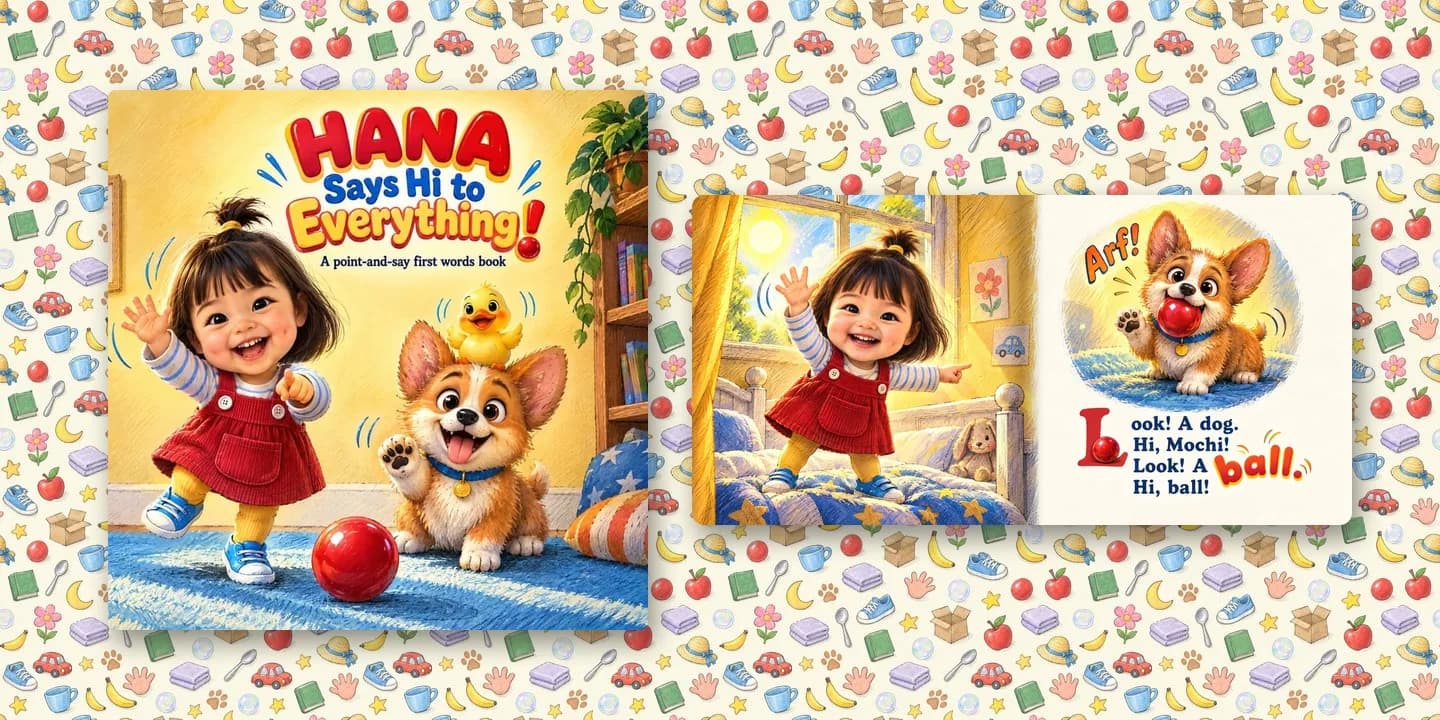
- Your Child Says Hi to Everything! — a bouncy point-and-say first-words book. Look! A ball. Hi, ball! Your child says hi to a wiggly corgi puppy, a cup and a spoon, a hat, a toy car, a big box (peekaboo!), the bath bubbles and, at bedtime, the moon. One bold, shiny thing on every page and a wave or a pointing finger to copy.
- Peekaboo, Your Child! — a giggly first-words book of the body: eyes behind two hands, ears, a nose behind a big pink flower (boop!), ten wiggly fingers, toes under the blanket and one very special belly button.
For a baby not yet saying words, Peek-a-Boo, Little Cloud! has big shapes, big words and one giggle on every page.
How do I make a first-words book starring my toddler?#
- Pick a story — start with Says Hi to Everything, or begin your own at /create.
- Add your child's name and age, so the words fit a toddler.
- Upload one clear photo and tick the consent box. Your child becomes the character on every page, with the same face from the cover to the last page.
- Tell the story box about your child's world — the dog's name, the favourite toy, the word they say most — and choose an art style.
- See the cover before you pay. The painted cover is free to look at; nothing is charged until you decide.
- Choose the format. The hardcover comes with narration and a song of the story, and the digital book is ready the same day. Prices are on one page.
Here is one, read in full. Hana is the sample child; your copy stars yours.
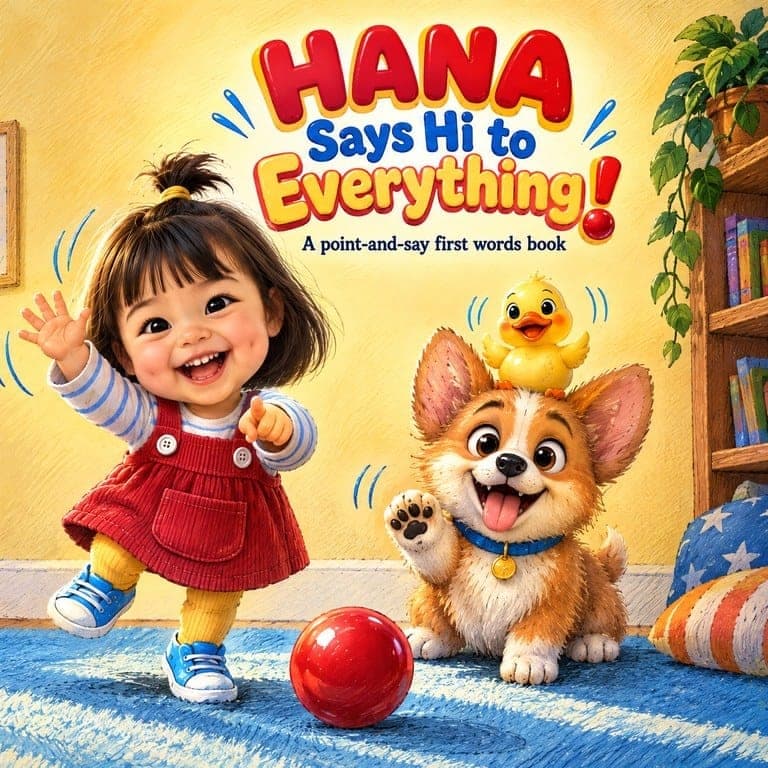

A book from our shop · ages 1–3
Your Child Says Hi to Everything!
Look! A ball. Hi, ball! Your little one says hi to EVERYTHING — Mochi the wiggly corgi puppy, a cup and a spoon, a hat, a zooming toy car, a big box (peekaboo!), the bath bubbles and, at bedtime, the moon in the window. A bouncy point-and-say first-words book for the very youngest: one bold, shiny thing on every page and a wave or a pointing finger to copy. Bye-bye, everything. Night-night!
Shown here starring Hana, 2. Yours is painted with your own child’s face and name on every page, from $39 — and you see the pages before you pay.
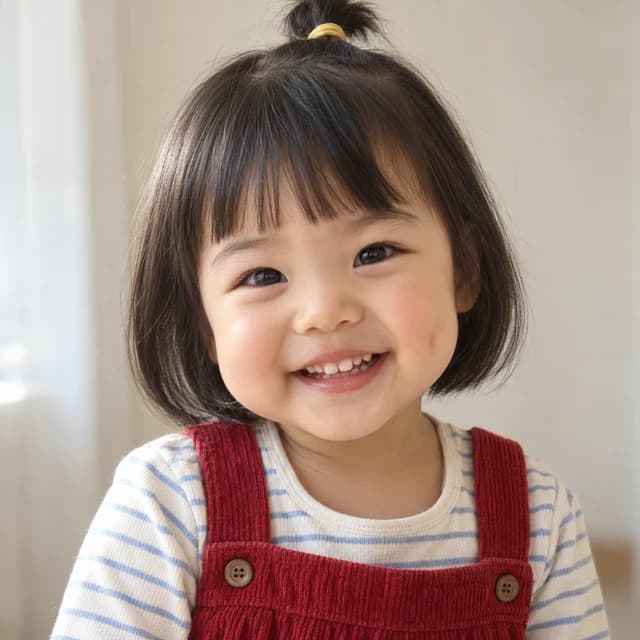
The photo they uploaded
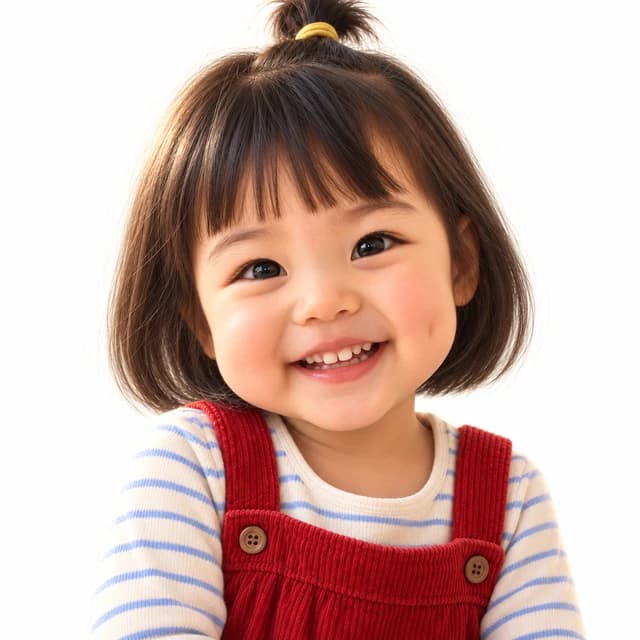
The character we drew
Written from this story — not a stock track with a name dropped in. Free with every book.
How the story begins
- 1Look! A dog. Hi, Mochi! Look! A ball. Hi, ball!
- 2Look! A cup. Hi, cup! Look! A spoon. Hi, spoon!
- 3Look! A hat. Hi, hat! Look! A duck. Hi, Peep!
The rest of the story is in Your Child Says Hi to Everything!.
The words to the song
[Verse 1]
Morning sun and a wiggly pup,
Hi, Mochi! Hi, ball! Hi, cup!
A hat, a duck, squeak, squeak, Peep!
A shoe, a car, beep, beep, beep!

[Chorus]
Look, look, what do you see?
Point and say it, one, two, three!
Wave your hand up in the air,
Hi, hi, everything, everywhere!

[Verse 2]
Apple, banana, picnic fun,
Splash, splash, bubbles, one by one!
Where is Peep? Peekaboo... there!
A book, a hug, a big soft chair.

[Chorus]
Look, look, what do you see?
Point and say it, one, two, three!
Wave your hand up in the air,
Hi, hi, everything, everywhere!

[Outro]
Look, the moon, so round and bright...
Bye-bye, everything. Night-night!
For more on the first two years, the guide to the best books for 2-year-olds picks up where this list leaves off.