If your child has Chicka Chicka Boom Boom by heart, watch what they do on the next reading. The nine books below are grouped by which of its three jobs your child has taken on — keeping the beat, hunting the letters, or waiting for the crash — because those are three different children, and buying the wrong one is how families end up with a shelf of unread alphabet books.
Which book should I read after Chicka Chicka Boom Boom?#
| What your child does while you read | What it means | Read next | Ages |
|---|---|---|---|
| Bounces, claps, or says it with you | They are in it for the rhythm | We're Going on a Bear Hunt | 2–6 |
| Fills in the end of the line | They want a part to perform | Brown Bear, Brown Bear, What Do You See? | 0–4 |
| Repeats the silliest name back at you | It is the mouth-feel of the words | Hairy Maclary from Donaldson's Dairy | 2–6 |
| Points at letters and names them | They are actually hunting letters | Dr. Seuss's ABC | 2–5 |
| Traces letter shapes with a finger | The shapes, not the sounds | Eating the Alphabet | 2–6 |
| Makes the noises back at you | Sound play, not letters | Mr. Brown Can Moo, Can You? | 0–5 |
| Laughs before the joke lands | They are waiting for the crash | Oi Frog! | 3–7 |
| Stares at the colours | It was always the pictures | Freight Train | 0–4 |
| Asks "what do you hear?" | They want the pattern again | Polar Bear, Polar Bear, What Do You Hear? | 2–5 |
What is Chicka Chicka Boom Boom actually doing?#
Here is the position, and it is one most reading lists get backwards: Chicka Chicka Boom Boom is not an alphabet book. It is a chant that happens to cast the alphabet.
The whole letter of the alphabet climbs a coconut tree, the tree gives way, and the letters come down in a heap — and the reason a two-year-old demands it four times is the boom boom, not the B. Bill Martin Jr. and John Archambault wrote it as a piece of spoken rhythm; Lois Ehlert drew the letters as fat, bright, cut-paper characters. It was first published in 1989.
On the credit, since page one keeps getting it wrong: John Archambault is a full co-author, not a contributor, and is routinely dropped from listings that name only Bill Martin Jr.
Why this matters for what you buy next: a parent who reads "he loves the alphabet book" reaches for more alphabet books, and the child — who was never in it for the alphabet — leaves them on the shelf. Reading Rockets defines alphabet knowledge as three separate things: naming letters, knowing the sounds they make, and knowing their printed shapes. Chicka Chicka Boom Boom serves the first and third, in passing, and barely touches the second.
That is not a criticism. Chanting is doing real work in its own right: Matthew Lerner and Christopher Lonigan, in the Journal of Experimental Child Psychology (2016), found that letter-name knowledge and phonological awareness are bidirectionally related — the starting level of each predicted growth in the other — and that the link reaches down to the large sound units a chant is made of: syllables, onsets and rimes. Your child bouncing to boom boom is building the ear that will later carry the letters. It is an old finding, too: Peter Bryant and colleagues, in the Journal of Child Language (1989), found that children who knew more nursery rhymes at three went on to show stronger phonological skills and early reading.
If they keep the beat: books that hand the child a line#
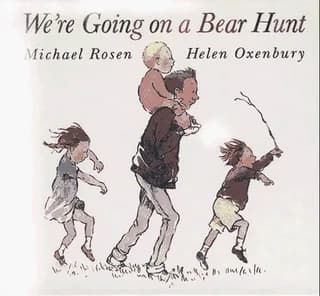
1. We're Going on a Bear Hunt — Michael Rosen, illustrated by Helen Oxenbury (1989). Picture book, ages 2–6.
- Written by
- Michael Rosen
- Illustrated by
- Helen Oxenbury
- First published
- 1989
- Ages
- 2–6
- Format
- Picture book and board book
The nearest thing in print to Chicka Chicka's pull. It is built on a marching refrain and a set of noises — the grass, the river, the mud — and the read-aloud pattern is the same: the adult carries the story, the child carries the sounds. The whole book turns around and sprints backwards at the end, and children who have heard it twice start the run before you do.
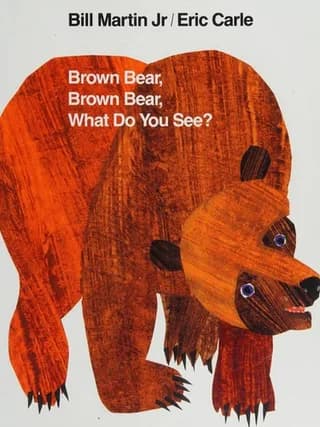
2. Brown Bear, Brown Bear, What Do You See? — Bill Martin Jr., illustrated by Eric Carle (1967). Ages 0–4.
- Written by
- Bill Martin Jr.
- Illustrated by
- Eric Carle
- First published
- 1967
- Ages
- 0–4
- Format
- Board book and picture book
Same author, gentler engine. Where Chicka Chicka asks your child to keep a beat, this asks them to finish a sentence — the line is short enough that a two-year-old supplies the last word unprompted. It is the better choice if your child chants along but cannot yet hold a long rhythm. If this is the one that lands, books like Brown Bear, Brown Bear goes further down that road.
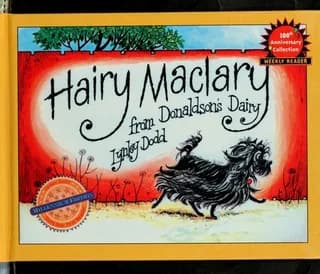
3. Hairy Maclary from Donaldson's Dairy — Lynley Dodd (1983). Ages 2–6.
- Written by
- Lynley Dodd
- First published
- 1983
- Ages
- 2–6
- Format
- Board book and picture book
The most underrated book on this list outside New Zealand and the UK. It is a cumulative list of dogs with absurd names — Hercules Morse, Bottomley Potts — that grows every page, so a child who loves Chicka Chicka's pile-up of letters gets the same accumulating shape, with the pleasure moved from the alphabet to the sound of the names. Read it too slowly and it dies; it needs the same skipping-rhyme tempo.
If they are hunting the letters: books where the alphabet is the subject#
Two books, and they solve different halves of the problem.
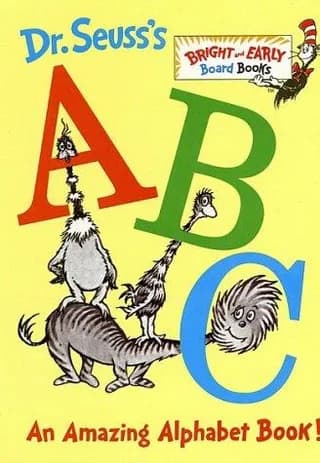
4. Dr. Seuss's ABC — Dr. Seuss (1963). Ages 2–5.
- Written by
- Dr. Seuss
- First published
- 1963
- Ages
- 2–5
- Format
- Board book and hardcover
This is the one to reach for if the missing piece is sounds. Every spread pairs the letter with a tongue-twisting line built from its sound, which is exactly the part Chicka Chicka skips. Reading Rockets notes that letter names are taught before letter sounds because a name is constant while a sound changes — this book is the bridge between the two, and the board edition survives being carried around.
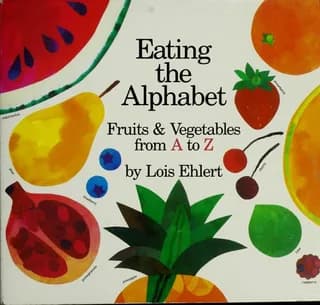
5. Eating the Alphabet: Fruits and Vegetables from A to Z — Lois Ehlert (1989). Ages 2–6.
- Written by
- Lois Ehlert
- First published
- 1989
- Ages
- 2–6
- Format
- Board book and picture book
The satisfying fact almost nobody prints: Lois Ehlert illustrated this and Chicka Chicka Boom Boom in the same year, 1989. A child who liked the fat cut-paper letters is looking at the same hands. Here the letters stand still and the food does the work, which makes it the better choice for a child who traces shapes rather than shouting names. It is also the quiet one on this list — no rhythm at all — so do not hand it to a child who came for the beat.
If it was the noise: books made of sound rather than story#
6. Mr. Brown Can Moo, Can You? — Dr. Seuss (1970). Ages 0–5.
- Written by
- Dr. Seuss
- First published
- 1970
- Ages
- 0–5
- Format
- Board book and picture book
Almost pure sound effect: a book of noises a child is invited to make back at you, page by page. There is no plot to lose, which makes it unusually good for the youngest end and for a child whose favourite part of Chicka Chicka is shouting boom boom rather than following anything.
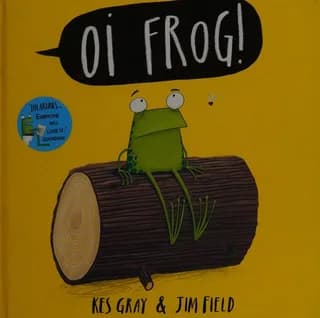
7. Oi Frog! — Kes Gray, illustrated by Jim Field (2014). Ages 3–7.
- Written by
- Kes Gray
- Illustrated by
- Jim Field
- First published
- 2014
- Ages
- 3–7
- Format
- Picture book
For the older child who is now in it for the joke. Every page sets up a rhyme and lands it as a punchline, so a child who has worked out that words end the same can call the answer before you read it — the first book on this list where being right out loud is the whole pleasure. Three is too young for most of it; five is about right.
If it was always the pictures#
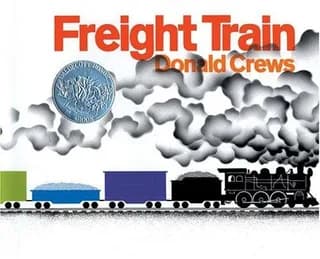
8. Freight Train — Donald Crews (1978). Ages 0–4.
- Written by
- Donald Crews
- First published
- 1978
- Ages
- 0–4
- Format
- Board book and picture book
Barely any words. A train of solid coloured carriages that blurs into motion across the pages, and the closest thing to Chicka Chicka's flat bright shapes without any rhythm attached. Choose it if your child's attention in that book goes to the tree and the colours rather than to your voice.
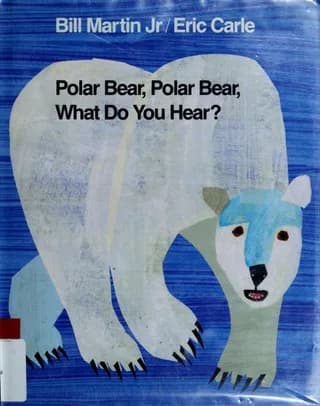
9. Polar Bear, Polar Bear, What Do You Hear? — Bill Martin Jr., illustrated by Eric Carle (1991). Ages 2–5.
- Written by
- Bill Martin Jr.
- Illustrated by
- Eric Carle
- First published
- 1991
- Ages
- 2–5
- Format
- Board book and picture book
The same call-and-response as Brown Bear, moved from seeing to hearing, so every answer is a noise the child performs. It is the natural pair for a household that already has Brown Bear and wants the pattern again without buying a different pattern.
How do you read Chicka Chicka Boom Boom aloud?#
Fast, and in time. It is a skipping rhyme, not a story, and read at ordinary story pace it falls flat — which is the single most common reason a parent decides the book is "not for us".
- Set a tempo on the first page and keep it. The text is written to a beat; your job is to be a metronome, not a narrator.
- Land hard on the refrain. Chicka chicka BOOM BOOM is the hook. Say it the same way every time and your child will take it over within two or three readings.
- Pause before the letters fall. One held beat before the tree gives way is worth more than any amount of expression elsewhere.
- Let them have the last line. Hand it over deliberately — stop, look at them, wait.
- Expect about three minutes at chant pace. If it is taking six, you are reading it as a story.
If your child is the one who wants the same rhythm every night rather than a new book, how to make a bedtime storybook covers the refrain trick and how long a bedtime story should actually run.
What to read next#
- Books like Brown Bear, Brown Bear — ten more call-and-response books, grouped by the job the child is doing.
- Books like The Gruffalo — where to go when rhyme turns into plot and your child wants a story with a shape.
- Books like Goodnight Moon — the quiet end of the shelf, for when the chanting has to stop.
Can a children's book generator write a chant with your child's name in it?#
It can, and it is a fairer question than it sounds — because the thing your child loves about Chicka Chicka Boom Boom is a shape, and a shape can hold any name.
None of the nine books above can do the one thing this particular child keeps asking for: put themselves in it. They chant A told B and B told C with total commitment and then ask, in the way small children do, where they are. A published book cannot answer that; it was printed before your child existed.
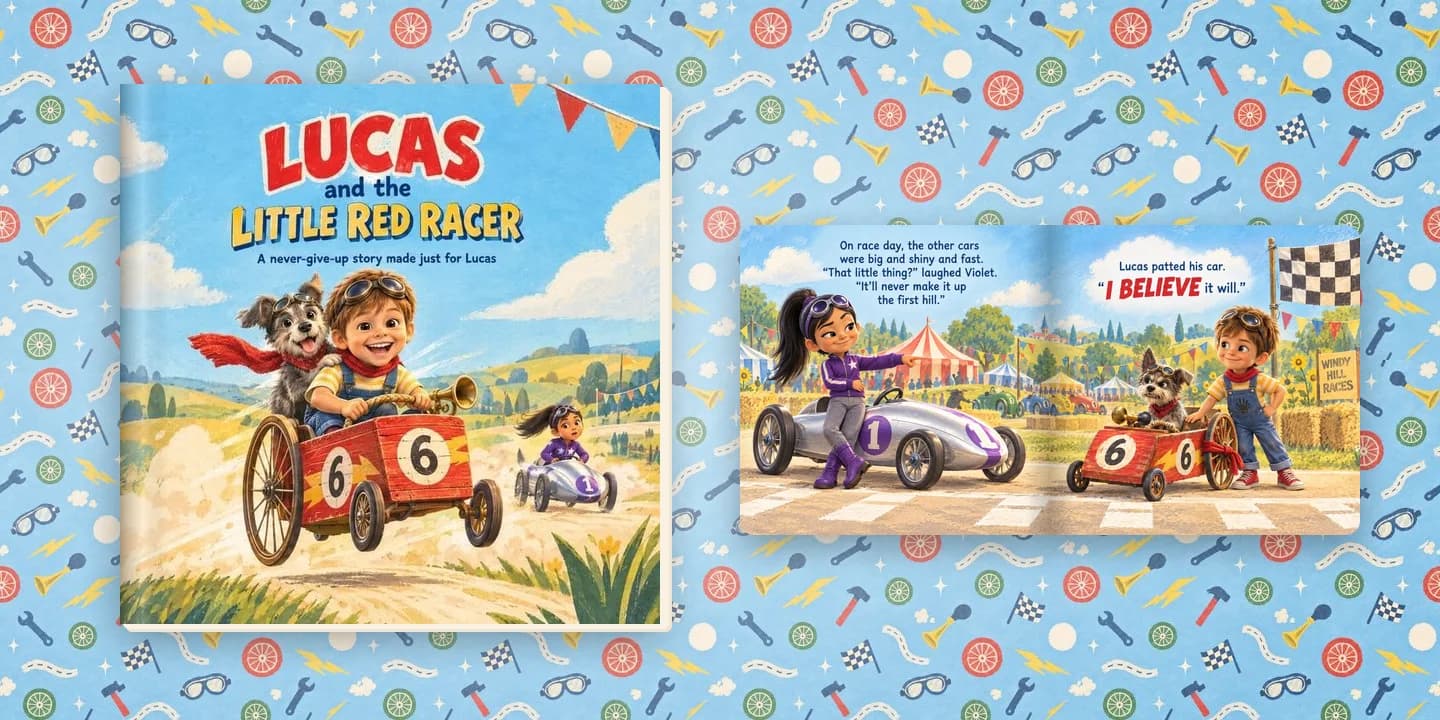
KindFable is built for exactly that gap. You bring one photo and a few sentences — the rhythm they like, the thing that happened this week, the word they will not stop saying — and it comes back as a real picture book with your child painted as the hero on every page, in one of nine art styles. Story length follows the age you enter, so a two-year-old's book chants and a six-year-old's book has a plot. If you want the machinery explained first, a children's book generator walks through what it does and where it still needs a person.
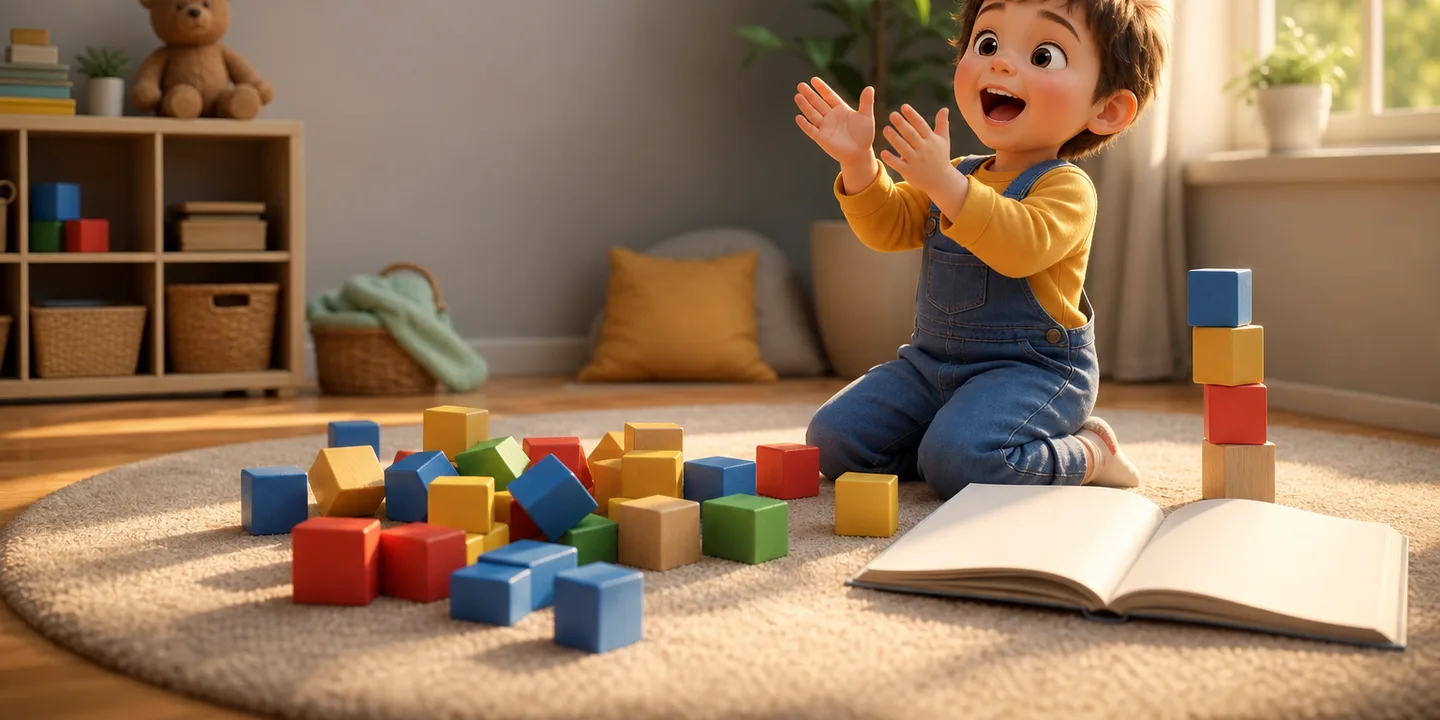
You do not have to write the chant yourself, either. The shop's closest cousin to the letters falling out of the coconut tree is Your Child and the Wobbly Tower, a finished story for ages 0 to 3. The sample shown stars Sofia, two, and it runs on exactly the build-up-and-crash your child is waiting for:
HOORAY! One block. Sofia did it.
Two blocks — HOORAY! — up, up. Three blocks… wobble… CRASH. A cheering bird, a roly-poly who never stays down, and a toddler who learns that whoops is okay, so build it again. A parent adds their own child's photo and name, and every page is painted with that child.
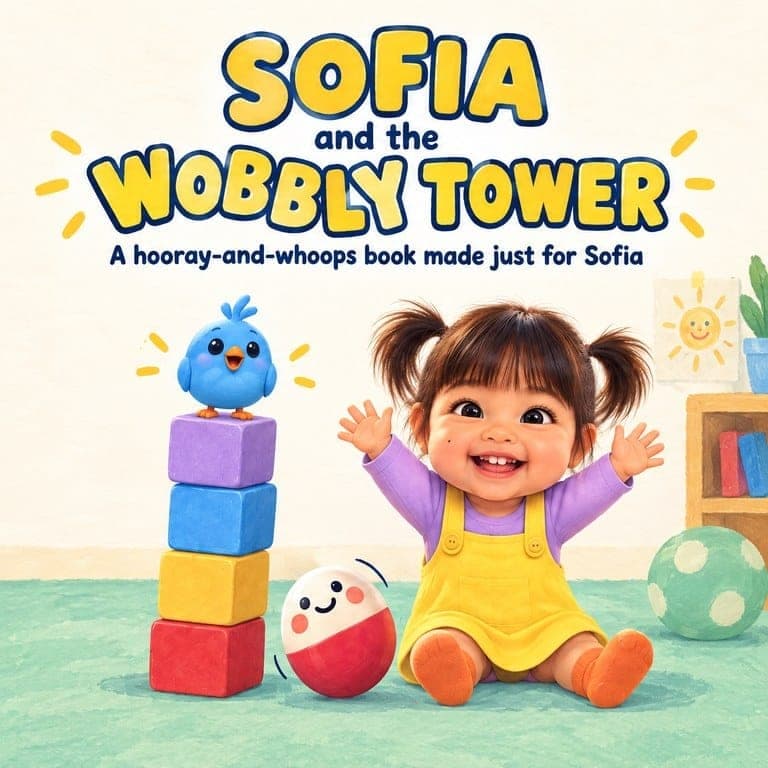

A book from our shop · ages 0–3
Your Child and the Wobbly Tower
One block — HOORAY! Two blocks — HOORAY! Three blocks… wobble… CRASH! A cheering bird, a roly-poly who never stays down, and a toddler who learns that whoops is okay — so build it again.
Shown here starring Sofia, 2. Yours is painted with your own child’s face and name on every page, from $39 — and you see the pages before you pay.
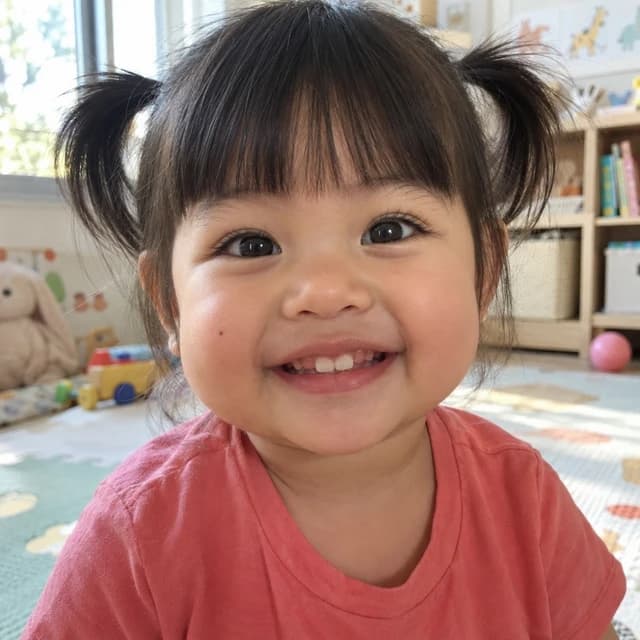
The photo they uploaded
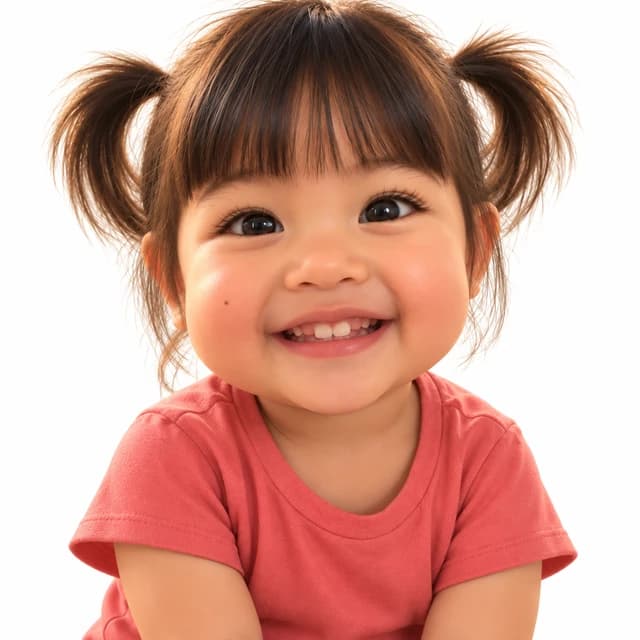
The character we drew
Written from this story — not a stock track with a name dropped in. Free with every book.
How the story begins
- 1Sofia has blocks. Bop has a cheer. Roly has a WOBBLE.
- 2HOORAY! One block. Sofia did it.
- 3HOORAY! Two blocks! Up, UP.
The rest of the story is in Your Child and the Wobbly Tower.
The words to the song
[Verse 1]
One block — hooray!
Two blocks — hooray!
Three blocks... wobble, wobble...
CRASH! Whoops! That's okay!

[Chorus]
Up, up, up we go,
wobble, wobble — oh!
Whoops! Again! Hooray!
That's the way we play!

[Verse 2]
Roly wobbles, Roly rocks,
Roly never stays down — like the blocks!
Bop sits on top — wobble — oh no!
CRASH! Whoops! Bop laughs — ho ho!

[Chorus]
Up, up, up we go,
wobble, wobble — oh!
Whoops! Again! Hooray!
That's the way we play!

[Outro]
Four blocks — hooray! — then down they go,
on purpose this time — Sofia said so!
Goodnight, little tower, two blocks high,
tomorrow: up, up, up to the sky!
Your child's pages are painted and shown to you before you decide anything — you see your child in their own book, with their name on it, for free. After that it is a softcover or a hardcover (the current prices sit on one page, and the hardcover ships free with the whole story narrated), and every book comes with its own song written from the text, which for a child who chants is the part that ends up playing in the car.
Start with the photo, or read a real book first.
Book covers are shown unaltered for identification, sourced from Open Library. Each cover remains the property of its publisher and illustrator. KindFable is not affiliated with any of the books recommended here.