The books like Where the Wild Things Are that actually work are the ones that copy the right part of it — and Sendak's book is four books at once.
One is the anger nobody ever tells Max off for. One is the journey out and, more to the point, the journey home. One is a room full of monsters who turn out to be bossable. One is the last page, where the supper is still hot.
Your child came back for one of those. The ten below are sorted by which, with the year, the age and the format on each.
Which book should I read after Where the Wild Things Are?#
Ask yourself which bit they turn back to once the book is finished, then read across.
| What they come back for | What they are responding to | Read next | Ages |
|---|---|---|---|
| The page where Max roars at his mother | Anger nobody scolds — the book takes Max's side | When Sophie Gets Angry · No, David! | 2–7 |
| The boat, the ocean, the weeks and almost a year | The round trip — going out, and getting yourself back | Harold and the Purple Crayon · Owl Moon | 3–8 |
| The wild things themselves | A monster that can be bossed | Go Away, Big Green Monster! · There's a Nightmare in My Closet · The Gruffalo | 2–7 |
| The very last page | The repair — supper still hot, nobody made to apologise | Owl Babies · The Runaway Bunny · The Tiger Who Came to Tea | 2–6 |
If they come back for all four, start with the bottom row. It is the cheapest to satisfy and the only one that helps at bedtime.
What is Where the Wild Things Are actually doing?#
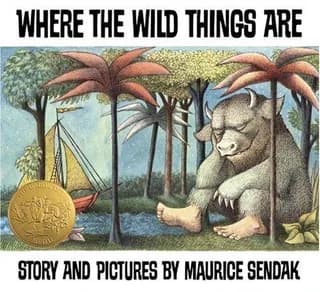
- Written by
- Maurice Sendak
- First published
- 1963
- Ages
- 4–8
- Format
- Picture book
Where the Wild Things Are is a 1963 picture book written and illustrated by Maurice Sendak, in which a boy called Max is sent to bed without supper, sails to an island of monsters, is crowned their king, and comes home. It won the Caldecott Medal in 1964.
Four things run inside it, and they are not equally important.
The anger is never corrected. Max is rude, Max is punished, and the book declines to side with the punishment. No adult is ever drawn at all — the mother is a voice at the start and a supper at the end, and nothing in between takes her side. A child who gets told off several times a day has every reason to notice that.
The journey is a round trip. Out through the bedroom wall, in and out of weeks and almost over a year, and back the same way. Plenty of picture books send a child somewhere; what makes this one hold is that Max gets himself home again under his own steam.
The monsters are governed, not defeated. Max tames them by looking at them, and later makes them stop. Nothing is killed and nothing is escaped from, and the wild things end the book sorry that he is going.
The supper is still hot. No apology from anybody, no lesson stated, and a room that was kept warm the entire time he was away.
Here is where most "similar books" lists go wrong: the monsters are the least important of the four.
They are simply the part you can see on the cover. Max leaves the island out of loneliness, not fear — he is king of everything and would rather be where someone loves him best. A recommendation that copies the monsters and drops the round trip has copied the costume.
If they came back for the anger: books that never tell a child off#
Both of these do what Sendak does and almost nothing else does: they let a small person be furious for a whole book without a grown-up correcting them inside it.
1. When Sophie Gets Angry—Really, Really Angry…#
- Written by
- Molly Bang
- First published
- 1999
- Ages
- 3–7
- Format
- Picture book
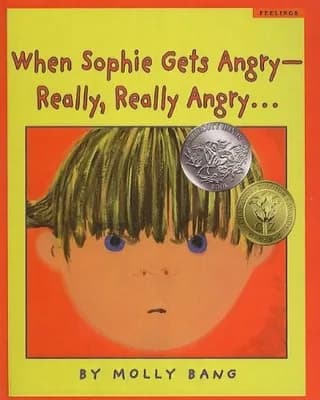
Molly Bang, 1999. Sophie's sister grabs her toy, Sophie falls over, roars, runs out of the house, climbs a tree, watches the water and comes home. It is Max's shape almost beat for beat, with one difference worth owning both books for: Sophie removes herself, and Max is sent.
Reading it aloud: the colours carry the argument, going red at the peak and cooling to green as she settles. Slow down as the page cools rather than as the story ends.
2. No, David!#
- Written by
- David Shannon
- First published
- 1998
- Ages
- 2–5
- Format
- Picture book
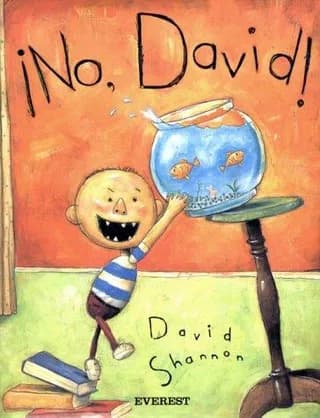
David Shannon, 1998. David is told no on almost every page, in enormous letters, until a last spread that is a hug. The detail most parents miss is that the adult is never drawn as a whole person — a hand, an arm, a doorway, and a voice. That makes it Max's book from the opposite end: David never gets to leave, so the repair has to come to him.
Reading it aloud: two minutes long, and the one here a two-year-old can already take. Let the last page sit in silence.
If they came back for the journey: books that go out and get home#
The most under-recommended group for this search, and the one carrying most of the original's actual load.
3. Harold and the Purple Crayon#
- Written by
- Crockett Johnson
- First published
- 1955
- Ages
- 3–7
- Format
- Picture book
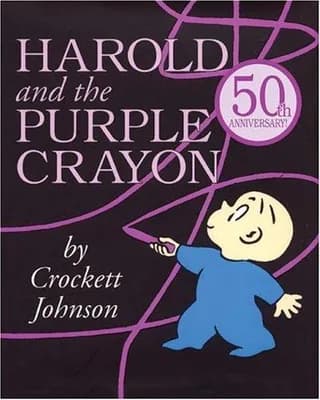
Crockett Johnson, 1955. A small boy in pyjamas draws a moon, a path, a forest, an ocean and a great deal of trouble, then draws his own bedroom window around the moon and gets back into bed.
This is the closest relative Max has, it is eight years older than him, and it appears on almost none of the lists ranking for this search. Harold makes the danger and Harold un-makes it: the round trip in its purest form, with the child holding the pen.
Reading it aloud: stop before he solves each problem and ask what he should draw. It is the rare book where a four-year-old's answer is as good as the author's.
4. Owl Moon#
- Written by
- Jane Yolen
- Illustrated by
- John Schoenherr
- First published
- 1987
- Ages
- 4–8
- Format
- Picture book
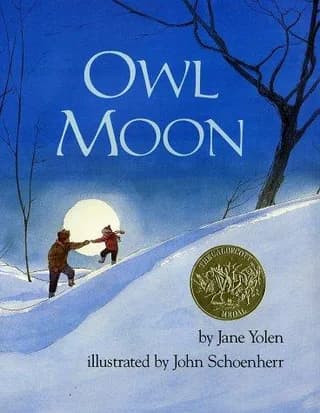
Jane Yolen and John Schoenherr, 1987, and winner of the Caldecott Medal in 1988. A child goes out into deep snow at night with their father to look for an owl. They find one. They walk home. Nothing is wild and nothing goes wrong, which makes it the gentle version of the same journey.
Reading it aloud: it is written to be read quietly and collapses if you perform it. The silences between the owl calls are the book.
If they came back for the monsters: books where the monster can be bossed#
Not books with monsters in them. Books where a child is plainly in charge of one, which is the specific pleasure Max supplies.
5. Go Away, Big Green Monster!#
- Written by
- Ed Emberley
- First published
- 1992
- Ages
- 2–5
- Format
- Die-cut picture book
Ed Emberley, 1992. Die-cut pages build a monster feature by feature out of the dark, then take it apart again on the child's instructions until nothing is left. It is the youngest book here and the most literal about the mechanism: the monster exists only while you are looking at it.
Reading it aloud: let them say the "go away" lines and mean it. Under three this often goes better at breakfast than at bedtime.
6. There's a Nightmare in My Closet#
- Written by
- Mercer Mayer
- First published
- 1968
- Ages
- 4–8
- Format
- Picture book
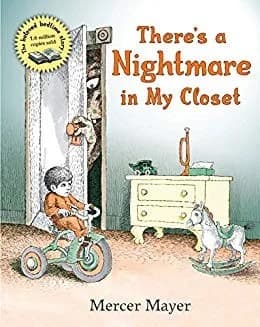
Mercer Mayer, 1968, and banded 4–8 by Penguin Random House. A boy arms himself, confronts the nightmare that lives in his closet, and finds it crying. He tucks it into bed beside him. Of everything here this most nearly repeats what Max does to the wild things, and it is almost never named alongside him.
Reading it aloud: the turn is the tears, not the monster. Pause there — some children need a beat to work out that the frightening thing is the frightened one.
7. The Gruffalo#
- Written by
- Julia Donaldson
- Illustrated by
- Axel Scheffler
- First published
- 1999
- Ages
- 3–7
- Format
- Board book and picture book
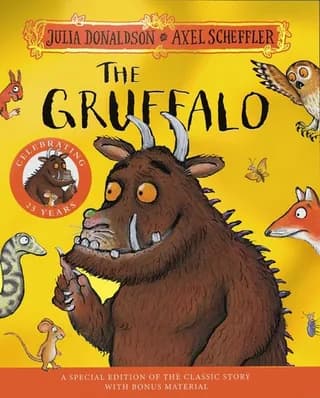
Julia Donaldson and Axel Scheffler, 1999. A mouse invents a monster to frighten off everything that wants to eat him, then walks into the monster he invented and talks his way out of that too.
An honest note: it is the least Sendak-like of the three. The mouse wins by being clever rather than by being king, and the rhyme does most of the work. Buy it because it is superb, not because it is similar.
Reading it aloud: pick a voice for the mouse and keep it. Children notice a swap and stop you to say so.
If they came back for the supper: books about the repair#
The quietest of the four and the one that lasts longest. Each ends with everyone home and nobody required to say sorry first.
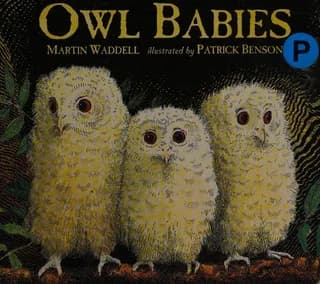
8. Owl Babies#
- Written by
- Martin Waddell
- Illustrated by
- Patrick Benson
- First published
- 1992
- Ages
- 2–5
- Format
- Board book and picture book
Martin Waddell and Patrick Benson, 1992. Three owlets wake in the night to find their mother gone, and spend the whole book waiting on a branch in the dark. Bill, the smallest, has one line and repeats it. She comes back.
Reading it aloud: hand Bill's line to your child and many will take it. The line they take is the one about the return, not the one about the fear.
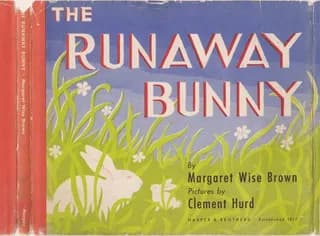
9. The Runaway Bunny#
- Written by
- Margaret Wise Brown
- Illustrated by
- Clement Hurd
- First published
- 1942
- Ages
- 2–5
- Format
- Board book and picture book
Margaret Wise Brown and Clement Hurd, 1942. A small rabbit announces he is running away and lists what he will turn into; his mother lists what she will become to find him each time. Some adults read it as claustrophobic rather than comforting, which is fair — but for a child testing whether leaving is even allowed, it is the most reassuring thing here.
Reading it aloud: it is a chant, not a plot. Keep the two voices clearly separate and stop on the carrot without adding anything of your own.
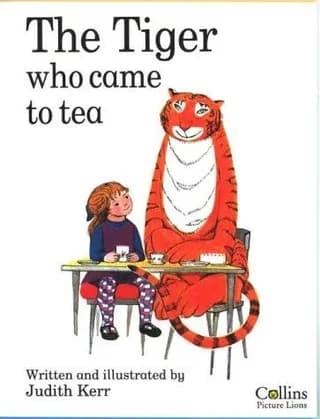
10. The Tiger Who Came to Tea#
- Written by
- Judith Kerr
- First published
- 1968
- Ages
- 2–6
- Format
- Picture book
Judith Kerr, 1968. A tiger arrives at teatime, eats everything in the house including all the water in the tap, and leaves. Nobody is frightened and nobody explains. It is the repair run backwards: the wild thing visits the house, and the house absorbs it without a scene.
Reading it aloud: sound more delighted with each thing the tiger eats, and resist making the ending mean something. It does not.
Is Where the Wild Things Are too scary?#
It is one of the most asked questions about the book, and page one for this keyword does not answer it at all.
For most children over four, no — and the fright is doing a job. Writing for BookTrust, the UK's national children's reading charity, the children's author Christopher Edge argues that children use scary stories "as a way to identify and master their fears – a crucial stage in child development – equipping them to deal with the real world". Christopher Edge is writing about older readers and middle-grade horror, but the mechanism is the one Sendak is using: the monsters are safe precisely because the boat comes back.
It is not on a banned-books list. Where the Wild Things Are does not appear among the American Library Association's frequently challenged children's books. The Association for Library Service to Children, a division of the American Library Association, noted in 2016 only that Where the Wild Things Are and Sendak's In the Night Kitchen turn up in searches about challenged Caldecott winners.
Fear of the dark is normal at this age and the book did not cause it. The American Academy of Pediatrics notes that a fear of being alone in the dark "is a common childhood fear", and advises parents not to belittle or ridicule a child's fears.
But do not make it the last book of the night to begin with. The American Academy of Pediatrics reports that nightmares "tend to peak between 3 and 12 years old". Read it after tea a few times, then move it to bedtime once it is familiar.
If they do not like it, they are not behind. Shelve it and try again in six months.
What age is Where the Wild Things Are for?#
It is banded 3–6 nearly everywhere, including on our own list of the best children's books of all time. Our position is narrower: start at four.
The case is that Max's book is told from outside the tantrum, by someone who already knows how it ends, and that vantage point is the thing a four-year-old can hold and a three-year-old usually cannot — the full argument is in the best books for 3-year-olds, where it is the one title we hold back, and it arrives in the best books for 4-year-olds.
The classic we would not hand over next#
- Written by
- Shel Silverstein
- First published
- 1964
- Ages
- 4–8
- Format
- Picture book
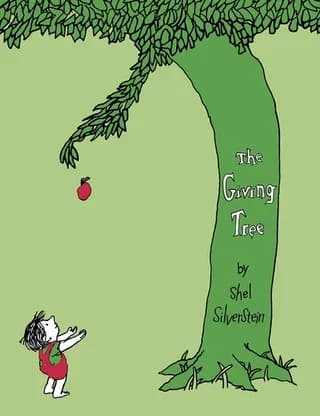
The Giving Tree gets suggested as a next read after Max, and it is the wrong one — not because it is a bad book, but because it is the structural opposite of what is being searched for.
Shel Silverstein, 1964. A tree gives a boy everything it has, piece by piece, until it is a stump.
There is no round trip. The boy leaves and keeps leaving, nobody is angry, and nothing is kept warm for anyone. It is not doing what a child who loved Max is asking for, and handing it over as the next read tends to produce a puzzled evening.
Read it at six or seven, when a child can argue with it. That is what it is good for.
How do I read Where the Wild Things Are aloud?#
By EBSCO's count it is ten sentences and 338 words, and it takes about four minutes at bedtime pace. Nearly all the craft is in what you do with the pages that have no words.
Say nothing at all during the rumpus. Three full spreads carry no text, and adults reflexively narrate them, which is the commonest way to lose the best part of the book. Reading Rockets, the literacy service of WETA, the public television station in Washington, D.C., notes that sharing wordless books builds "listening skills, vocabulary, comprehension".
Ask about the pictures, not the plot. "What are they doing now?" while the rumpus is happening does more than any comprehension question afterwards.
Land the last line quietly. Do not add "and his mummy wasn't cross any more" — the book deliberately does not say it, and the silence is where a child does the thinking.
Then ask the real question. "Why did Max want to go home?" Their answer will usually tell you which of the four things above they came for.
What to read next#
- The wider shelf, sorted by the age each book lands at → the best children's books of all time.
- You want the whole year's list → the best books for 3-year-olds and the best books for 4-year-olds.
- The anger is the actual problem, not the reading → books about feelings for toddlers, sorted by when in the day to read each one.
- Why some books survive forty readings → what makes a good children's story, and turning a photo into a children's book on how a child becomes a character.
What can a book where my child is the main character do that Max cannot?#
If you keep one thing from this page, keep who each book is for:
- The one who comes back for the roar → When Sophie Gets Angry, or No, David! under three.
- The one who comes back for the boat → Harold and the Purple Crayon, then Owl Moon.
- The one who comes back for the monsters → Go Away, Big Green Monster! at two, There's a Nightmare in My Closet at four.
- The one who comes back for the supper → Owl Babies, and keep it in the bedroom.
Ten books, and not one of them starts in your child's bedroom.
That is not a flaw. Max's room has to be a room anyone can stand in, or the book would only ever have worked for one boy in Brooklyn. The generality is the engineering.
But a round trip needs a place to leave from, and every child listening has to lend Max theirs.
That is what we make at KindFable. You upload one photo, type a few lines about your child — what they are into, something that actually happened to them — and we paint them as the hero of a full 32-page storybook. Not their name dropped into a template: their face, drawn as a character, on every page, with up to three companions beside them. A grandparent, the dog, an imaginary friend who lives on the ceiling.
A book where my child is the main character does not have to be lent a bedroom. The child goes out from a room that is already theirs, takes the people who are actually in the house, and comes back to them — which is the part of Max's book that does the work.
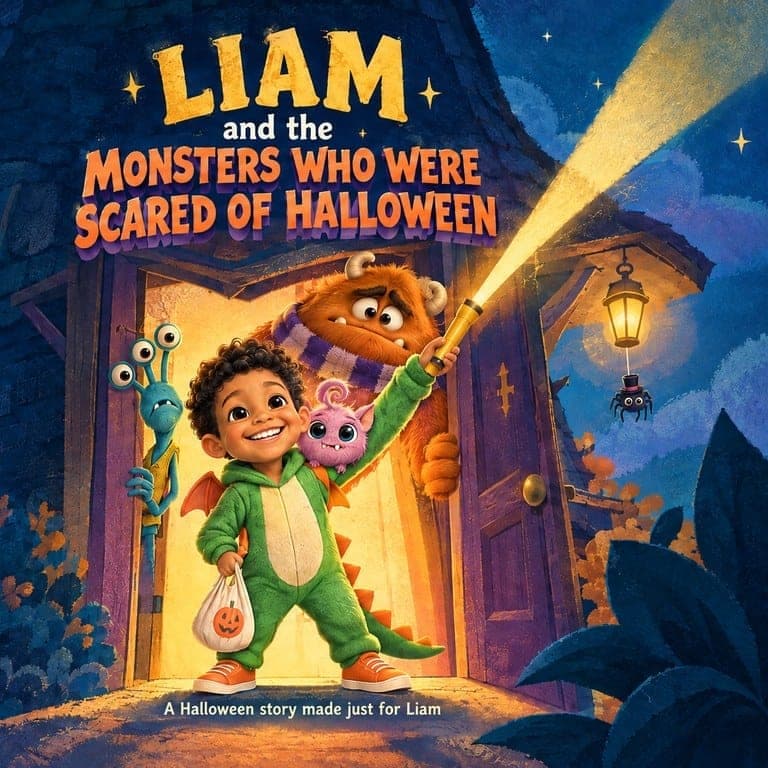
If your child came back for the monsters, there is a finished story in our shop built for exactly that child: a personalized halloween book for ages 3 to 8, in which the monsters are the frightened ones. The sample shown stars Liam, six, in a dragon onesie on Halloween night:
On Halloween night, Liam the dragon had one BIG plan. He was going to knock on EVERY door on Marigold Street. Because doors are for knocking.
At the very end of the street stands Number 13, where nobody ever knocks — and behind its door are three real monsters who are terrified of trick-or-treaters. Monsters that can be bossed, as Max knew. A parent adds their own child's photo and name, and every page is painted with that child.
A book from our shop · ages 3–8
Your Child and the Monsters Who Were Scared of Halloween
Halloween night in a dragon onesie — your child knocks at the one dark house on the street and finds three real monsters who are terrified of trick-or-treaters.
Shown here starring Liam, 6. Yours is painted with your own child’s face and name on every page, from $39 — and you see the pages before you pay.
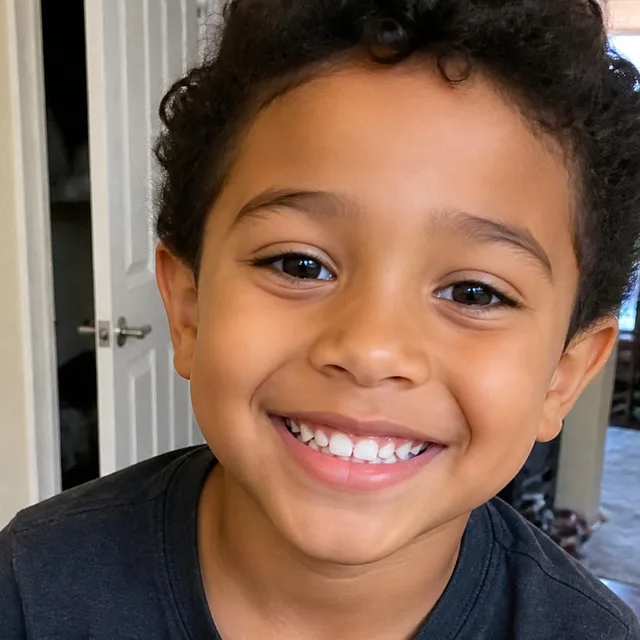
The photo they uploaded
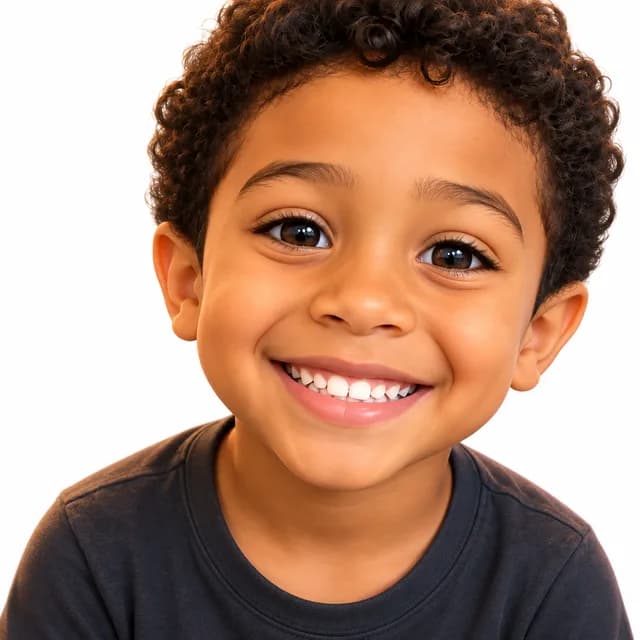
The character we drew
Written from this story — not a stock track with a name dropped in. Free with every book.
How the story begins
- 1On Halloween night, Liam the dragon had one BIG plan. He was going to knock on EVERY door on Marigold Street. Because doors are for knocking.
- 2But at the very end of the street stood Number 13. Nobody EVER knocked at Number 13. “It's haunted!” said the robot. “It's creepy!” said the vampire. “It's a DOOR,” said Liam. “And doors are for knocking.”
- 3KNOCK. KNOCK. KNOCK. Creeeeeeak... The door opened. All by itself.
The rest of the story is in Your Child and the Monsters Who Were Scared of Halloween.
The words to the song
[Verse 1]
Liam the dragon had a plan
Knock on each door, all down the street
Number 13, Marigold Street
Bruno baked treats, heaps and heaps
Mimi the witch said, “Wow!”
[Chorus]
Knock, knock, knock, Liam says
Doors are for knocking, all night long
Trick or treat, come along
Best costumes ever, sing this song
Happy Halloween, sing along
[Verse 2]
One big toe, out they crept
Twig reached every doorbell high
Dot stayed far from candy bowls
A fake cobweb tickled Bruno’s nose
“Ah-choo!” and out went lights
[Chorus]
Liam came back, knock, knock, knock
“Doors are for knocking!” Liam sang
Everyone came to Number 13
Biggest Halloween party ever
“Goodnight, Liam,” squeaked Dot
For a shop book it goes: open the book, press "Personalize this book", add your child's name and one photo, and tick the consent box. To write your own on KindFable it goes: name and age, one photo, the consent box, a few lines about your child, and one of nine art styles. Either way you see your child's book, painted, before you pay for anything — the softcover and hardcover prices sit on one page, every book includes its own song free, and the hardcover adds a narration, which is how a custom storybook becomes something your child can also listen to.
Read the ten first. Then, on the evening they ask why Max wanted to go home, start with the photo.
Book covers are shown unaltered for identification, sourced from Open Library. Each cover remains the property of its publisher and illustrator. KindFable is not affiliated with any of the books recommended here.