Search for books like The Gruffalo and you get the same two answers everywhere: more Julia Donaldson, then The Very Hungry Caterpillar. The first half is fair, and it is one search away without us. The second half is a mistake — it answers a child who has just sat through a whole plot in verse with a book they outgrew a year ago.
The Gruffalo runs on four separate engines, and your child is gripped by one or two of them, not all four. The ten books below are sorted by which.
Which book should I read after The Gruffalo?#
Watch what your child does on the next reading, then take the row that matches. The age on each book is our call about when it actually lands, and several of these exist as board books — the point is not the binding but the story, which has to be more than a child who has just sat through The Gruffalo already has.
| What your child does while you read | What they are hooked on | Read next | Age |
|---|---|---|---|
| Finishes the rhyme before you get there | The couplet — verse that tells them what is coming | Hairy Maclary · Oi Frog! | 2–6 |
| Grins when the mouse invents a monster | The bluff — a small character out-thinking a big one | Rosie's Walk · The Three Billy Goats Gruff · Stone Soup | 2–8 |
| Turns straight back to the Gruffalo's page | The monster, met safely | Go Away, Big Green Monster! · Where the Wild Things Are · The Tiger Who Came to Tea | 2–8 |
| Recites the animals in order, or walks the walk | The journey — one shape, out and back | We're Going on a Bear Hunt · The Napping House | 2–6 |
If your child does all four, start with the bluff row. It is the engine that dates slowest, and it is the one every "similar books" list quietly misses.
What is The Gruffalo actually doing?#
The Gruffalo is a 1999 picture book by Julia Donaldson, illustrated by Axel Scheffler, in which a mouse walking through a wood invents a monster to frighten off three predators who want to eat him — and then meets the monster he invented.
The plot is older than the book, and that is the interesting part. The Gruffalo's official site, run by its publisher Macmillan Children's Books, records that Donaldson "came across a Chinese tale about a clever girl who tricks a hungry tiger into believing she is the Queen of the Jungle and scares him away", and that she "couldn't think of anything to rhyme with 'tiger' — so she created her own monster whose name had to end in O, to rhyme with 'doesn't he know'". The monster exists because of a rhyme, which tells you which engine came first.
The couplet does the work. The verse has a fixed beat and a predictable rhyme, so the second line is half-guessable from the first. A child who cannot read a word is right, out loud, several times a page — and being right in front of you is the entire pleasure.
The bluff is the whole plot. The mouse never fights anything. He describes something that does not exist, and the describing is what saves him. Then he turns it inside out and uses the fox, the owl and the snake to frighten the Gruffalo. This shape has a name — the trickster tale, where the weakest character wins by knowing something the strong one does not.
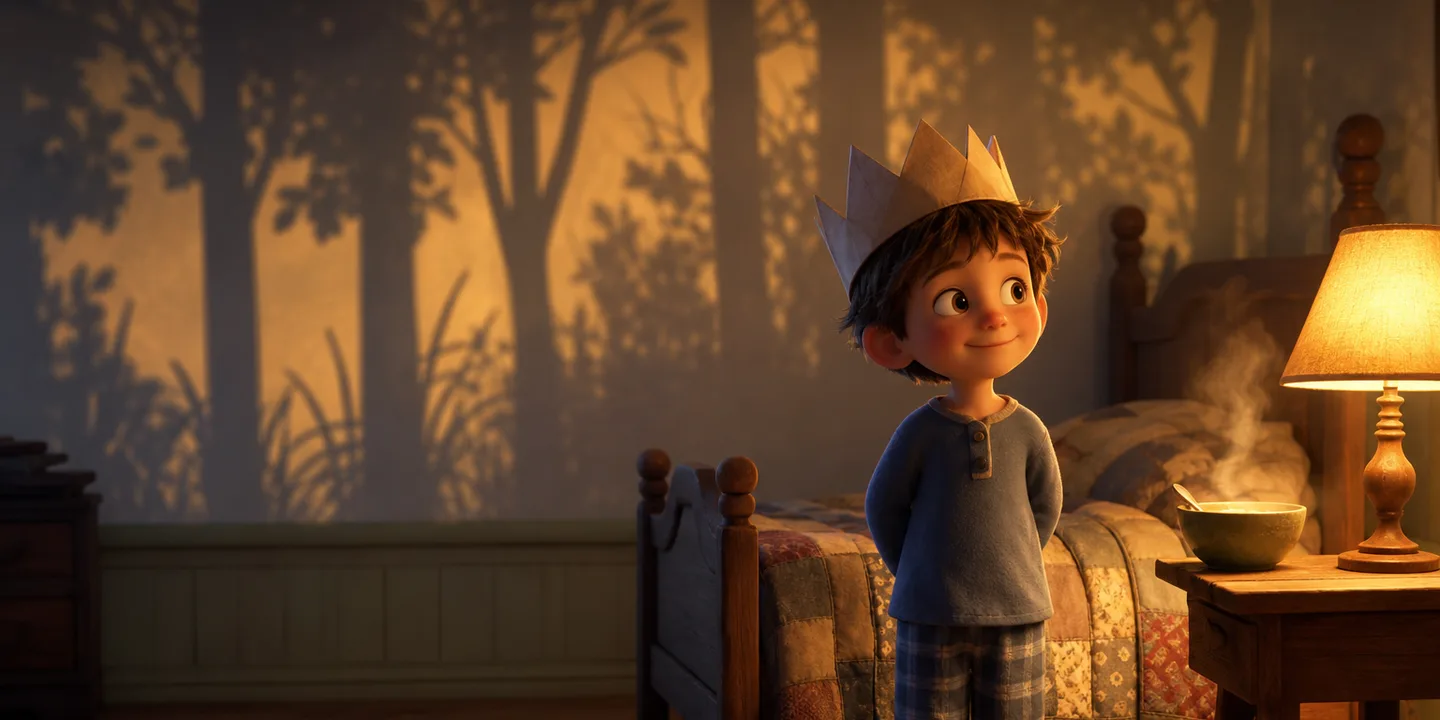
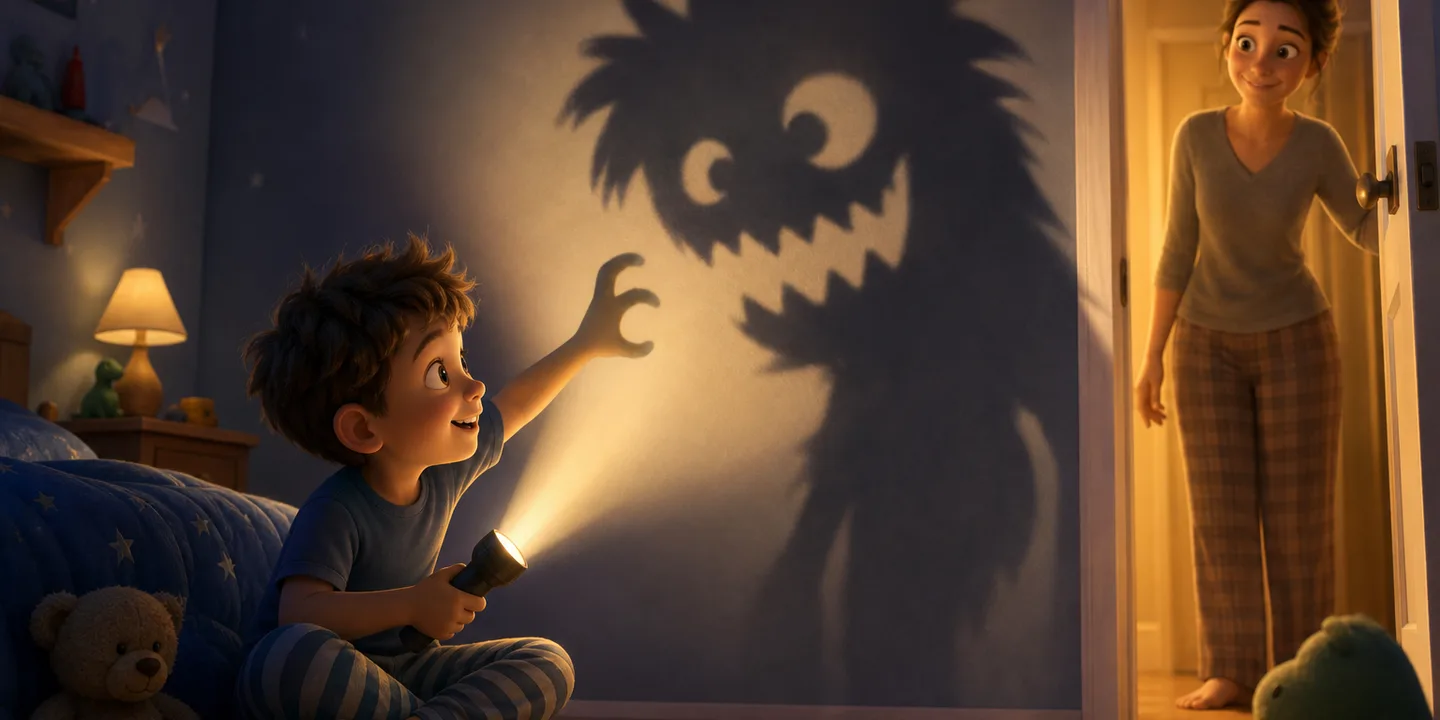
The monster arrives after you have stopped believing in it. Three predators are seen off before the Gruffalo appears, so the reader has been told in detail that he is imaginary. Then he walks out of the trees. Very few picture books set up a fright and pay it off on exactly the terms they promised.
The second half runs the first half backwards. Same wood, same three animals, same order, opposite outcome — a story that folds in half.
Should you just read more Julia Donaldson?#
Partly — and then stop. Room on the Broom, The Snail and the Whale, Stick Man, Zog and The Gruffalo's Child are all Donaldson and Scheffler, they are all good, and you will find every one of them without help from us. If you want exactly one, take Room on the Broom: it is the only one that repeats the Gruffalo's real move, an accumulation that turns into a rescue.
Then go somewhere else, and here is the disagreement. A list of one author is not a recommendation, it is an author page — the easiest thing we could write and the least use to you.
If they finish your lines: stories that are told in rhyme#
Most rhyming picture books rhyme decoratively — the verse is a coat of paint over a story that would survive in prose. These two rhyme structurally. Take the rhyme out and the book stops working.
Rhyme at this age is also doing something measurable. Bryant, Bradley, Maclean and Crossland reported in the Journal of Child Language in 1989 that there is "a strong relation between early knowledge of nursery rhymes and success in reading and spelling over the next three years", even after social background, IQ and starting phonological skill are accounted for.
1. Hairy Maclary from Donaldson's Dairy#
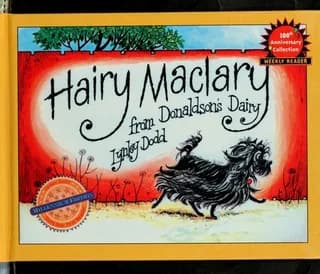
- Written by
- Lynley Dodd
- First published
- 1983
- Ages
- 2–5
- Format
- Board book and picture book
A scruffy dog collects a gang of other dogs, street by street, in verse that is almost impossible to read slowly — then meets Scarface Claw, the toughest tom in town, who sends the whole parade home. The Gruffalo's shape in miniature: a build-up, one big frightening thing, a fast retreat.
Reading it aloud: the dogs' names are the point. Hercules Morse, as big as a horse is the line a two-year-old starts supplying, and the roll call returns on every spread.
2. Oi Frog!#
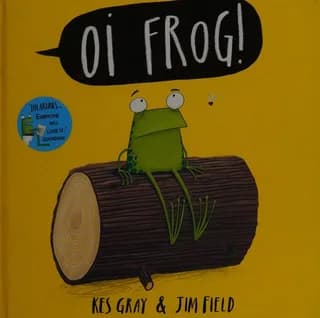
- Written by
- Kes Gray
- Illustrated by
- Jim Field
- First published
- 2014
- Ages
- 3–6
- Format
- Picture book
Kes Gray and Jim Field's frogs sit on logs, cats sit on mats, and a cat with a clipboard explains the seating rules to an increasingly worried frog. It is one rhyme joke stretched to breaking point, which is exactly what a four-year-old wants and exactly what an adult finds wearing.
Reading it aloud: stop before the second half of each pair and let them guess. They will be wrong, loudly, and being wrong is the game rather than a failure.
An honest note: it is funnier than it is beautiful. If what you loved about The Gruffalo was Axel Scheffler's wood, this will feel bright and flat beside it.
If they cheer for the mouse: the small one who out-thinks the big one#
This is the engine the "similar books" lists miss, and the oldest one in the book. In a trickster tale the powerless character wins by inventing something — a very particular kind of comfort to hand a person who is three feet tall.
3. Rosie's Walk#
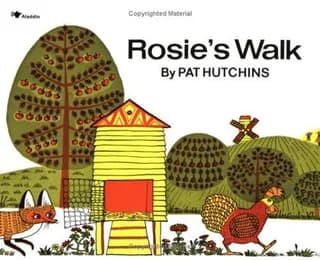
- Written by
- Pat Hutchins
- First published
- 1968
- Ages
- 2–5
- Format
- Board book and picture book
Thirty-two words. A hen walks around a farmyard, a fox stalks her the whole way, and he is flattened by a rake, a pond, a haystack and a beehive — none of which Rosie notices. The text never mentions the fox at all, so the entire story lives in the pictures.
Reading it aloud: say only what is written, then wait. This is the first book here where your child does more of the talking than you do, which is the whole point of it.
4. The Three Billy Goats Gruff#
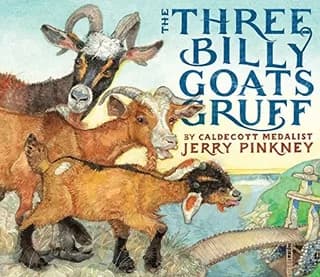
- Written by
- Jerry Pinkney
- First published
- 2017
- Ages
- 4–8
- Format
- Picture book
The Norwegian folk tale in Jerry Pinkney's watercolours. The first two goats escape the troll under the bridge by promising that a bigger, better meal is coming along behind them — the mouse's trick exactly, with the bluff pointed forwards instead of backwards. The third goat is bigger than the troll and simply butts him off the bridge, which is worth knowing before you promise a child nobody gets hurt.
Reading it aloud: the trip-trap belongs to them; do it with hands on the table. Pinkney does not leave the troll at the bottom of the river — he gets a fright of his own from a very large fish, and the artist's closing note is about forgiveness. Children who ask whether the troll is all right have an answer here, which is not true of every telling.
5. Stone Soup#
- Written by
- Marcia Brown
- First published
- 1947
- Ages
- 4–8
- Format
- Picture book
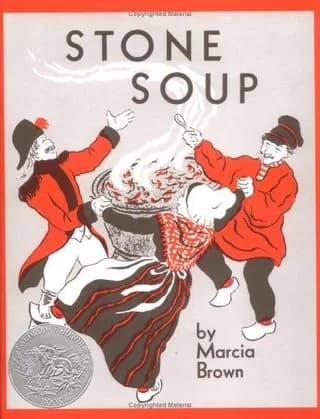
Marcia Brown's 1947 telling, the Caldecott Honor one, drawn in black, white and orange: three hungry soldiers convince a village that a stone makes wonderful soup, and the villagers cheerfully fetch everything a soup actually needs. Nobody is beaten; they are talked into being generous, and the bluff comes true in the pot.
Reading it aloud: hold this one back. Under four the joke does not land, because it depends on knowing something the characters do not. At five it is the funniest book here, and the one most likely to be new to you.
Get the right one off the shelf. Jon J Muth's Stone Soup is a different book with three monks in China rather than three soldiers. Both are good; only one matches the description above.
If it is the monster they came for: frightening things, cut down to size#
Some children do not care who outwits whom. They want the page where the Gruffalo is standing there, and they want it again. That is a perfectly good reason to love a book, and it points somewhere else entirely.
6. Go Away, Big Green Monster!#
- Written by
- Ed Emberley
- First published
- 1992
- Ages
- 2–5
- Format
- Picture book with die-cut pages
Die-cut pages build a monster's face feature by feature, then dismantle it while the child orders each piece to leave. The child holds all the power, and the last page keeps them in charge: don't come back, until I say so.
Reading it aloud: let them say "go away" themselves, and let them mean it. Some under-threes want only the building half and stop at the top of the arc; that still works.
7. Where the Wild Things Are#
- Written by
- Maurice Sendak
- First published
- 1963
- Ages
- 4–8
- Format
- Picture book
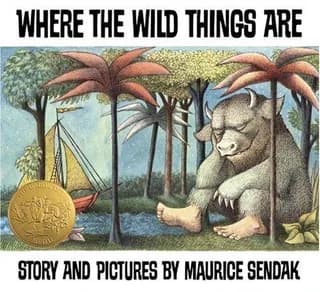
Max is sent to bed without supper, sails to an island of monsters, is crowned their king, and comes home to find his dinner still hot. The wild things are enormous and entirely under his control — a child's own temper wearing a costume.
Reading it aloud: the wild rumpus is three wordless spreads. Do not narrate them. Turn the pages slowly and let the silence be the party.
8. The Tiger Who Came to Tea#
- Written by
- Judith Kerr
- First published
- 1968
- Ages
- 3–6
- Format
- Picture book
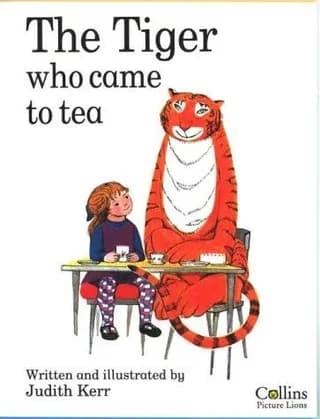
A tiger rings the doorbell and eats absolutely everything in the house, including all the water in the tap, then says thank you and leaves. Nobody is frightened and nothing is ever explained, which is the most Gruffalo-ish thing about it.
Reading it aloud: the pleasure is escalation. Let each thing he eats sound more outrageous than the last, and deliver the line about the tap completely straight.
If it is the walk itself: books that go out and come back#
The Gruffalo is a loop — three encounters out, the same three back. A child who recites the animals in order is telling you they have learned the shape rather than the words, and the shape is a thing you can go and find again.
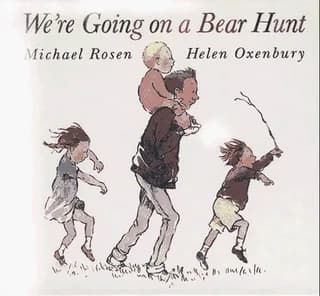
9. We're Going on a Bear Hunt#
- Written by
- Michael Rosen
- Illustrated by
- Helen Oxenbury
- First published
- 1989
- Ages
- 2–6
- Format
- Picture book
Michael Rosen and Helen Oxenbury turned a campfire chant into a book. A family crosses grass, river, mud, forest, snowstorm and cave, meets the bear, and runs the whole route backwards at speed.
Reading it aloud: stand up. This is the one book here that gets worse sitting down, and the return journey should be genuinely too fast for comfort.
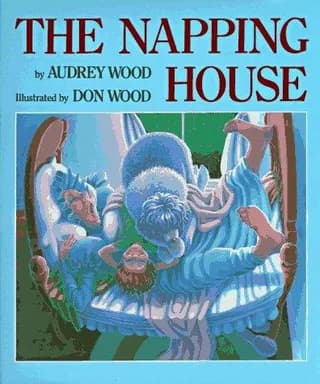
10. The Napping House#
- Written by
- Audrey Wood
- Illustrated by
- Don Wood
- First published
- 1984
- Ages
- 2–6
- Format
- Picture book
A granny, a child, a dog, a cat, a mouse and a wakeful flea pile onto one bed while the rain comes down, and then the pile comes apart in reverse. The pictures lift from grey to full colour as the house wakes.
Reading it aloud: slow and low on the way up, then let the collapse run away from you. The mirror structure means the second half needs no explaining at all.
Is The Gruffalo too scary for a three-year-old?#
Usually not, and the book is built so that it is not. By the time the Gruffalo appears the mouse has described him in detail three times — once each to the fox, the owl and the snake — as something he made up. The child is on the inside of the fright rather than on the receiving end of it.
Fear a child chooses is a different thing from fear that happens to them. Taranu, Clasen, Rosas, Dodd and Andersen, reporting in Child Psychiatry and Human Development in 2025, asked the parents of 1,600 children aged 1 to 17 about nineteen kinds of scary play and found that 93% of children were reported to enjoy at least one recreational fear activity.
The screen is a different question from the page. The animated film gives the Gruffalo a voice, a size and a soundtrack the illustration does not, and children who are fine with the book are sometimes not fine with the film.
If your child covers the page, believe them. Read the last spread first, so they know the mouse walks away, and try again in three months.
How do I read these aloud so they land?#
1. Let the rhyme finish itself. Stop a beat before the rhyming word and hold it. In Hairy Maclary it is the dog's name; in The Gruffalo it is half the book. A child filling that gap is doing the earliest thing that counts as reading.
2. Read it wrong on purpose. "And his favourite food is... toast?" Being corrected is the goal. Asking questions and letting the child do the talking has a name — dialogic reading — and as Reading Rockets puts it, "the adult helps the child become the teller of the story". Reading Rockets is published by WETA, the public broadcaster in Washington, D.C.
3. Perform the frightening bits. A monster read flatly is more unsettling than a monster read hugely, because a child reads your face before they read the page.
4. Reread until you cannot bear it. Most parents tire of a book long before the child does. Repetition is how a small child moves from listening to predicting to performing, and a new book every night interrupts exactly that.
What to read next#
- The wider shelf, sorted by the age each book actually lands at → the best children's books of all time.
- A younger child, and the same method one stage earlier → books like The Very Hungry Caterpillar and the best books for 3-year-olds.
- Why any of these devices work at all → what makes a good children's story.
- The clever-hero instinct pointing at a castle rather than a wood → princess stories where she has the plan.
Why can't a children's book generator give you the eleventh book?#
If you remember one line of this, remember who each of them is for:
- The one who finishes your rhymes → Hairy Maclary at two, Oi Frog! at four.
- The one who loves the trick → Rosie's Walk now, The Three Billy Goats Gruff next, Stone Soup at five.
- The one who came for the monster → Go Away, Big Green Monster! at two, Where the Wild Things Are at four, The Tiger Who Came to Tea anywhere in between.
- The one who walks the walk → We're Going on a Bear Hunt, standing up, and The Napping House at the end of the day.
Ten good books — and in all ten, the clever small character is somebody else.
That is the one thing no publisher can fix. The engine of The Gruffalo is that the smallest creature in the wood is the one with the plan, while the child listening is the smallest person in the room, holding a book about a mouse.
There is one more version of that story available to you, and it is the one no publisher can print in advance: the one where the small clever character is your child.
That is what we make at KindFable. You upload one photo, type a few lines — what they are into, something that actually happened this month — and we paint them as the hero of a full 32-page storybook. Not a name dropped into a template: their face, drawn as a character, on every page, with up to three companions beside them — a grandparent, the dog, an imaginary friend who lives on the ceiling.
Most of what calls itself a children's book generator swaps a name into a story and leaves the pictures alone. That is not what happens here: your child is painted into every picture, and the book does the thing the mouse does — it puts the plan in the hands of the smallest person there.
Here is a finished one from our shop, in rhyme. It is a personalized dinosaur book for ages 3 to 7, and the sample shown stars Oliver, five. It opens in couplets a Gruffalo reader will finish for you:
October night. The moon is round. The leaves go skipping on the ground.
His two best friends are dinosaurs, and they are a bit too big for trick-or-treating — Bonk knocks the door flat, Toot honks the pumpkins out — until the child picks up a piece of chalk and makes a plan. The rhyme, the monster and the small one with the plan, in one book. A parent adds their own child's photo and name, and every page is painted with that child.


A book from our shop · ages 3–7
Your Child and the Too-Big Trick-or-Treaters
A rhyming Halloween with two dinosaur best friends who are a bit too big for trick-or-treating — Bonk knocks the door flat, Toot honks the pumpkins out — until your child chalks a plan and the whole street comes to them.
Shown here starring Oliver, 5. Yours is painted with your own child’s face and name on every page, from $39 — and you see the pages before you pay.
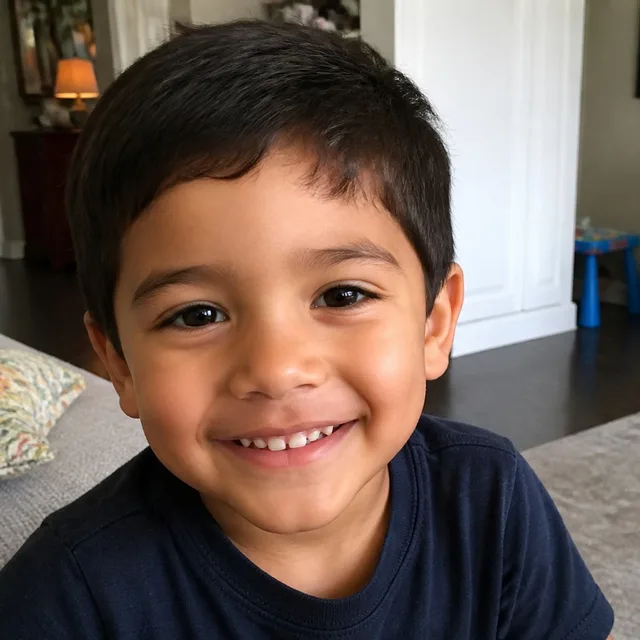
The photo they uploaded
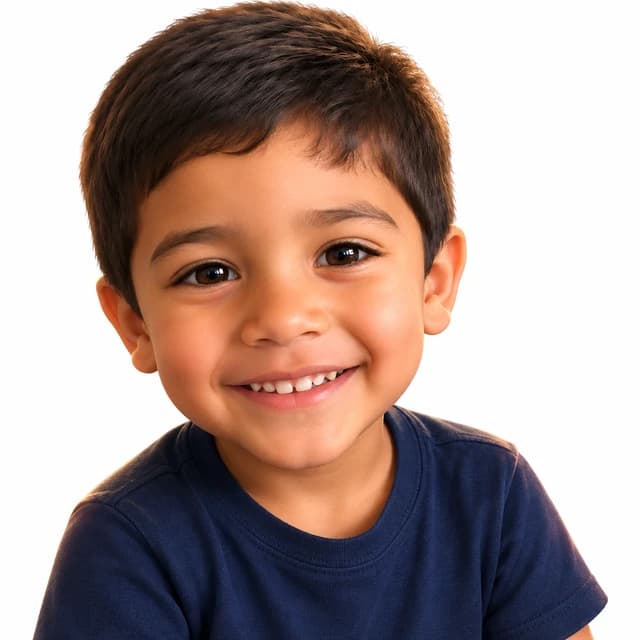
The character we drew
Written from this story — not a stock track with a name dropped in. Free with every book.
How the story begins
- 1October night. The moon is round. The leaves go skipping on the ground. And OLIVER is at the gate. His two best friends are running late.
- 2THUMP! THUMP! THUMP! The windows shake. The pumpkins jiggle. Fences quake. Here's BONK, as bumpy as a tank. Here's TOOT, who honks hello: HONK-HONK!
- 3A ghost needs sheets. For BONK? Let's see... One, two — no, wait — it's TWENTY-THREE. “Too big? Too tall? Too bumpy? NO! Just come as YOU — come on, let's GO!” A witch's hat for TOOT? Oh dear. It sits so high it's hardly here.
The rest of the story is in Your Child and the Too-Big Trick-or-Treaters.
The words to the song
[Verse 1]
October night, the moon is round,
THUMP-THUMP-THUMP — what's that sound?
It's Bonk and Toot, they've come to play,
Oliver's friends, on Halloween day!

[Chorus]
Too big? Too loud? Too stompy? NO!
We'll find a way — come on, let's GO!
If the door's too small, if the hat won't fit,
We'll make our OWN way — that's the trick of it!

[Verse 2]
Knock on the door — KER-BOOM! — oh dear.
Say a little boo — HOOOONK! — did you hear?
One swish of tail and the pumpkins roll,
Down the hill like a bowling bowl!

[Verse 3]
The lights went out, the doors shut tight,
Two big dinos hid from sight.
(Not very well — we saw your tail!)
But Oliver's plan was sure not to fail.

[Chorus]
Too big? Too loud? Too stompy? NO!
We'll find a way — come on, let's GO!
A neck's a slide and a tail's a drum,
Ding-ding! Roll up! Everybody come!

[Outro]
Now tap goes Bonk, as soft as can be,
And "boo" goes Toot, like a whisper — see?
Two sleepy heads on the windowsill.
Goodnight, Oliver. The street is still.
For a shop book it goes: open the book, press "Personalize this book", add your child's name and one photo, and tick the consent box. To write your own on KindFable it goes: name and age, one photo, the consent box, a few lines about your child, and one of nine art styles. Either way you see your child's book, painted, before you pay for anything — and the softcover and hardcover prices sit on one page, with every book including its own song free and the hardcover adding a narration. After that it lives in your dashboard: the page-flip reader, the audio studio, and a reorder button for when the grandparents ask.
If one of the four rows above described your child better than an age band ever has, that is the whole idea. Start with the photo and see the cover before you decide anything.
Book covers are shown unaltered for identification, sourced from Open Library. Each cover remains the property of its publisher and illustrator. KindFable is not affiliated with any of the books recommended here.