The best books for 2-year-olds are the ones a two-year-old can do something with.
At two a book is still a physical object before it is a story. It gets carried around the house, opened at the wrong end, sat on, and handed back to you upside down. And at the same time something else is happening very fast: the American Academy of Pediatrics describes a two-year-old as speaking with a rapidly growing vocabulary of fifty or more words, and it keeps climbing all year.
Those two facts pull in opposite directions in a bookshop. One of them wants a book that survives being operated. The other wants a book that hands over words. They are rarely the same book.
So this list is sorted by what the book has to do — not by theme, and not by what your child says. At two the job decides the format, the board-versus-paper question is a genuine fork, and by four it has quietly stopped mattering.
Board book or picture book for a 2-year-old?#
Four jobs, four verdicts. Find the one your evenings actually need.
| What the book has to do | How you can tell | Format to buy | Where to start |
|---|---|---|---|
| Be operated — a flap to lift, a hole to poke | Their hands are inside the book before you have read a word | Board. A paper flap does not survive being lifted with real enthusiasm | Dear Zoo · Where's Spot? · The Very Hungry Caterpillar |
| Name things — one picture, one word, next page | You point, they say it, or very nearly say it | Either. Board if it lives in the changing bag | Brown Bear, Brown Bear · Freight Train · From Head to Toe |
| Make a noise — a chant you both end up shouting | Nobody is looking at the pictures at all | Paper. Most of the great ones were never board | Chicka Chicka Boom Boom · Hairy Maclary |
| End the day — the same book, slower every page | The room goes quiet roughly on cue | Either. Whichever copy lives by the bed | Goodnight Moon · Ten, Nine, Eight |
Durability is the reason parents are given for buying board, and by two it has largely expired. Thick card exists to survive being chewed and grabbed by a fist. Most two-year-olds have stopped eating books and turn pages with fingers, roughly one at a time, mostly forwards.
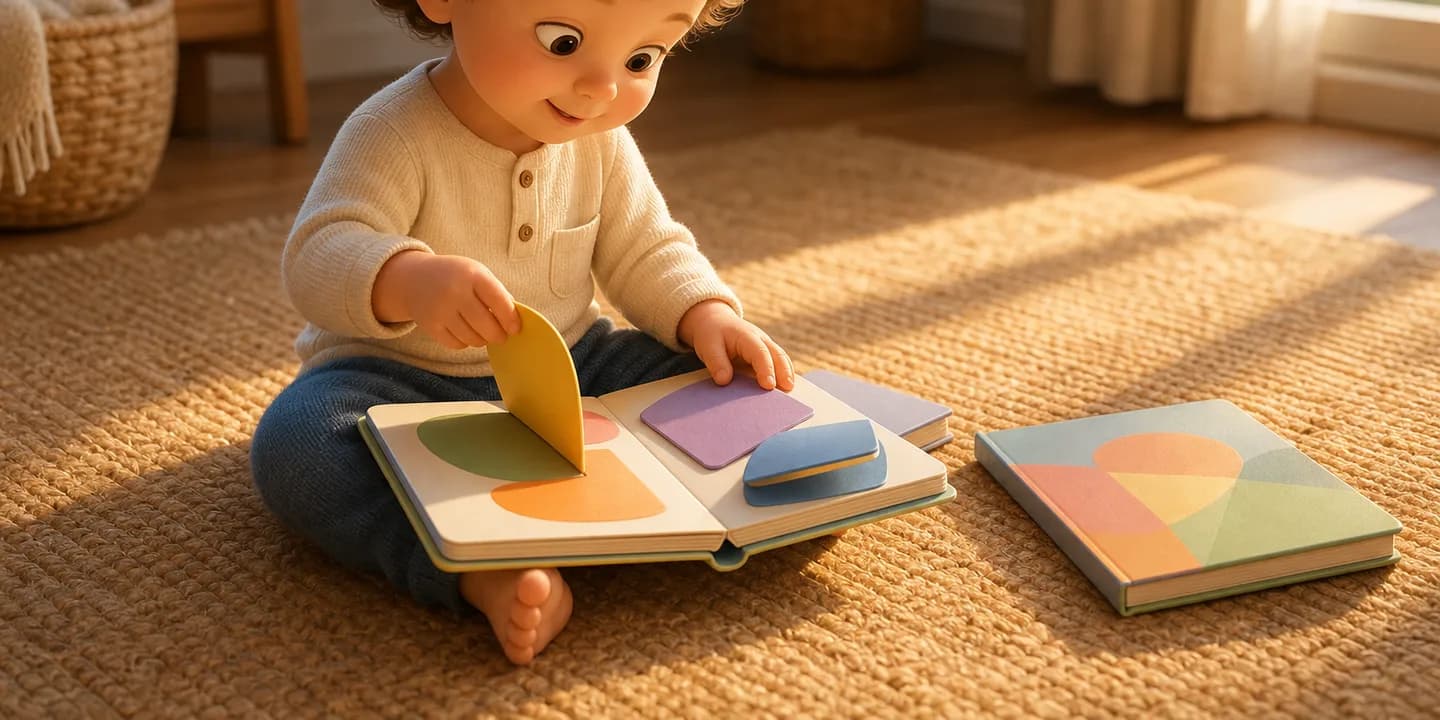
What has not expired is the mechanism. A flap is a hinge. A hinge printed on paper does not survive being operated with real enthusiasm. That, and not toughness, is the reason to spend money on card — and it is why the swap matters: the loudest, most-recited books at two were mostly made as paper picture books, and restricting the shelf to board editions quietly deletes them.
What is a two-year-old actually doing with a book?#
Three things are true at two that were not true at one, and each changes what is worth buying.
The words are arriving faster than they ever will again. The American Academy of Pediatrics tells parents to choose "activity-oriented books that encourage him to touch, point, and name objects". At two a book is mostly a machine for attaching names to pictures, which is why the plainest books on this page are not the compromises they look like.
The attention is short, and it moves. Reading Rockets, the literacy service of WETA, the public television station in Washington, D.C., states that "toddlers frequently have shorter attention spans than babies" and advises parents to "read a little bit, several times a day". It adds that "toddlers need to move, so don't worry if they act out stories or just skip, romp, or tumble as you read to them".
The hands want a job. This is the year the book becomes a thing to be worked as well as heard — and it is where the shopping goes wrong, because the feature that holds a two-year-old still is not necessarily the feature that teaches them anything.
Does a lift-the-flap book actually teach anything?#
Every list of books for two-year-olds recommends interactive books and stops there. The honest answer has two halves, and they disagree with each other.
The case for the flap. Reading Rockets recommends books with "flaps or different textures to touch" on the grounds that they keep hands busy — and with a two-year-old, holding the child at the book is most of the battle.
The case against. Reviewing the research on picture books in Frontiers in Psychology, Gabrielle Strouse, Angela Nyhout and Patricia Ganea report that "for both word and letter learning, the manipulative features traditionally found in print books do not appear to facilitate learning and transfer, and in cases when the features are irrelevant to the book's educational content, may even interfere with it". In the study Strouse, Nyhout and Ganea summarise, toddlers aged eighteen to twenty-two months who were read a nine-animal book in its commercial form, with flaps and pull tabs, did not generalise the animal names; toddlers read the same book as a plain scanned copy did.
Both are right, about different jobs. The flap buys you attention. The plain page buys the word. A shelf that contains only flap books is a shelf that is very good at getting a two-year-old to sit down and slightly bad at the thing you sat them down for.
The practical test is to ask what the flap is hiding. In Dear Zoo it hides the animal you are about to name, so lifting it is the naming. A tab that spins a wheel in the corner of the page is competing with the page. Keep one book of each kind within reach, and stop asking a single book to do both.
Books to be operated#
The child's hands are the point. All three are board for a reason, and all three are slower to read than they look.
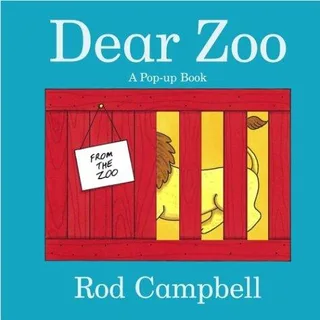
1. Dear Zoo#
- Written by
- Rod Campbell
- First published
- 1982
- Ages
- 0–3
- Format
- Lift-the-flap board book
Rod Campbell's 1982 book in which the zoo keeps sending unsuitable pets and the child keeps sending them back. One flap per spread, one animal under each, and no plot to lose track of.
Reading it aloud: ask "what's in this one?" and wait before the flap goes up. The pause is where the word happens; the flap is the reward for producing it.
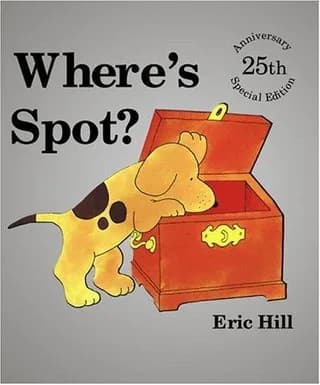
2. Where's Spot?#
- Written by
- Eric Hill
- First published
- 1980
- Ages
- 0–3
- Format
- Lift-the-flap board book
Eric Hill's 1980 book, and often the first book a child "reads" back to you. A mother dog searches the house flap by flap, finding the wrong animal behind every one of them until the last.
Reading it aloud: ask the question the book asks and let them answer no. No is a two-year-old's strongest word, and this book is built to collect one from every flap but the last.
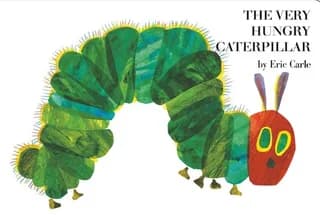
3. The Very Hungry Caterpillar#
- Written by
- Eric Carle
- First published
- 1969
- Ages
- 0–4
- Format
- Board book and picture book
Eric Carle's 1969 book. The die-cut holes are the rare case of a mechanism that is genuinely part of the story rather than bolted onto it.
An honest note: most parents buy it for the counting and the days of the week, and at two neither of those lands. What lands is the repeated line and the holes. The counting arrives at three, so buy it now for the fingers and again for the maths later — and if the holes are what they love, the books to read next are sorted by exactly that.
Books that are a list of names#
No plot, barely any sentences, and the most useful shelf in the house at two. These are the ones that feed the vocabulary.
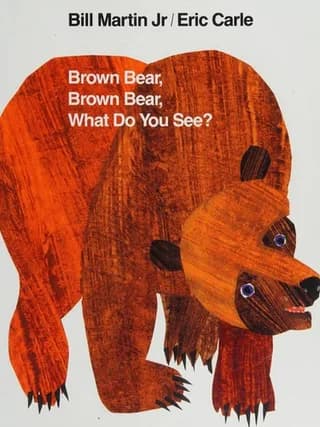
4. Brown Bear, Brown Bear, What Do You See?#
- Written by
- Bill Martin Jr.
- Illustrated by
- Eric Carle
- First published
- 1967
- Ages
- 0–4
- Format
- Board book and picture book
Bill Martin Jr.'s 1967 text with Eric Carle's animals. One question, one answer, one new creature, repeat — a structure so regular that a two-year-old starts supplying the next line within a few readings.
Reading it aloud: read up to "I see a…" and then stop dead. Whatever word arrives is the word they own, and at two it may be the only one in the room. It still counts.
5. Freight Train#
- Written by
- Donald Crews
- First published
- 1978
- Ages
- 0–4
- Format
- Board book and picture book
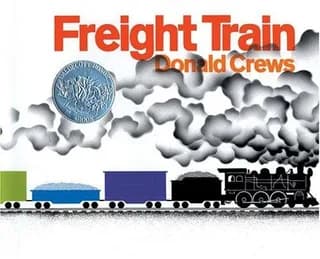
Donald Crews's 1978 book is a list of coloured carriages that crosses empty pages and then blurs into speed. There is almost no text — a colour, a carriage, a bridge, a tunnel.
Reading it aloud: run a finger along the train and name each car as you pass it. When the colours smear together at the end, the naming stops and the picture takes over. It is the page to slow down for.
6. From Head to Toe#
- Written by
- Eric Carle
- First published
- 1997
- Ages
- 0–4
- Format
- Board book and picture book
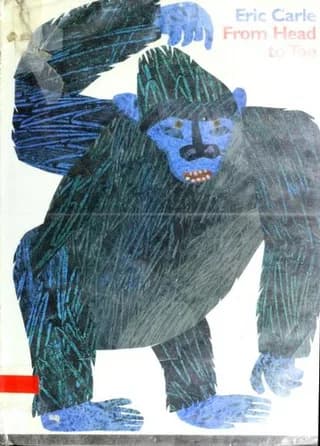
Eric Carle's 1997 book names an animal, names a body part, and then asks the reader "can you do it?" It is the rare book that gives a two-year-old the thing Reading Rockets says they need: permission to move while you read.
Reading it aloud: stand up and do every animal. A book that ends with everyone out of breath is a book that gets requested again, which is the only metric that matters at two.
Books that are pure noise#
The chanting shelf. Nobody is looking at the pictures, the meaning is optional, and the words are being used as percussion. Both of these are worth owning on paper.
7. Chicka Chicka Boom Boom#
- Written by
- Bill Martin Jr. and John Archambault
- Illustrated by
- Lois Ehlert
- First published
- 1989
- Ages
- 2–6
- Format
- Board book and picture book
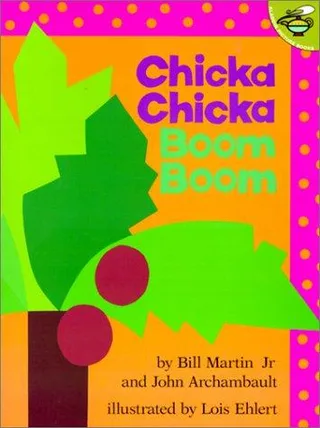
Bill Martin Jr. and John Archambault's 1989 text, illustrated by Lois Ehlert. The lowercase letters race up a coconut tree, it collapses, and the capitals arrive to sort it out.
Buy it as percussion, not as an alphabet. The letters are characters here rather than lessons, and a two-year-old who cannot name a single letter can still join in on the boom boom. That is the reason to own it.
8. Hairy Maclary from Donaldson's Dairy#
- Written by
- Lynley Dodd
- First published
- 1983
- Ages
- 2–5
- Format
- Board book and picture book
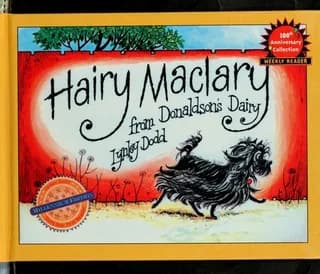
Lynley Dodd's 1983 book is a naming book that thinks it is a chase. Hercules Morse, as big as a horse. Bottomley Potts, covered in spots. The dogs accumulate, the metre never slips, and then a cat ends it.
Reading it aloud: give every dog its rhyme at full volume, and drop to nothing on the last line. The names are the whole book, and they are what a two-year-old takes from it long before the plot.
Books that end the day#
Both of these are naming books in pyjamas, which is the thing nobody says about bedtime books. They work by pointing at objects in a room and naming them, one at a time, slower and slower.
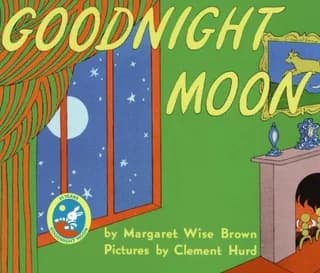
9. Goodnight Moon#
- Written by
- Margaret Wise Brown
- Illustrated by
- Clement Hurd
- First published
- 1947
- Ages
- 0–4
- Format
- Board book and picture book
Margaret Wise Brown and Clement Hurd's 1947 book: a room, then everything in the room said goodnight to in turn. Strip the atmosphere away and the middle section is doing exactly what Brown Bear does, aimed at sleep instead of at daylight.
Reading it aloud: take a full second longer on each page than on the one before. The book is a decelerating machine, and reading it at normal speed removes the only feature that matters.
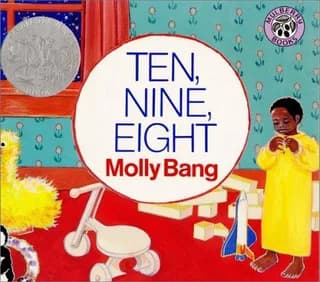
10. Ten, Nine, Eight#
- Written by
- Molly Bang
- First published
- 1983
- Ages
- 0–4
- Format
- Board book and picture book
Molly Bang's 1983 book counts a small girl down to sleep through ten things in her bedroom — ten small toes, nine soft friends, eight square windowpanes. It was named a 1984 Caldecott Honor Book by the American Library Association.
Reading it aloud: point at the thing before you say the number. Counting backwards at two is not arithmetic, it is a list that visibly runs out, and watching it run out is the reassurance a bedtime needs.
The one to buy at six months, not at two#
- Written by
- Dorothy Kunhardt
- First published
- 1940
- Ages
- 0–3
- Format
- Touch-and-feel board book
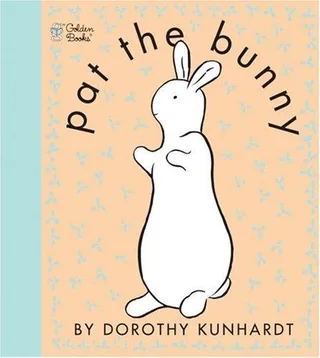
Pat the Bunny appears on nearly every list of books for two-year-olds, and we think it arrives about eighteen months late. Dorothy Kunhardt's 1940 book is banded 0–3, "up to preschool", by Penguin Random House, and the contents agree: fur to stroke, a mirror to look into, a scratchy face to feel.
It is a wonderful book and there is no language in it to acquire. That was exactly right a year ago, when the hands were ahead of the mouth. At two the mouth has caught up and is hungry, and the same money buys a book with words in it — which is what the second year is short of.
Give it at a baby shower, where it is close to unbeatable.
How do I read to a two-year-old who will not sit down?#
Let them move. A two-year-old circling the rug while you read is not refusing the book. Reading Rockets is explicit that a toddler who skips, romps or tumbles through a story is still listening, and insisting on stillness costs more than it buys.
Ask before you read the line. Point at the picture, ask what it is, and wait longer than is comfortable. Supply the word only if it does not arrive. This has a name — dialogic reading — and at two the version that works is the plainest one: what is that?
Read the same one again, immediately. The fortieth reading is not your fortieth reading. It is the one where they finally say the word half a beat before you do, and there is no way to reach it except by going round again.
What to read next#
- The whole shelf, sorted by the age each book lands at → the best children's books of all time.
- The next two birthdays → the best books for 3-year-olds, sorted by what your child says, and the best books for 4-year-olds, sorted by what is new at four.
- Feelings are arriving faster than the words for them → books about feelings for toddlers.
- You are about to start potty training → potty training books, which splits the method book for you from the story book for them, because they are two different purchases.
- Why some of these survive forty readings and others do not → what makes a good children's story, and books that teach colors for the naming shelf specifically.
- They have fallen for the alphabet chant → books like Chicka Chicka Boom Boom, the rhythm-first shelf for a child who wants to shout the refrain.
Why does a personalized storybook land so hard at two?#
If you keep one thing from this page, keep the format fork:
- If they want to operate the book → Dear Zoo, then Where's Spot? Board, both.
- If they want words → Brown Bear, Brown Bear, then Freight Train.
- If they want noise → Chicka Chicka Boom Boom, then Hairy Maclary. Paper, both.
- If the book has to end the day → Goodnight Moon, then Ten, Nine, Eight.
- If you were about to buy Pat the Bunny → give it to somebody's newborn instead.
Ten good books. Between them a two-year-old learns the names of a lion, a spotted puppy, a freight train, a coconut tree and a very quiet old lady whispering hush.
Naming is the entire job of the second year, and by the end of it they are extremely good at it. The American Speech-Language-Hearing Association lists "says their name when asked" among the milestones between two and three. The first name a child owns outright is their own.
It is also the one name the shelf cannot say back to them. Every book above is a list of somebody else's things, and that is not a flaw in the books — a naming machine has to be built before it ever meets the child. What it cannot contain is a name that arrived in the world two years ago.
That is what we make at KindFable. You upload one photo, type a few lines about your child — what they are into, something that actually happened this month — and we paint them as the hero of a full 32-page storybook. Not their name dropped into a template: their face, drawn as a character, on every page, with up to three companions beside them. A grandparent, the dog, an imaginary friend who lives on the ceiling.
At two the argument is unusually simple. A personalized storybook is the only book on the shelf where the answer to who is that? is a word your child already has.
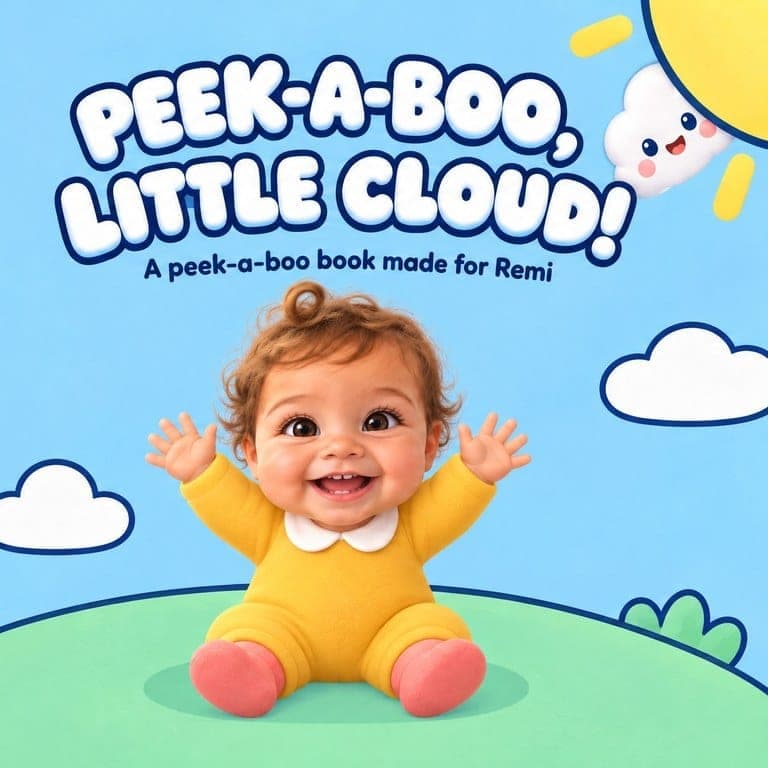
Here is a complete one, so you can judge it rather than take our word for it. Peek-a-Boo, Little Cloud! is a finished story in our shop, written for ages 0–3. The sample below stars Remi, who is two: a parent adds their own child's photo and name, and every page is painted with that child instead.

A book from our shop · ages 0–3
Peek-a-Boo, Little Cloud!
Where's Little Cloud? Behind the sun? In the bubbles? With the sheep? A peek-a-boo board-style book for the littlest readers — big shapes, big words, one giggle on every page — and at the end it's your little one who hides.
Shown here starring Remi, 2. Yours is painted with your own child’s face and name on every page, from $39 — and you see the pages before you pay.
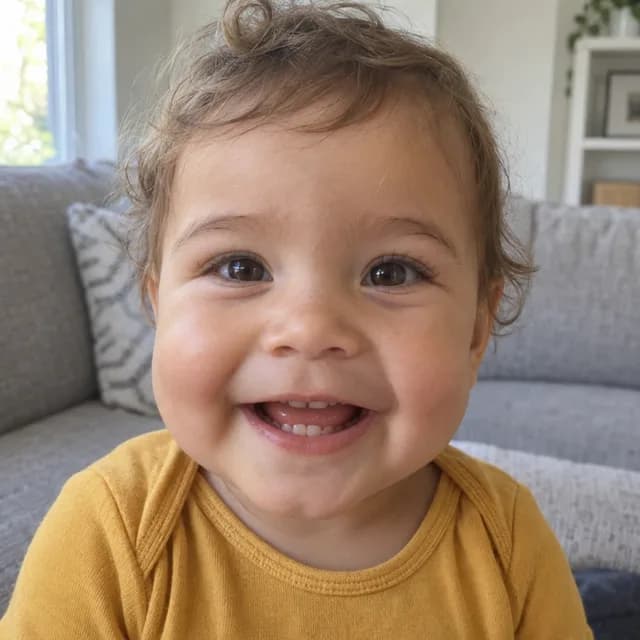
The photo they uploaded
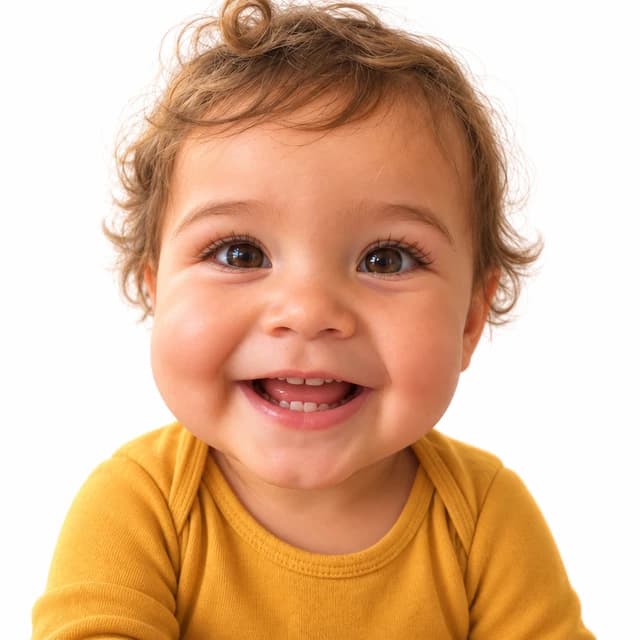
The character we drew
Written from this story — not a stock track with a name dropped in. Free with every book.
How the story begins
- 1This is Little Cloud. Little Cloud loves PEEK-A-BOO.
- 2Where's Little Cloud? Is it behind the SUN?
- 3PEEK-A-BOO! There you are!
The rest of the story is in Peek-a-Boo, Little Cloud!.
The words to the song
[Verse 1]
Where's Little Cloud? Is it behind the sun?
Peek-a-boo! There you are, little one!
Where's Little Cloud? In the bubbles, maybe?
Peek-a-boo! There you are, my baby!

[Verse 2]
Where's Little Cloud? With the sheep so white?
Peek-a-boo! There you are — what a sight!
Where's Little Cloud? In the pillows, hiding?
Peek-a-boo! There you are — no more hiding!

[Verse 3]
Now where's REMI? Under the blanket, I see...
Peek-a-boo! There you are, right here with me!

[Outro]
Little Cloud is sleepy, Little Cloud is soft,
Little Cloud's a pillow now — the moon is up aloft.
Goodnight, Little Cloud. Goodnight, Remi, too.
Close your eyes... and tomorrow — peek-a-boo!
It is built exactly the way this list says a two-year-old's book should be. Big shapes, big words, one giggle on every page, and a question you can stop and ask: "Where's Little Cloud? Is it behind the SUN?" Then the answer a toddler shouts before you can: "PEEK-A-BOO! There you are!" It is a naming book that happens to have your child in it — and at two, finding themselves on the page is the entire event.
You can pick a finished story like this one from the shop, or write your own on KindFable: name and age, one photo, a tick box for consent, a few lines about your child, and one of nine art styles. Either way, you see the pages painted before you pay for anything — the softcover and hardcover prices sit on one page, the hardcover adds a narrated audiobook, and every book includes its own song, free. Everything afterwards lives in your dashboard: the page-flip reader, the audio studio, and a reorder button for when the grandparents ask.
Read the ten first — they are how a two-year-old learns that everything has a name. Then, on the day they point at a photograph and say their own, start with the photo.
When they are ready for a story with a bit of mischief in it, move on to books like The Gruffalo — and for a first birthday, what makes a book worth giving.
Book covers are shown unaltered for identification, sourced from Open Library. Each cover remains the property of its publisher and illustrator. KindFable is not affiliated with any of the books recommended here.