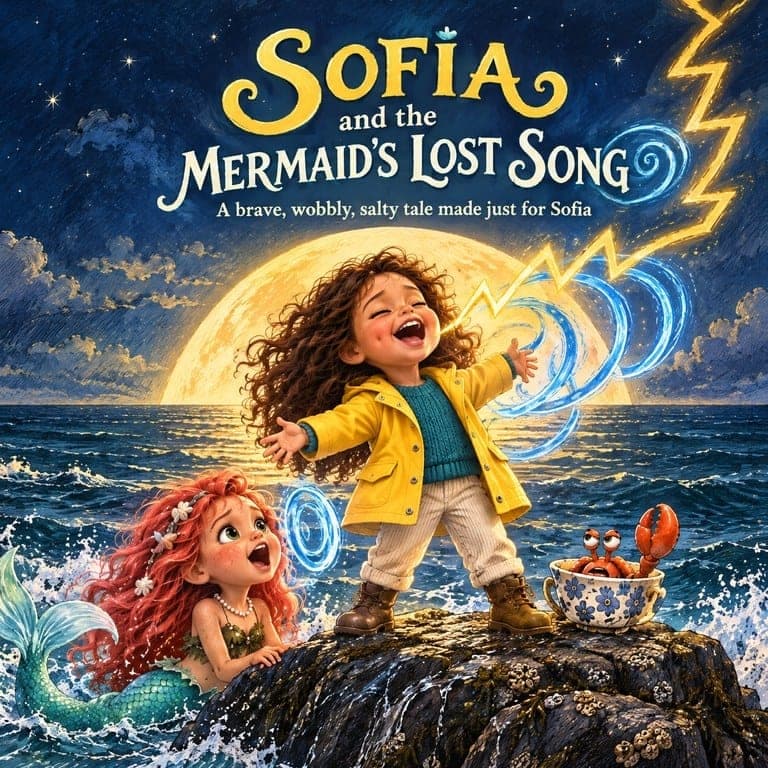
A personalized book about imagination puts your child inside a world that could not exist — a talking crab, a mermaid, a moon that has to be sung up — and then asks them to do something real there. Your Child and the Mermaid's Lost Song, a finished story in our shop, does exactly that, and its real thing is small and brave: singing out loud in your own voice.
What is Your Child and the Mermaid's Lost Song?#
It is a personalized mermaid book for ages 3–7. A mermaid has lost her song, a crab in a teacup knows things, and the child at the center of it only sings into a raincoat hood since somebody laughed. On the night of the tide, somebody has to sing the moon up — loud, wobbly, and their own.
The sample below stars Sofia, who is five. A parent adds their own child's photo and name, and every page is painted with that child instead:

A book from our shop · ages 3–7
Your Child and the Mermaid's Lost Song
A mermaid has lost her song, a crab in a teacup knows things, and your child only sings into a raincoat hood since somebody laughed. On the night of the tide, somebody has to sing the moon up — loud, wobbly, and their own.
Shown here starring Sofia, 5. Yours is painted with your own child’s face and name on every page, from $39 — and you see the pages before you pay.
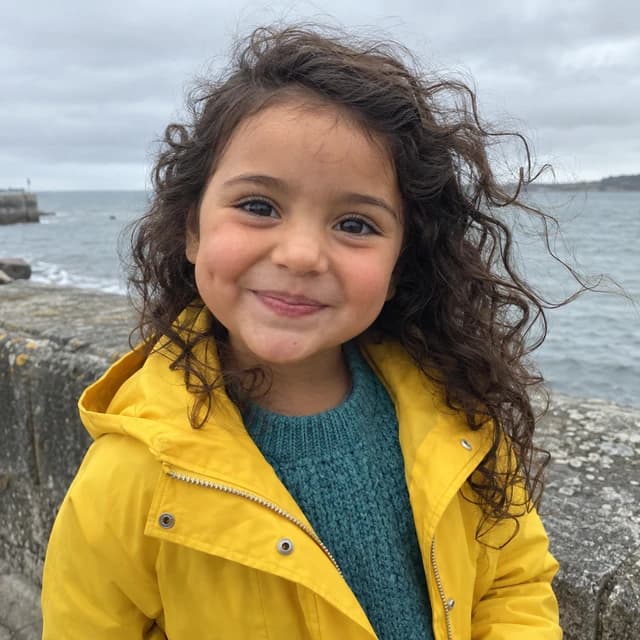
The photo they uploaded
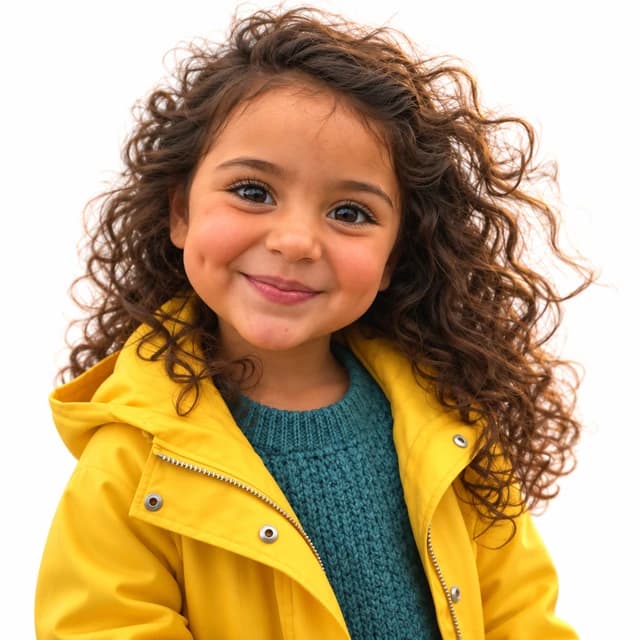
The character we drew
Written from this story — not a stock track with a name dropped in. Free with every book.
How the story begins
- 1Sofia's singing was LOUD. Sofia's singing was WOBBLY. Once, somebody laughed. So Sofia stopped singing. Except into her hood, where nobody could hear.
- 2Down by the rock pools, somebody was crying. It was a mermaid. “She's lost her song,” said a crab in a teacup. “I'm Pinch. I know things.”
- 3“Every mermaid sings the moon up,” said Pinch. “Her song was a BOOM. Not a tinkle. So she borrowed a tinkle. A borrowed song doesn't fit.” Marina opened her mouth. Nothing came out.
The rest of the story is in Your Child and the Mermaid's Lost Song.
The words to the song
[Verse 1]
Sofia sang, and somebody laughed,
So she sang in her hood like a boat in a draft.
Down by the pools was a mermaid in tears —
"I borrowed a tinkle. Now nothing appears."

[Chorus]
A borrowed song doesn't fit, doesn't fit,
Says the crab in the teacup — that's it, that's it.
Loud and wobbly, deep and BOOM,
Sing your own and you'll sing up the moon.

[Verse 2]
They looked in a shell — only hush, hush, hush.
They looked in a cave — boom... boom... in the dark and the rush.
They looked in the lighthouse — the foghorn went BOOM!
"It sounds like you!" laughed Sofia in the gloom.

[Chorus]

[Verse 3]
Hood down. "Somebody laughed at me too."
Two lost songs on one rock, and the sea turning blue.
No moon, no moon, and the tinkles far away —
So Sofia stood up. And she sang anyway.

[Verse 4]
Loud! Wobbly! Terrible! Hers!
And BOOM came the answer through the wind and the whirs,
Gold and blue in a braid to the top of the sky —
And the moon came up like a plate. Oh my.

[Outro]
Now the window is open, the hood's on the chair,
And a gold zigzag flies out into the air,
And far out at sea, in the dark, in the foam,
A BOOM says goodnight — and Sofia sings home.
The opening pages set up the whole book in four short lines: "Sofia's singing was LOUD. Sofia's singing was WOBBLY. Once, somebody laughed. So Sofia stopped singing." Then comes the turn into the imagined world — "Down by the rock pools, somebody was crying" — and a crab called Pinch who introduces himself with the best line on the page: "I'm Pinch. I know things."
Why does a story about imagination need something real in it?#
Because imagination is where young children practise the real thing. The American Academy of Pediatrics' HealthyChildren guidance on the preschool years lists "plays make believe" among the milestones of the preschool years, right beside learning to take turns — and pretending is how a child tries on a role they are not ready to play in real life yet.
A mermaid and a talking crab are not the point of this book. They are the safe distance. A child who would never sing in front of the class can sing on a rock by the sea to a moon, in a story, with a crab keeping score — and the feeling they practise there is the same one they will need at the school concert.
That is also why the imagined world has rules. Pinch explains the mermaid's problem in one line a child can hold on to: "A borrowed song doesn't fit." It is a fantasy sentence about a real thing — trying to sound like somebody else because your own voice once got laughed at.
Why does the story start with somebody laughing?#
Because that moment is developmentally real, not just a sad beat. Michael Lewis and colleagues found that self-conscious emotions like embarrassment only appear once a child has developed self-recognition — the "that's me" milestone that arrives around 18 to 24 months — because you cannot feel embarrassed in front of others until you have a clear sense of yourself as someone others are watching (Lewis, Sullivan, Stanger & Weiss, 1989).
A five-year-old who stops singing after one laugh is not being dramatic. She is old enough to know she is being watched, and not yet old enough to shrug it off. Singing into her hood, where nobody can hear, is exactly what a child that age does with a feeling like that: she keeps the voice and hides it.
Why is the child the one who has to act?#
The story could have had somebody else fix the mermaid's song. Instead it puts the job on the child — somebody has to sing the moon up, and the book says so plainly.
Albert Bandura's foundational work on self-efficacy — a person's belief that their own actions can produce an outcome — is one of the most replicated ideas in developmental psychology (Bandura, 1977). An imaginative story is one of the few places a small child can be the only person who can do the thing, and do it. The lesson the book carries is simple enough for a three-year-old and true enough for an adult: your own voice is worth singing — loud, wobbly and yours.
How does your child stay your child in a world this strange?#
The obvious worry with a fantasy book is that your child dissolves into the scenery — a generic girl or boy among mermaids and rock pools. Look at the photo→character pair above, then look through the pages: the sample child is recognizably the same child on every one, from the rock pools to the night of the tide.
That is not particular to this book. Every KindFable book paints one definitive portrait of your child first, then keeps that same portrait on every page that follows. Our walkthrough of how a photo becomes a book explains what to expect, and our guide to all nine art styles shows the likeness holding across every look KindFable offers when you write your own story.
Does the song add anything?#
It is a book about singing, so it had better. Every KindFable book includes its own song, written from that book's own story rather than a generic tune, free with either binding. The song for Your Child and the Mermaid's Lost Song plays beside the book above — which makes this the rare story where the reading ends and the child can go straight on singing.
How do you get this book for your child?#
- Pick the book. Open the product page for Your Child and the Mermaid's Lost Song, or browse the shop for another story.
- Add your child. Their first name and one clear photo of their face, then tick the consent box. The photo is used only to paint the character and is deleted immediately after — never saved.
- See your child in the book before you pay. Your child appears painted into the pages before any card details are asked for. If it is not right, nothing has been spent.
- Receive it. The digital book and PDF are yours immediately, and a real 8.5-inch square softcover or hardcover is printed and posted to you — the prices are on one page. Every book includes its song, and the hardcover adds a narrated audiobook.
What if my child's imagination lives somewhere else?#
The shop has three more finished books about imagination, each a different kind of pretending:
- Dressing up → Your Child Could Be Anything, ages 3 to 6: eleven jobs, from firefighter to astronaut, each with its own costume, and a parrot in a tiny hat for every one.
- A cardboard box → Your Child's Box-Tastic Moving Day!, ages 3 to 6: a new room full of boxes, and one that blinks awake as a robot. A box can be anything.
- Rewriting the story → Your Child's Happily-Ever-Breakfast!, ages 3 to 6: the fairy-tale characters climb out of the book, and your child draws them a new ending.
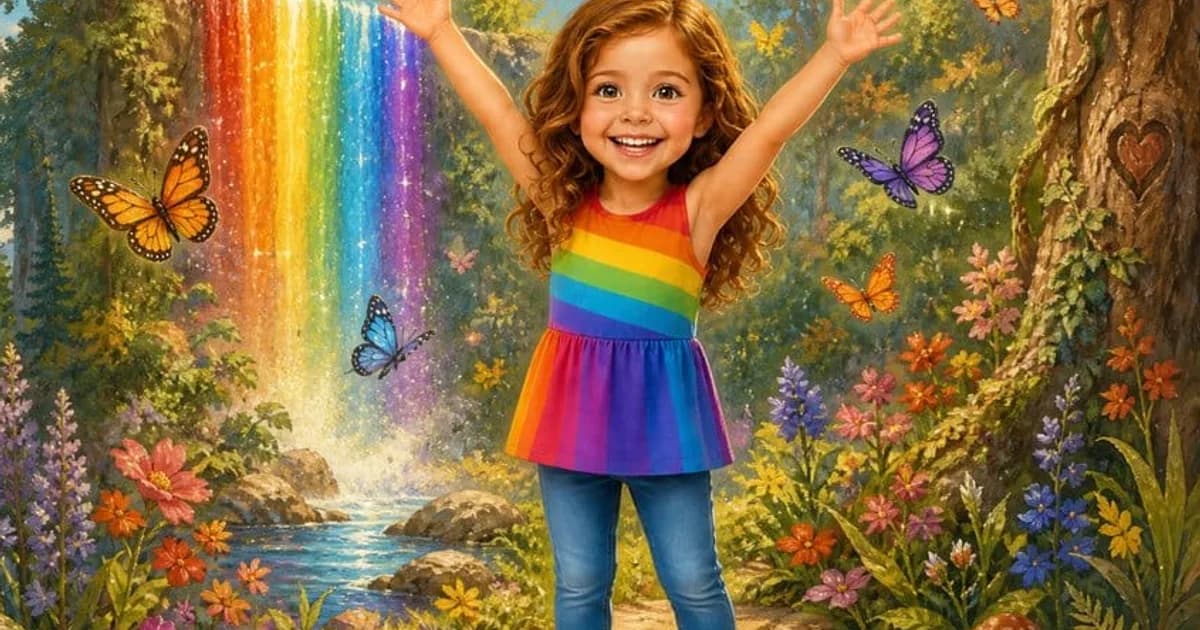
Or write their world yourself. On the create page you type a few sentences about your child — the pretend game they play every day, the friend nobody else can see, the thing they are secretly brave about — and choose one of nine art styles. The same one-photo approach turns a rainy morning into an adventure, a rainbow waterfall into a fairy tale, and just as easily handles a first hockey goal or a first day at school.
Real event or invented world, the same test decides whether a story idea is ready: is there one true, specific feeling in it — the song that got laughed at, the game they will not stop playing — rather than a generic instruction? That feeling is what a five-year-old recognizes as their story rather than a story about mermaids.
Sources. Lewis, M., Sullivan, M.W., Stanger, C. & Weiss, M., "Self Development and Self-Conscious Emotions," Child Development 60(1), 1989 (PubMed). Bandura, A., "Self-Efficacy: Toward a Unifying Theory of Behavioral Change," Psychological Review 84(2), 1977 (PubMed).