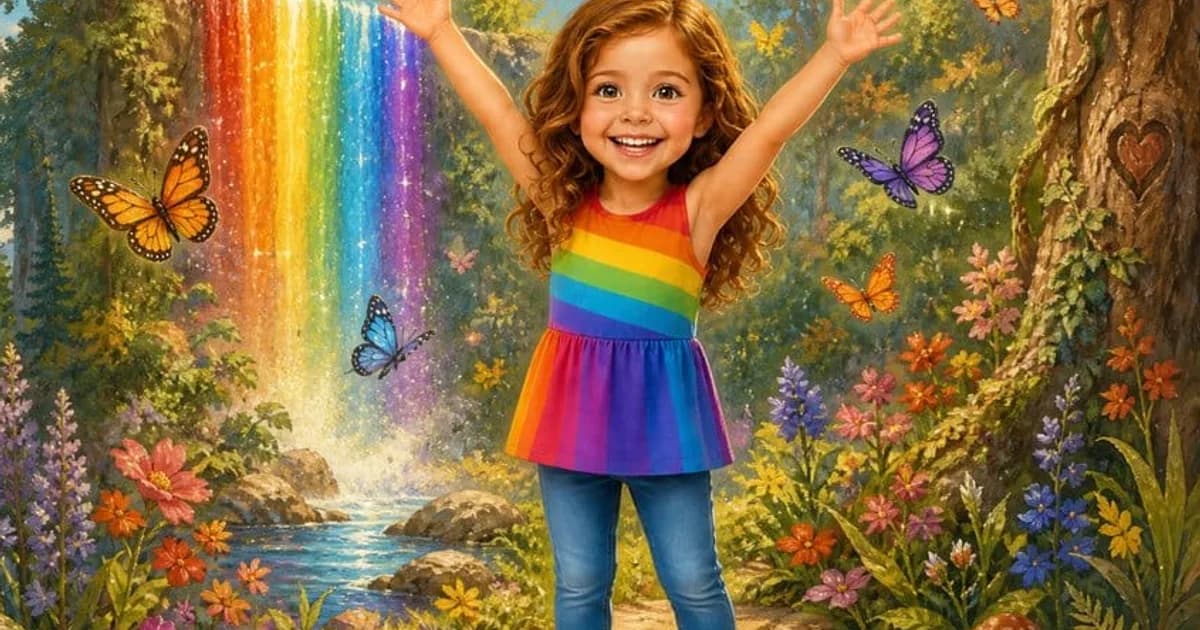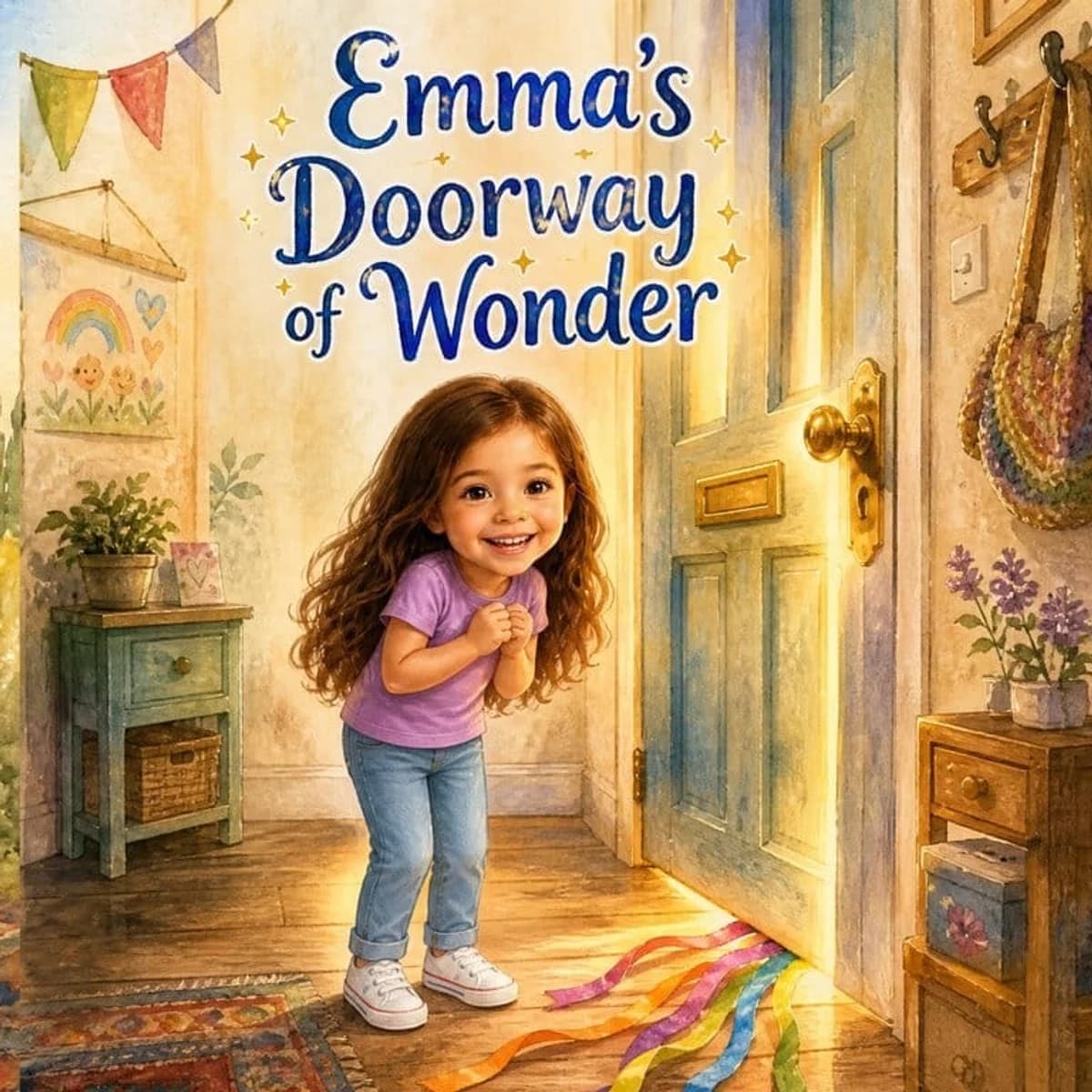

A personalized children's book with photo is a picture book where your child is the hero, painted from a photograph you upload instead of chosen from stock art. This article walks through one from start to finish: choosing a finished story in our shop, adding one photo and a name, and seeing your own child on the pages before you pay.
The example is Lucas and the Little Red Racer. You can read the opening pages and hear its song further down. Nothing here is a mock-up.
What is in a personalized children's book with photo?#
Three things, and only two of them are yours to supply:
| Part | Who provides it | What it means for you |
|---|---|---|
| The story | Already written, in a shop book | Nothing to type, nothing to plan |
| Your child's face | One photo you upload | Your child is painted into every picture |
| Your child's name | Typed once | It appears in the text wherever the hero is named |
That is the whole list. A shop book is a finished story with a real arc and a real lesson. The sample in the shop stars a boy called Lucas; when you personalize it, the hero on every page is your child instead, with your child's name in the words.
If you would rather tell a story of your own — a real weekend, a real first — there is a second route, and it is covered further down.
How do you choose the right shop book?#
Start with the child, not the catalogue. The useful question is not which book looks nicest? It is: what is my child in the middle of right now?
A child who has just been told they are too small to do something wants a book where the small one gets there. A child who is about to become a big sister wants that. A child who is obsessed with dinosaurs, or racing, or the moon, wants to see themselves inside the obsession.
Lucas and the Little Red Racer is the first kind. It opens like this:
Lucas built his racing car all by himself. It had four wobbly wheels, one squeaky horn, and a great big number 6. It was the littlest car on Windy Hill. LITTLE SIX.
Then the other cars turn up, big and shiny and fast, and a girl called Violet laughs that the little thing will never make it up the first hill. Lucas pats his car and says, "I BELIEVE it will." When the race starts, everybody zooms away — everybody except Little Six.
The book is written for ages 3 to 7, and its lesson is three words long: believe, try, keep going. That is the sort of line a child repeats back to you a month later, at the bottom of a climbing frame.
Three questions that pick the book for you#
- What age band is it written for? Each shop book lists one. Sentence length and pacing follow it, so a three-year-old's book does not read like a seven-year-old's.
- What does it teach, without saying so? Perseverance, patience, sharing, courage. Pick the one your child needs this month.
- Who else is in it? Some books have room for a sibling, a grandparent or a pet from their own photos. Others, like this one, are about the child alone.
Why does a book about your own child get re-read?#
Because the child is not reading about a hero. They are reading about themselves.
Reading researchers have made a version of this point for years: the National Literacy Trust reports that children who see themselves and their own lives reflected in books are markedly more likely to enjoy reading and to keep doing it. A book with your child's own face in every picture is not a novelty item — it is the kind of book that gets pulled off the shelf again.
Re-reading matters more than it sounds. The American Academy of Pediatrics recommends reading aloud with young children every day as part of routine care, and the easiest book to read every day is the one your child keeps bringing to you. A picture of themselves, pushing a little red car up a hill, does that job well.
How does one photo become the same child on every page?#
You upload one picture. It does not need to be a good one — a phone snapshot in a living room, hair everywhere, mid-laugh, is fine.


A book from our shop · ages 3–7
Your Child and the Little Red Racer
The littlest car in the Great Hill Race, a wobbly wheel, an enormous puddle — and three words stronger than any engine: Believe. Try. Keep going.
Shown here starring Lucas, 6. Yours is painted with your own child’s face and name on every page, from $39 — and you see the pages before you pay.
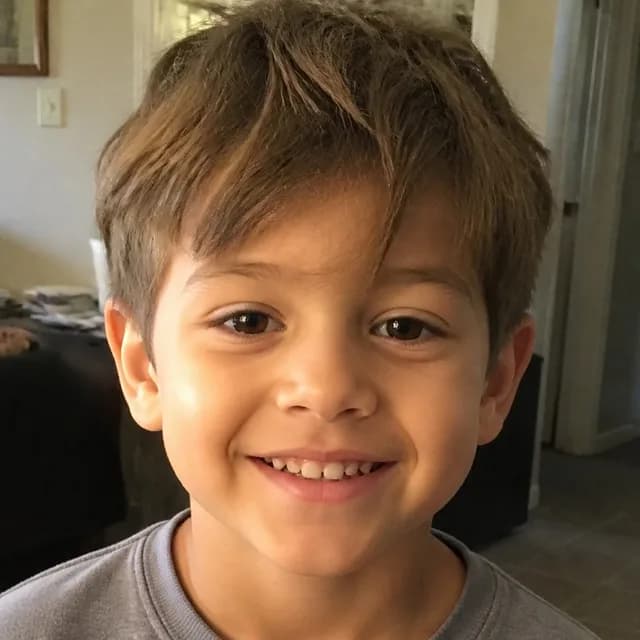
The photo they uploaded

The character we drew
Written from this story — not a stock track with a name dropped in. Free with every book.
How the story begins
- 1Lucas built his racing car all by himself. It had four wobbly wheels, one squeaky horn, and a great big number 6. It was the littlest car on Windy Hill. LITTLE SIX.
- 2On race day, the other cars were big and shiny and fast. “That little thing?” laughed Violet. “It'll never make it up the first hill.” Lucas patted his car. “I BELIEVE it will.”
- 3THREE... TWO... ONE... GO! Everybody zoomed away. Everybody except Little Six. Clunk. Clatter. PLOP.
The rest of the story is in Your Child and the Little Red Racer.
The words to the song
[Verse 1]
Four wobbly wheels and a squeaky horn,
The littlest car since cars were born.
They laughed and said, "It's far too small!"
But Lucas didn't mind at all.

[Chorus]
Believe! (I believe!) Try! (I'll try!)
Keep going, going, up to the sky!
When the hill is steep and the road is long,
Three little words will keep you strong:
Believe. Try. Keep going.

[Verse 2]
A wheel fell off at the starting line,
One twist, two taps, and it's fine, just fine.
The hill said "NO," so he got out and pushed,
Through mud and rain and a great big SPLOOSH!

[Verse 3]
He sat in the puddle and hung his head,
"Maybe I'm just too small," he said.
Then up came Pepper, all soaking wet,
With a wheel in his mouth — we're not done yet!

[Chorus]
Believe! (I believe!) Try! (I'll try!)
Keep going, going, up to the sky!
And if a friend has stopped on the way,
Throw them a rope, and together say:
Believe. Try. Keep going.

[Outro]
Not first, not fastest — but who could doubt
The loudest cheer when they rolled out?
Goodnight, Little Six. Goodnight, Lucas, too.
There's always another hill for you.
The mechanism matters, because it is where most tools fall down. The photo is turned into one character drawing, and that drawing — not the photo — is what every picture in the book is painted from. That is why the child on the last page is the same child as on the cover, rather than a slightly different child each time.
We never save the original photo — not to our storage, our database or our logs — which is why no real child's photo appears anywhere on this site. It is sent to our AI provider in the United States to be checked and drawn, under that provider's own terms; only the drawing is kept.
What makes a photo work?#
This is the question we are asked most, and the answer is duller than people expect. A good source photo needs three things, and none of them is quality:
- The whole face, straight on. Nothing covering it — no sunglasses, no hat brim, no hand near the chin. Everything the drawing keeps comes from the face, so anything hidden is guessed at instead.
- One child in frame. Two faces means the drawing has to choose, and it may choose wrong.
- Ordinary light. A living room by a window beats a studio portrait. Harsh shadow across half a face costs more than a slightly blurry phone camera does.
That is the entire list. If you want to see more photo-to-character examples side by side, how a photo becomes an illustrated hero has them.
Does the child look right for the story?#
Yes, and it is worth stating because it is the thing that usually goes wrong elsewhere.
The photo gives the book your child's face, not your child's clothes. The hero is dressed for the story being told rather than in whatever t-shirt they happened to be wearing when you took the picture. A racing book where the hero stands in pyjamas is a book a five-year-old will notice immediately.
How do you personalize a shop book? The six steps#
There is no trick to this. Most parents are done in a few minutes.
1. Open the book's page. For this one it is Lucas and the Little Red Racer. Read the blurb, flip through the sample, play the song. No account, no card.
2. Press "Personalize this book". This is where the sample's hero becomes yours.
3. Type your child's name. It replaces Lucas in the text, wherever the hero is named.
4. Upload one photo, and tick the consent box. One line confirming the child is yours and you are happy for the photo to be used to draw them. A child's face is not something to be casual about.
5. See your child's pages. You see your child painted into the book before being asked for anything. If the child on the page does not look like your child, you stop there and it has cost you nothing.
6. Choose the format. The hardcover includes a narration and a song at no extra cost. If you are weighing the options, hardcover, softcover or digital compares them.
One photo, one name, one decision.
What if you want to write your own story instead?#
Then skip the shop and open the create page. You type your child's name and age, upload the same kind of photo, and write a few plain sentences about something that actually happened — a first goal, a lost tooth, a trip to the seaside. You choose one of nine art styles (the guide to the nine art styles helps if you are undecided), and the story is written from your note.
The advice for that story box is the same advice a good editor would give: write what you noticed that nobody else in the room did. The odd, small detail is what makes a child recognise the book as theirs. What makes a good children's story goes deeper on that.
Which route suits which parent?#
| If you… | Choose |
|---|---|
| Want a present ready today, with no writing | A shop book |
| Have a specific memory you want kept | The create page |
| Are buying for a holiday or occasion | A shop book in that occasion |
| Want the same child in a second book later | Either — your library keeps the character |
Who is a photo book like this a good gift for?#
Almost anyone who reads to a child. Grandparents are the most common buyers, because a book with the grandchild painted in is a present they can read with the child at the next visit. Parents buy them for birthdays and holidays; for seasonal ones, the personalized Christmas book guide lists what to order and when so it arrives in time.
It also works in the other direction. Children can give one: a book starring a child and their father is a Father's Day present that gets read at bedtime rather than put in a drawer, and a personalized book for Dad covers how families do that.
What do you get afterwards?#
Once the book exists it lives in your dashboard, and so does everything you can do with it:
- The reader — the same page-flip book embedded above, on any device.
- The audio studio — the song, and with a hardcover the narration, with the words shown so a child can sing and read along.
- Reordering — a second copy for a grandparent, without rebuilding anything.
- Your library — every book you have made, so the next one can reuse the same character rather than starting from a new photo.
What does the AI actually do?#
Three jobs, and it is worth being precise about them rather than saying "AI" and moving on:
- It draws a character from the photo, once, and then paints that same character on every page of the book.
- It puts your child into the story — into a finished shop story, or into a new one written from your own note if you use the create page.
- It writes a song from that story, and with the hardcover reads the book aloud, rather than dropping a name into a template.
You can make one of these#
Not "something like this" — this. The same page-flip book, the same song, from one photo of your child and their name. Start with Lucas and the Little Red Racer if your child is the littlest one on the hill, or browse the shop for the story that fits them.
Or start with a personalized children's book with a photo and write your own. Either way: believe, try, keep going.