Dialogic reading is a way of reading a picture book aloud as a conversation: you ask a question, build on your child's answer, and hand the story back, until your child is doing most of the telling. Grover Whitehurst's team published the first study in 1988. The method has two parts, the PEER sequence and the five CROWD prompts.
Most parents already do a little of it without the name. What the name adds is a short list of moves that work at two, a different list that works at five, and a clear sense of what the research does and does not promise.
What is dialogic reading?#
Dialogic reading is shared picture-book reading in which the adult and the child swap roles. In ordinary reading the adult reads and the child listens. In dialogic reading the adult asks, listens and adds a little, and the child talks — first a word, then a sentence, eventually the whole story.
Whitehurst, writing for Reading Rockets, puts it in one line: "In dialogic reading, the adult helps the child become the teller of the story." He credits the method to the Stony Brook Reading and Language Project, his group at Stony Brook, New York.
The first published study was Whitehurst, Falco, Lonigan, Fischel, DeBaryshe, Valdez-Menchaca and Caulfield, "Accelerating language development through picture book reading", in Developmental Psychology in 1988. Parents of children under three were coached for one month to ask more open-ended questions, expand their child's answers and do less straight reading. At the end of the month their children scored significantly higher than a control group on standardized tests of expressive language, and used longer utterances.
A plain-English definition you can keep: dialogic reading is reading with a child rather than to one, using questions to make the child the storyteller.
How does the PEER sequence work?#
PEER is the single exchange that dialogic reading repeats, a few seconds long, on nearly every page. It has four moves.
- Prompt. Ask the child to say something about the page.
- Evaluate. Respond to the answer — praise it, or gently correct it.
- Expand. Say the child's answer back with a few more words or one new idea.
- Repeat. Ask the prompt again, so the child can say the longer version.
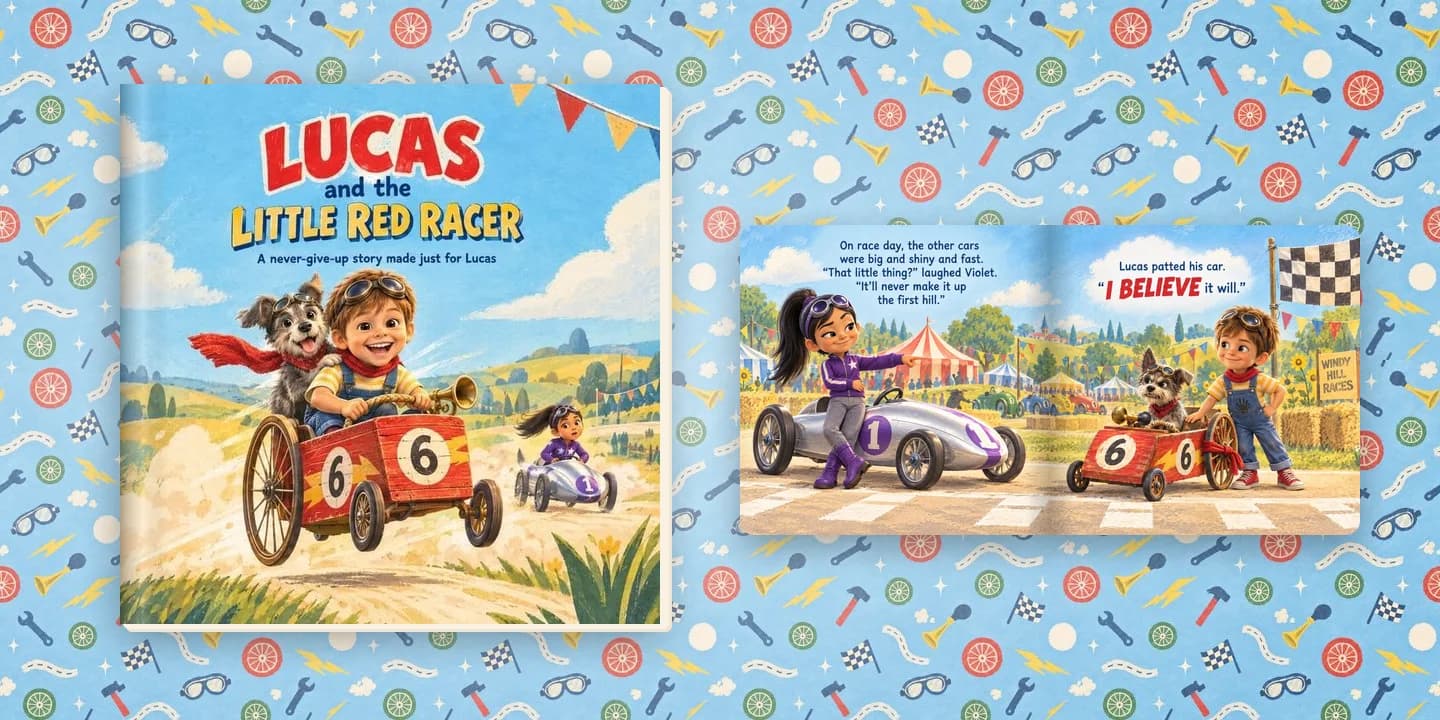
Here is the PEER sequence on the first page of a picture book about a little homemade racing car with a big number 6 on the side:
Prompt: "What's this?" (pointing at the car)
Child: "Car!"
Evaluate: "Yes, it is."
Expand: "It's a little red racing car, with a number six."
Repeat: "Can you say racing car?"
That is the whole trick. The expansion is where the new words arrive, and the repeat is where the child gets to use them straight away instead of just hearing them.
Whitehurst makes one exception: the first reading of a new book. The first time through, read the story so the child knows how it goes. PEER belongs to the second reading and every one after — which is also why repetition matters so much at this age, as why toddlers want the same book again and again explains.
What are the CROWD prompts in dialogic reading?#
CROWD names the five kinds of question that start a PEER sequence. The table below writes each one out as a real question for two ages, using the opening pages of Your Child and the Little Red Racer, a KindFable book whose sample stars a six-year-old called Lucas. It opens: "Lucas built his racing car all by himself. It had four wobbly wheels, one squeaky horn, and a great big number 6."
| Prompt | What it does | Ages 2–3 | Ages 4–5 |
|---|---|---|---|
| Completion | Child finishes your sentence — best in rhyme and repeated lines | "THREE... TWO... ONE... ___!" (GO!) | "Everybody zoomed away. Everybody except ___." (Little Six) |
| Recall | Child tells you what already happened | "Who built the car?" | "What went wrong when the race started?" |
| Open-ended | Child describes a picture in their own words | "Tell me about the car." | "Tell me what's happening on this page." |
| Wh- | What, where, why, how — teaches words | "What's this?" (the horn) → "a squeaky horn" | "Why do you think Violet laughed at Little Six?" |
| Distancing | Links the story to the child's own life | "Do you have a toy that squeaks?" | "Has anyone ever told you that you were too little to do something? What did you do?" |
The age split is not our invention. Reading Rockets says distancing and recall prompts "are more difficult for children than completion, open-ended, and wh- prompts" and that "frequent use of distancing and recall prompts should be limited to four- and five-year-olds." The 2–3 column of the table keeps those two prompts as concrete as possible, and you should expect a shrug to some of them.
Almost any picture book works. Completion prompts need a book with a refrain; open-ended prompts need busy, detailed pictures. Many of the best children's books of all time earned their place precisely because they have both.
Which dialogic reading strategies suit a toddler, and which a five-year-old?#
The CROWD prompts are not equally useful at every age, and the research shows the method itself doing different jobs at two and at five.
At two and three, it is a vocabulary tool. Suzanne Mol, Adriana Bus, Maria de Jong and Daisy Smeets pooled 16 studies in a 2008 meta-analysis in Early Education and Development and found a moderate effect on expressive vocabulary (Cohen's d of 0.59, across nine studies and 322 children) — an effect that "reduced substantially when children were older (4 to 5 years old)."
At four and five, it is a conversation tool. Once vocabulary gains flatten, what the prompts build is the ability to tell a story in order and connect it to life — which is exactly what recall and distancing prompts ask for.
A practical ladder, youngest first:
- Under two: point and name. "Dog! A big brown dog." You are doing the expanding; the child is doing the pointing.
- Two: completion prompts in any book with a repeated line, plus "what's this?" on every page.
- Three: add open-ended prompts on busy pictures. Try one "why" question per book.
- Four: recall at the start of a reread ("what happens to this car?") and one distancing question at the end.
- Five: let the child read the pictures to you, with you prompting only when they stall.
Feelings are where distancing prompts pay off most, and they need the calm-moment timing that books about feelings for toddlers sets out. For the preschool years, when a child can start naming a character's feeling and the reason for it, books about emotions for preschoolers has titles built for those conversations.
Does dialogic reading actually work?#
Yes, for spoken language — and the honest version of the answer is more useful than the enthusiastic one.
What the government review found. The What Works Clearinghouse, the evidence-review arm of the US Department of Education's Institute of Education Sciences, rated dialogic reading in its February 2007 intervention report. Five studies with over 300 preschool children met its standards. It found positive effects on oral language, an average improvement of 19 percentile points, and no discernible effects on phonological processing.
For children with language delays. A second What Works Clearinghouse report, from April 2010, looked at two studies of 52 children aged three to six with language delays and found "potentially positive effects" on communication and language, from what it called a small extent of evidence.
In the developer's words. Whitehurst's own summary on Reading Rockets is that "children can jump ahead by several months in just a few weeks of dialogic reading," across homes, preschools and day care in New York, Tennessee and Mexico.
What that adds up to:
| Dialogic reading does | Dialogic reading does not |
|---|---|
| Build spoken vocabulary, most clearly at two and three | Teach the sounds inside words — the What Works Clearinghouse found no discernible effect there |
| Lengthen the sentences a child uses about a book | Replace letter and phonics work at school age |
| Turn a familiar book into a new conversation | Need special books, training or materials — the procedures are free |
The mechanism underneath is not mysterious. Harvard's Center on the Developing Child calls these responsive back-and-forth exchanges serve and return, and says "the human brain expects this game of back and forth." A book gives both of you something to serve.
Is dialogic reading the same as shared reading or an interactive read aloud?#
The three terms overlap, and people use them loosely. The useful distinctions:
| Term | Who does the talking | Typical setting | Core idea |
|---|---|---|---|
| Shared reading | Mostly the adult | Home or class | Any adult and child reading one book together |
| Interactive read aloud | Adult, with planned pauses for the group | Classroom | The teacher reads to a group and stops at chosen points to ask and discuss |
| Dialogic reading | Increasingly the child | One child or a small group | A specific method — PEER plus CROWD — that turns the child into the storyteller |
Every dialogic read is shared reading; not every shared read is dialogic. An interactive read aloud is the classroom cousin: one adult, a whole carpet of children, fewer turns each. McGee and Schickedanz's repeated interactive read-aloud — the same book three times, each reading with a different job — is the best-known version, and read-aloud books for kindergarten covers it along with ten books that hold a room.
At home, with one child on your lap, you can do something no classroom can: give every prompt to the same child and wait as long as the answer takes.
When should you not use dialogic reading?#
This is where we part company with most guides, including the method's own. Whitehurst writes that, after the first reading, "PEER sequences should occur on nearly every page." We think the last book of the night should have none.
Bedtime is for winding down. A PEER sequence on every page asks a tired child to think, answer and repeat, page after page. That is good practice at four in the afternoon and a bad idea at seven-thirty at night. Keep the prompts for a daytime read, or the first book of the evening, and let the last one run straight through in your voice.
Whitehurst himself leaves the door open. The same article says to "mix up your prompts with straight reading" and warns: "Don't push children with more prompts than they can handle happily." A whole book without prompts is just the far end of that mix.
Three other moments to go easy:
- The first reading of a new book. Read it through. The method says so too.
- When a question starts to feel like a test. "What color is that?" asked for the fifth time is a quiz, not a conversation. Switch to an open-ended prompt or just read.
- When your child is upset. A child in the middle of a big feeling cannot answer a distancing question about it. Come back to the book when things are calm.
One opinion we will stand behind: the most underused prompt for two-year-olds is completion, and the most overused is recall. Parents reach for "what happened?" because it feels like comprehension. For a two-year-old it is one of the hardest questions in the set. "THREE... TWO... ONE... ___!" gets a shout every time.
What happens to the distancing question in a book where my child is the main character?#
Which prompt suits which child, in one line each:
- Two: completion and "what's this?" — the child supplies a word you set up.
- Three: add open-ended prompts on busy pictures, and one "why" per book.
- Four and five: recall and distancing, because they ask a child to hold the story in mind and carry it somewhere else.
The hardest move in the whole method is the distancing prompt: "has that ever happened to you?" It asks a child to cross a gap — from Lucas on the page to me on the sofa, from a little car on Windy Hill to the time someone said I was too small. Reading Rockets reserves it for four- and five-year-olds for exactly that reason. Distancing, in Whitehurst's words, helps children "form a bridge between books and the real world."
There is one kind of book where that bridge is already built. In a book where my child is the main character, "has that ever happened to you?" stops being a leap and becomes a conversation starter a three-year-old can answer: it's happening to you right now, on this page. The question can move forward instead: "What do you think you'll do next?" That is the goal dialogic reading has been working toward all along — the child telling the story — with the child telling their own.
The honest limit: we know of no study that has tested dialogic reading with personalized books, and the What Works Clearinghouse findings come from ordinary picture books. What a personalized book changes is the distance, not the evidence.
That is the book we make at KindFable. Your Child and the Little Red Racer is a finished story for ages three to seven about the littlest car in the Great Hill Race — a wobbly wheel, an enormous puddle, and three words: Believe. Try. Keep going. The sample stars Lucas, who is six. When you order it, you add your child's photo and name, and every page is painted with your child in the driver's seat.
Its opening is built for completion prompts — "THREE... TWO... ONE... GO! Everybody zoomed away. Everybody except Little Six. Clunk. Clatter. PLOP." — and Violet's "That little thing?" hands a four-year-old the easiest distancing question they will ever answer, because the little thing is theirs.


A book from our shop · ages 3–7
Your Child and the Little Red Racer
The littlest car in the Great Hill Race, a wobbly wheel, an enormous puddle — and three words stronger than any engine: Believe. Try. Keep going.
Shown here starring Lucas, 6. Yours is painted with your own child’s face and name on every page, from $39 — and you see the pages before you pay.
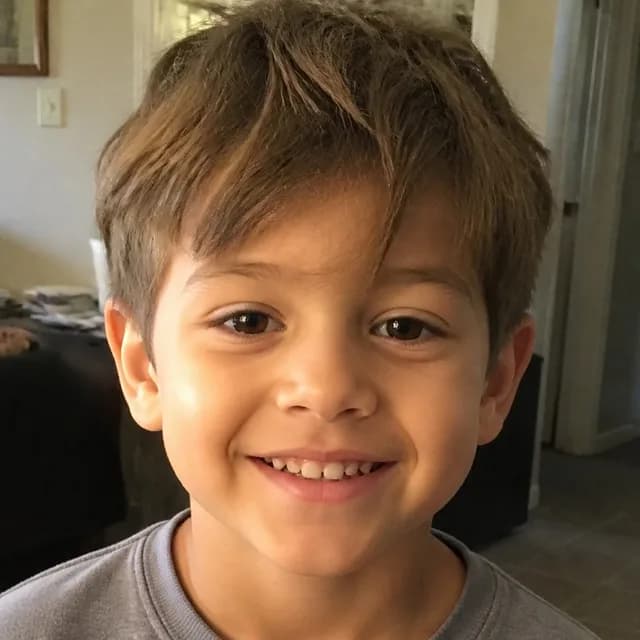
The photo they uploaded
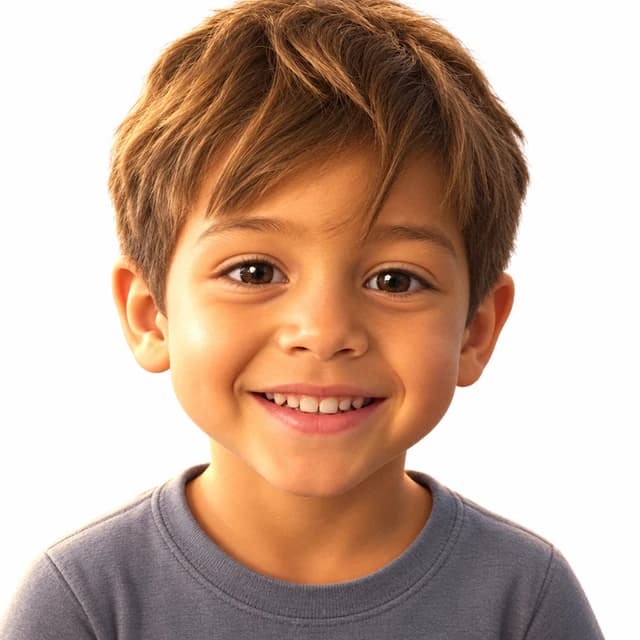
The character we drew
Written from this story — not a stock track with a name dropped in. Free with every book.
How the story begins
- 1Lucas built his racing car all by himself. It had four wobbly wheels, one squeaky horn, and a great big number 6. It was the littlest car on Windy Hill. LITTLE SIX.
- 2On race day, the other cars were big and shiny and fast. “That little thing?” laughed Violet. “It'll never make it up the first hill.” Lucas patted his car. “I BELIEVE it will.”
- 3THREE... TWO... ONE... GO! Everybody zoomed away. Everybody except Little Six. Clunk. Clatter. PLOP.
The rest of the story is in Your Child and the Little Red Racer.
The words to the song
[Verse 1]
Four wobbly wheels and a squeaky horn,
The littlest car since cars were born.
They laughed and said, "It's far too small!"
But Lucas didn't mind at all.

[Chorus]
Believe! (I believe!) Try! (I'll try!)
Keep going, going, up to the sky!
When the hill is steep and the road is long,
Three little words will keep you strong:
Believe. Try. Keep going.

[Verse 2]
A wheel fell off at the starting line,
One twist, two taps, and it's fine, just fine.
The hill said "NO," so he got out and pushed,
Through mud and rain and a great big SPLOOSH!

[Verse 3]
He sat in the puddle and hung his head,
"Maybe I'm just too small," he said.
Then up came Pepper, all soaking wet,
With a wheel in his mouth — we're not done yet!

[Chorus]
Believe! (I believe!) Try! (I'll try!)
Keep going, going, up to the sky!
And if a friend has stopped on the way,
Throw them a rope, and together say:
Believe. Try. Keep going.

[Outro]
Not first, not fastest — but who could doubt
The loudest cheer when they rolled out?
Goodnight, Little Six. Goodnight, Lucas, too.
There's always another hill for you.
For a child who needs the opposite lesson — waiting rather than going — Your Child and the Great Kite has a mouse shouting "Go go go!" and a heron saying "Wait... for... the wind," which is a completion prompt waiting to happen. Both sit in the KindFable shop alongside the rest of the finished books: pick one, add a photo and a name, and see your child on the pages before you pay.
If you would rather write the story yourself, start a book of your own: your child's name and age, one photo, a tick box for consent, a few lines about your child, and one of nine art styles. You see the cover, painted, before paying for anything — the softcover and hardcover prices sit on one page, the hardcover adds a narrated audiobook, and every book comes with its own song. The finished book lives in your dashboard, with the page-flip reader, the audio studio and a reorder button. If you want to know what happens to the photo along the way, how to turn a photo into a children's book walks through it.
Then read it twice. The first time, just read. The second time, ask.