Most lists of books about feelings for toddlers sort them by emotion: one for anger, one for worry, one for sadness. Almost none mention the thing that decides whether any of them work, which is when you read it.
A book about big feelings does not reach a child who is having one. Mid-meltdown, a two-year-old is not available for a plot, a moral or a page turn. These books do their work hours later, or the next morning, at a moment when nothing at all is wrong.
When should you read a book about feelings to a toddler?#
Read it when your child is calm, and read it more than once. That is the whole trick, and it is the opposite of what these books look like they are for. A story about a llama losing his temper is not an intervention. It is a rehearsal, and rehearsals happen on ordinary days.
This is not a hunch. The American Academy of Pediatrics, on its HealthyChildren.org page of books to teach kids about feelings and resilience, puts it in a single line:
"Talking about feelings when children are calm is a wonderful way to prepare them for times when they may feel stressed and overwhelmed."
So what is the book for during the meltdown? Nothing. You be the calm one. The support a settled adult gives a child who cannot yet settle themselves has a name — co-regulation — and it is the mechanism underneath everything else on this page. The practice brief Co-Regulation From Birth Through Young Adulthood, based on work conducted by the Duke Center for Child and Family Policy for the US Administration for Children and Families, describes self-regulation as something that "develops through interaction with caregivers" rather than something a child arrives holding.
A book cannot do that. A book is what you use afterwards, to give the afternoon a name and a shape, so the next one is slightly less strange.
What are the three jobs a feelings book can do?#
Sorted this way rather than by emotion, most of the shelf falls into three piles, plus one book that belongs to the grown-up.
| What just happened | What you want the book to do | When to read it | Start with | Age |
|---|---|---|---|---|
| Nothing. An ordinary Tuesday | Give the feeling a name before it is needed | Any neutral moment, on repeat | My Many Colored Days · In My Heart | 1½–4 |
| A tantrum, earlier today or yesterday | Let them watch the feeling arrive and pass in somebody else | The next calm morning | Llama Llama Red Pajama · When Sophie Gets Angry | 2–7 |
| A hard drop-off, or one coming | Rehearse the leaving and the coming back | Bedtime, the night before | Owl Babies | 2–5 |
| A whole day of being told no | Say plainly that the relationship survived it | Bedtime, the same night, once everyone is calm | No, David! · Where the Wild Things Are · The Runaway Bunny | 2–6 |
| The feeling is happening right now | Nothing. Put the book down | — | The Rabbit Listened, and read it yourself first | — |
If you buy one book from this article, make it a rehearsal book. The naming books are the ones every list leads with and the ones that do least on their own.
Naming books: read these when nothing is wrong#
A toddler cannot reach for a word they have never heard in a calm room. These two exist to put the words in the room.
My Many Colored Days#
- Written by
- Dr. Seuss
- Illustrated by
- Steve Johnson and Lou Fancher
- First published
- 1996
- Ages
- 1½–4
- Format
- Board book and picture book
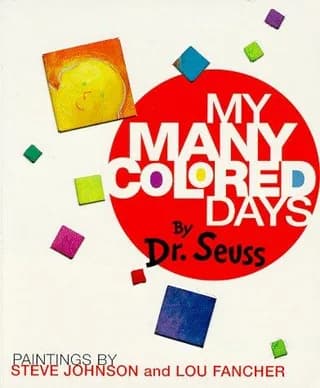
A Dr. Seuss text published in 1996 with paintings by Steve Johnson and Lou Fancher, and it looks nothing like a Seuss book because he did not draw it. Every day is a colour and an animal: a slow brown bear day, a busy yellow bee day, a grey day when nothing much happens.
It is the best naming book here precisely because it never asks the child to identify anything or to do better. It says only: some days feel like this, and then they are over.
Reading it aloud: at the end, ask what colour today was. The answer is worth having precisely because the book has given them something to answer with.
In My Heart: A Book of Feelings#
- Written by
- Jo Witek
- Illustrated by
- Christine Roussey
- First published
- 2014
- Ages
- 1½–4
- Format
- Board book and picture book
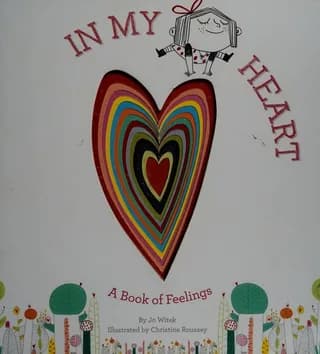
Jo Witek and Christine Roussey, 2014. One feeling per spread, each with a die-cut heart that grows and shrinks as you turn the pages, so the book changes shape in the child's hands.
An honest note: this is the kind of book page one recommends first, and it is the one I would rank last of the nine here. A vocabulary book hands over the word and stops. It never shows a feeling arriving, peaking and leaving, which is the part a toddler needs to see. Buy it as a first dictionary, not as the main event.
Reading it aloud: let them put a finger through the heart. Under three, that is most of what this book is for, and it is enough.
Rehearsal books: read these the next calm morning#
The pile that earns its shelf space. In each one a small character has a big feeling, the feeling peaks, and then it ends — the single fact a two-year-old has no way of knowing yet.
Llama Llama Red Pajama#
- Written by
- Anna Dewdney
- First published
- 2005
- Ages
- 2–6
- Format
- Board book and picture book
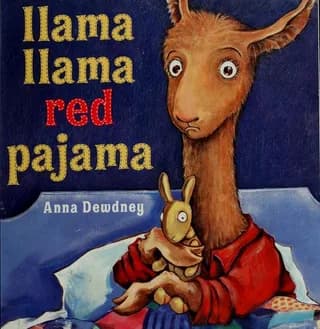
Anna Dewdney, 2005. Baby Llama is put to bed, waits, frets, works himself up and finally screams the house down while his mother is downstairs on the phone. She comes up, tells him she was busy, and promises she is always near even when she is not in the room. Nobody is punished.
The whole shape — fine, wobbly, furious, held, fine again — fits inside one short book. A toddler gets to watch their own afternoon happen from the outside.
Reading it aloud: read it in the morning if bedtime is where your trouble is. Handing a stalling child a bedtime book about stalling at bedtime is an invitation, not a lesson.
When Sophie Gets Angry—Really, Really Angry…#
- Written by
- Molly Bang
- First published
- 1999
- Ages
- 3–7
- Format
- Picture book
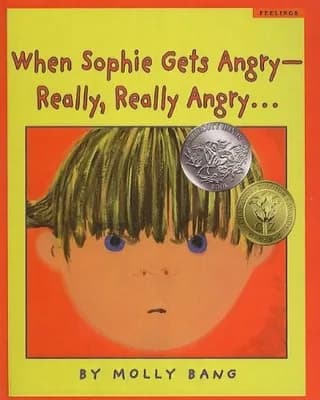
Molly Bang, 1999, and a Caldecott Honor book in 2000 according to the American Library Association's medal and honor list. Sophie's sister grabs her gorilla, Sophie falls over a truck, roars, runs out of the house, climbs a tree, watches the water, and comes home.
The colour does the arguing: the pages go red and orange at the peak and cool to green as she settles, which makes it the most physically accurate picture of anger in any book here.
Reading it aloud: too big for most two-year-olds, and it lands hard at four. Slow right down on the running pages and say nothing at all while she is up the tree.
Owl Babies#
- Written by
- Martin Waddell
- Illustrated by
- Patrick Benson
- First published
- 1992
- Ages
- 2–5
- Format
- Board book and picture book
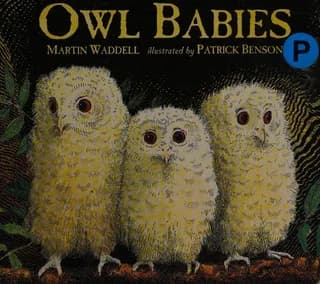
Martin Waddell and Patrick Benson, 1992. Three owlets wake to find their mother gone and spend the whole book waiting in the dark. Bill, the smallest, has one line and repeats it. She comes back.
Read this the night before a hard drop-off, never at the nursery door. At the door a child needs your face, not a plot.
Reading it aloud: give them Bill's line. After a few readings many children will say it before you do, which is the point — they are practising the ending rather than the fear.
Repair books: read these at bedtime after a bad day#
These teach nothing. They say one thing only, which is that today was hard and we are still fine.
No, David!#
- Written by
- David Shannon
- First published
- 1998
- Ages
- 2–5
- Format
- Picture book
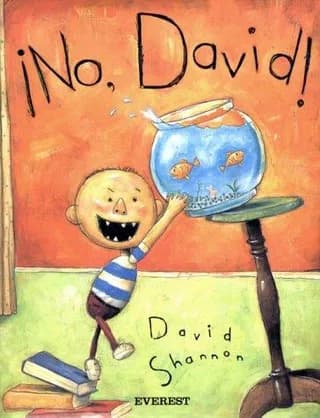
David Shannon, 1998, and a Caldecott Honor book in 1999 on the same American Library Association list. Every page is David doing something forbidden and an adult voice saying no in enormous letters — until the last spread, which is a hug and the only kind sentence in the whole book.
For a child who has spent an entire day being corrected, that final page does more than any amount of explaining.
Reading it aloud: play the nos broad and funny, then stop dead, drop your voice for the last two pages, and let the silence sit there.
Where the Wild Things Are#
- Written by
- Maurice Sendak
- First published
- 1963
- Ages
- 4–8
- Format
- Picture book
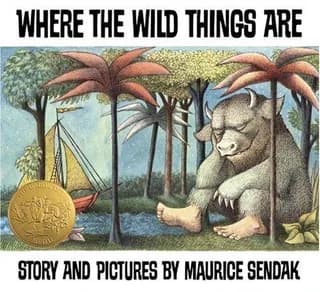
Maurice Sendak, 1963. Max is sent to bed without supper, sails to where the wild things are, is made king of them, gets lonely at the top of it, and comes home.
Max is angry and the book never once tells him not to be. He goes, he rules it, he gets lonely, he comes back, and his supper is still hot. That last detail is the entire repair: somebody stayed angry with him and fed him anyway.
Reading it aloud: the supper is the ending, not the monsters. Land the last words quietly and notice whether your child spots that nobody apologised and nobody had to.
The Runaway Bunny#
- Written by
- Margaret Wise Brown
- Illustrated by
- Clement Hurd
- First published
- 1942
- Ages
- 2–5
- Format
- Board book and picture book
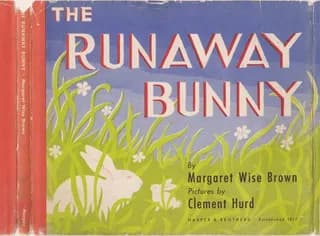
Margaret Wise Brown and Clement Hurd, 1942. A small rabbit announces he is running away and lists what he will turn into; his mother lists what she will become to find him each time.
Some adults find it claustrophobic rather than comforting, and that is a fair reading. For a two-year-old testing whether leaving is even allowed, it is the most reassuring book here.
Reading it aloud: it is a chant, not a plot. Keep the two voices clearly different and end on the carrot without adding a word of your own.
The book for the middle of the feeling is the one for you#
The Rabbit Listened#
- Written by
- Cori Doerrfeld
- First published
- 2018
- Ages
- 3–7
- Format
- Picture book
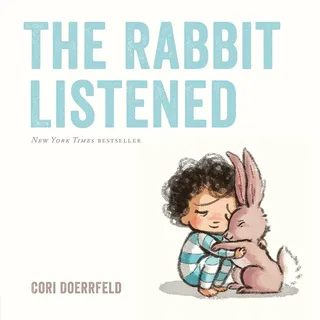
Cori Doerrfeld, 2018. Taylor builds something, it falls down, and a queue of animals arrive to say what Taylor should do about it: talk about it, shout about it, remember it, laugh about it, hide, throw it all away, get even. Taylor wants none of it. Then a rabbit comes, sits close, says nothing at all, and eventually Taylor talks.
This is the only book here written for the adult. It is an instruction manual for the middle of the feeling, disguised as a picture book — and a book in your hand is already a thing you are saying, which is exactly what the rabbit does not do.
Reading it aloud: read it by yourself first, and be ready to recognise yourself in at least two of the animals.
Why does the talking matter more than the book?#
Because the book is the prompt and the conversation is the active ingredient, and there is research that separates the two cleanly.
A 2025 narrative review in Frontiers in Psychology by Rotem Schapira and Ilaria Grazzani surveys the experiments that tested this directly. In one, 68 toddlers aged 24 to 35 months were read the same stories, after which one group talked about the characters' emotions and the other about the objects and actions in the storybook. The emotion group "significantly outperformed the control group on measures of emotion understanding". In a later trial in the same review, 142 toddlers were split three ways, and only the group whose reading was followed by conversation about emotions improved on both empathy and prosocial behaviour.
Same books. Different talk. Different result.
Ask, do not explain. Asking questions and letting the child do the talking has a name — dialogic reading — and it is what turns any of the nine books above into the version that works. Three questions that fit a toddler:
- "How do you think he feels?" while pointing at a face on the page, not at your child.
- "Has that happened to you?" and then waiting, even when the wait is uncomfortable.
- "What did his mum do?" — the recovery, not the outburst, is the part worth rehearsing.
The parent handout Teaching Your Child to Identify and Express Emotions, published by the Center on the Social and Emotional Foundations for Early Learning at Vanderbilt University, goes one further and anchors the conversation to a remembered episode: "Yesterday, you were angry because Joey would not let you play with his truck." Yesterday. Not now.
What age do toddlers understand emotions?#
Emotion words arrive earlier than most parents expect. Writing in Infancy, Ashley Ruba, Vrinda Kalia and Makeba Parramore Wilbourn — whose own book-sharing study of 50 infants aged 12 to 24 months examined how parents talk about feelings while reading — summarise the developmental research in one line: "around 18-months of age, emotion labels first appear in infants' vocabularies".
So a feelings book at eighteen months is not early. It is on time — as long as it is a naming book, read flat, with no expectation that anything is being learned. The rehearsal and repair books start landing later, once a child can hold a character in mind across several pages.
What does not arrive at eighteen months is the ability to use any of it while upset. The gap between knowing the word angry and being able to reach for it mid-scream lasts years, and it is why the calm-moment rule matters more than the title on the cover.
What to read next#
- The wider shelf, sorted by the age each book lands at → the best children's books of all time, and what makes a good children's story on why the durable ones last.
- The feeling you are managing is nursery or school → books about starting kindergarten covers separation on its own.
- The feeling is a new baby in the house → books about becoming a big brother, which is jealousy and demotion rather than excitement, whatever the cover says.
- The bedtime end of this → child-hero bedtime stories, audiobooks for children for the nights your voice has gone, and the gift guide if you are buying rather than borrowing.
Does a personalized children's book with photo beat a book about a llama?#
Who each of these is for, in one line:
- Under three, nothing wrong → My Many Colored Days, with In My Heart as a dictionary.
- The tantrums are the problem → Llama Llama Red Pajama at two, When Sophie Gets Angry at four.
- The drop-offs are the problem → Owl Babies, the night before.
- The day was all correction → No, David!, then Where the Wild Things Are at three.
- You are the one who needs help → The Rabbit Listened.
Nine books, and every one of them asks your child to make the same jump: from Sophie to me, from David to me, from a llama in the dark to a small person in the dark. Adults make that jump without noticing it. At two and three it is the hardest part of reading, and it is precisely the part that collapses when a child is upset.
There is one kind of book that does not ask them to make the jump at all.
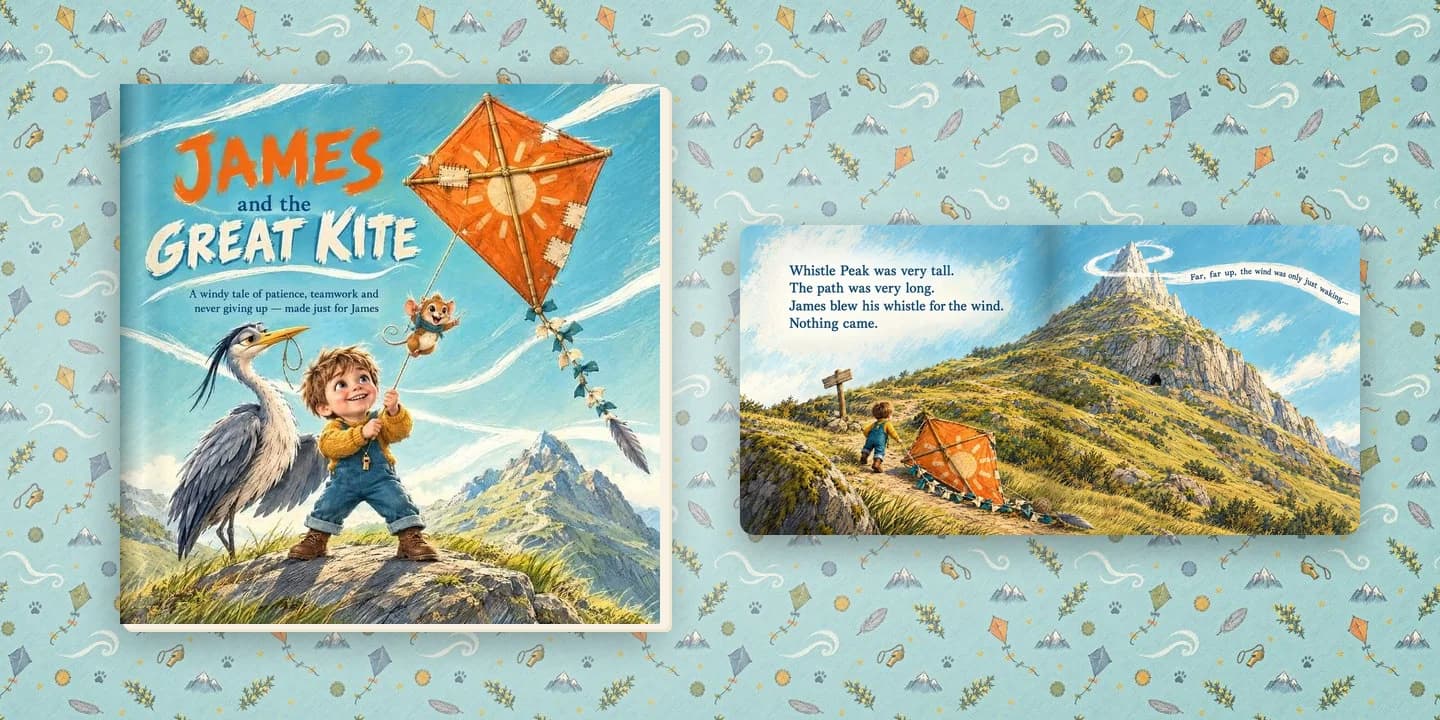
That is what we make at KindFable. You upload one photo and type a few lines about your child — what they are into, and something that actually happened this month, including the bad Tuesday if that is the honest answer. We paint them as the hero of a full 32-page storybook: not a name dropped into a template, but their face, drawn as a character, on every page, with up to three companions beside them.
A personalized children's book with photo is the one story on the shelf that needs no translating. It can be read on a calm Tuesday morning about a feeling that happened on Monday, and the child on the page having it is theirs.
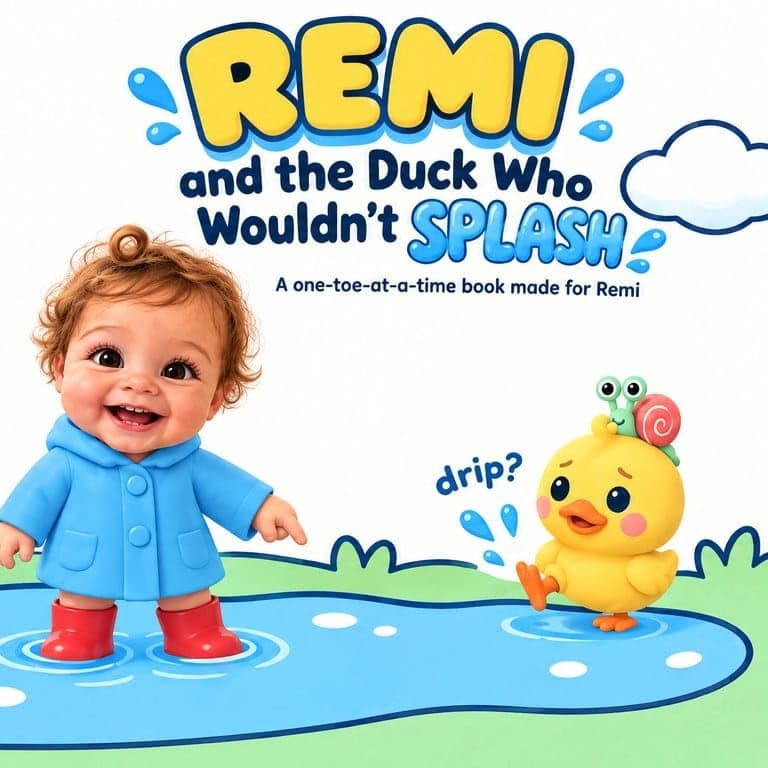
The one in our shop written for exactly this age is Your Child and the Duck Who Wouldn't Splash, a board-style book for ages 0 to 3 about the most common toddler feeling there is: being scared of something new. It is a finished story: the sample shown stars Remi, who is two, and when you order it you add your own child's photo and name, and every page is painted with your child instead.
"This is Puddle. Puddle is scared of WATER. (Yes. A duck.)" The fear belongs to the duck, which is the trick. Your toddler gets to be the brave one — "One toe, Puddle. Like THIS." — and to say "Good duck!" when Puddle tries. A child who has just coached someone else through a fear has rehearsed their own, without being asked to talk about it.

A book from our shop · ages 0–3
Your Child and the Duck Who Wouldn't Splash
Puddle is a duck. Puddle is scared of water. (Yes. A duck.) So your little one shows him how — one toe, two feet, a little sit-down splash — until SPLASH! SPLASH! QUACK! A board-style book for the littlest readers about being brave one small step at a time.
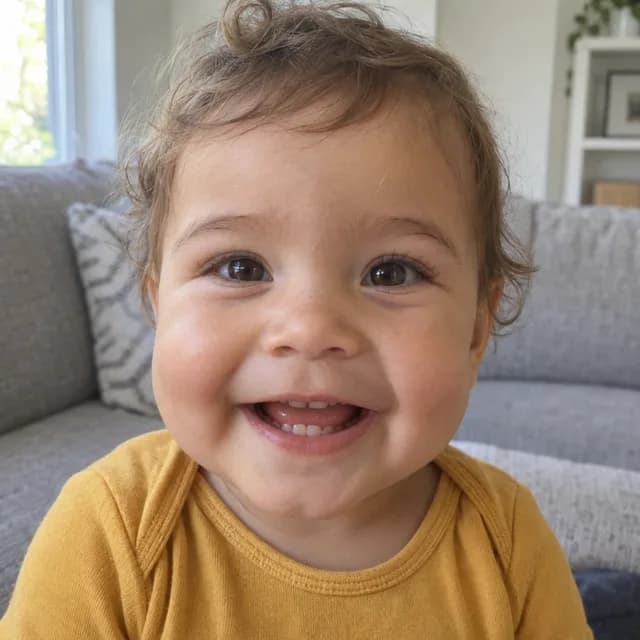
Shown here starring Remi, 2. Yours is painted with your own child’s face and name on every page, from $39 — and you see the pages before you pay.
The photo they uploaded

The character we drew
Written from this story — not a stock track with a name dropped in. Free with every book.
How the story begins
- 1This is Puddle. Puddle is scared of WATER. (Yes. A duck.)
- 2One toe, Puddle. Like THIS.
- 3Puddle tried. Good duck!
The rest of the story is in Your Child and the Duck Who Wouldn't Splash.
The words to the song
[Verse 1]
One toe, Puddle, like this — drip!
Two feet, Puddle, like this — splish!
Good duck, good duck, look at you!
A little bit of water and a little bit of you.

[Verse 2]
Sit down, Puddle, like this — SPLASH!
Now the pond, Puddle — don't dash!
Brave duck, brave duck, look at you!
Floating on the water — QUACK! — it's true!

[Chorus]
Splish, splash, splish, splash,
Puddle loves the water now!
Splish, splash, splish, splash,
show me, show me, show me how!

[Outro]
Pitter patter, here's the rain,
Puddle isn't scared again.
Wrap up warm and close your eyes —
goodnight, Puddle. Goodnight, Remi. Tomorrow: splash surprise!
If you would rather write about the feeling that happened in your house, on KindFable it goes: name and age, one photo, a tick box for consent, a few lines about your child, and one of nine art styles. You see the cover, painted, before you pay for anything — the softcover and hardcover prices sit on one page, and the hardcover adds the narrated audiobook, and every book includes its own song, free. Everything then lives in your dashboard: the page-flip reader, the audio studio, and a reorder button for when the grandparents ask.
Read the nine first. Then, on an ordinary calm morning, start with the photo.
For the stories that teach the other half of feelings — noticing someone else's — the best books about kindness for kids is the companion list.
Book covers are shown unaltered for identification, sourced from Open Library. Each cover remains the property of its publisher and illustrator. KindFable is not affiliated with any of the books recommended here.
If the feeling in question is a new baby arriving, a personalized big brother book gives the older child the hero's role instead of the helper's.