The best books about emotions for preschoolers give a feeling a name and a reason: The Day the Crayons Quit for naming, Don't Let the Pigeon Drive the Bus! for anger, Wemberly Worried for worry, The Snowy Day for sadness and Go Away, Big Green Monster! for calming down. Read them at calm moments, then talk about what the characters felt.
That last part matters more than which ten books you choose, and the research below is why. This list is for ages three to five. For under-threes, the shelf is different, and so is the advice: see books about feelings for toddlers.
Can books help children understand emotions?#
Yes, and the evidence is specific about how. A book about emotions for preschoolers is a story in which a character's feeling is shown clearly enough, and caused clearly enough, that a three-to-five-year-old can name it, explain it and compare it with their own. The book is the prompt. The talk it starts is where most of the learning happens.
The strongest summary is a 2025 narrative review in Frontiers in Psychology by Rotem Schapira and Ilaria Grazzani, which collected 15 intervention studies on shared book reading and social-emotional skills, ten of them in preschools. Two of the preschool results:
- Ornaghi and colleagues (2011), 70 children aged 35 to 57 months. After each story, the experimental group played language games and talked about thoughts and feelings. The review reports that this group "outperformed the control group on both language and emotion comprehension measures". The control group had no structured conversation.
- Grazzani and Ornaghi (2011), 100 children aged 3 to 5. Stories built around emotion words, followed by conversations about emotions, "significantly improved emotion comprehension, particularly among 4-year-old participants".
Why it is worth the effort at this age. In a study published in Psychological Science in 2001, Carroll Izard and colleagues followed 72 children from economically disadvantaged families from age five to age nine. Children who were better at recognizing and labeling emotions at five showed more positive social behavior and stronger academic competence at nine, even after the researchers controlled for verbal ability and temperament.
What the research does not say is that owning feelings books does anything by itself. In each reading study, the books came with an adult asking questions.
What should you ask while reading a feelings book?#
The parent handout Teaching Your Child to Identify and Express Emotions, from the Center on the Social and Emotional Foundations for Early Learning at Vanderbilt University, suggests four questions to ask about a character:
- "What is (the character) feeling right now?"
- "How do you know?"
- "Have you ever felt that way?"
- "What do you do when you feel that way?"
The second one does the most work with preschoolers, because it sends them back to the picture: the face, the fists, the color of the page. Asking questions and letting the child do most of the talking has a name, dialogic reading, and our guide to dialogic reading shows how to run it with any book on this list.
What emotions should preschoolers know?#
Happy, sad, angry and scared are where most children start. Between three and five, the vocabulary can widen to the feelings that cause most of the trouble: frustrated, worried, jealous, disappointed, lonely, embarrassed and proud.
The Vanderbilt handout puts it in one line: young children "get angry, sad, frustrated, nervous, happy, or embarrassed, but they often do not have the words to talk about how they are feeling." Without the words, the feeling comes out in the body instead.
Two more skills arrive in these years and change which books work:
- Feelings have causes. A four-year-old can learn not only that a character is angry but why. That "because" is the thing to look for on the page.
- Other people have feelings too. The American Academy of Pediatrics' page on emotional development in preschoolers describes children of this age as "especially sensitive to the feelings of others—adults and children alike."
Naming and managing feelings is what educators call social-emotional learning: CASEL's framework lists "identifying one's emotions" and "managing one's emotions" as core skills. Each of the social emotional books for preschoolers below works on one of the two.
The Day the Crayons Quit#
- Written by
- Drew Daywalt
- Illustrated by
- Oliver Jeffers
- First published
- 2013
- Ages
- 4–8
- Format
- Picture book
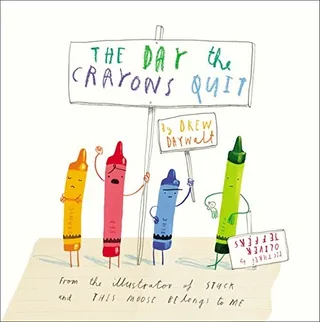
Drew Daywalt and Oliver Jeffers, 2013. Duncan opens his crayon box and finds letters instead. Red is exhausted, Beige is tired of coming second to Brown, and Yellow and Orange are furious with each other over which one is the real color of the sun.
This is the best naming book for this age, because every feeling comes with its reason written into the letter: envy, feeling left out, feeling used.
Reading it aloud: give each crayon a different voice and ask "why is he mad?" before you turn the page. Children often start answering for the next crayon before you read its letter.
Skip it if: your child is three. The letter format asks for more sitting than most three-year-olds bring.
Which feelings book fits your child right now?#
Start from what you see at home, not from the emotion's name.
| What you notice | What it usually means | Read this | Age |
|---|---|---|---|
| Can't say what is wrong, only that it is "bad" | Needs more words than happy, sad and mad | The Day the Crayons Quit | 4–8 |
| Screaming when the answer is no | Frustration, still hard to hold | Don't Let the Pigeon Drive the Bus! | 3–6 |
| Mean to the new baby, then sorry | Jealousy, with love underneath | Julius, Baby of the World | 4–7 |
| "What if…" at bedtime, every night | Worry that runs on its own | Wemberly Worried | 4–7 |
| Bluster before school or a new place | Fear dressed up as refusal | The Pigeon HAS to Go to School! | 3–5 |
| Scared of the dark or the closet | Fear of something imagined | There's a Nightmare in My Closet | 4–8 |
| Upset over something small that ended | Disappointment and sadness | The Snowy Day | 3–7 |
| Waiting, sad, and saying so | Sadness that needs company | Frog and Toad Are Friends | 4–8 |
| A feeling that seems to take over | Needs proof it can be made smaller | Go Away, Big Green Monster! | 2–5 |
If you buy one book from this list, make it Don't Let the Pigeon Drive the Bus! It is the only one here where your child gets to be the calm grown-up while someone else melts down.
What are the best books about anger for preschoolers?#
Anger at three to five is mostly frustration: the answer was no, the tower fell, the baby got the lap. These two books let a child watch that feeling from the outside.
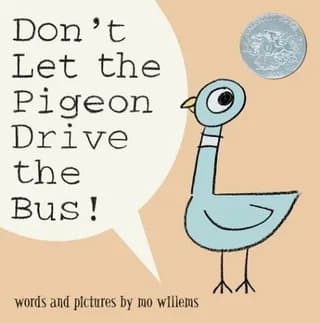
Don't Let the Pigeon Drive the Bus!#
- Written by
- Mo Willems
- First published
- 2003
- Ages
- 3–6
- Format
- Picture book
Mo Willems, 2003, and a Caldecott Honor book in 2004 according to the American Library Association's Caldecott list. The bus driver leaves and asks the reader one thing: don't let the pigeon drive the bus. The pigeon wheedles, bargains and finally has a full tantrum across a double page.
The trick is that the child has to say no. For once, they hold the line against a meltdown instead of having one.
Reading it aloud: leave real gaps after each of the pigeon's requests. Most preschoolers shout "NO!" without being asked, and the shout gets louder as the pigeon gets more upset.
Skip it if: you want the feeling to resolve. The pigeon simply moves on to wanting something else.
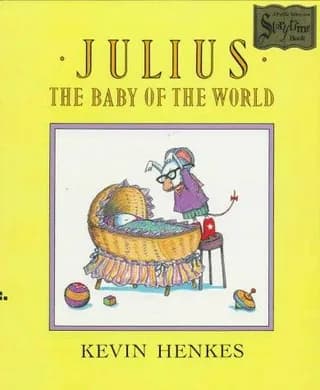
Julius, Baby of the World#
- Written by
- Kevin Henkes
- First published
- 1990
- Ages
- 4–7
- Format
- Picture book
Kevin Henkes, 1990. Lilly is sure her new brother is disgusting, says so at length, and is sent to the uncooperative chair for it more than once. Then a visiting cousin insults Julius, and Lilly turns on her instead.
It is the most honest jealousy book we know, because Lilly is never scolded into loving the baby. She gets there on her own, sideways, and the reader sees it happen.
Reading it aloud: the laugh is the release. A jealous preschooler often laughs hardest at Lilly's worst moments, a safe way to admit the feeling. Our new sibling book guide goes further.
Skip it if: there is no baby in the house. The book loses most of its point without one.
Which picture books help with worry and fear?#
Fear at this age is often about things that are not there. Zero to Three's page on childhood fears lists the typical ones of the preschool period, "of the dark, of strangers, of monsters, of going to the doctor, of dogs or other animals", and notes that "as children get older and can use more logical thinking skills, these fears can fade." These three cover worry, bluster and the dark.
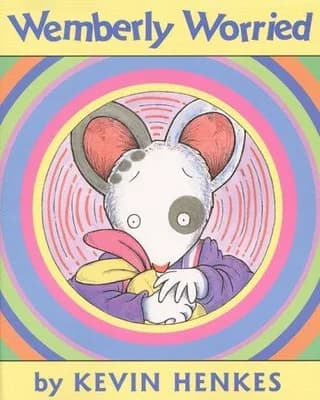
Wemberly Worried#
- Written by
- Kevin Henkes
- First published
- 2000
- Ages
- 4–7
- Format
- Picture book
Kevin Henkes, 2000. Wemberly worries about everything, big and small, holding on to her favorite toy the whole time, and then school starts. She meets a girl who worries too.
The book never argues her worries away. For a child who worries by temperament rather than once in a while, that honesty is the point: the worry stays, and she still has a good day.
Reading it aloud: resist adding "and there was nothing to worry about." Children who worry have stopped believing that sentence, and the book's own ending is stronger.
Skip it if: your child is not a worrier. The list of worries can plant new ones.
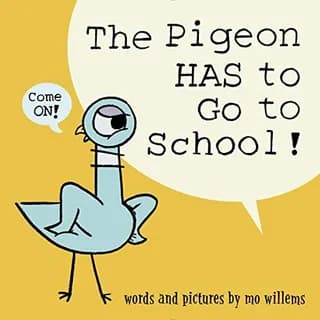
The Pigeon HAS to Go to School!#
- Written by
- Mo Willems
- First published
- 2019
- Ages
- 3–5
- Format
- Picture book
Mo Willems, 2019. The pigeon has a long list of reasons not to go to school, and nearly every one of them is a worry about something new, dressed up as a complaint.
This is the book for the child who does not look frightened, only difficult. The pigeon shows the worry underneath the refusal.
Reading it aloud: after each objection, ask "is he mad, or is he scared?" Most four-year-olds work out the answer before the pigeon admits it. Our list of books about starting kindergarten has more for this particular worry.
Skip it if: your child has not met the first pigeon book, which makes this one land.
There's a Nightmare in My Closet#
- Written by
- Mercer Mayer
- First published
- 1968
- Ages
- 4–8
- Format
- Picture book
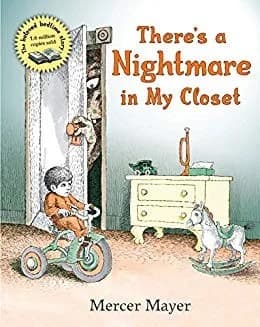
Mercer Mayer, 1968. A boy arms himself with a helmet and a toy gun, faces the nightmare that lives in his closet, and finds that it is crying. He tucks it into bed beside him.
It turns fear around: the scary thing turns out to be the scared one, and the child ends up looking after it. Our list of books like Where the Wild Things Are has more books built on this turn.
Reading it aloud: pause at the tears. Some children need a moment to realize the monster is now the one who is afraid.
Skip it if: you would rather not have a toy gun in a bedtime book. It is brief, but there.
Which books help a preschooler with sadness?#
Most preschool sadness is small and real: something ended, something was lost, someone did not come. These two books take small sadness seriously without making it bigger than it is. Neither is a book about death or serious loss. For those, The Rabbit Listened (Cori Doerrfeld, 2018) and a conversation with your pediatrician are better places to start.
The Snowy Day#
- Written by
- Ezra Jack Keats
- First published
- 1962
- Ages
- 3–7
- Format
- Board book and picture book
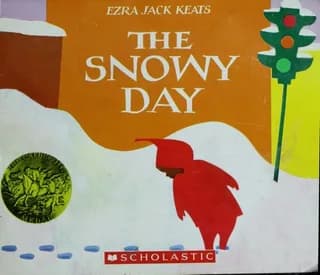
Ezra Jack Keats, 1962, and the Caldecott Medal winner for 1963. Peter spends a whole day in the snow and puts a snowball in his pocket to keep. At bedtime the pocket is empty, and the book says only: "He felt very sad."
It is the best book about small sadness ever written, because it gives the feeling one plain sentence and then moves on. The next morning there is new snow, and a friend to share it with.
Reading it aloud: stop after the empty pocket and let the silence sit for a moment. Preschoolers often ask where the snowball went, and that question leads straight into talking about things that end.
Skip it if: you want a problem solved. The sadness here is only felt, then outgrown.
Frog and Toad Are Friends#
- Written by
- Arnold Lobel
- First published
- 1970
- Ages
- 4–8
- Format
- Beginning reader, 5 stories
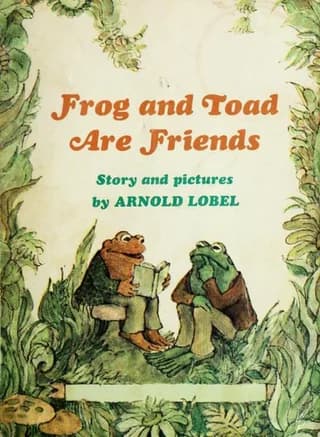
Arnold Lobel, 1970, and a Caldecott Honor book in 1971. Read the story called "The Letter". Toad sits on his porch every day waiting for mail that never comes, and tells Frog, "This is my sad time of day." Frog goes home and writes him a letter, then gives it to a snail to deliver.
Frog does not try to fix the sadness quickly. He waits with Toad, for days, and waiting together is what helps.
Reading it aloud: read just this one story, not the whole book. Children often want to write a letter afterwards, and it is worth letting them.
Skip it if: your child needs bright pictures. The quiet brown illustrations lose some children before the snail arrives.
Which books teach a preschooler to calm a big feeling?#
Harvard's Center on the Developing Child says of self-regulation and the skills that support it, in its InBrief on executive function: "Children aren't born with these skills—they are born with the potential to develop them." Books about big feelings cannot teach calming down. What they can do is show that a feeling has a shape, and that it gets smaller.
Go Away, Big Green Monster!#
- Written by
- Ed Emberley
- First published
- 1992
- Ages
- 2–5
- Format
- Die-cut picture book
Ed Emberley, 1992. Die-cut pages build a monster one feature at a time. Then the child sends it away, one piece at a time, until nothing is left.
It is the most literal picture on this list of a feeling getting smaller, and the child is in charge of the shrinking.
Reading it aloud: give the "go away" lines to your child and let them say them firmly. Three-year-olds often ask to build the monster again straight away, just to send it off a second time.
Skip it if: your child is five and wants a plot. There is none.
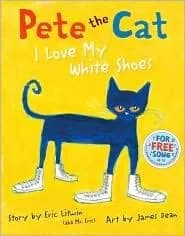
Pete the Cat: I Love My White Shoes#
- Written by
- Eric Litwin
- Illustrated by
- James Dean
- First published
- 2010
- Ages
- 2–6
- Format
- Picture book, with a song
Eric Litwin and James Dean, 2010. Pete steps in strawberries, blueberries and mud, and his shoes change color each time. After each one, the book asks, "Did Pete cry? Goodness, no!" and he keeps singing.
Here is where we disagree with the lists that recommend it. This is a good book about flexibility and a poor book about feelings. Its refrain treats not crying as the success. A four-year-old who cried at breakfast hears that as a rule they broke, not a skill they could learn.
Reading it aloud: keep the song, and change the question. Ask "would you cry?" and accept any answer. The best books for 4-year-olds has more for children who love a sing-along.
Skip it if: your child is sensitive about crying. Go Away, Big Green Monster! puts them in control of a feeling instead of asking them to hide it.
What to read next#
- The wider shelf, by the age each book lands at → the best children's books of all time.
- Feelings are one half; noticing someone else's is the other → books about kindness for kids.
- Why some stories last and others do not → what makes a good children's story.
When does a personalized children's book with photo help more?#
A quick recap of who each book suits:
- Needs more feeling words → The Day the Crayons Quit.
- Anger and "no" → Don't Let the Pigeon Drive the Bus!, and Julius if there is a baby.
- Worry and fear → Wemberly Worried for the born worrier, the school pigeon for the bluster, There's a Nightmare in My Closet for the dark.
- Small sadness → The Snowy Day, then Frog and Toad's "The Letter".
- A feeling that takes over → Go Away, Big Green Monster!
All ten show a character's own feeling. None shows the feeling that puzzles a preschooler most: a grown-up's. A four-year-old notices when a parent comes home quiet and tired and does not laugh at the usual joke. No publisher can print a book about your kitchen on that evening, and what your child might do about it.
A personalized children's book with photo can be that book, because the child noticing the feeling on the page is your child. That turns "how does Toad feel?" into "what did you do when Daddy was tired?", the kind of question the reading studies found worth asking.
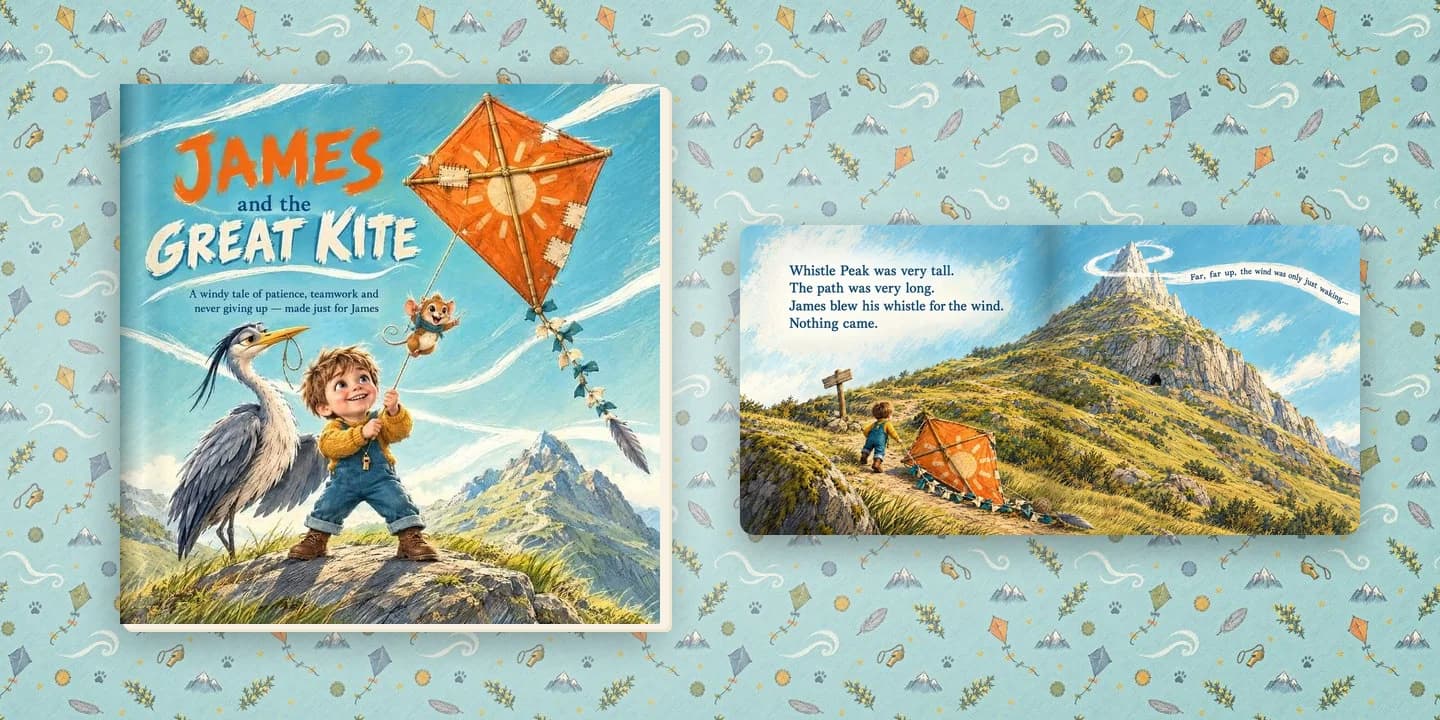
The book in our shop that does this is our personalized fathers day book, Your Child and Daddy's Lost Laugh, for ages 3 to 6. The sample shown stars Owen, who is five, and his Dad:
"Every evening, Owen did his welcome dance, and every evening Dad laughed. But tonight Dad came home, and sat down, and yawned the biggest yawn in the world. He did not laugh. Not even a little. 'Dad's laugh,' said Owen, 'is MISSING.'"
So Owen and Mister Toes, a very bossy sock puppet, draw a Laugh Map: a funny face, a cardboard-box show, the biggest pillow fort ever, and one last secret at level four. It is a funny book, not one about a parent's illness: noticing that someone you love is low, and doing something kind about it. When you order it, you add your child's photo and name, and every page is painted with your child instead of Owen.
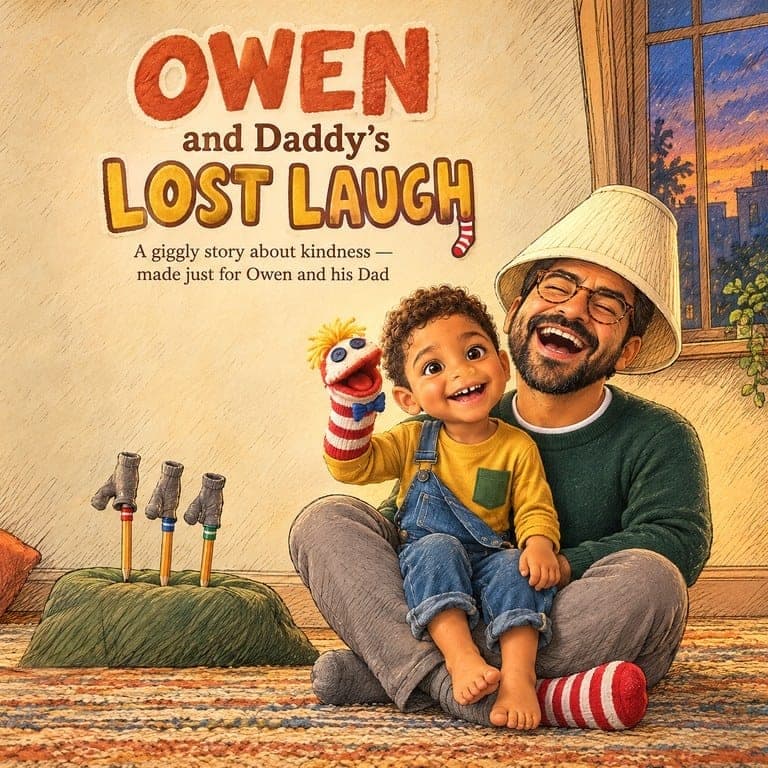

A book from our shop · ages 3–6
Your Child and Daddy's Lost Laugh
Dad comes home too tired to laugh at the welcome dance — so your child and Mister Toes, a very bossy sock puppet, draw a Laugh Map: a funny face, a cardboard-box show, the biggest pillow fort ever… and one last secret, level FOUR.
Shown here starring Owen, 5. Yours is painted with your own child’s face and name on every page, from $39 — and you see the pages before you pay.
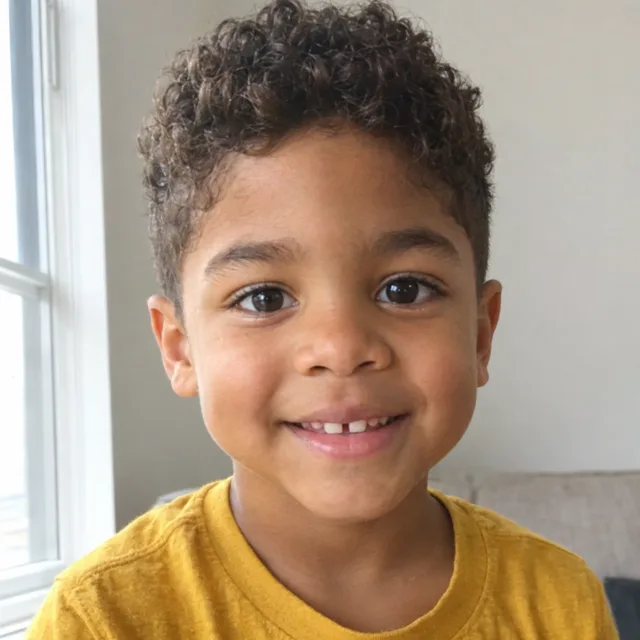
The photo they uploaded
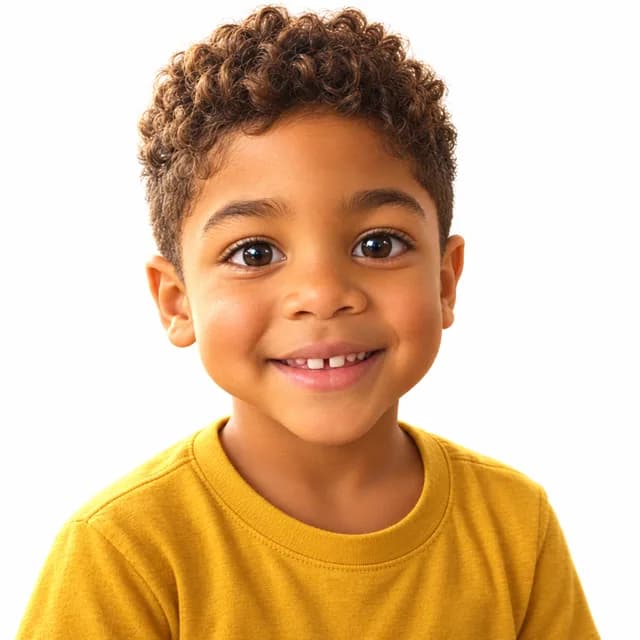
The character we drew
Written from this story — not a stock track with a name dropped in. Free with every book.
How the story begins
- 1Every evening, Owen did his welcome dance, and every evening Dad laughed. But tonight Dad came home, and sat down, and yawned the biggest yawn in the world. He did not laugh. Not even a little. “Dad's laugh,” said Owen, “is MISSING.”
- 2A missing laugh needs a map. Owen drew five ways to find one. Mister Toes had opinions about all of them. Funny face FIRST! “Funny face first,” agreed Owen. “Then the show. Then the fort. Then... we'll see.”
- 3First, practice. Owen pulled his cheeks. He crossed his eyes. He gave himself a toothpaste moustache. Mister Toes pulled the same face. The mirror nearly laughed. “Ready,” said Owen.
The rest of the story is in Your Child and Daddy's Lost Laugh.
The words to the song
[Verse 1]
Dad came home and sat right down and yawned a yawn so wide,
He didn't laugh at the welcome dance — the laugh had gone to hide.
So Owen grabbed a sock and said, “Now Mister Toes, let's go —
A missing laugh needs a map, and we've got five plans in a row!”

[Chorus]
Level one — one corner up! Level two — a smile!
Level three — a great big HA! Now hold on for a while...
Level four is the tickle spot, and once you've found the door,
You'll never lose a laugh again — it's right behind yours!

[Verse 2]
A toothpaste moustache, crossy eyes — one corner of a grin.
A cardboard show, the curtain fell — “Heh,” said Dad. That's a win!
The biggest fort of pillows, Dad crawled inside — too tall —
His head came through the roof in a lampshade. “HA!” That's three! That's all?

[Verse 3]
Mister Toes knew one more thing, he whispered it in the dark:
“Laughs hide in the ticklish spot.” And Owen's fingers found the mark.
The fort came down, the socks flew up, and Dad went HA HA HA —
And Owen laughed so hard he fell right off his dad's big arm. Ta-da!

[Chorus]
Level one — one corner up! Level two — a smile!
Level three — a great big HA! Now hold on for a while...
Level four is the tickle spot, and once you've found the door,
You'll never lose a laugh again — it's right behind yours!

[Outro]
“Dad, where was your laugh?” said Owen, tucked in for the night.
“Right behind yours,” said Dad. “It always is.” Goodnight.
Other feelings in our shop: for a child who needs the brave version, Your Child and the Midnight Apple turns a scary night into a shared toffee apple. For under-threes, Your Child and the Duck Who Wouldn't Splash lets a toddler coach a frightened duck. Or browse every finished book.
If the feeling you want to write about happened in your own house, KindFable lets you write it yourself: your child's name and age, one photo, a consent tick box, a few lines about what happened, and one of nine art styles. You see the painted cover before you pay anything. The softcover and hardcover prices are on one page. The hardcover includes the narrated audiobook, and every book comes with its own song. Your dashboard keeps the page-flip reader, the audio studio and a reorder button.
Read the ten first, and talk about them. Then, on a calm day, start with the photo.
Book covers are shown unaltered for identification, sourced from Open Library. Each cover remains the property of its publisher and illustrator. KindFable is not affiliated with any of the books recommended here.