There is a reason this search is unusually hard to answer well. People arrive at it wanting two opposite things.
Some read The Giving Tree to a child, felt the last page land, and want more of that. Others finished it uneasy and cannot quite say why — and Google's own suggestions know it, because type the title into the box and it offers "is the giving tree a bad book" as readily as anything else.
Both are legitimate, and they need different books. So this list is split on the argument rather than pretending it is not there.
The argument, stated fairly#
- Written by
- Shel Silverstein
- First published
- 1964
- Ages
- 4–10
- Format
- Picture book
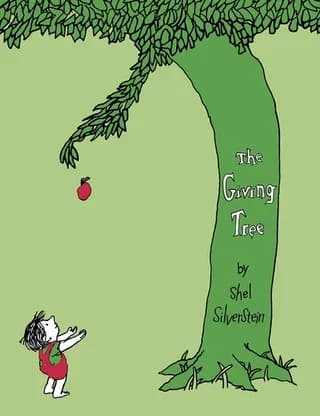
Shel Silverstein published it in 1964. A tree loves a boy. He takes her apples, then her branches, then her trunk, and at the end he is an old man and she is a stump, and she offers him the last thing she has, which is somewhere to sit.
The generous reading: this is what love looks like when it is not counting. The tree is a parent, or grace, or the earth. She is happy. The book says so, repeatedly, and it is not being ironic.
The uneasy reading: the boy never says thank you. He returns only when he wants something. The tree is described in the feminine and the taker in the masculine, which makes the book, for many readers, a story about a woman erased by someone else's appetite. And a boy consuming a tree piece by piece has an obvious second meaning for anyone who has thought about what people take from the natural world.
Where I land, since this list depends on it: the book is not badly made and it is not secretly wicked. It is genuinely ambiguous, and it is ambiguous on purpose. Silverstein never once tells you what to think of the tree — no narrator steps in, no moral is offered — and that refusal is the reason people are still arguing sixty years later, and the reason it is still in print. A book that resolved itself would have been forgotten.
⚠️ It has also, at least once, been treated as unsuitable: the national literacy nonprofit Reading Partners lists it among children's books you didn't know were banned, reporting that a public library in Colorado removed it in 1988 for being sexist. The American Library Association keeps its own running list of frequently challenged children's books for anyone who wants the wider context.
None of that tells you what to read next. What tells you is which of the two readings is yours.
If you loved it for the unconditional love#
These are the closest in feeling. All of them are about a love with no ceiling.
The Runaway Bunny#
- Written by
- Margaret Wise Brown
- Illustrated by
- Clement Hurd
- First published
- 1942
- Ages
- 2–6
- Format
- Picture book
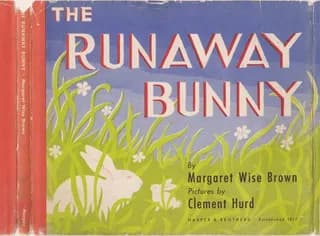
A small rabbit announces he is running away. His mother replies that she will become whatever she needs to — a fisherman, a mountain climber, the wind — to be where he is. He keeps inventing escapes; she keeps answering.
Margaret Wise Brown wrote it in 1942, two years before Goodnight Moon, and it is the purest version of the idea The Giving Tree is reaching for: a love that does not negotiate. The crucial difference is that nothing is consumed. The mother is not diminished by any of it; she simply follows.
It is also, quietly, the one that reads differently to adults. Children hear a game. Parents hear something closer to a vow.
Read it if you wanted the unconditional part and none of the loss.
Love You Forever#
- Written by
- Robert Munsch
- Illustrated by
- Sheila McGraw
- First published
- 1986
- Ages
- 3–8
- Format
- Picture book
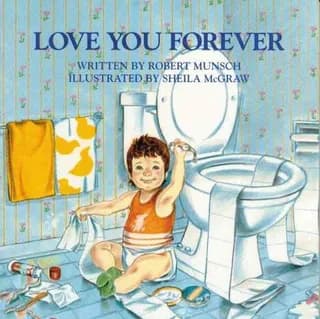
A mother rocks her baby and sings a song. She sings it to a toddler, a nine-year-old, a teenager. Eventually she is old, and her grown son picks her up and sings it back, and then sings it to his own daughter.
This is the book most like The Giving Tree in the shape of its emotion — and, fairly warned, in the size of the argument around it. Robert Munsch wrote the song after two stillborn babies, which explains a great deal, and the book is beloved to the point of being a standard gift. It also makes a substantial number of adults deeply uncomfortable, because the mother expresses her love by driving across town at night with a ladder and climbing through her adult son's bedroom window.
Read it if The Giving Tree worked on you. Read it yourself first if it did not.
Guess How Much I Love You#
- Written by
- Sam McBratney
- Illustrated by
- Anita Jeram
- First published
- 1994
- Ages
- 2–6
- Format
- Picture book
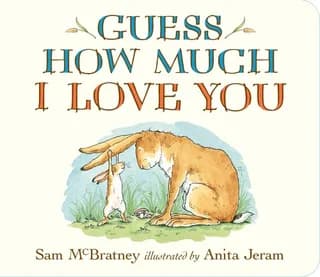
A small hare tries to tell a big hare how much he loves him, using his arms, and keeps losing the competition because the big hare's arms are longer.
The gentlest book here and the one with no shadow in it at all. Nobody gives anything up, nobody is diminished, and the only tension is a child trying to win an argument he cannot win and being loved for trying. Anita Jeram's soft-pencil hares are half the reason it works.
Read it if you want the feeling at bedtime with nothing to explain afterwards.
The Wonderful Things You Will Be#
- Written by
- Emily Winfield Martin
- First published
- 2015
- Ages
- 3–8
- Format
- Picture book
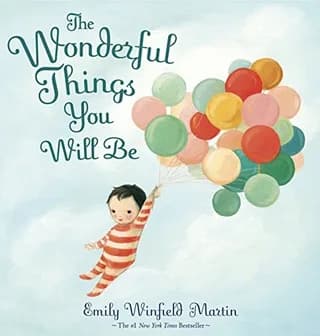
A parent looks at a child and wonders aloud who they will turn out to be — brave, kind, strange, entirely themselves — and concludes that whoever it is will be loved.
Emily Winfield Martin's book is the one people give at christenings and adoptions and first birthdays, and it does the "and the tree was happy" work with the sadness removed. It is also the closest thing on this list to a book you can inscribe.
Read it if the gift is for a very small child, or for the parent.
If it made you uneasy — giving that goes both ways#
If the one-way relationship is the part you cannot unsee, the answer is not a gentler book about sacrifice. It is a book where generosity comes back, or where it is aimed at the world instead of at one person who never says thank you.
Stone Soup#
- Written by
- Marcia Brown
- First published
- 1947
- Ages
- 4–8
- Format
- Picture book
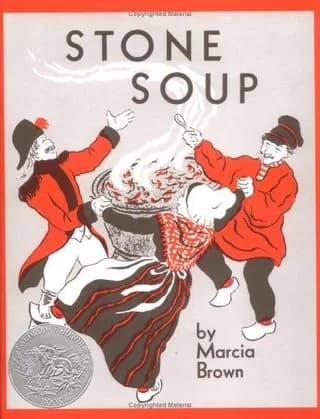
Three hungry soldiers arrive at a village where everyone has hidden their food. They announce they will make soup from a stone, and by asking for one small improvement at a time — a carrot, an onion, some barley — they get the whole village to feed itself.
Marcia Brown's 1947 telling is the practical answer to The Giving Tree, and the best book here for a preschooler, because the giving is physically visible. Abstract generosity does not land at four. A pot on a fire that everyone puts one thing into does.
Read it if you want the lesson to be legible to a small child, and mutual.
Last Stop on Market Street#
- Written by
- Matt de la Peña
- Illustrated by
- Christian Robinson
- First published
- 2015
- Ages
- 4–8
- Format
- Picture book
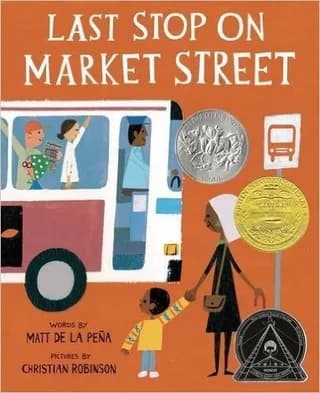
CJ and his grandmother ride the bus across town after church. He asks why they don't have a car, why he doesn't have what other children have — and she answers each complaint by showing him something worth having instead. The last stop turns out to be a soup kitchen, where they are volunteers.
This is the most complete rebuttal on this list. The giving is real and costly, it is chosen rather than extracted, and it goes outward to strangers. It also treats a child as capable of understanding something difficult, which The Giving Tree arguably does not.
Read it if you want a book about giving that a seven-year-old can argue with you about.
Miss Rumphius#
- Written by
- Barbara Cooney
- First published
- 1982
- Ages
- 4–9
- Format
- Picture book
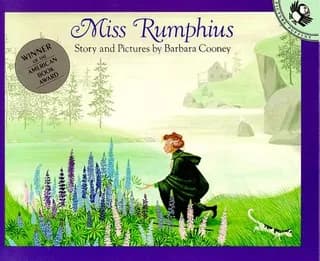
Alice's grandfather tells her she must do a third thing besides travelling and living by the sea: she must make the world more beautiful. She spends a long life failing to work out how, and eventually scatters lupine seeds across the coast of Maine until it is blue.
Barbara Cooney wrote and illustrated it, and its jacket carries the American Book Award seal. It is the deep answer to The Giving Tree, and the answer is a redirection: the giving is not poured into one taker, it is poured into the world, and Miss Rumphius is not diminished by it. She is the happiest person in this article.
Read it if the thing that troubled you was where the tree's giving went.
Each Kindness#
- Written by
- Jacqueline Woodson
- Illustrated by
- E. B. Lewis
- First published
- 2012
- Ages
- 6–10
- Format
- Picture book
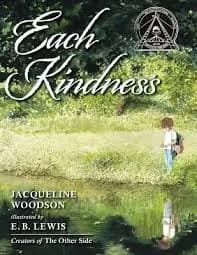
A new girl arrives at school in worn clothes and tries to be friends. Chloe refuses her, over and over, in small ordinary ways. Then the new girl moves away, and the chance is simply gone.
Jacqueline Woodson and E. B. Lewis wrote the rarest thing in children's publishing: a picture book with an unhappy ending and no redemption scene. The kindness is not performed and there is no apology, because there is nobody left to apologise to.
⚠️ It is the hardest book on this list and it is for older children — six and up, and better at seven or eight. It is also the one most likely to change a child's behaviour.
Read it if your child is old enough to sit with something unresolved.
The Invisible Boy#
- Written by
- Trudy Ludwig
- Illustrated by
- Patrice Barton
- First published
- 2013
- Ages
- 5–9
- Format
- Picture book
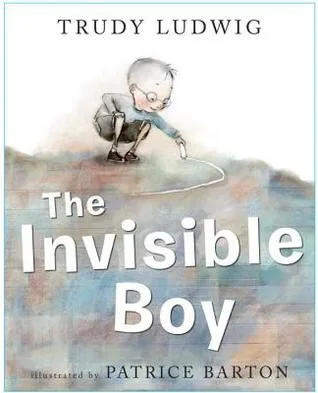
Brian is never picked, never invited, and is drawn in grey while everyone around him is in colour. A new boy is kind to him, and Brian gains colour a little at a time across the pages.
Patrice Barton's colour device is the whole book and children notice it themselves without being told, which is why it works where an explaining book would not. It is the constructive companion to Each Kindness — the same subject, with the repair included.
Read it if Each Kindness is too much, or you want both.
If what you wanted was the ache of a child growing up#
The other thing The Giving Tree does is time. The boy is a boy, then a young man, then old, in the space of a short book, and that is genuinely why some adults cry at it.
The Kissing Hand#
- Written by
- Audrey Penn
- Illustrated by
- Ruth E. Harper and Nancy M. Leak
- First published
- 1993
- Ages
- 3–7
- Format
- Picture book
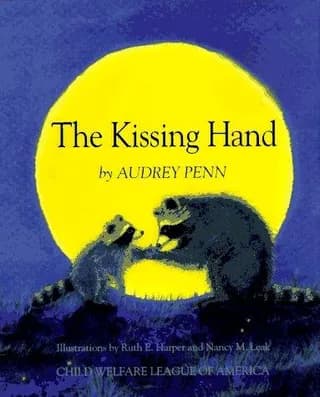
Chester Raccoon does not want to go to school. His mother kisses his palm so he can press it to his cheek when he needs her.
It is a separation book rather than a whole-life book, but it is the same nerve: the child goes, the parent stays, and something has to be given for the crossing. Unlike the tree, what is given costs nothing and does not run out — which is the point, and is why this is the book handed out on first days of school across the English-speaking world.
Read it if the leaving is the part that got you, and there is a real leaving coming.
The Rabbit Listened#
- Written by
- Cori Doerrfeld
- First published
- 2018
- Ages
- 3–8
- Format
- Picture book
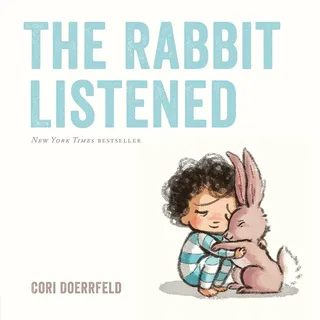
Taylor builds something and it falls down. Each animal arrives with advice — shout about it, laugh about it, knock something else down — and Taylor wants none of it. The rabbit comes and says nothing at all, and stays.
Cori Doerrfeld's book is the shortest and it is on this list for one reason: it is a book about giving in which the thing given is attention, not substance. If The Giving Tree troubled you because love is depicted as things handed over until they run out, this is the correction, and a four-year-old gets it instantly.
Read it if you want the one book here that says love is not a resource you can run out of.
Which one, for you#
| What you wanted from The Giving Tree | Start with | Age |
|---|---|---|
| The love with no ceiling | The Runaway Bunny, Guess How Much I Love You | 2–6 |
| The whole-life sweep, and you were fine with it | Love You Forever | 3–8 |
| Something to inscribe and give | The Wonderful Things You Will Be | 3–8 |
| Giving a small child can actually see | Stone Soup | 4–8 |
| Giving that is chosen, costly and mutual | Last Stop on Market Street | 4–8 |
| Giving aimed at the world, not at one taker | Miss Rumphius | 4–9 |
| The ache of the leaving | The Kissing Hand | 3–7 |
| Proof that love is not a thing that runs out | The Rabbit Listened | 3–8 |
| A child old enough for something unresolved | Each Kindness, then The Invisible Boy | 6–10 |
What to read next#
- The best children's books of all time — the wider list this one sits inside.
- Books like Guess How Much I Love You — if the gentlest entry above was the one that landed.
- Books about kindness for kids — the whole shelf that Each Kindness and The Invisible Boy belong to.
- Books about feelings for toddlers — for a younger child than most of this list.
- The best books for 4 year olds — if you are buying for the age where Stone Soup is the right answer.
Why a personalized children's book with photo answers this differently#
Every book above is somebody else's child. That is fine — it is how reading works — but it is worth noticing what The Giving Tree is actually doing to an adult reader, which is making them think about a specific person: their own child, at the age they are now, and at the ages they will be.
The educator Rudine Sims Bishop described children's books as mirrors, windows and sliding glass doors — a mirror being the book in which a child sees themselves. A personalized children's book with photo is the most literal mirror there is: it puts that specific child on the page instead of a stand-in. You add one photo and a few sentences about something true — the thing they always ask for, the walk you always take — and the book is written and illustrated around it, with them in it.
Why it lands differently: It answers the ache differently from any book on this list. The Giving Tree makes you feel the passing of time in the abstract. A book made now, about the child as they are now, is the version you can put on a shelf and open in a decade — which is also, in our experience, why grandparents order them. A personalized book for grandchild built from one real afternoon is a strange and durable thing to be given.
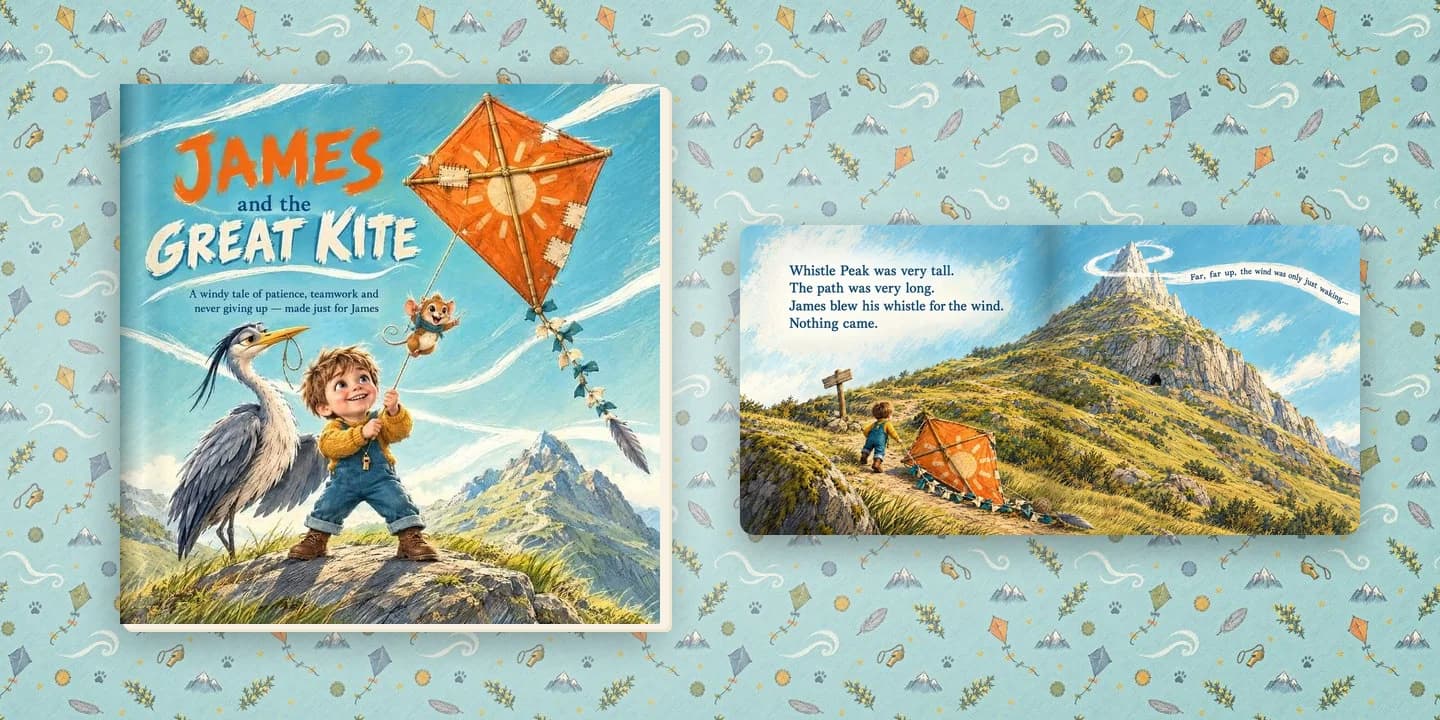
From our shop: If the uneasy reading was yours — giving that only goes one way — the book from our shop we would put beside it is Your Child and the Great Kite, because its giving goes round in a circle. It is a finished story: the sample shown stars James, who is six, and when you order it you add your own child's photo and name, and every page is painted with your child instead.
"James found the Great Kite at the back of the shed. It was old. It was torn. It was bigger than James." He carries it up Whistle Peak, where the wind "EATS kites", with two friends who want opposite things: Pip, a mouse tangled in the string who squeaks "Go go go!", and Marlow, a heron standing in a pond who says "Wait... for... the wind." Its lesson is patience and teamwork — "not yet" is not "never" — the kind of giving where everyone does their part.
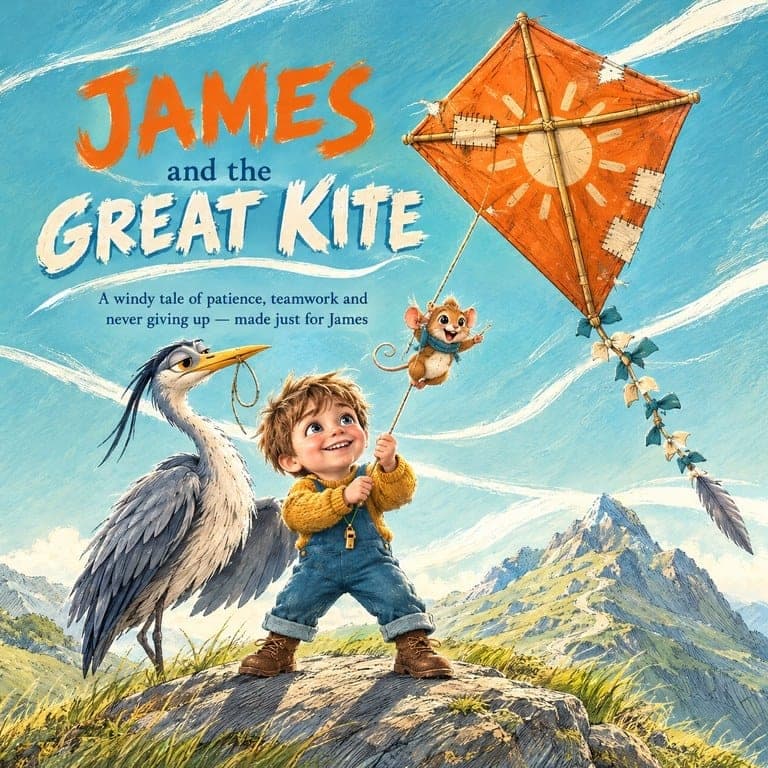

A book from our shop · ages 3–7
Your Child and the Great Kite
An old torn kite, a mountain whose wind "eats kites", a mouse who wants to go-go-go and a heron who says wait. Three tries, three tumbles, three "Not yet"s — until nobody runs, everyone counts the wind's breaths, and the kite flies higher than any kite ever has.
Shown here starring James, 6. Yours is painted with your own child’s face and name on every page, from $39 — and you see the pages before you pay.

The photo they uploaded

The character we drew
Written from this story — not a stock track with a name dropped in. Free with every book.
How the story begins
- 1James found the Great Kite at the back of the shed. It was old. It was torn. It was bigger than James. “Nobody has ever flown a kite from Whistle Peak,” he said. “The wind up there EATS kites.” James smiled. “Let's see.”
- 2Whistle Peak was very tall. The path was very long. James blew his whistle for the wind. Nothing came. Far, far up, the wind was only just waking...
- 3“Go go go!” squeaked Pip, who was tangled in the string. “Go go GO!” “Wait,” said Marlow, who was standing in a pond. “Wait... for... the wind.”
The rest of the story is in Your Child and the Great Kite.
The words to the song
[Verse 1]
An old paper kite at the back of the shed,
“The wind up there eats them,” everybody said.
But James took the string and he looked at the sky —
“Let's see,” said James. “Let's see if it flies.”

[Chorus]
In... and out. In... and out.
That's what the wind is all about.
Don't run, don't rush, don't quit, don't cry —
One breath at a time, and the kite will fly!

[Verse 2]
A mouse said “Go go go!” and he ran through the mud,
A heron said “Wait...” standing still in the flood.
The kite went up — then SNAP! — and down,
“I quit!” squeaked the mouse. “Not yet,” said James, no frown.

[Verse 3]
They patched it and knotted it, feather for a tail,
They hid from the rain and they didn't wail.
The wind was so big it took James for a ride —
Mouse grabbed heron, heron grabbed boy, all side by side!

[Chorus]
In... and out. In... and out.
Nobody ran and nobody shouted.
“ONE... TWO... THREE!” — up, up, so high —
One breath at a time, and the kite will fly!

[Outro]
The sun went down and they wound up the string,
Tomorrow they'll fly it higher than anything.
Patched and proud on the wall it will climb —
Not yet... not ever... one breath at a time.
A child who likes the eager-friend, careful-friend pairing of Pip and Marlow will probably like Gerald and Piggie too; our list of books like Elephant & Piggie starts there and climbs toward first chapter books.
You see your child's painted pages before paying for anything: write a story of your own instead, or read how it works and what it costs first.
Book covers are shown unaltered for identification, sourced from Open Library. Each cover remains the property of its publisher and illustrator. KindFable is not affiliated with any of the books recommended here.