A children's book generator turns a photo and a few words into a complete illustrated book starring your child. The question every parent asks first is how much they have to come up with themselves. The answer is: far less than you think.
There are two ways in. You can pick a finished story from our shop and add your child's photo and name — nothing to write at all. Or you can type one honest line about your child on the create page and have a whole new story built around it. This article shows a finished shop book, then explains the one-line route.
Do I need a story before I start?#
No. That is the fear worth putting down first, because it stops more parents than the price does.
If you do not want to write anything, you do not have to. Every book in the shop is a complete story with a beginning, a setback and an ending already in it. The sample shown stars a girl called Maya; when you personalize it, every page is painted with your child instead, and your child's name is in the words.
If you would rather tell your own story, you are still not being asked to write. You are being asked to notice. A morning your daughter spent digging through a toy box, the way your son goes quiet before he is brave, the fact that she names every stone she picks up — that is the raw material, and you already have it.
What does a finished book look like?#
This is Maya and Auntie's Garden Party, a finished story in our shop for ages 3 to 6. It opens like this:
Every Saturday, Maya went to Auntie Jo's garden. It was not tidy. It was a jungle, and it was wonderful. Auntie Jo put one striped seed in Maya's hand. "When this is taller than me," said Auntie Jo, "we'll throw a GARDEN PARTY."
One striped seed, ten Saturdays and one very impatient frog called Fig, who keeps asking whether it is party time yet. The book is about patience — everything big starts small, and the waiting is the growing. Auntie is in it too, which is why it works as a present from an aunt.
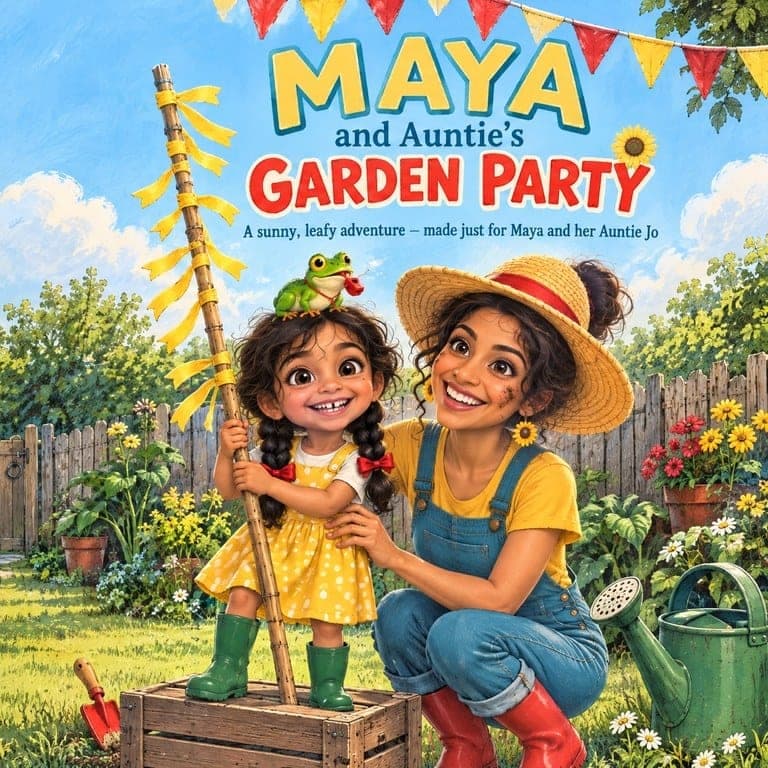

A book from our shop · ages 3–6
Your Child and Auntie's Garden Party
One striped seed, ten Saturdays in Auntie's wild garden and one very impatient frog — until the sunflower is a whole head taller than Auntie, and the hats of Maple Street come over the hedge for the GARDEN PARTY.
Shown here starring Maya, 5. Yours is painted with your own child’s face and name on every page, from $39 — and you see the pages before you pay.
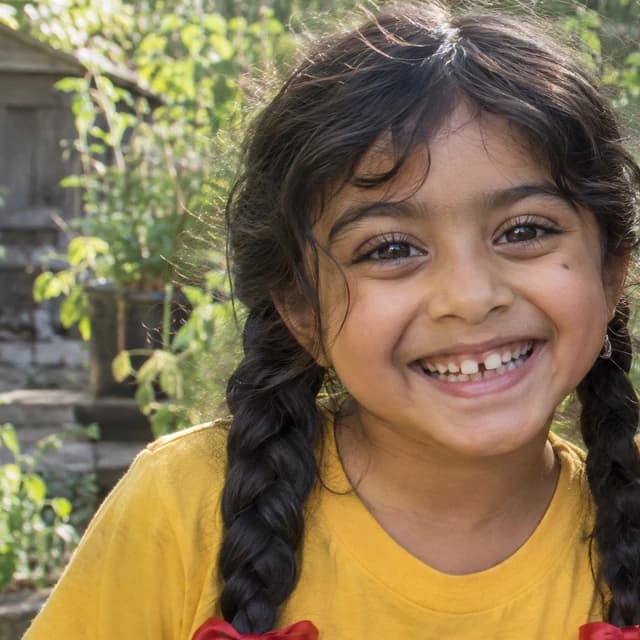
The photo they uploaded
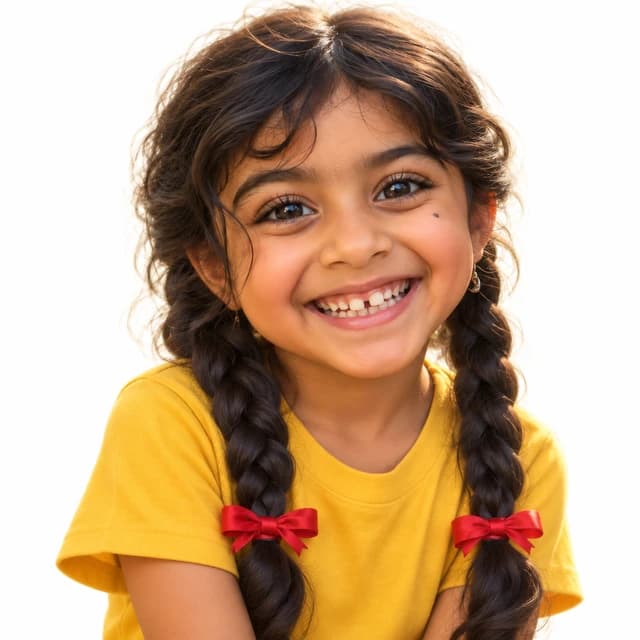
The character we drew
Written from this story — not a stock track with a name dropped in. Free with every book.
How the story begins
- 1Every Saturday, Maya went to Auntie Jo's garden. It was not tidy. It was a jungle, and it was wonderful. Auntie Jo put one striped seed in Maya's hand. “When this is taller than me,” said Auntie Jo, “we'll throw a GARDEN PARTY.” Party time? Fig hopped out of the watering can. “Not yet,” said Maya.
- 2Maya dug the hole. Fig helped, by sitting in it. Seed in. Soil on. One whole can of water. Maya tied the first ribbon on the cane, right at the bottom. Nothing yet.
- 3Saturday. A sprout! Two leaves, like a tiny green butterfly. Maya and Auntie Jo lay on their tummies and looked at it for a long time. “Everything big,” said Auntie Jo, “starts small.” Ribbon two.
The rest of the story is in Your Child and Auntie's Garden Party.
The words to the song
[Verse 1]
Every Saturday I go to Auntie Jo's,
Where the garden is a jungle and nobody mows.
She put a striped seed in my hand and said to me:
“When it's taller than your Auntie — a party there will be!”

[Chorus]
Knee-high, waist-high, nose to nose and then —
Tie another ribbon and we'll measure it again.
A frog keeps asking, “Party time?” — not yet, not yet, not yet!
'Cause the waiting is the growing, and the best is what you get.

[Verse 2]
Two leaves like a butterfly, a sprout as small as small,
Auntie Jo says everything that's big begins that small.
Flags along a string and a scarecrow in a hat,
Twelve jars painted blue and yellow — Fig painted himself. That's that.

[Verse 3]
Twelve invitations, one sunflower on each,
A mailbox for the whole street, every house within our reach.
A windy day, a scarf, a bud — a green fist holding tight,
Then OPEN! Like a plate of sun, we looked it in the eye.

[Chorus]
Knee-high, waist-high, nose to nose and then —
Tie another ribbon and we'll measure it again.
A frog keeps asking, “Party time?” — not yet, not yet, not yet!
'Cause the waiting is the growing, and the best is what you get.

[Outro]
Auntie on her tiptoes, and it's a head above her hat,
The hats came over the hedge — and Fig said, “PARTY TIME!” at that.
Lanterns lit, and flags, and seeds for next year in my hand:
Same garden, bigger sunflower — that's the plan.
What makes a good line to type?#
If you take the create-page route, the useful question is which few words to type.
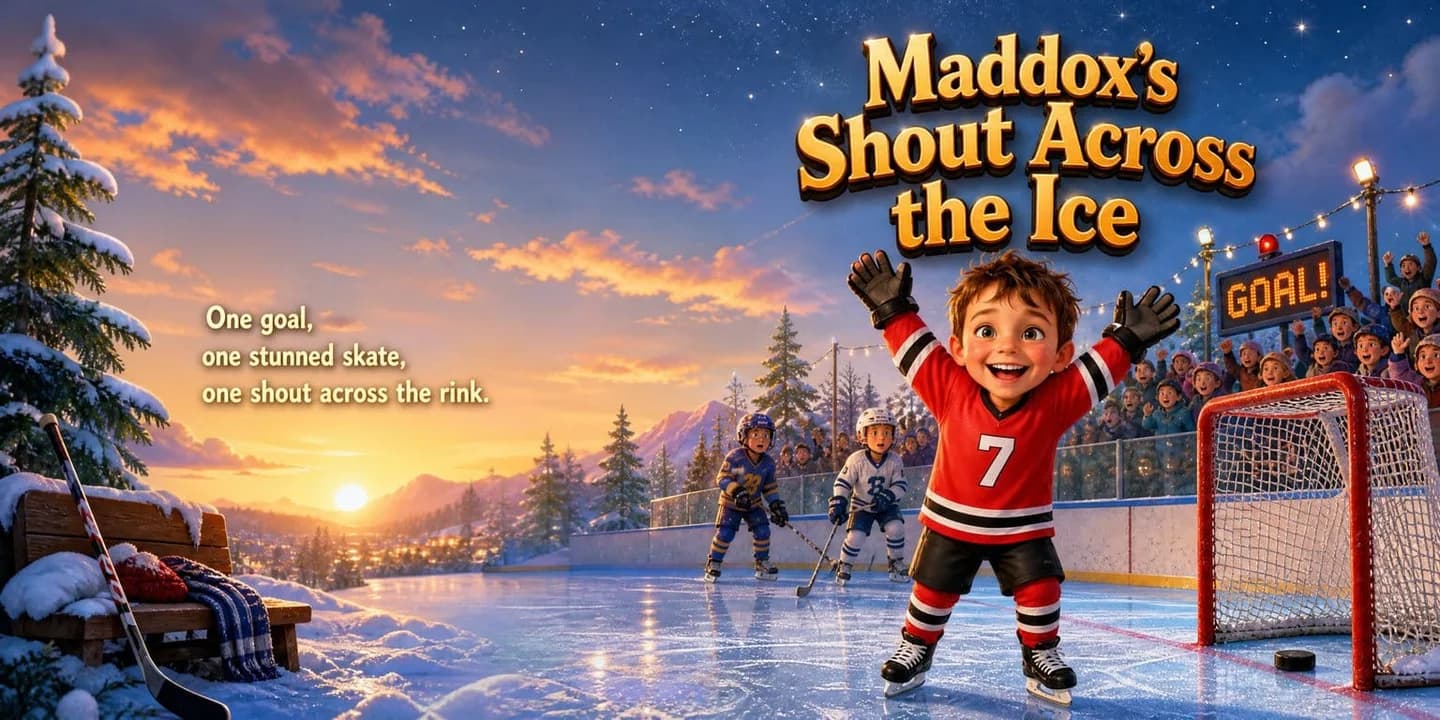
Write the thing you would tell a friend on the phone. Not "she had a lovely day" — the odd specific bit. The boy who didn't celebrate his first goal and stood completely still for ten seconds before it sank in. A generator can invent a rocket ship. It cannot invent the ten seconds your child stood completely still.
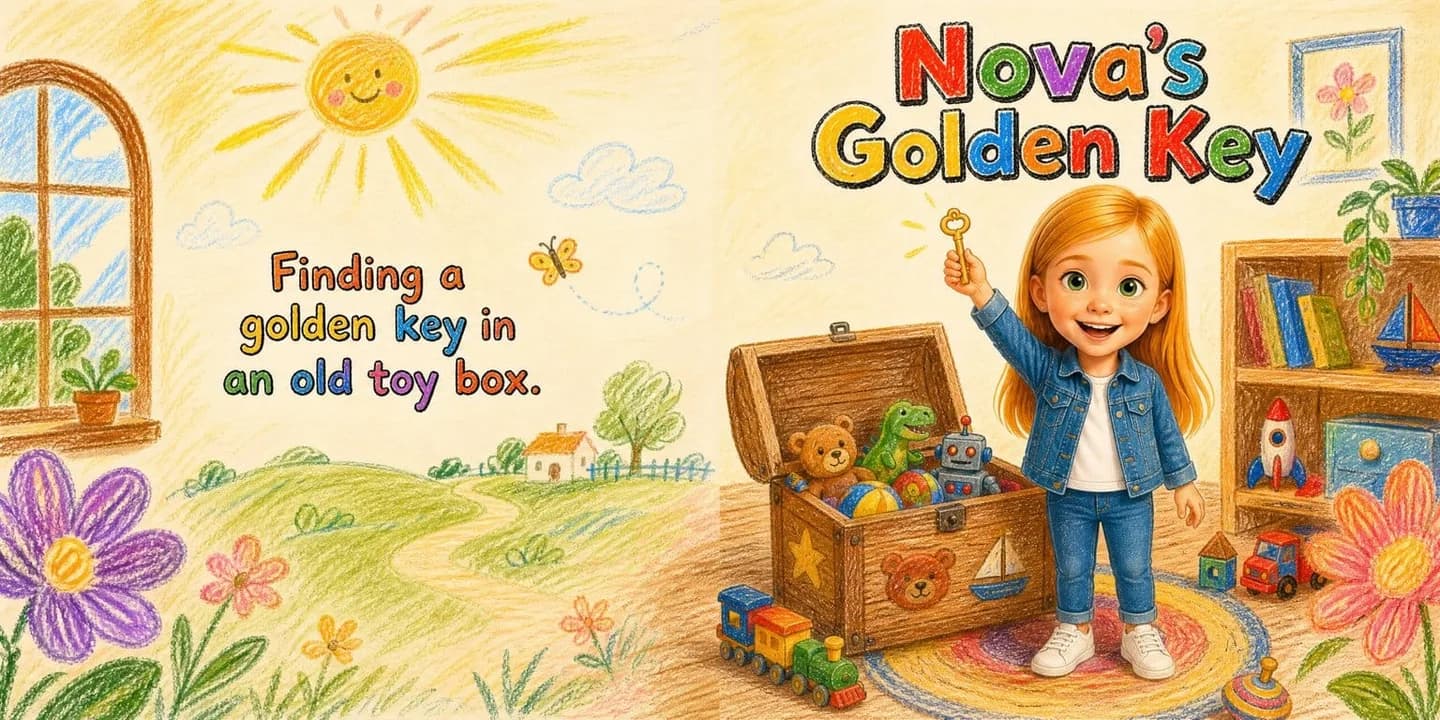
Do not tidy it up. Adjectives are the part a stranger could have guessed. A button and a crumb found in an old sock are worth more than "the messy old toy box".
Say if they tried more than once. "She kept climbing the ladder and coming back down" is worth more than any adjective, because trying and failing and trying again is the shape a picture book is built on. It is the same shape as Maya's book: a seed that shows nothing, then a sprout, then week after week of waiting before anything big happens.
Ordinary beats special. A first snow, a lost tooth, a new puppy, a Saturday spent looking for something. Children's reading charities have made this point for years: the National Literacy Trust reports that children who see their own lives reflected in books are markedly more likely to enjoy reading and to keep doing it.
There is also a reason a story about a child who tries five things that do not work is worth more than one about instant success. Research summarised by Harvard's Center on the Developing Child describes persistence and self-directed problem-solving as core executive-function skills built through practice rather than instruction. A book in which your child keeps going, and then finds it, is doing something a book about winning straight away cannot.
What do parents get wrong when they write their line?#
Almost always the same four things, and all four are easy to avoid.
Writing a summary instead of a moment. "We had a great holiday" gives nothing to draw. "She refused to come out of the sea until her lips went blue" gives a whole book.
Describing the child instead of the story. You do not need to write what your daughter looks like — the photo does that. Spend your words on what she did.
Being too big. "He wants to be an astronaut" is a wish, not an afternoon. "He made a rocket out of the recycling and would not let anyone throw it away" is an afternoon, and it is far better.
Making it perfect. The moment you tidy a memory, you sand off the thing that made it yours. The button in the sock, the ten seconds of silence, the sea and the blue lips — those survive onto the page. "A lovely day" does not.
If you are stuck, answer one question: what did your child do this month that made you laugh, or made you proud, and that nobody outside your house knows about? Write that sentence.
What age is a personalised book right for?#
Roughly two to nine, and the book changes shape across that range rather than just changing the name on the cover.
- Two to four. Short sentences, one clear thing happening per page, and a child who wants to point at themselves. This is the age where a personalised book gets read most, because recognising yourself is most of the pleasure.
- Five to seven. The sweet spot. Old enough to follow a story with a setback in it, young enough that seeing themselves as the hero is genuinely thrilling. Most of our books are for children this age.
- Eight to nine. The book has to be a real story now, not just a mirror — which is why the age you type matters. An eight-year-old's book gets longer sentences and a proper problem to solve. Shop books list their age band on the product page, so you can pick one that fits.
Above nine, a personalised picture book usually lands as a keepsake rather than a bedtime read — which is still a good reason to make one, just a different one.
Will my child actually look like my child?#
This is the question worth asking of any children's book generator, because it is where the cheap ones fall down. A book where the child is drawn slightly differently on every page is not a book. It is a pile of pictures.
Your child is drawn once, properly, from the photo you upload — and that drawing is who appears on every page. Flip through the book above and the hero is the same girl from the cover to the last page — and when you personalize it, that same steadiness is what your own child gets.
We never save your child's photo. It is not written to our storage, our database or our logs, and it is never published anywhere — only the cartoon drawing is kept. To make that drawing the photo is sent to our AI provider in the United States, which handles it under its own terms. That is a promise we make in writing, on our privacy page, not a setting you have to find.
How do I make one?#
From the shop: open a book's page — for example Maya and Auntie's Garden Party — press "Personalize this book", type your child's name, upload one photo and tick the consent box. You see your own child's pages before paying for anything.
From your own line, on the create page:
1. Open the create page. No account and no card first.
2. Type your child's name and age. The age is not decoration — a book for an eight-year-old reads differently from a book for a five-year-old, in sentence length and in pacing.
3. Upload one photo. It only needs the whole face, straight on, with nothing covering it. An ordinary indoor phone snapshot is perfect.
4. Tick the consent box. One line confirming the child is yours and you are happy for the photo to be used to draw them.
5. Type your line. A single sentence is enough. Write the specific detail, not the summary.
6. Choose an art style. Nine are available. If you are undecided, the guide to the nine art styles shows each one side by side.
7. See your cover, then decide. You are shown the finished painted cover of your book before you are asked for anything. If the child on it does not look like your child, you stop there and it has cost you nothing.
Can up to four children be in the same book?#
Yes — one child plus up to three others. A brother, a grandmother, the dog, a toy that goes everywhere. Each of them gets a photo or a short description, and each of them stays themselves across the book the same way the main character does.
This matters more than it sounds. A book with a new baby in it is a way of telling an older child they are still the main character. A book with a grandfather in it is worth keeping long after he is not there to read it.
What do I get when it is finished?#
| What | What it is |
|---|---|
| The book itself | A full picture book, readable on any device in the same page-flip reader you used above |
| A hardcover | A real printed book, square and full-bleed, posted to you |
| The narration | The whole book read aloud, so it can be listened to in the car or at bedtime |
| A song | Written from your child's own story, with the words shown so they can sing along |
| Your library | Every book you have made, so the next one can reuse the same character |
The narration and the song both come with a hardcover. The song for Maya's book plays on this page, above — taken straight from the finished book, not a demo recording.
If you are weighing up the formats, hardcover, softcover or digital compares them properly, including what each one is actually good for.
Is a generated book worth giving as a present?#
A present is judged on whether it says I know you. That is exactly what personalisation buys, and exactly what a generic book cannot.
The test is not whether the artwork is beautiful. It is whether the child in it looks like your child, and whether the story in it is one they recognise from their own life. A book about a girl who grew a sunflower is nothing. A book about your girl, with her auntie, waiting ten Saturdays for something to grow — that gets read until it falls apart.
You can make one of these#
Not something like it — this. The same nine styles, the same page-flip book, the same narration and song with a hardcover, from one photo and one honest sentence about your child.
Start with a personalized children's book with a photo, read how a photo becomes an illustrated hero first, or see what a personalized children's book includes, page by page. If you are comparing tools rather than books, the AI storybook generator walk-through follows one book from the first click to the finished hardcover.
One photo and one name is enough. One honest line, if you want to write it, is plenty.