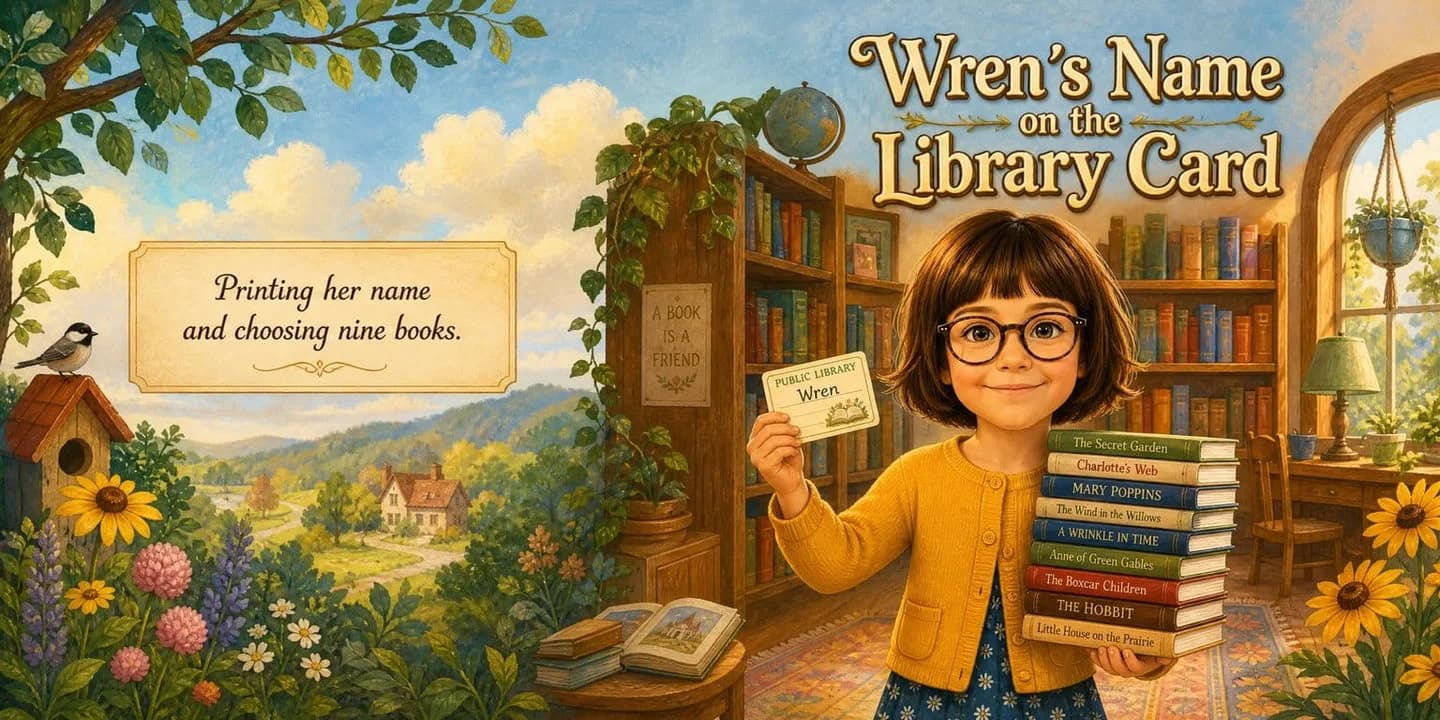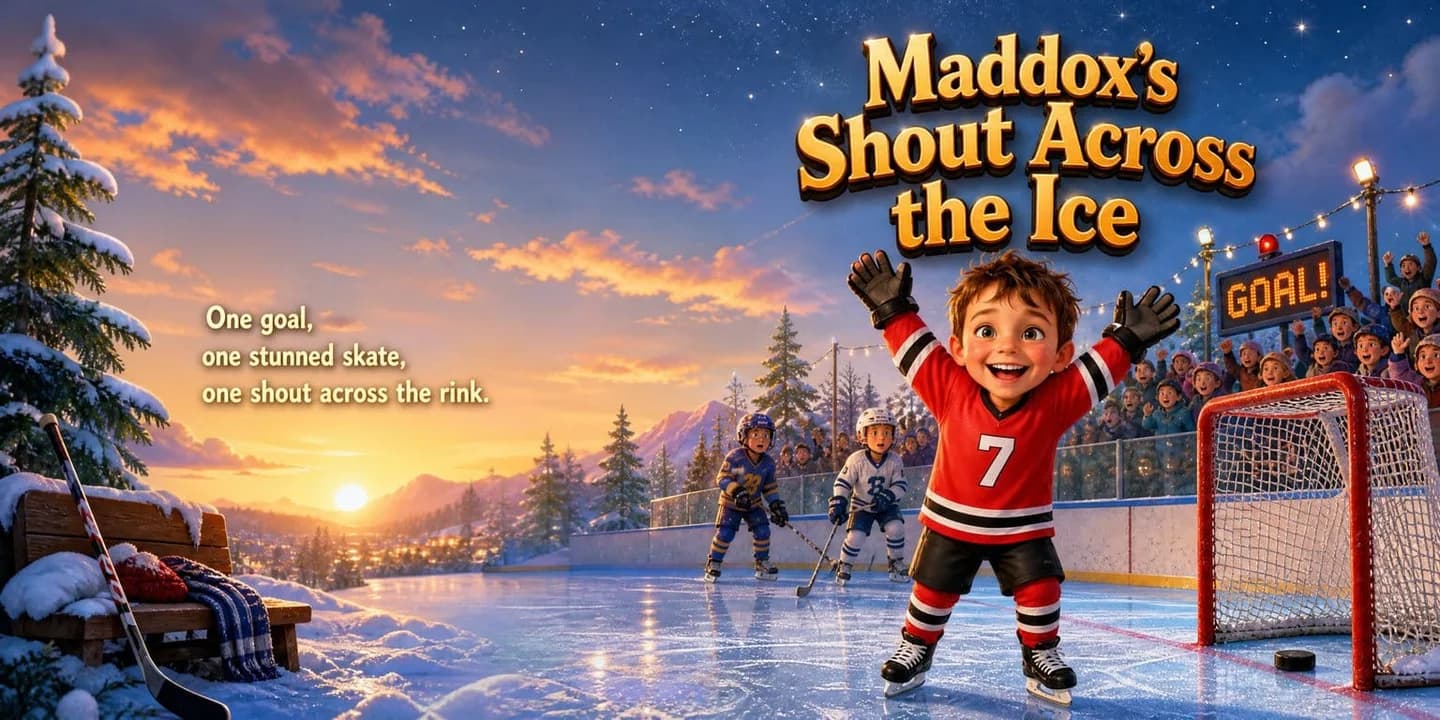
A personalized children's book used to mean a template story with your child's name typed into the blanks. It can mean something much better now: your child's own face, painted from a single photo, on every page of a real story. The clearest way to show the difference is a whole book, so here is one — a rhyming birthday story from our shop, which you can read in full below and then order with your own child as the hero.
What is a personalized children's book, exactly?#
There are three different products sold under the same name, and it helps to know which one you are looking at.
| Type | What changes | What stays generic |
|---|---|---|
| Name-swap book | The name in the text | The child in the pictures, who looks like nobody in particular |
| Pick-a-lookalike book | Name, plus a cartoon child built from menus (hair, skin, glasses) | The face — it is an approximation, not your child |
| Painted-from-a-photo book | Name, and the hero is painted from your child's own photo on every page | Nothing about the hero |
KindFable makes the third kind. One photo becomes one character drawing, and that same character is painted into every picture in the book. That is the whole promise of a personalized children's book with photo: a child can point at any page and say that's me.
Which book is on this page?#
The book below is Picks a Pet!, a finished rhyming story from the KindFable shop for ages 3 to 7. The sample you can read stars Chloe, who is five. When you order it, Chloe's face and name are replaced by your child's, and every picture is painted with your child in it.
The premise is simple and irresistible to a small child: it is nearly their birthday, and they may pick ONE pet. A dog, a cat, a bunny, a fish, a parrot, a tortoise, a hamster, a pony — and every one of them is, for a page at least, the very best.
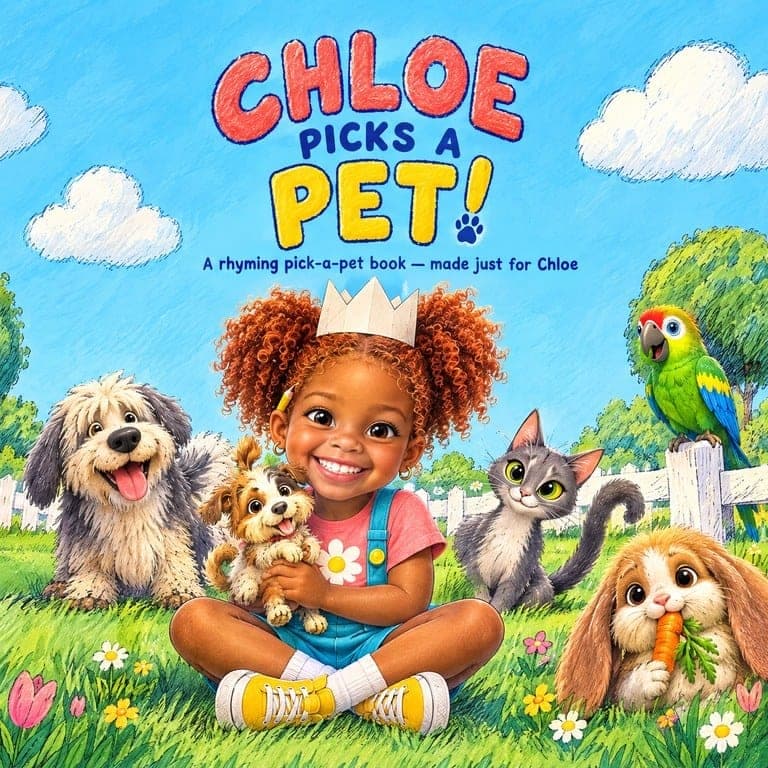

A book from our shop · ages 3–7
Your Child Picks a Pet!
A birthday, ONE pet to pick, and eight that are all the best — a dog, a cat, a bunny, a fish, a parrot, a tortoise, a hamster and a pony. A rhyming book about how nobody is THE best, and everyone is different.
Shown here starring Chloe, 5. Yours is painted with your own child’s face and name on every page, from $39 — and you see the pages before you pay.
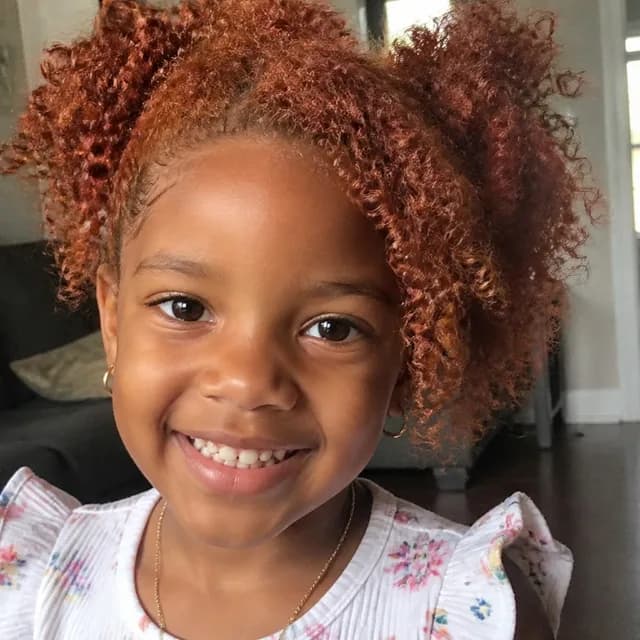
The photo they uploaded
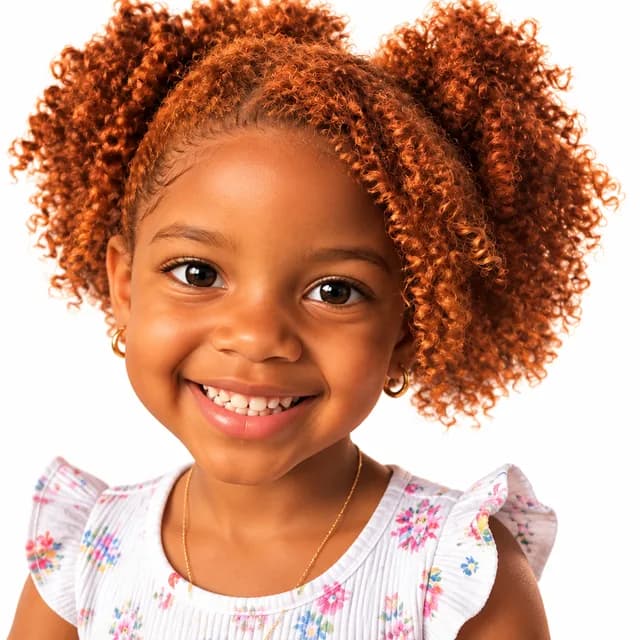
The character we drew
Written from this story — not a stock track with a name dropped in. Free with every book.
How the story begins
- 1Tomorrow is Chloe's birthday, and she may pick ONE pet. Just one — and only one — the very BEST one yet. But which one is the best? A dog? A cat? A fish? Chloe shut her eyes up tight and thought about her wish.
- 2DOGS are the best! Dogs run and fetch and dig. Dogs lick your face from chin to nose. Dogs love you very BIG. “Woof!” said the dog, and Chloe laughed out loud. “A dog!” she said. “That's it! The best!” (She was not sure. But proud.)
- 3CATS are the best! Cats leap and pounce and purr. Cats walk on roofs and never fall — a soft and silver blur. “Come here, cat,” said Chloe. The cat said, “Not just yet.” “A cat!” said Chloe. “That's the best!” (Or... was it? Hard to bet.)
The rest of the story is in Your Child Picks a Pet!.
The words to the song
[Verse 1]
Tomorrow is my birthday and I get to pick a pet,
Just one, and only one — the very best one yet!
A dog? A cat? A bunny? A fish inside a bowl?
I shut my eyes up tight and I think with all my soul.

[Chorus]
Dogs are the best! (Woof!) Cats are the best! (Meow!)
Bunnies, fish and parrots — everybody, take a bow!
If everybody's best, then who's the best? Who? WHO?
Nobody's THE best — and that's the best thing too!

[Verse 2]
A dog will lick your face, a cat will walk a roof,
A bunny munches carrots, a pony has a hoof.
A fish goes blub, a parrot squawks, a tortoise takes his time,
A hamster runs his wheel all night — squeak, squeak, at bedtime!

[Verse 3]
So a dog is best at dog, and a cat is best at cat,
And everyone is different — and I love them just like that.
I didn't pick the best one. I picked the one that's right:
A wobbly pup with one ear up, who snores with me all night.

[Chorus]
Dogs are the best! (Woof!) Cats are the best! (Meow!)
Bunnies, fish and parrots — everybody, take a bow!
If everybody's best, then who's the best? Who? WHO?
Nobody's THE best — and that's the best thing too!

[Outro]
You're different. So am I. And that is how it should be.
Which pet would you pick? Come and tell it to me!
Why does a story built around a choice work so well?#
Because choosing is the thing a young child most wants to be trusted with. The book opens like this:
Tomorrow is Chloe's birthday, / and she may pick ONE pet. / Just one — and only one — / the very BEST one yet.
Your child is not watching someone else choose. They are the one with their eyes shut, thinking about their wish. Then each animal gets its turn:
DOGS are the best! / Dogs run and fetch and dig. / Dogs lick your face from chin to nose. / Dogs love you very BIG.
And every time the hero is sure, the book adds a little wink — (She was not sure. But proud.) — which is exactly how a five-year-old decides things. The lesson the story carries is one parents are glad to hand over: nobody is THE best; everyone is different, and everyone is good.
Why the rhyme matters#
Rhyme is not decoration at this age. Bryant, Bradley, Maclean and Crossland reported in the Journal of Child Language in 1989 that there is "a strong relation between early knowledge of nursery rhymes and success in reading and spelling over the next three years". A rhyming book with their own name at the end of the line is one a child will start finishing for you by the third reading.
Does putting the child in the book really make a difference?#
The research says it does. In the most direct study of personalized children's books, Kucirkova, Messer and Sheehy (2014) found preschoolers retained more new words from the personalized sections of a book than from identical non-personalized sections. Cunningham and colleagues (2014) showed the self-reference memory advantage — remembering things better when they are about you — is reliable by age five. Our guide to what brain science says about personalized books walks through both.
The American Academy of Pediatrics, in its policy statement on literacy promotion, recommends reading with children every day from infancy. A book a child asks for by name is the easiest way to make that happen — and a book with their own face in it gets asked for.
What does "the same child on every page" actually mean?#
Look at the pair above. The photo is on the left, the character on the right. Now flip through the book. The child with eyes shut tight, wishing, is the same child laughing at the dog and calling to the cat — same face, same hair, from the cover to the last page. That is what separates a real book where your child is the main character from a name-swap.
It also means the child is the one doing things in every picture: choosing, laughing, asking, changing their mind. They are not a face in the corner of a page about animals. They are the reason the animals are there.
Two ways to get one: shop story or your own story?#
KindFable offers both, and they suit different moments.
| A story from the shop | A story you write | |
|---|---|---|
| Where | Picks a Pet! and the other shop titles | The create page |
| What you provide | One photo and a name | One photo, a name, and a few sentences about something real |
| Best for | A birthday, a holiday, a theme your child loves | A first tooth, a first swim, a new bed — a day only your family had |
| What you see before paying | Your child painted into the book | Your child on the painted cover |
A shop story is the quick, safe choice for a present: you have looked inside it before you order. A story you write is the keepsake choice: a book about a day your child actually lived, with the small true details — the colour of the boots, the name of the dog — carried onto the page.
If you are weighing it up as a tool rather than a book, this explainer covers how an AI storybook generator works and what to expect from one.
Which art style should you choose?#
For a shop story, the look is already chosen — what you see in the sample is what your child's copy looks like, with your child in it.
For a story you write, there are nine styles. A bright, animated-movie look suits action and big grins; Classic Storybook and Watercolor suit quieter, dreamier stories; Crayon Doodle and Soft Felt are made for the youngest readers. Our walkthrough of every art style for a personalized children's book shows them side by side. Whatever the style, the child's face is drawn the same way — the world changes its medium; your child does not.
Does it come with anything besides the book?#
Every KindFable book comes with its own song, written from the story and free — play this one above, next to the book. The hardcover adds a full narrated audio story, so on nights you cannot read aloud the audio version does it for you, with the pictures still open on the bed. Corbeil, Trehub and Peretz (2016) found infant-directed singing kept babies calm roughly twice as long as speech; a simple song with a child's own name in it is the kind that gets requested in the car.
How do you order one for your child?#
The whole thing takes a few minutes.
- Pick the book. Open Picks a Pet! or any story in the shop, and read the sample first.
- Add your child's first name and age.
- Upload one clear photo of their face and tick the consent box. The photo is used only to draw the character and is deleted straight after — never saved.
- See your child in the book before you pay anything. If it does not look like your child, you have lost nothing.
- Choose the format. The digital book and PDF are yours immediately, and a real 8.5-inch square softcover or hardcover is printed and posted to you. Every book includes its song; the hardcover adds the narrated audio story.
From your dashboard you can read every book in the page-flip reader, open the audio studio for the song (and the narration, with the hardcover), download the PDF, and reorder a printed copy any time.
What should you write if you make your own? A four-line checklist#
If you choose the create page instead, parents tell us the hardest part is deciding what to type. Four questions are all a personalized children's book needs — here with an illustrative example:
| Line | The question it answers | An example |
|---|---|---|
| 1 | When and where? | On Saturday we went to the beach for the first time. |
| 2 | What did they do? | She carried her green bucket down to the water all by herself. |
| 3 | What was the biggest moment? | A wave filled the bucket and knocked her sitting down. |
| 4 | How did it end — how did they feel? | She laughed and asked to do it again. |
Two things worth copying. First, the specific nouns: the green bucket, the first time. Each one is a detail your child will recognise on the page — and a detail a template book cannot have, because a template book has never met your child. Second, the feeling in the last line. Without it, the story is a list of events; with it, the last page has somewhere to land.
What you can leave out: everything the book decides better than you can — page count, which scenes get pictures, how the child is posed. Our longer guide to what makes a children's story work explains the shape, and our guides to books for two-year-olds and three-year-olds explain how simple to keep it for the youngest.
What other personalized books are worth a look?#
It depends on who is in your child's world. If there are two children, a book for twins puts both on every page from two photos; if there is a dog, the family dog can be in it too; if a new baby is on the way, a new sibling book is made for that moment. For a child who loves capes and rescues, see a book where your child is the main character; for the classic fairy-tale shape, see personalized fairy tale books. And if you are choosing between hardcover, softcover and digital, this comparison is the short version.
The one-photo rule#
If there is one thing to take from this page, it is this: a personalized children's book is only as personal as its pictures. A name on the page is nice; your child's own face, choosing their own pet on their own birthday, is the thing they will carry to show everyone. Pick a story, upload one photo, look at your child in the book. The rest is the book's job.
Sources. Kucirkova, Messer & Sheehy, "Reading personalized books with preschool children enhances their word acquisition", First Language 34(3), 2014. Cunningham et al., "The self-reference effect on memory in early childhood", Child Development 85(2), 2014. Corbeil, Trehub & Peretz, "Singing delays the onset of infant distress", Infancy 21(3), 2016. Bryant, Bradley, Maclean & Crossland, "Nursery rhymes, phonological skills and reading", Journal of Child Language 16(2), 1989.
If the phrase you had in mind was picture book rather than children's book, a personalized picture book with your child painted in is the same idea from the illustration side — with a whole finished book to read.