There are twenty-five Elephant & Piggie books, and then there are none. If you are here, your child has finished them and asked for more, and every list you have found gives you fifteen funny books in no particular order.
That order is the whole problem. Your child reads these books themselves — that is what the series is for — so the only question that matters is how much harder the next one is. A book one level too high does not produce a slightly harder read. It produces a child who hands it back and stops asking.
So this list is sorted on that single axis, from "the same afternoon" to "first chapter book", with the year and the format on every entry.
What Mo Willems actually engineered#
It is worth knowing what makes the series readable, because it gives you a test to apply in a shop to any book at all.
Four things, and you can check all of them in ten seconds:
- Dialogue only. There is no narration. A beginning reader decoding "Piggie said excitedly" is doing two jobs; here there is only speech, in bubbles, colour-coded — Piggie's words in pink, Gerald's in grey.
- One or two bubbles a page. The child finishes a page in a breath and turns it. That turn is the reward, and it arrives constantly.
- The same words, over and over. New vocabulary arrives slowly and then repeats, so the child meets each word enough times to own it.
- The picture carries the meaning. When the child stalls on a word, the illustration tells them what it must be. They are never stranded.
That is not a style. It is the published definition of the form: the American Library Association's Theodor Seuss Geisel Award, which recognises "the most distinguished contribution to the body of American children's literature known as beginning reader books", judges on exactly these criteria — simple sentences, words repeated for retention, new words added slowly, illustrations that demonstrate the story, and a plot that pulls the reader to the next page. Two Elephant & Piggie titles have won it: There Is a Bird on Your Head! in 2008 and Are You Ready to Play Outside? in 2009.
An opinion, and it decides this whole list: the Geisel is a far better guide than any age printed on a cover. It is judged by librarians against a written standard for beginning readers. Three of the eight books below have won or been honoured by it — See the Cat, Hi! Fly Guy and Charlie & Mouse — and so has the one at the end without a cover.
Eight books, easiest first#
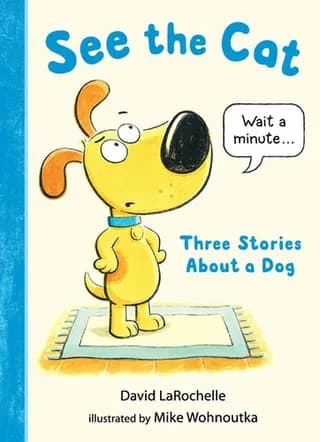
1. See the Cat: Three Stories About a Dog — the same afternoon#
- Written by
- David LaRochelle
- Illustrated by
- Mike Wohnoutka
- First published
- 2020
- Ages
- 4–7
- Format
- Beginning reader
A book insists the dog is a cat. The dog objects, in writing, to the book. The argument escalates.
This is the closest thing in print to Elephant & Piggie and the answer if you want one book with no jump at all. It is dialogue, it is a character talking back, and there are days when a page holds four words. It won the Geisel Award in 2021 — the medal, not an honour.
A child who finished Elephant & Piggie this morning can read this one this afternoon, and that is the entire recommendation.
Read it if you want zero risk. Start here.
2. Hi! Fly Guy — one rung up#
- Written by
- Tedd Arnold
- First published
- 2005
- Ages
- 4–7
- Format
- Beginning reader
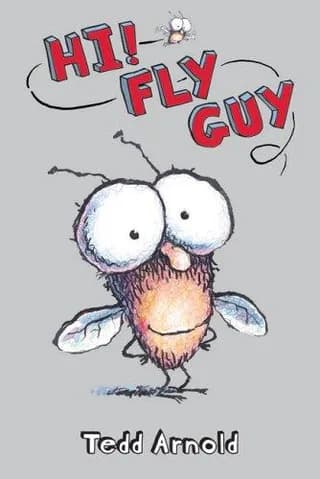
A boy catches a fly for a pet show. The fly, it turns out, can say his name. It is called Buzz.
Slightly more text per page than Elephant & Piggie and some actual narration, but short chapters give the same constant sense of finishing something. It was a Geisel Honor book in 2006, the award's first year. There are more than twenty in the series, which is the real point: a child who likes it has a year of reading in front of them.
Read it if the child wants a series to disappear into rather than one book.
3. Charlie & Mouse — one rung up, quieter#
- Written by
- Laurel Snyder
- Illustrated by
- Emily Hughes
- First published
- 2017
- Ages
- 4–8
- Format
- Beginning reader
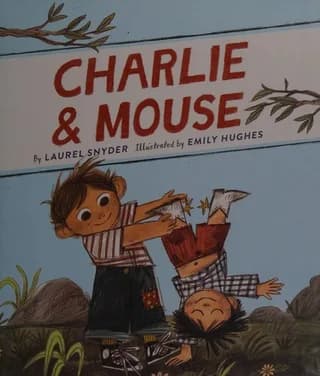
Two brothers do four ordinary things: go to a party in the park, sell rocks, invent a bedtime banana. Nothing dramatic happens in any of them.
It won the Geisel Award in 2018, and it is the gentlest book here. The reading load is close to Fly Guy, but the pleasure is recognition rather than jokes — the child sees their own household. Read it if the Elephant & Piggie appeal in your house was the friendship rather than the slapstick.
Read it if your child likes books about children who are like them.
4. Don't Let the Pigeon Drive the Bus! — same author, easier, different job#
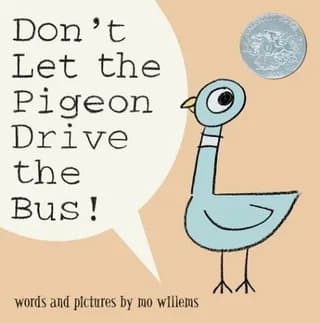
- Written by
- Mo Willems
- First published
- 2003
- Ages
- 3–6
- Format
- Picture book
A pigeon asks the reader, directly and at increasing volume, to be allowed to drive a bus. The reader says no. The pigeon does not take it well.
Same author, and easier than Elephant & Piggie — but it is a picture book, not a beginning reader, and the child is meant to shout at it rather than read it alone. It is the right book for a younger sibling listening in, and it is the one to hand a child who is tired and wants to be read to. It was a Caldecott Honor book in 2004, Willems' first book for children.
Read it if there is a younger child in the room, or the reader needs a night off.
5. Narwhal: Unicorn of the Sea — the jump most lists hide#
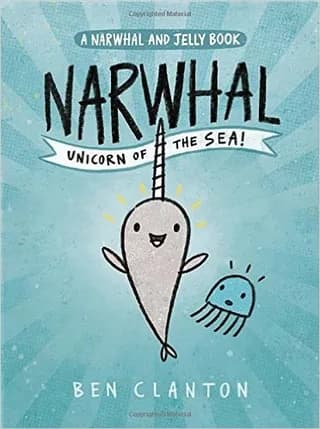
- Written by
- Ben Clanton
- First published
- 2016
- Ages
- 6–9
- Format
- Graphic novel
A narwhal and a jellyfish meet, disagree about whether the narwhal is imaginary, and become friends over waffles.
Every list puts this next to Elephant & Piggie, and in spirit it belongs there — two friends, deadpan dialogue, real warmth. In difficulty it does not. It is a graphic novel: several panels a page, far more words, and the child has to track a reading order across the panels as well as decode the words. That is two new skills at once.
It is a wonderful book and it is a genuine step. Give it three months.
Read it if the child is already reading Fly Guy comfortably. Not before.
6. Good Rosie! — a picture book that reads like a comic#
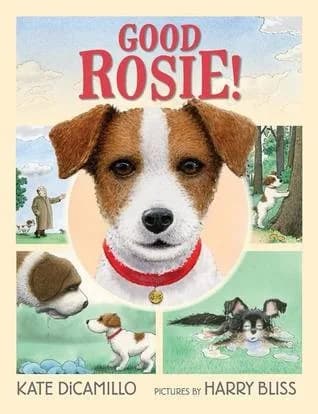
- Written by
- Kate DiCamillo
- Illustrated by
- Harry Bliss
- First published
- 2018
- Ages
- 4–8
- Format
- Picture book with panels
A lonely dog is taken to a dog park, where two other dogs are much too much, and slowly the three of them work each other out.
Kate DiCamillo and Harry Bliss put comic panels inside a picture book, which makes it a soft introduction to the panel-reading Narwhal will demand — with none of Narwhal's word count. It is also the most emotionally precise book on this list. Loneliness at the dog park is recognisable to a five-year-old.
Read it if you want to prepare for graphic novels without leaving the picture book.
7. Frog and Toad Are Friends — harder than everyone remembers#
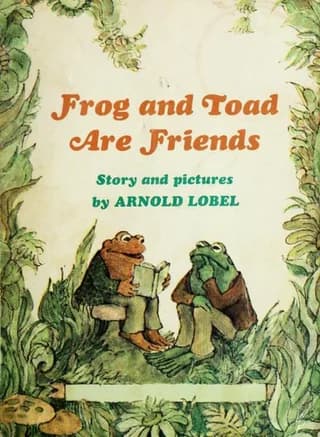
- Written by
- Arnold Lobel
- First published
- 1970
- Ages
- 4–8
- Format
- Beginning reader, 5 stories
Two friends, five short stories, and one of the great openings in children's writing: Frog arrives in April to wake Toad, who wants to sleep until May.
Nearly every list treats this as the natural next step and it is, eventually — but it is a real jump. The sentences are longer, the humour is dry rather than physical, and the pleasure is melancholy in places. A child who can read Fly Guy will still find this slow going for a month.
It is worth the month. It is also the book most likely to be the one they remember at thirty.
Read it if the child is reading confidently and you are willing to read the first story together.
8. Mercy Watson to the Rescue — the first chapter book#
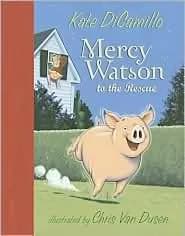
- Written by
- Kate DiCamillo
- Illustrated by
- Chris Van Dusen
- First published
- 2005
- Ages
- 5–8
- Format
- Early chapter book
A pig who lives indoors, eats toast with a great deal of butter, and accidentally rescues her owners from a hole in the floor by wanting more toast.
This is a chapter book: chapters, more words, fewer pictures per page — but Chris Van Dusen's illustrations are on almost every spread and the chapters are very short. It is the standard first chapter book for a reason, and it is where this list ends, because a child who can read Mercy Watson does not need a list any more.
Read it if the child has read everything above and is asking for "a real book".
One more, without a cover: Penny and Her Marble (Kevin Henkes, 2013) is a Geisel Honor book and sits neatly between Charlie & Mouse and Frog and Toad — a mouse takes a marble that is not hers and spends the book feeling terrible about it, which is a remarkably sophisticated thing to do in a beginning reader. We show it without a cover because the only cover image available for it is a scan of the book's inner title page rather than the jacket.
Which one, for your child#
| What happens when they read | What it means | Start with |
|---|---|---|
| Finishes a page and immediately turns it | Ready for the same level, not harder | See the Cat |
| Reads happily but wants more of it | Ready for a series | Hi! Fly Guy |
| Prefers the friendship to the jokes | Ready for quieter | Charlie & Mouse |
| Gets tired halfway and asks you to take over | Not a reading problem — a stamina one | Pigeon, read aloud |
| Reads Fly Guy without stopping | Ready for panels | Good Rosie!, then Narwhal |
| Reads anything you hand them | Ready for the jump | Frog and Toad, then Mercy Watson |
What to read next#
- The best children's books of all time — the wider list this one sits inside.
- Books like Don't Let the Pigeon Drive the Bus — for the read-aloud half of the shelf, where the child is listening rather than working.
- Best books for 4 year olds — if a younger sibling is circling.
- Read-aloud books for kindergarten — what the teacher is reading while your child reads these.
What does a personalized storybook do while a child is learning to read?#
Everything above is work. Pleasant work, but work: a child reading a beginning reader is concentrating, and concentration has a daily limit that arrives earlier than parents expect.
The book they want at the end of that is the opposite — one where somebody else does the reading and they simply get to be in the story. That is what a personalized storybook is for at this age. You add a photo and a few sentences about something real, and your child is painted into every page of a book that is read to them.
It is not a beginning reader and it should not pretend to be. It is the book at the end of the day when they have run out of decoding — though a child who has just met Gerald and Piggie will still enjoy catching the odd word they can read for themselves, especially their own name.
Here is a complete one from our shop, so you can judge the real thing. Picks a Pet! is a finished rhyming story for ages 3 to 7. The sample stars Chloe, who is five, and when you order it your own child's face and name take her place on every page. It is nearly her birthday, she may pick ONE pet, and every animal on the list is, for a page, "the very BEST one yet". Like Elephant and Piggie, it runs on big feelings, quick turns and a joke in the brackets: (She was not sure. But proud.)
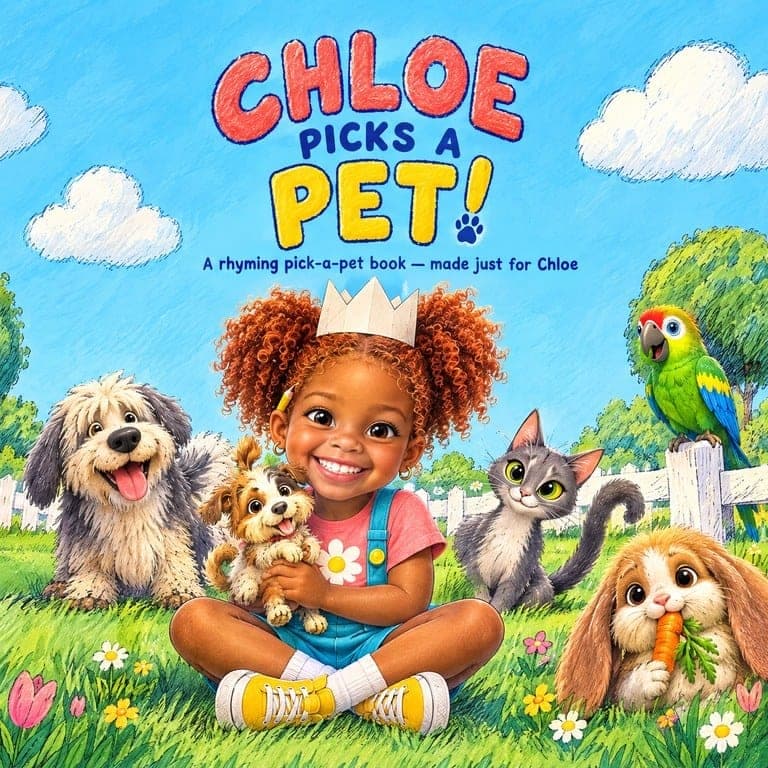

A book from our shop · ages 3–7
Your Child Picks a Pet!
A birthday, ONE pet to pick, and eight that are all the best — a dog, a cat, a bunny, a fish, a parrot, a tortoise, a hamster and a pony. A rhyming book about how nobody is THE best, and everyone is different.
Shown here starring Chloe, 5. Yours is painted with your own child’s face and name on every page, from $39 — and you see the pages before you pay.
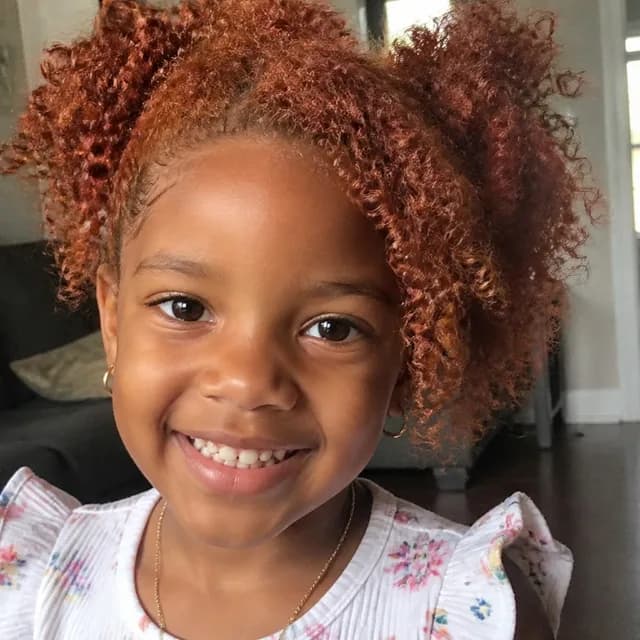
The photo they uploaded
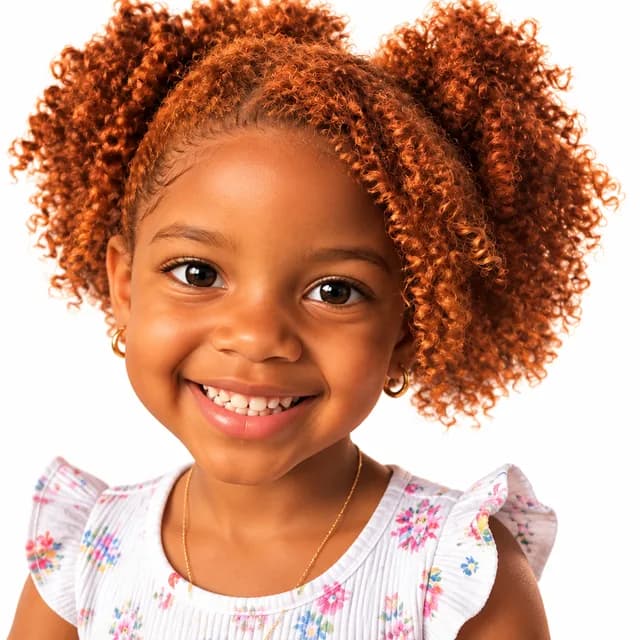
The character we drew
Written from this story — not a stock track with a name dropped in. Free with every book.
How the story begins
- 1Tomorrow is Chloe's birthday, and she may pick ONE pet. Just one — and only one — the very BEST one yet. But which one is the best? A dog? A cat? A fish? Chloe shut her eyes up tight and thought about her wish.
- 2DOGS are the best! Dogs run and fetch and dig. Dogs lick your face from chin to nose. Dogs love you very BIG. “Woof!” said the dog, and Chloe laughed out loud. “A dog!” she said. “That's it! The best!” (She was not sure. But proud.)
- 3CATS are the best! Cats leap and pounce and purr. Cats walk on roofs and never fall — a soft and silver blur. “Come here, cat,” said Chloe. The cat said, “Not just yet.” “A cat!” said Chloe. “That's the best!” (Or... was it? Hard to bet.)
The rest of the story is in Your Child Picks a Pet!.
The words to the song
[Verse 1]
Tomorrow is my birthday and I get to pick a pet,
Just one, and only one — the very best one yet!
A dog? A cat? A bunny? A fish inside a bowl?
I shut my eyes up tight and I think with all my soul.

[Chorus]
Dogs are the best! (Woof!) Cats are the best! (Meow!)
Bunnies, fish and parrots — everybody, take a bow!
If everybody's best, then who's the best? Who? WHO?
Nobody's THE best — and that's the best thing too!

[Verse 2]
A dog will lick your face, a cat will walk a roof,
A bunny munches carrots, a pony has a hoof.
A fish goes blub, a parrot squawks, a tortoise takes his time,
A hamster runs his wheel all night — squeak, squeak, at bedtime!

[Verse 3]
So a dog is best at dog, and a cat is best at cat,
And everyone is different — and I love them just like that.
I didn't pick the best one. I picked the one that's right:
A wobbly pup with one ear up, who snores with me all night.

[Chorus]
Dogs are the best! (Woof!) Cats are the best! (Meow!)
Bunnies, fish and parrots — everybody, take a bow!
If everybody's best, then who's the best? Who? WHO?
Nobody's THE best — and that's the best thing too!

[Outro]
You're different. So am I. And that is how it should be.
Which pet would you pick? Come and tell it to me!
You can order Picks a Pet! with your child choosing, or write a story of your own from a few sentences. For what a personalized book is and is not, our guide to the personalized children's book goes through it with a whole book to read.
You can see your child painted into the book before paying for anything: start a book, or read how it works and what it costs first.
Book covers are shown unaltered for identification, sourced from Open Library. Each cover remains the property of its publisher and illustrator. KindFable is not affiliated with any of the books recommended here.