Flying with a toddler goes best when the toddler already knows what is going to happen. Rehearse the airport at home, buy a seat and bring an approved car seat if you can, pack snacks for twice the flight time, and plan the flight in 20-minute blocks of something new. The rest of this guide covers the first flight from booking to landing: 40 tips in the order you will need them, the actual security rules for families in the US and Canada, what the FAA says about lap children and car seats, how to help small ears, and the picture books that make the day feel familiar.
Is it hard to fly with a toddler?#
It is harder than flying with a baby and easier than most parents fear. Babies tend to sleep and can be fed on take-off and landing. Children from about 18 months to three years are the toughest travellers: they want to move, they do not understand why they cannot, and they have not yet learned to wait.
The good news is that most of the difficulty is predictable, and predictable problems can be planned for. A toddler on a plane needs four things: to know what is happening, to eat, to move, and to have something new to look at every so often. Every tip below serves one of those four.
How do I prepare my toddler for their first flight?#
Toddlers cope with new places much better when the sequence is familiar. A week or two before the trip, start telling the story of the day.
- Read a book about flying. A picture book that walks through the airport in order is the simplest rehearsal there is (see the list further down).
- Play airport at home. A row of dining chairs is the plane. A toy bag goes on the "scale" (the bathroom scales). Teddy walks through the "scanner" (a doorway). Everyone buckles a belt.
- Watch planes. Videos of take-off and landing, or a trip to watch planes from an airport viewing area, take the surprise out of the noise.
- Name the feelings. "Your tummy might feel wobbly when the plane goes up. That's okay. It feels like a swing."
- Practise sitting. Ten minutes at the table with a snack and a book, buckled into a booster or high chair, is a dress rehearsal for the seat.
- Talk about where you are going. "We are flying to see Granny. When we land, Granny will be waiting." A destination gives the waiting a point.
- Let them pack a small bag. A child who chose the toys in their own backpack is more invested in the day.
The guide to books about feelings for toddlers helps with the words for a wobbly tummy, and if the trip is to see family, the list of gifts from grandparents has ideas for the arrival.
Should my toddler have their own seat — and a car seat?#
This is the biggest decision you make when booking, so it is worth getting right.
Under two, the airline usually lets your child fly on your lap. That is cheaper, but the US Federal Aviation Administration is clear about safety. Its guidance for families says "the safest place for your child under the age of two on a U.S. airplane is in an approved child restraint system (CRS) or device, not in your lap", because adult arms cannot hold a child securely during unexpected turbulence.
Over two, your child needs their own seat on almost every airline.
Which restraint to bring:
| Option | Who it suits | What to check |
|---|---|---|
| Your own car seat | Babies and toddlers who fit it | A label stating it is certified for use in motor vehicles and aircraft (in red text on US seats) |
| FAA-approved CARES harness | Children who have outgrown a car seat but are small for the adult belt (roughly 22 to 44 lb) | The harness must be FAA-approved; it is light enough for a backpack |
| Lap belt only | Older children | Booster seats cannot be used during take-off and landing |
A familiar car seat has one more benefit: it is a place your child already knows how to sit and sleep in. The cost is carrying it. Many parents use a small travel car seat or a cart that turns the seat into a stroller for the airport.
In Canada, the Government of Canada's page on air travel with children covers lap infants and child seats, and each airline sets its own approved-seat rules, so check yours before you fly.
Booking tips for flying with a toddler#
- Fly at their best time of day. Early morning flights are often less delayed; a flight across nap time works only if your child sleeps easily away from home.
- Choose direct flights wherever you can. One take-off and one landing beats two of each.
- If you must connect, leave a long layover. Rushing a toddler through a terminal is worse than an hour of extra waiting.
- Book seats together at the time of booking, not at the gate.
- Window seat for the toddler. It gives them something to look at and keeps small hands out of the aisle.
- Consider bulkhead seats for space at your feet — but check where the armrest trays go and whether a car seat is allowed there.
- Ask about family boarding and whether your airline lets you gate-check a stroller.
What to pack in a toddler carry-on#
Pack for a delay, not for the scheduled flight time. A two-hour flight can become a five-hour day.
Essentials:
- nappies or spare underwear for twice the journey, plus wipes and a changing mat
- two full changes of clothes for your child, and a spare top for you
- a sippy cup or bottle, filled after security
- snacks — more than you think, in small separate bags
- the comfort toy or blanket they sleep with
- any medicines, a thermometer, and plasters
- a light blanket or sweater (planes get cold)
- a few sick bags or zip-lock bags
Entertainment (rotate it, do not hand it all over at once):
- three or four small new toys, each wrapped — unwrapping is half the fun
- a sticker book or reusable sticker sheets
- chunky crayons and a small notebook
- one or two picture books, including one about flying
- a story or audiobook downloaded to listen to, with child-sized headphones
- a small soft toy for imaginative play on the tray table
For more ideas that need no screen, the list of screen-free activities for kids has dozens that fit on a tray table.
What are the airport security rules for kids?#
Security is the part of the day parents worry about most, and the rules for families are more generous than many expect.
| United States (TSA) | Canada (CATSA) | |
|---|---|---|
| Milk, formula, baby food | TSA allows "formula, breast milk, toddler drinks, and baby/toddler food (including puree pouches) in quantities over 3.4 oz (100 ml)"; tell the officer at the start of screening | CATSA allows baby food, milk, liquid formula, water and juice over 100 ml when travelling with a child under two; present them to the officer |
| Shoes | Children 12 and under can keep shoes, light jackets and headwear on | Check on the day |
| Strollers and car seats | Screened by X-ray when they fit | Screening officers inspect strollers, infant carriers and car seats |
| Separation | Children are not separated from their parent | — |
Practical tips for the checkpoint:
- Put liquids for the child in one easy-to-reach bag so you can lift it out quickly.
- Fold the stroller before your turn; it usually goes through the X-ray.
- Carry a toddler through the scanner if asked; it takes a few seconds.
- Tell your child beforehand that Teddy goes for a ride in the machine and comes out the other side.
Does my child need a consent letter to fly?#
If you are flying internationally from Canada with only one parent, the Government of Canada recommends a consent letter signed by the other parent, and says any child under 19 "should carry a consent letter when travelling abroad without both parents". It is not legally required in Canada, but border officers or airline staff may ask for one. For US trips, check the rules of your destination country and carry your child's own passport or ID as required.
How do I get through the airport with a toddler?#
- Arrive early, then slow down. Time at the airport is time for your child to move before sitting for hours.
- Let them walk in the terminal if it is quiet; it is the last chance for a while.
- Find the windows. Watching planes taxi is free entertainment and a good rehearsal.
- Change a nappy just before boarding. Plane toilets are tiny.
- Fill drinks after security and keep a snack in your pocket for the boarding queue.
- Use family boarding or board last. Families split: one adult boards early to set up the car seat while the other keeps the toddler moving until the last call.
How do I keep a toddler happy on the plane?#
Plan the flight in blocks of about 20 minutes. Toddlers rarely stay with anything for longer, and a fresh activity before boredom sets in prevents most meltdowns.
| Block | Idea |
|---|---|
| Take-off | A drink or snack to help their ears; look out of the window together |
| 1 | Unwrap a small new toy |
| 2 | A picture book, read in a quiet voice |
| 3 | Snack time, one item at a time |
| 4 | Stickers on the tray table or a notebook |
| 5 | A walk up the aisle when the seatbelt sign is off |
| 6 | Listen to a story or an audiobook with headphones |
| 7 | Crayons and "draw what you see out of the window" |
| Descent | A drink or a chewy snack; keep them awake if possible |
Small tricks that work:
- Window clings and painter's tape on the window or tray; they peel off without marks.
- A cup of ice from the crew is surprisingly absorbing.
- The safety card is a picture book; ask what each person is doing.
- Talk about the clouds. Which ones look like animals?
How do I help my toddler's ears on a plane?#
Changes in cabin pressure, especially during the descent, can hurt small ears. Swallowing helps the ears equalise. Pediatricians usually suggest:
- a drink from a sippy cup, a bottle or a breastfeed during take-off and the descent
- a snack to chew, such as crackers or dried fruit (not a choking-risk food)
- a dummy, for children who use one
- keeping your child awake for the descent if you can, since swallowing slows during sleep
If your child has a cold or an ear infection before the trip, ask your doctor whether flying is sensible and what to give for pain.
Will my toddler sleep on the plane?#
Some will, many will not. You can make it more likely:
- bring the sleep comforts from home: the blanket, the toy, the sleeping bag if it fits in the seat
- keep a mini version of the bedtime routine: pyjamas, a story, the same song
- a car seat helps, because the child already sleeps in it
- do not count on it — plan the day as if they will stay awake, and enjoy it if they do not
The guide to the toddler bedtime routine explains how a short, predictable routine works almost anywhere — including at 30,000 feet.
What if my toddler melts down on the plane?#
It may happen, and most passengers have seen it before. What helps:
- Stay calm yourself. Your child reads your face.
- Name the feeling. "You're tired and you want to get out of the seat. I know."
- Change the scene. A walk to the back of the plane, a look at the toilet, a new toy.
- Offer food or drink. Hunger and thirst cause many meltdowns.
- Ignore the glances. You are doing your best in a metal tube; nobody can do more.
Is flying with a toddler different from flying with a baby?#
Very. Most first-flight advice is written for babies, and much of it stops working around the first birthday.
| Baby (under 12 months) | Toddler (1 to 3 years) | |
|---|---|---|
| Sleep | Often sleeps much of the flight | May fight sleep in a new, exciting place |
| Ears | Feeding at take-off and landing usually helps | Needs a cup, a snack or a reason to swallow |
| Movement | Happy in arms or a carrier | Wants to walk, climb and explore |
| Entertainment | A few toys, faces, a window | New activities every 20 minutes |
| Seat | Lap or bassinet on some long flights | Own seat strongly recommended; required from age two |
| Food | Milk, maybe purees | Lots of small snacks, familiar foods |
| Toilet | Nappies | Nappies, or a newly potty-trained child who needs the toilet now |
How do I fly alone with a toddler?#
One adult and one toddler is very doable with a little extra planning.
- Use a backpack, not a shoulder bag, so both hands are free.
- Choose a seat near the toilet if your child is potty-trained or you expect nappy changes.
- Ask for help. Crew and fellow passengers will often hold a bag, lift a case into the locker or watch while you fold the stroller.
- Gate-check the stroller. It carries your child and the bags right up to the plane door.
- Keep everything for the flight in one bag under the seat in front, so you never need the locker mid-flight.
- Take the toddler with you to the toilet. A plane toilet is tiny, but there is always a way.
- Lower the bar. If your child spends the flight eating crackers and looking out of the window, that is a success.
What should a potty-trained toddler do on a plane?#
A newly potty-trained child and a seatbelt sign are a tricky combination.
- Take them to the toilet just before boarding, even if they say they do not need to go.
- Go again as soon as the seatbelt sign goes off, before the queue builds.
- Pack two full changes of clothes and a plastic bag for wet ones.
- Consider a pull-up for the flight if your child is very new to the potty — present it as "plane pants", not a step backwards.
- Practise the noisy flush beforehand by showing a video; the sudden whoosh frightens some children.
For more on this stage, the guide to potty training books has stories that prepare children for toilets in new places.
What are the best plane snacks for toddlers?#
Snacks are entertainment as much as food on a plane. Pack small amounts of many things, and open one at a time.
- crackers, rice cakes and breadsticks
- cheese cubes (in a cool bag for longer trips)
- blueberries, halved grapes (cut lengthways), apple slices
- dry cereal in a cup with a lid — eating one piece at a time takes ages
- pouches of fruit or yoghurt (allowed through security for young children)
- a sandwich cut into small shapes
- a special treat saved for the descent
Avoid foods that are choking risks for young children, such as whole grapes, nuts and popcorn; the American Academy of Pediatrics keeps a list in its choking-prevention guide.
How do I handle a long-haul flight and jet lag with a toddler?#
On flights of several hours, the same principles apply, stretched out.
- Book overnight flights only if your child sleeps well away from home. Otherwise, a daytime flight with a good night's sleep at the other end can be easier.
- Bring sleep cues: pyjamas, the sleeping bag, the bedtime book and song.
- Plan for two or three "days" of activities: more snacks, more small toys, more stories.
- On arrival, follow local time for meals, light and bedtime as quickly as you can, with short naps to bridge the gap.
- Get outside in daylight on the first days; light helps reset body clocks.
- Expect a few unsettled nights. Most young children adjust within a few days.
What to do after landing#
- Keep your child in their seat until the seatbelt sign goes off.
- Expect a long wait at baggage claim; keep a snack in reserve.
- Get outside and let them run, if you can.
- Keep the first evening quiet, close to the usual routine.
- Talk about the flight afterwards. Children who retell the day — "the plane went up and my tummy went wobbly" — are already preparing for the next one.
Which picture books help prepare a toddler for flying?#
Reading a book about flying several times before the trip is the easiest way to make the day feel known.
| Book | Author | Why it helps |
|---|---|---|
| Airport | Byron Barton | Simple pictures of every part of the airport in order |
| Planes | Byron Barton | Big, bold planes for the youngest |
| A Day at the Airport | Richard Scarry | Busy pages full of things to find and name |
| Is It Sky Time, Your Child? | KindFable | Your child's own first flight, from bag scale to take-off |
For more by age, see the list of the best books for 3-year-olds and the best books for 4-year-olds.
Can a book where my child is the main character rehearse the flight?#
For a first flight, a story about your own child at the airport is a rehearsal they can repeat as often as they like. They see themselves putting the bag on the scale, walking through the arch, looking at the big planes and buckling up — so when it happens for real, it has already happened in the book.
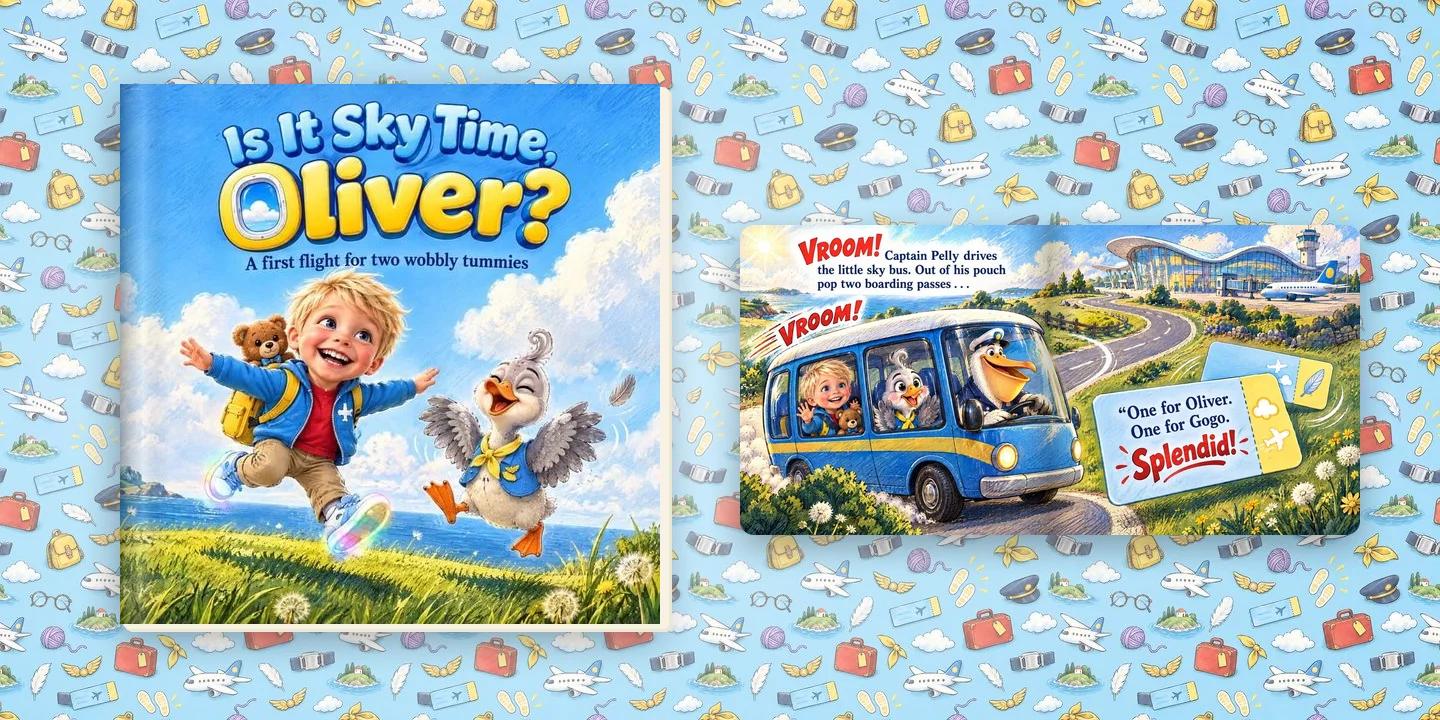
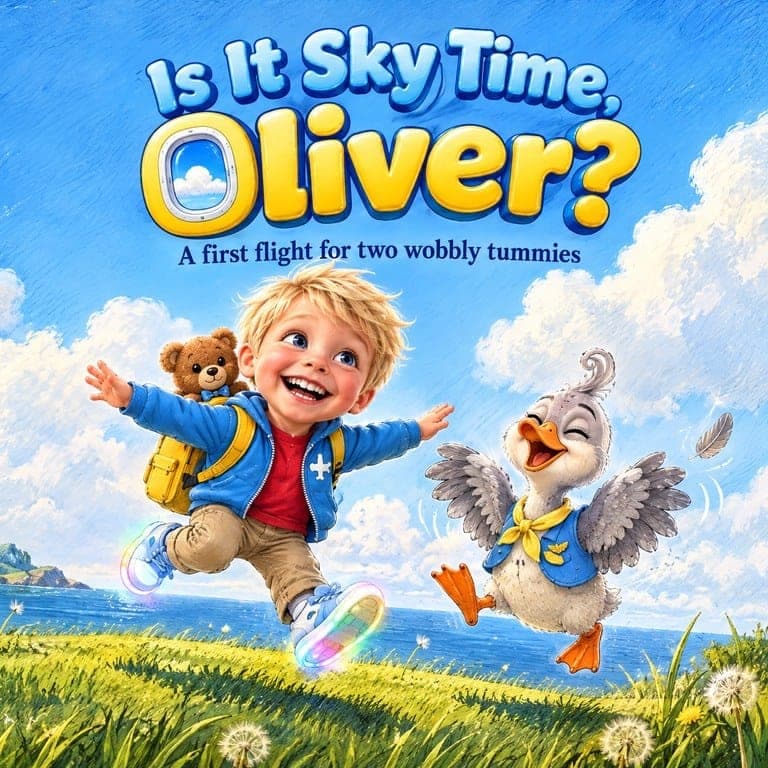
Is It Sky Time? follows a child on their very first flight with a pelican pilot and a young goose who is flying for the first time too. Both tummies wobble, both try a brave trick at every part of the airport, and both find the bravest one of all: holding on to each other. It is a book about the airport sequence and about the feeling, which is what a nervous first-time flyer needs.
Every KindFable hardcover also comes with narration — a personalized audiobook for kids that says your child's name — so the story can play on headphones during the flight itself.
Here is the book in full. Oliver is the sample child; your copy stars yours.
A book from our shop · ages 2–5
Is It Sky Time, Your Child?
Tap, tap! Out of Captain Pelly's pouch pops Gogo the goose: “Fly with me to Granny Goose!” It's your child's very first flight — and Gogo's too — and both tummies wobble. A beeping bag scale, a BOINK at the arch, a window full of BIG planes . . . until they find the bravest trick of all: holding on to each other.
Shown here starring Oliver, 4. Yours is painted with your own child’s face and name on every page, from $39 — and you see the pages before you pay.
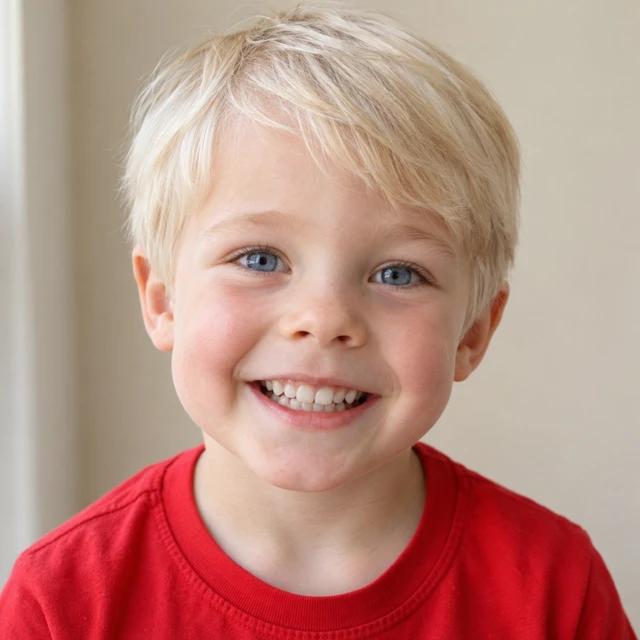
The photo they uploaded
The character we drew
Written from this story — not a stock track with a name dropped in. Free with every book.
How the story begins
- 1Tap, tap! Out of Pelly's pouch pops Gogo. HONK! “Fly with me to Granny Goose!” Oliver wants to fly. Gogo too! But tummies wobble. “Is it sky time?” “Not yet!”
- 2VROOM! Captain Pelly drives the little sky bus. Out of his pouch pop two boarding passes . . . “One for Oliver. One for Gogo. Splendid!”
- 3Gogo's brave trick: puff up BIG! He hops on the scale. BEEP! “Not a bag, Gogo!” Tag on . . . away rides the red bag. “Bye-bye, bag!”
The rest of the story is in Is It Sky Time, Your Child?.
The words to the song
[Verse 1]
Tap, tap, tap! The pouch goes pop,
Out jumps Gogo, hop, hop, hop!
"Fly with me to Granny Goose!"
Wobble, wobble — tummies loose!

[Chorus]
Is it sky time? Not yet, not yet!
Beep goes the scale and the bag is set,
Click goes the belt, then zoom, zoom, pop —
Hold on tight to the very top!

[Verse 2]
Puff up big? Beep! Not a bag!
Eyes shut tight? Boink! Wiggle-wag!
Roar out loud? Still wobbly, oh —
Hand in wing is the trick, you know!

[Chorus]
Is it sky time? Not yet, not yet!
Beep goes the scale and the bag is set,
Click goes the belt, then zoom, zoom, pop —
Hold on tight to the very top!

[Outro]
Yawn, pop, BUMP! Hello, red bag!
Granny's hug, and Pelly's brag:
"My pouch wobbled long ago!"
Is it sky time? YES! Let's go!
How do I create my child's first-flight book with a photo?#
- Open Is It Sky Time? in the shop, or start your own story at /create if the trip has details you want in it.
- Add your child's name and age.
- Upload one clear photo and tick the consent box. Your child becomes the character on every page, with the same face throughout.
- Add details in the story box — who is waiting at the other end, the toy that is coming too — and choose an art style.
- See the painted cover before you pay. Nothing is charged until you decide.
- Choose the format. The digital book is ready the same day, which matters if the trip is soon; the hardcover comes with the narration and a song. See pricing.
Your dashboard keeps the book, so it can be read on the plane in the page-flip reader and listened to on the way home.
A short checklist for the night before#
- Passports, ID, boarding passes, consent letter if needed
- Car seat or CARES harness, labelled for aircraft use
- Carry-on packed with spare clothes for both of you
- Snacks portioned into small bags
- Wrapped small toys, stickers, crayons, books
- Story or audiobook downloaded, headphones charged
- Comfort toy and blanket in the bag, not the suitcase
- Medicines and a thermometer
- The flying book read one more time at bedtime