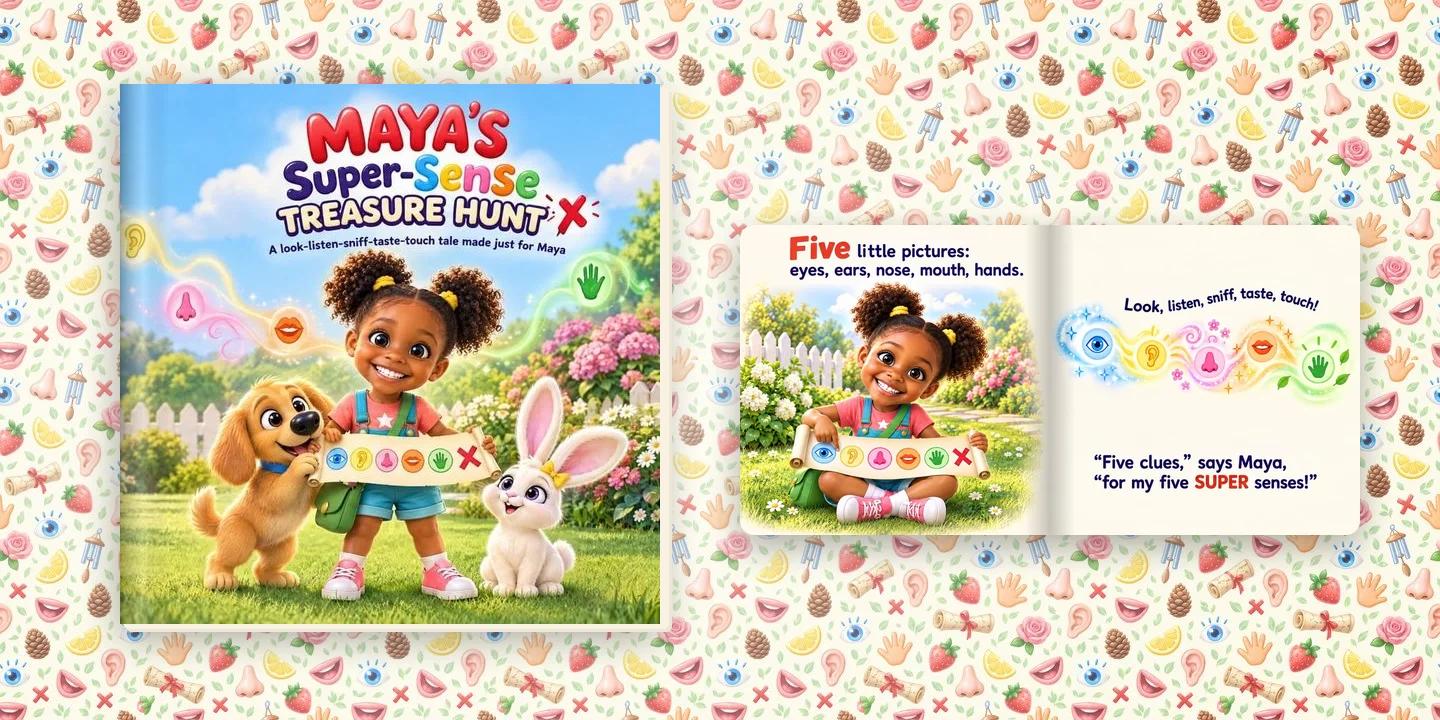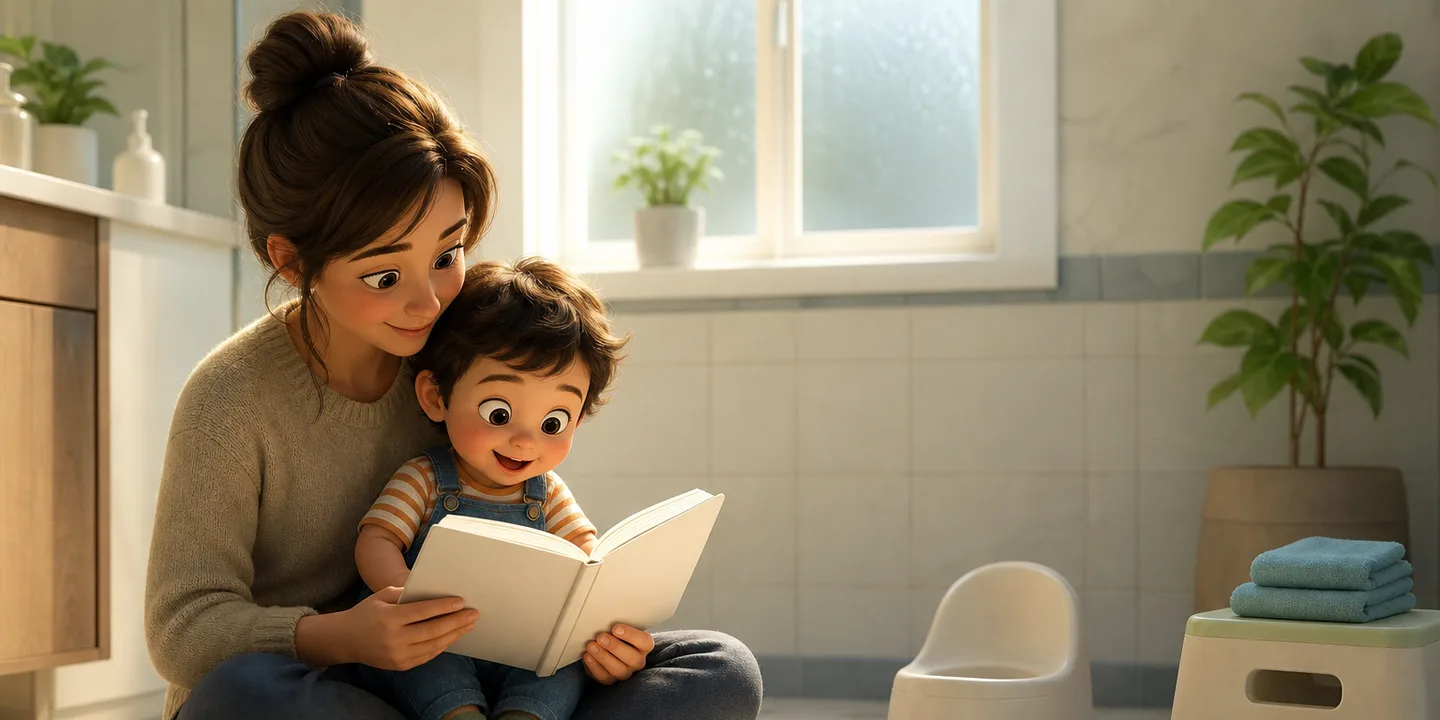
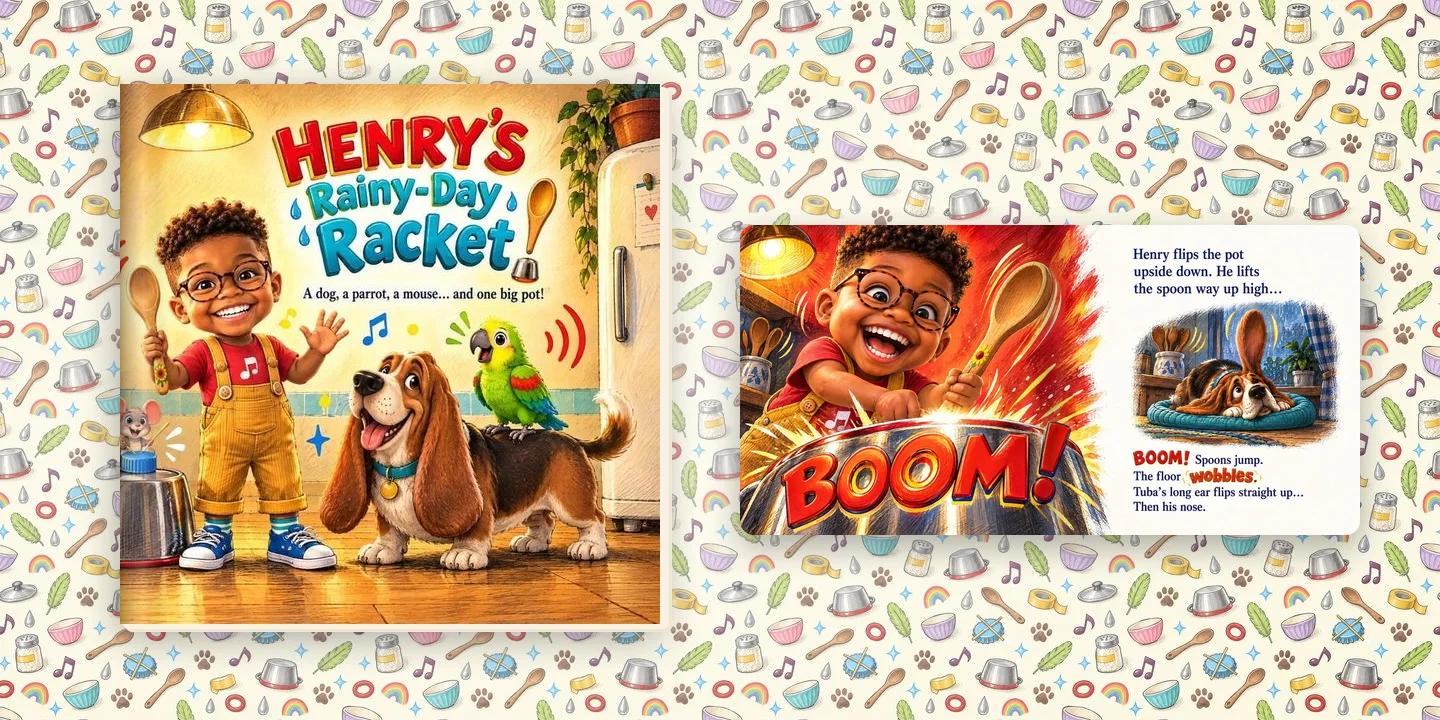
The best screen-free activities for kids are the ones that take less than two minutes to set up: a blanket fort, a kitchen band, a sock-sorting race, a treasure hunt with picture clues, a story read aloud. The hard part of swapping out a tablet is rarely the activity — it is the first five minutes, when a bored child has to get started on their own. Below are 60 indoor ideas for children aged about 2 to 6, sorted by setup time and by whether your child needs to burn energy or calm down, plus the guidelines behind the limits and a plan for handing the tablet back without a fight.
How much screen time is too much for young kids?#
Two health bodies set the numbers most parents in North America work from, and they agree closely.
| Source | Under 2 | Ages 2 to 4 or 5 |
|---|---|---|
| World Health Organization guidelines (April 2019) | Not recommended for babies or 1-year-olds | No more than 1 hour a day; "less is better" |
| Canadian Paediatric Society, "Screen limits for young children" (2025) | Not recommended, except video chatting with family | About an hour or less a day (ages 2 to 5) |
Both bodies add the same thing: when a young child is sitting still, reading and storytelling with a caregiver are the better choice. The CPS also advises keeping screens off for at least an hour before bed and out of bedrooms.
What children actually get is a lot more. The 2025 Common Sense Census, a US survey of families with children aged 0 to 8, found screen time "steady at about 2.5 hours per day", with 40% of children owning their own tablet by age two and 58% by age four.
None of this means a cartoon on a sick day is a failure. It means that for most families, the gap between the guideline and the reality is about an hour and a half a day — and the activities below are what fills that gap.
What makes a screen-free activity actually work?#
A good list is not the problem; most parents have seen a hundred ideas on a board somewhere. What decides whether an activity gets used on a wet Tuesday at 4 p.m. is four practical things.
- Setup time. If it takes longer to prepare than the child will play with it, it will not happen twice. Most of the ideas below take under five minutes.
- Energy match. A child bouncing off the sofa needs to move; a child who is overtired needs something slow and rhythmic. Getting this wrong is why the craft ends in tears.
- Open-endedness. A box can be a car, a boat or a bed for a teddy. A toy that does one thing is finished in three minutes.
- A clear start. Children find it easier to stay with an activity than to begin one. Sitting down with them for the first few minutes, then drifting away, is the most reliable trick there is.
A small study in Infant Behavior and Development (Dauch and colleagues, 2018) supports the "less is more" rule: 36 toddlers each played with either four toys or sixteen. With four, they played with each toy for longer and in more varied ways. A basket with four things in it beats a playroom with forty.
Quick-start activities: under two minutes to set up#
These are the ones to reach for when a child is already whining and you need something now.
- Blanket fort. Two chairs, a sheet, a cushion. Add a torch and it becomes a cave, a tent or a rocket.
- Kitchen band. Upside-down pots, a wooden spoon, a box of rice with a lid taped on. Play loud, then whisper-quiet.
- Sock-matching race. Tip out the clean laundry and see how many pairs can be found before a song ends.
- Hide the toy. Hide one small toy in a room; say "warmer" and "colder" as they search. Then swap roles.
- Sticky-tape road. Masking tape on the floor makes a road for toy cars, a balance beam or a hopscotch.
- Pillow stepping stones. Cushions on the floor, the carpet is "lava".
- Animal walks. Waddle like a penguin, hop like a frog, slither like a snake across the hall.
- Box of anything. One big delivery box. Do not suggest what it is. Wait.
- Freeze dance. Music on, dance; music off, freeze. The youngest players love being caught.
- Read-aloud on the floor. A pile of picture books and you lying down beside them. It counts.
Activities that burn energy indoors#
For the child who has been inside all day and is climbing the furniture. The WHO guidelines ask for at least 180 minutes of physical activity spread through the day for children aged 1 to 4, so movement indoors is not a luxury in winter.
| Activity | Best age | Setup | What you need |
|---|---|---|---|
| Cushion obstacle course | 2–6 | 5 min | Sofa cushions, a chair to crawl under, a line of tape |
| Balloon volleyball (keep it off the floor) | 3–6 | 1 min | One balloon — supervise; burst balloons are a choking hazard |
| Simon says / "the floor says" | 3–6 | 0 min | Nothing |
| Bubble pop in the hallway | 2–5 | 1 min | Bubble mixture, a towel for the floor |
| Laundry-basket bowling | 2–5 | 2 min | Empty plastic bottles, a soft ball |
| Treasure hunt with picture clues | 3–6 | 10 min | Drawings of places in the house |
| Dance party with scarves | 2–6 | 1 min | Music, a scarf each |
| Indoor snowball fight | 2–6 | 2 min | Balled-up socks |
| Crawl-through tunnel | 1–4 | 3 min | A row of chairs and a blanket |
| Stair counting (with you beside them) | 2–4 | 0 min | A safe staircase |
A note on balloons: the American Academy of Pediatrics' choking-prevention guide says balloons "pose a choking risk to children up to 8 years of age". Play with one blown-up balloon only with an adult present, and pick up every burst piece straight away.
Calm screen-free activities for quiet time#
For before nap, before dinner, or the hour after nursery when a child is running on empty.
- Playdough and a cookie cutter. Squashing is the point; the shapes are a bonus.
- Water in a tray. A baking tray, a centimetre of water, cups and a sponge. Towel underneath.
- Sticker scenes. A sheet of stickers and a piece of paper. Simple, absorbing, silent.
- Threading. Big wooden beads or penne pasta onto a shoelace.
- Sorting. Buttons by colour, spoons from forks, big socks from small ones.
- Drawing to music. Put on something slow and draw what it sounds like.
- Window watching. Count red cars, birds or umbrellas from the window.
- Puzzle on a tray. Four to twenty pieces depending on age; a tray stops pieces wandering.
- Audiobook or story with no screen. The child listens and imagines; nobody needs to read.
- Picture-book picnic. A blanket, a snack, three books. Let them "read" to a teddy.
For a child who struggles to come down from a busy day, the guide to the toddler bedtime routine shows how to turn this kind of quiet activity into a predictable wind-down.
Screen-free activities by age#
A two-year-old and a six-year-old want very different things from the same afternoon. This is a rough guide; your child's interests matter more than the label.
Screen-free activities for toddlers (ages 1 to 3)#
Toddlers learn with their hands and their mouths, so everything should be big, safe and repeatable.
- Posting game: drop large lids or blocks through a slot cut in a box.
- Pots-and-lids matching from the kitchen cupboard.
- Peekaboo with a scarf, then with a toy under a cup.
- Scrunching and tearing old paper (wrapping paper, junk mail) into a box.
- Bath-time painting with foam or a wet sponge on the tiles.
- Filling and emptying: a muffin tin and a bowl of large pom-poms or blocks.
- Pushing a toy pram or a laundry basket full of teddies around the house.
- Naming game: point at things and name them together. The list of books for language development has the books that turn this into a habit.
Keep small items — anything that fits through a toilet-paper tube is a common home check — out of reach of children under three.
Indoor activities for 3-year-olds and 4-year-olds#
At three and four, imagination takes over. The same box is now a shop, a vet's clinic or a spaceship.
- Pretend café: paper menus, toy food, a notepad for taking orders.
- Teddy bears' doctor's surgery with plasters and a toy stethoscope.
- Make a road map on a big sheet of paper and drive cars along it.
- Shadow puppets with a torch on the wall.
- Colour-hunt: find five red things, then five blue things.
- Simple baking: stirring, pouring and decorating biscuits.
- Musical statues and musical chairs with cushions.
- Act out a favourite picture book with costumes from a dressing-up box.
Colour games pair well with books; the guide to books that teach colors lists the best ones by approach.
Screen-free activities for kids aged 5 and 6#
By five and six, children can follow rules, wait their turn and carry a project over several days.
- Board games with real rules: snakes and ladders, dominoes, simple card games.
- Build a cardboard city over a week, one building a day.
- Write and illustrate a family newspaper.
- Make a comic strip: four boxes, one story.
- Science at the sink: what floats and what sinks? Guess first, then test.
- Plan and put on a puppet show for the family.
- Learn a card trick and perform it.
- Make a time capsule box and write a letter to their future self.
Screen-free activities that need a little preparation#
These take ten to twenty minutes to set up, so they suit a weekend morning or a planned rainy day. They also hold attention much longer — sometimes an hour or more.
| Activity | Age | Why it holds attention |
|---|---|---|
| Treasure hunt with a hand-drawn map | 3–6 | A goal, a sequence of clues, a reward at the end |
| Homemade playdough (flour, salt, water, oil) | 2–6 | Making it is half the play |
| Indoor camping night with torches | 3–6 | Novelty: dinner on a blanket, stories in a tent |
| Cardboard-box car wash or drive-in | 3–6 | Building, decorating, then playing in it |
| Salt-dough ornaments or handprints | 3–6 | Two sessions: make, then paint the next day |
| Kitchen science: baking soda volcano | 4–6 | A big, safe reaction they can repeat |
| Painting with ice cubes (food colouring frozen in a tray) | 2–5 | Changes as it melts |
| Family talent show | 4–6 | Rehearsal, costumes, an audience |
If one of these turns into a favourite, write it on a card and keep it in a jar. On a bad afternoon, letting the child pull a card is often easier than asking them what they want to do.
Do audiobooks and stories count as screen-free?#
Yes — and they are one of the most useful swaps, because they work in places where other activities do not: in the car, at the doctor's, in bed, during a long queue.
Listening to a story asks a child to do work that a video does for them: picture the characters, hold the plot in their head, guess what comes next. That is part of why both the WHO and the CPS single out reading and storytelling with a caregiver as the best way for a young child to spend sitting-down time.
A few ways to use stories in place of a screen:
- Car rides. A short audiobook instead of a tablet on the back of the seat.
- Quiet time. A story playing while a child builds, draws or lies on the floor.
- Bedtime. A story heard twice is a story your child will start telling back to you.
- Waiting rooms. A picture book from your bag is lighter than a charger.
If your child has a favourite story already, they will often listen to it many times — which is exactly what young children are built to do. The guide to why toddlers want the same book explains why the repetition is good for them.
How do I switch off the tablet without a meltdown?#
Most screen battles are lost at the transition, not because the child loves the screen more than the alternative. Children find it hard to stop doing something absorbing with no warning and nothing to go to. A few small changes help.
- Warn them. "Five more minutes, then the tablet goes to sleep." A visual timer helps younger children who cannot yet tell the time.
- Stop at a natural end. The end of an episode, not the middle of a level.
- Have the next thing ready. The fort already built, the band already on the floor. Walking towards something is easier than walking away from something.
- Keep the rule boringly the same. If the tablet goes off before dinner every day, it stops being a negotiation.
- Name the feeling. "You're cross that it's finished. It's hard to stop." Then move on to the next thing without a lecture.
The guide to books about tantrums covers what to do when the transition still ends in a big feeling, and our article on how to limit screen time for kids sets out a fuller family plan.
How do I set up the house so screen-free play is the easy choice?#
Children choose whatever is easiest to reach. A few changes to the room do more than any rule.
- Rotate toys. Keep four or five out; store the rest and swap them every week or two.
- Open shelves, not deep bins. A child can see a toy on a low shelf; they cannot see what is at the bottom of a box.
- A "yes" space. One corner where the child can play freely without being told to stop touching something.
- Craft basics within reach. Paper, crayons, tape, scissors (child-safe), stickers.
- Books everywhere. A basket of books by the sofa, in the car and by the bed. Books that are in sight get read.
- Devices out of sight. A tablet on the kitchen counter is an invitation; a tablet in a drawer is a decision.
Which picture books inspire screen-free play?#
Some books are almost instructions for an afternoon of play. Read one, then do what the book does.
| Book | Author | The play it starts |
|---|---|---|
| Not a Box | Antoinette Portis | Turning a cardboard box into anything |
| Not a Stick | Antoinette Portis | Imaginative play with one simple object |
| Harold and the Purple Crayon | Crockett Johnson | Drawing a world on a long sheet of paper |
| The Snowy Day | Ezra Jack Keats | Making tracks, snow play, winter walks |
| Hello! Hello! | Matthew Cordell | Putting the screens down and going outside |
| Beautiful Oops! | Barney Saltzberg | Turning mistakes in a drawing into something new |
| Your Child's Rainy-Day Racket! | KindFable | A kitchen band made from pots, spoons and bowls |
For more reading by age, see our lists of the best books for 2-year-olds and the best books for 3-year-olds.
Why does a personalized audiobook for kids make a good screen swap?#
A story with your child's own name in it does something a cartoon cannot: it makes them the one who has the adventure. Children who wander away from a book about someone else will often sit still for a book about themselves — and ask to hear it again.
It works without a screen. Every KindFable hardcover comes with narration of the story, a personalized audiobook for kids in which your child hears their own name, and a song made from the story. It plays in the car, at bedtime or during quiet time, while the printed book stays on the shelf for the reading you do together.
It starts the play. A book about your child banging pots in a kitchen band is an invitation to do exactly that the moment the book closes.
It suits the age. For two- to six-year-olds, the language, length and pictures are chosen for the age you enter, so the story is neither too babyish nor too long.
Here is one in full: a rainy-day kitchen-band story full of BOOMs and CLANGs, painted for a child who wants to make a lot of noise. Henry is the sample child; your copy stars yours.
A book from our shop · ages 3–6
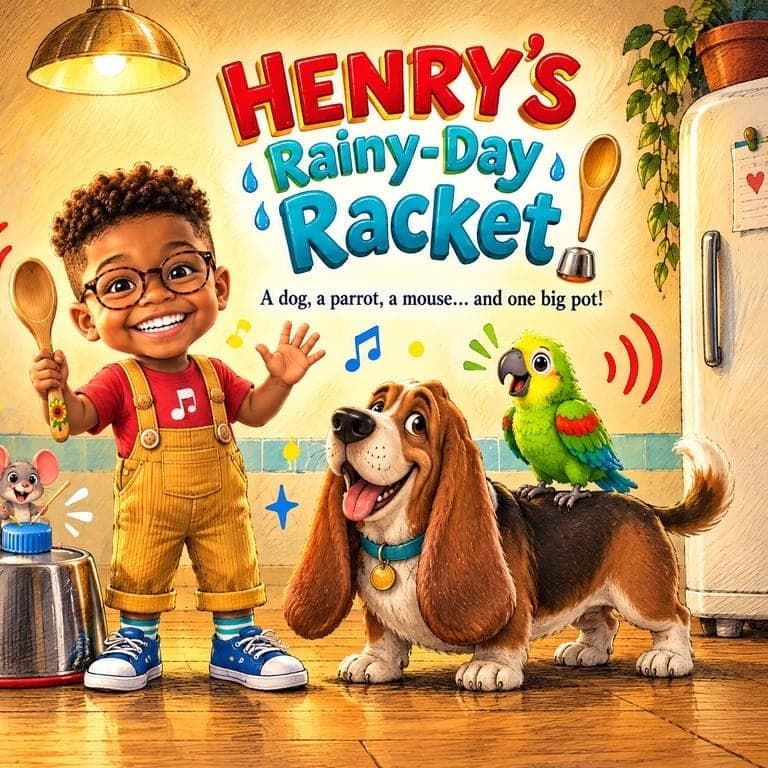
Your Child's Rainy-Day Racket!
Rain all day, and your child wants BIG music with a whole band. A wooden spoon and an upside-down pot go BOOM, Tuba the basset hound howls along, Kiwi the copy-cat parrot squawks “Tape first!” — and the kitchen band gets LOUDER and LOUDER, until it's TOO LOUD. Then… hush. Who is the tiniest drummer of all? A bouncy, noisy rainy-day book where every sound is painted right into the picture.
Shown here starring Henry, 4. Yours is painted with your own child’s face and name on every page, from $39 — and you see the pages before you pay.

The photo they uploaded

The character we drew
Written from this story — not a stock track with a name dropped in. Free with every book.
How the story begins
- 1Drip, drop, rain all day. Henry wants to play music. BIG music, with a whole band! But his band is... just Tuba. And Tuba snores. Then Henry spots a spoon and a shiny pot. Hmm!
- 2Henry flips the pot upside down. He lifts the spoon way up high... BOOM! Spoons jump. The floor wobbles. Tuba's long ear flips straight up... Then his nose.
- 3BOOM! goes the pot. Tuba points his nose up... “AWOOO!” BOOM! AWOOO! Tuba's song goes on and on. A band of two!
The rest of the story is in Your Child's Rainy-Day Racket!.
The words to the song
[Verse 1]
Rain on the window, drip-drop day,
Henry wants a band to play!
A wooden spoon and a big old pot —
BOOM! goes Henry. Look what we've got!

[Chorus]
Boom, ting, shaka, tik, tik, tik!
Tuba sings AWOOO, Kiwi copies quick!
Rainy days, sunny days,
Boom, ting, shaka... the kitchen band plays!

[Verse 2]
Too loud, too loud! So hush, hush, hush...
Pit, pat, plink, the raindrops brush.
Teeny Crumb taps, tik-tik, slow,
Tuba's heart goes bum-bump below.

[Chorus]
Boom, ting, shaka, tik, tik, tik!
Tuba sings AWOOO, Kiwi copies quick!
Rainy days, sunny days,
Boom, ting, shaka... the kitchen band plays!

[Outro]
Grab a spoon, find a pot,
(Listen first! Listen first!)
Loud and soft, all together now...
Boom... ting... shaka... AWOOO!
How do I make a book that stars my child, with a photo?#
Every KindFable book starts from one photo and a few words about your child.
- Choose a story from the shop — such as Your Child's Rainy-Day Racket! — or start your own at /create.
- Add your child's name and age, so the words and the length fit them.
- Upload one clear photo and tick the consent box. Your child becomes the character on every page, with the same face from the cover to the last page.
- Tell the story box what they love — the dog, the drum, the joke they repeat — and pick an art style.
- See the painted cover before you pay. Nothing is charged until you decide.
- Pick the format. The hardcover comes with the narration and the song; the digital book is ready the same day. Prices are on one page.
Your dashboard keeps every book: your child can reread it in the page-flip reader, play the narration on their own, and you can order another printed copy later.
What is a realistic screen-free goal?#
Very few families go from two and a half hours a day to none, and nobody needs to. A realistic goal is to make screens one choice among several rather than the default.
Start with one daily window. Pick the time when screens most often take over — usually after nursery or while dinner is cooking — and set up one activity from this list for that slot only.
Count the wins, not the slips. A week with four screen-free afternoons is a good week.
Let boredom happen. A child who says "I'm bored" and is not handed a device will, after a few grumpy minutes, usually find something. That skill — starting play on their own — is the one this whole list is really trying to build. The guide to how to encourage independent play shows how to grow it a few minutes at a time.